

Bart Isn't The Simpsons' Main Character For A Good Reason
Before "The Simpsons," TV families were mostly functional, supportive, wholesome groups who represented a nostalgic vision of suburban America that had long since faded despite what the small screen would have viewers believe.
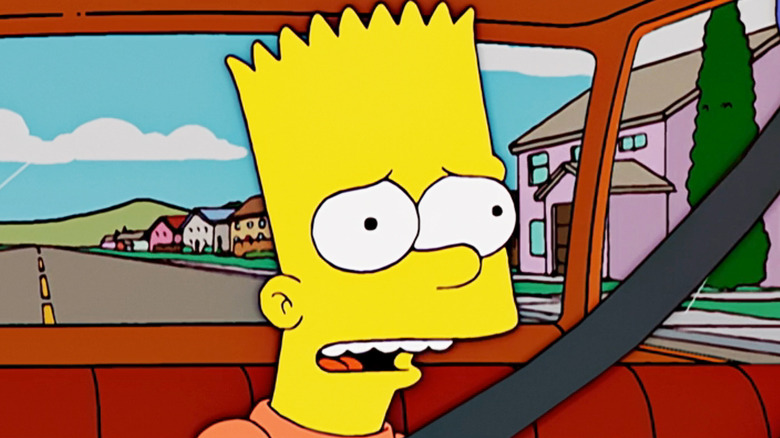
Then, in 1989, Fox introduced audiences to Homer, Marge, Bart, Lisa, and Maggie, and nothing was ever the same. Initially, Bart looked to be the breakout star of the show, becoming nothing short of an icon for kids who couldn't get enough of his juvenile delinquency. But "The Simpsons" has now been on the air for 36 years, with a movie sequel also in the works, and Homer has since established himself as the real star of "The Simpsons."
Much of that has been by design. In 2010, "The Simpsons" creator Matt Groening and Dan Castellaneta, who voices Homer and dozens of other Springfieldians, spoke to Entertainment Weekly about why the Simpsons patriarch had become the show's de facto main character. "With Homer, there's just a wider range of jokes you can do," Groening explained. "And there are far more drastic consequences to Homer's stupidity. There's only so far you can go with a juvenile delinquent."
As the head of the Simpsons household, Homer was always positioned to develop into the show's main character. Though the show has clearly made the best use possible of its ensemble cast, giving every member of the family time to develop and embark on their own storylines, Homer became the centerpiece as the series went on. In that sense, for all its subversive energy (much of which has long since dissipated), "The Simpsons" helped continue a sitcom tradition.
Homer is the rock of The Simpsons
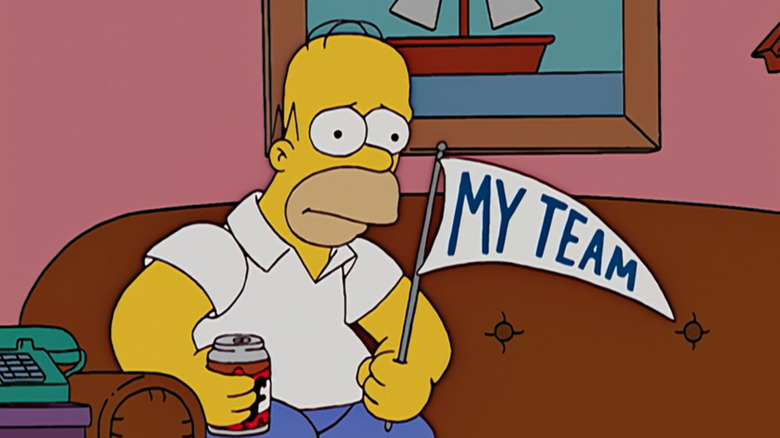
In that same interview, Matt Groening explained that one reason Homer became a focal point was simple — he was funnier. "We wanted Bart to do anything up to the point of him being tried in court as an adult," Groening said. "But Homer is an adult, and his boneheadedness is funnier. The things that come out of Homer's mouth and the decisions Dan makes are unbelievable."
But the reason the writers focused more on Homer as the show progressed goes beyond humor. When "The Simpsons" debuted, Bart wasn't just seen as the best character, he also became a vaunted pop culture figure rather quickly. As Groening recalled during a BBC Two documentary, "One of the most delightful aspects of 'Simpsons'-mania in the early 1990s was how many different groups appropriated Bart Simpson. ... It was amazing how many people could take this cute little guy and make him their own."
But just as "Simpsons mania" faded, so too did Bart's standing as the show's unofficial mascot. As fans of the series grew up, their allegiance shifted somewhat from the foul-mouthed Simpson son to his lovable doofus of a dad. He was always there, waiting to be discovered by kids who matured along with the series.
This shift is represented on the show itself, with earlier seasons focusing more on Bart before more Homer-centric episodes became the norm. As longtime producer and writer Al Jean put it during a 2007 New York Post interview, "We started writing more Homer stories, I think because we're more like Homer than Bart."
Homer was always destined to become the main character on The Simpsons

In fairness, "The Simpsons" wasn't the first show to subvert traditional sitcom sensibilities. The series was preceded in its more vulgar take on the American family by "Married... with Children" in 1987, also on Fox. Ed O'Neill's jaded patriarch was nothing like the warm and supportive TV dads that populated traditional family sitcoms, and as such, he prepared the groundwork on which "The Simpsons" and Homer himself built their success.
When Matt Groening's show debuted, it too would find its greatest success with the similarly loutish head of its household, even if it took some time to get there. As such, the show continued a tradition of beloved sitcom dads, even while it tried to subvert such tropes.
That speaks to something deeper about Homer's character, another reason he eventually became the unofficial main character of "The Simpsons." As Groening explained to Entertainment Weekly, "Homer is ... truly American in his love of food and idiotic pop culture. We can all relate to it, we just feel guilt about it." In that sense, Homer Simpson, and indeed Al Bundy, were just as American as any of the congenial dads that had populated TV series for decades, which surely played into Homer's increasing popularity.
Crucially, however, for all his dimwittedness, Homer also had a big heart — something the writers tried to convey through his marriage to Marge. Groening continued, "Homer really is living in the moment. He has the Ego too. It's just that he's mostly ruled by Id. But his redemption is his love of Marge and I think equally important, Marge's love of Homer. ... We feel if Marge can forgive Homer, so can we."