

15 Star Trek Episodes That Have Aged Poorly

Since its start, "Star Trek" has been a forward-thinking franchise that has used socially progressive themes and diverse casts to depict the future. That said, the original science-fiction series and its offshoots are very much products of their respective times. As such, sometimes entire episode premises falter when viewed through a modern-day lens, making them uncomfortable to watch.
Insensitive depictions, dialogue about gender and race, socially regressive plot points: "Star Trek" has had its fair share of narrative stumbles. In a few cases, particularly dark scenes feel like they push boundaries solely for cheap shock value. With that — and modern audience's sensibilities —in mind, here are 15 "Star Trek" episodes that have aged poorly.
'The Enemy Within' ('The Original Series')
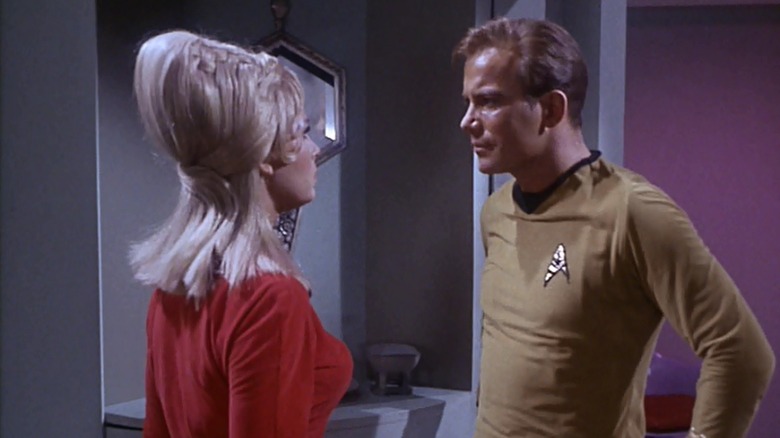
Actor Grace Lee Whitney, who recurred as yeoman Janice Rand in the early episodes of "The Original Series," has a tragic history with the franchise. One of Rand's most prominent episodes is "The Enemy Within," which has Captain Kirk (William Shatner) split into good and evil halves by a transporter accident. The evil Kirk assaults Rand in her quarters, and the yeoman is rescued by a technician after she scratches her attacker's face. After Kirk is successfully restored when his two personalities are merged, Spock (Leonard Nimoy) jokes that Rand may have found the evil Kirk attractive.
From the extended assault sequence, which actually left Whitney black and blue, to Spock's completely inappropriate closing joke, "The Enemy Within" is an uncomfortable watch. Kirk forcing himself on Rand feels a step too far; giving the alter ego his distinguishing facial scratches could've been achieved differently. The assault is made all the more disturbing by the circumstances under which Whitney was cut from the show. That the episode ends with Spock's tone-deaf joke makes "The Enemy Within" all the more regrettable.
'Patterns of Force' ('The Original Series')
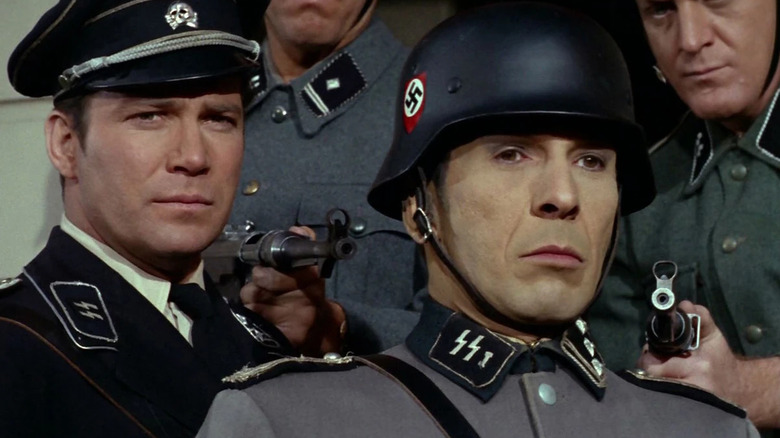
Throughout "The Original Series," the Enterprise visited many planets with civilizations inspired by different periods in Earth's history. The most controversial took place in the Season 2 episode "Patterns of Force," which featured a society based on Nazi Germany. The planet chose this direction after it was introduced by Starfleet Academy professor John Gill (David Brian), who felt the Nazis had the most efficient system of government. To make matters worse, the planet regularly launched interplanetary nuclear warheads against its peaceful neighboring planet.
Gill complimenting Nazism over its perceived governmental efficiency, completely ignoring its obvious accompanying evils, is patently ludicrous. This also raises the question of why Gill encouraged a 1:1 recreation of Nazi Germany, right down to its use of matching uniforms and imagery, instead of his own reimagined analogue. The fact that the episode also contains casual interplanetary genocide is just another poorly conceived plot point. Germany was understandably wary of the premise, banning the "Star Trek" episode from its country's television broadcasts for decades.
'The Paradise Syndrome' ('The Original Series')
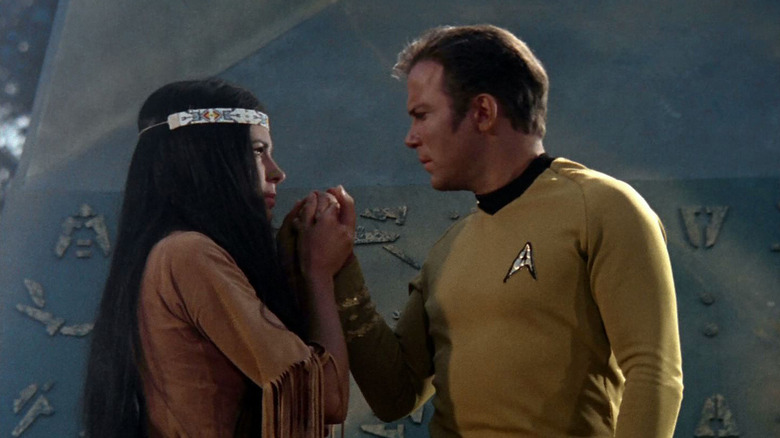
Indigenous North American societies have been depicted in multiple "Star Trek" series over the years, often in culturally insensitive ways. In this Season 3 episode, The Enterprise comes across a planet being threatened by an incoming asteroid, with the native population discovered to be descended from various Native American communities. Investigating a strange obelisk on the planet, Kirk endures an energy surge that leaves him suffering from severe amnesia. Recuperating among an indigenous tribe, Kirk is revered as a god; he eventually takes the local priestess, Miramanee (Sabrina Scharf), as his bride.
"The Paradise Syndrome" is an episode that literally turns Kirk into a white savior archetype. Seeing Shatner cavort in indigenous clothing is a campy sight, to be sure, as he proclaims himself to be the godly Kirok. That the episode contains many non-indigenous actors playing indigenous characters adds further insult to injury, even if it was a common industry practice at the time. An odd episode all around, "The Paradise Syndrome" continues the steady decline in the show's overall quality in its final season.
'The Way to Eden' ('The Original Series')
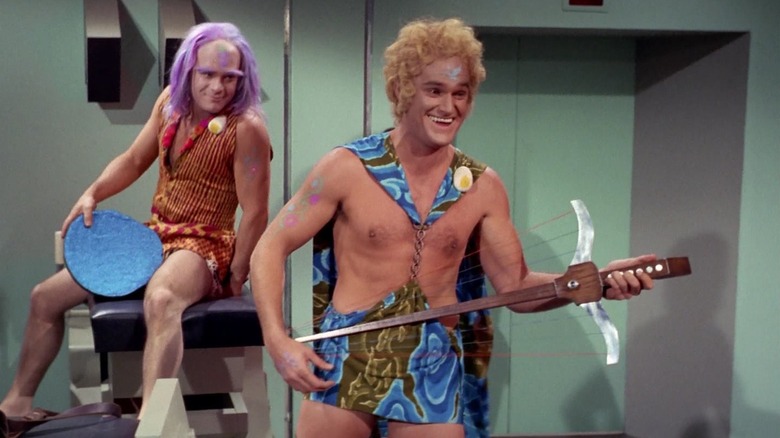
Thanks to a slashed production budget and creative shake-ups, the third season of "The Original Series" contains some of the worst episodes in the entire run. This includes the embarrassingly campy episode "The Way to Eden," in which the Enterprise picks up a group of interstellar travelers. Best described as space hippies, this groovy group is led by the manipulative Sevrin (Skip Homeier) to search for the biblical Eden. As Spock deduces that Sevrin had gone insane before enthralling his followers, the group moves to continue their journey, with or without the Enterprise's support.
Compared to the other episodes on this list from "The Original Series," "The Way to Eden" has a sillier reason for not aging well: Space hippies are one of the most ludicrous encounters the Enterprise ever experienced. (For the record, it also crossed paths with Abraham Lincoln and Apollo.) Having the space hippies participate in an extended jam session with Spock feels like an effort to have "Star Trek" feel hip and relevant to contemporary audiences. Consistently ranked among the worst episodes of the series, "The Way to Eden" is the show at its most laughably dated.
'Turnabout Intruder' ('The Original Series')
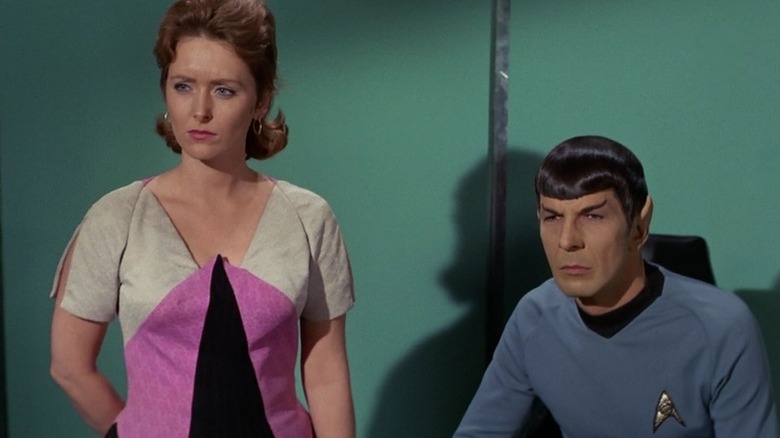
After three seasons, "The Original Series" went out with what was one of the worst series finales in the franchise, "Turnabout Intruder." The episode has Kirk's scheming ex, Janice Lester (Sandra Smith), switch bodies with him in an effort to finally advance her career. Kirk, in Lester's body, tries to convince his crew about the switch while they're increasingly concerned by the behavior of the Lester-possessed Kirk. Things come to a head when it becomes clear how unhinged Lester truly is as she tries to court-martial for mutiny anyone who opposes her.
There's so much wrong in "Turnabout Intruder," from the implication that Starfleet is openly sexist to Lester herself. The episode posits that women trying to advance their careers are shrill and unreasonable, and it also has scenes depicting violence against women. Smith does an admirable job playing Kirk trapped in Lester's body, whereas Shatner's performance as Lester involves more scenery-chewing than usual. A dubious end for one of television's most groundbreaking series, "Turnabout Intruder" stumbles as it brings the show across the finish line.
'Code of Honor' ('The Next Generation')
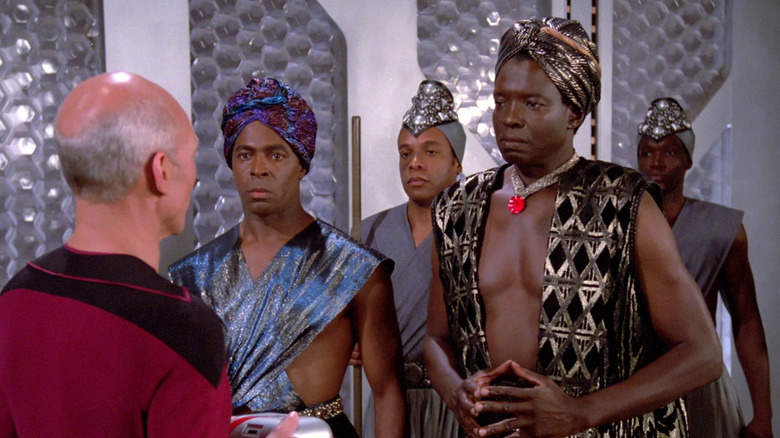
Even though "Star Trek: The Next Generation" debuted nearly 20 years after "The Original Series," it still had multiple questionable episodes. The most arguably blatant in this regard is the first season's "Code of Honor." The episode has the Enterprise visit a planet with a culture echoing 1940s caricatures of Sub-Saharan African society. The planet's leader, Lutan (Jessie Lawrence Ferguson), takes an unhealthy interest in Tasha Yar (Denise Crosby), coercing her into dueling his current partner (Karole Selmon).
The inclusion of unmistakably dated African caricatures rightfully left the cast worried about the show's future. "Code of Honor" is the most overtly racist that "Star Trek" has ever gotten, at the very least within "The Next Generation." That this was only the show's fourth episode makes it a wonder that it survived this huge stumble out of the gate. Several cast members have spoken out against the episode since, with Jonathan Frakes going as far as wanting it removed from streaming platforms.
'Angel One' ('The Next Generation')
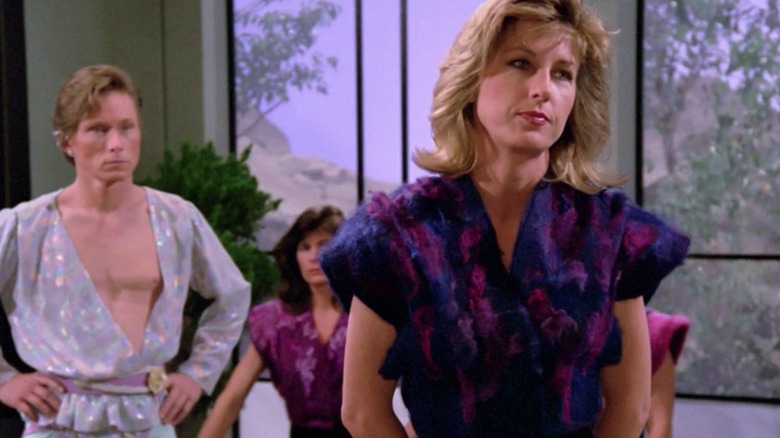
The questionable content in the first season of "The Next Generation" wasn't limited to its inappropriate depictions of race. The episode "Angel One" is named for a planet ruled by a female oligarchy, with males subservient to them. The Enterprise investigates the crash of a Federation vessel on the planet, with the male survivors accelerating the collapse of the native society. One of the planet's leaders, Beata (Karen Montgomery), takes an interest in Will Riker (Jonathan Frakes) when he beams down to Angel One.
While its female-run civilization presents the illusion of feminism, "Angel One" is one of the most sexist "Star Trek" episodes ever produced. Aside from its inspired gender-role reversal, the show also implies that a female-led society is doomed for failure. Like "Code of Honor" before it, this is an episode that the cast and crew have rightfully distanced themselves from since its debut. As one of the worst episodes of "The Next Generation," "Angel One" is another low point for the show's inaugural season.
'The Child' ('The Next Generation')
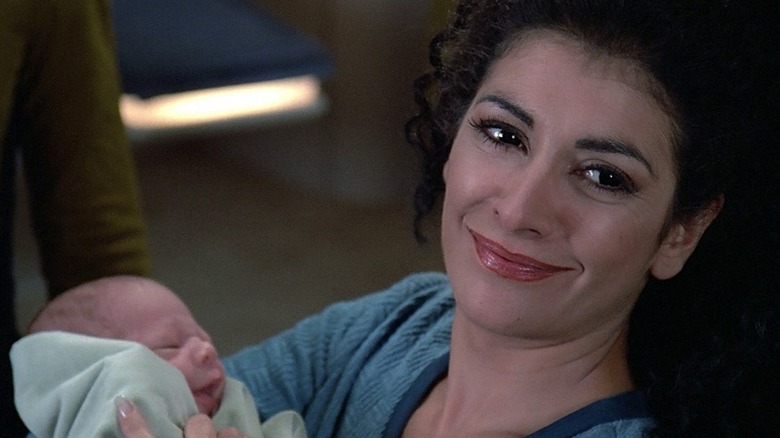
From the questionable outfits she was tasked with wearing to the flimsy storylines she was given early on, Deanna Troi (Marina Sirtis) deserved far better in "The Next Generation." The worst of the show's treatment of Troi was in the second season premiere episode "The Child," which finds her impregnated by a strange alien entity. The child develops quickly, is born and ages at an accelerated rate, with Troi naming him Ian (RJ Williams). Ultimately, Ian sacrifices himself to save everyone when the crew comes under risk while transporting deadly virus samples.
The nonconsensual impregnation of Troi in "The Child" starts off the second season awkwardly with a clear violation of her body. That the rest of the crew comes off as unsympathetic and unsupportive makes this development all the more head-scratching. To top it all off, the pregnancy and Ian's birth, life, and death don't really have a lasting impact on Troi beyond this episode. That raises the question why this episode had to happen at all, adding nothing but another demeaning story for Troi in the series.
'Up the Long Ladder' ('The Next Generation')
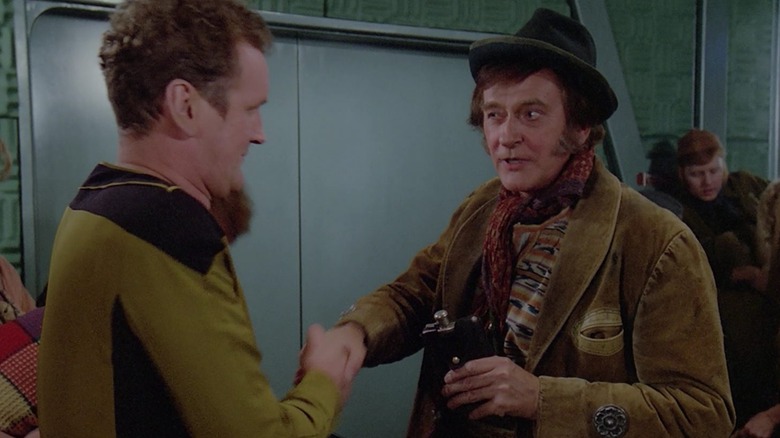
Even though "The Next Generation" Season 2 is generally considered an improvement over its mediocre first season, it still has some of the series' worst episodes. This includes "Up the Long Ladder," with its prominent incorporation of Irish stereotypes that would've felt out of place in the 1970s, let alone when the episode first aired in 1989. The hour has the Enterprise take in a group of colonists resembling a rural Irish community from the early 20th century. This coincides with the Enterprise visiting another remote colony, whose inhabitants rely on cloning to survive due to their limited gene pool.
"Up the Long Ladder" is an episode that is so absurd it almost has to be seen to be believed. The depiction of the Irish veers so hard into outdated stereotypes that it's comical for all the wrong reasons. This includes the suggestion that the Irish couldn't advance beyond a 20th-century agrarian society, despite venturing countless light-years away from Earth. An absolute travesty in its execution, "Up the Long Ladder" is a reminder that "The Next Generation" still hadn't overcome its growing pains.
'Journey's End' ('The Next Generation')
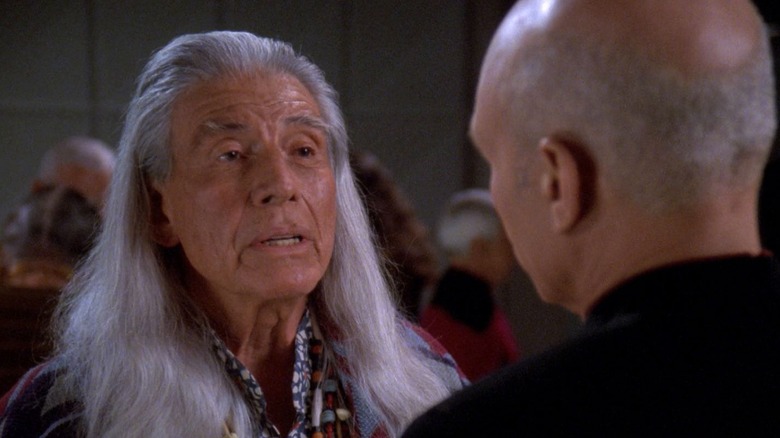
Even by the end of its seven-season run, "The Next Generation" was still producing the occasional clunker of an episode. Among the most infamous in the final season was "Journey's End," which involved the Enterprise forcibly relocating human colonists from planets claimed by the Cardassian Union. This includes a colony descended from North American indigenous tribes, to the chagrin of a visiting Wesley Crusher (Wil Wheaton). At the tribe's urging, Wesley undergoes a vision quest to learn about his cosmic destiny as Cardassians arrive to confront the Enterprise.
From the morally questionable mission, made all the more offensive by the ethnic background of the colonists, to its handling of indigenous cultures, "Journey's End" is in poor taste all around. That the show repeatedly refers to the colonists as "Indians" makes this episode's execution even more unforgivably uncomfortable. And while Wesley's vision quest proves to be more cosmically omnipotent than anticipated by the closing twist, its initial presentation is poorly realized. Season 7 often felt like a step backwards in quality for "The Next Generation," and "Journey's End" underscores that dubious distinction.
'Profit and Lace' ('Deep Space Nine')
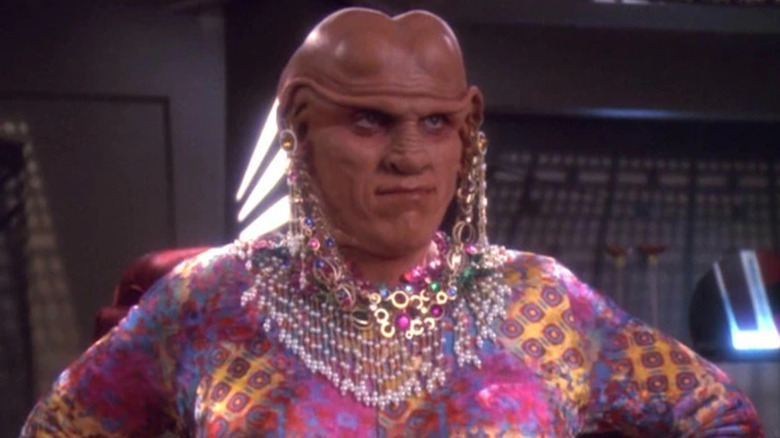
With all due respect to the cast and crew, the Ferengi-centric installments of "Star Trek: Deep Space Nine" felt out of place as the series shifted to a war narrative. This includes the Season 6 episode "Profit and Lace," which has Quark (Armin Shimerman) in the unlikely position of arguing for more equitable rights for Ferengi women. This grand scheme has Quark disguise himself as a woman in order to get closer to the new Ferengi Commissioner Brunt (Jeffrey Combs). More than just throwing on women's clothing, Quark undergoes a full-on (albeit temporary) sex change as part of this elaborate ruse.
On one hand, having Quark fight for women's rights by any means necessary is a nice evolution of the character. But the problem is that so much of what Quark does to reach his goal, including the sex change, is played for bizarre, slapstick comedy. This continues with the episode's denouement, as Quark's hormonal changes make him act in a more feminine manner in an awkward attempt at laughs. "Profit and Lace" is one of the all-around strangest episodes of "Deep Space Nine," and can definitely be skipped during a binge of the series.
'Tattoo' ('Voyager')
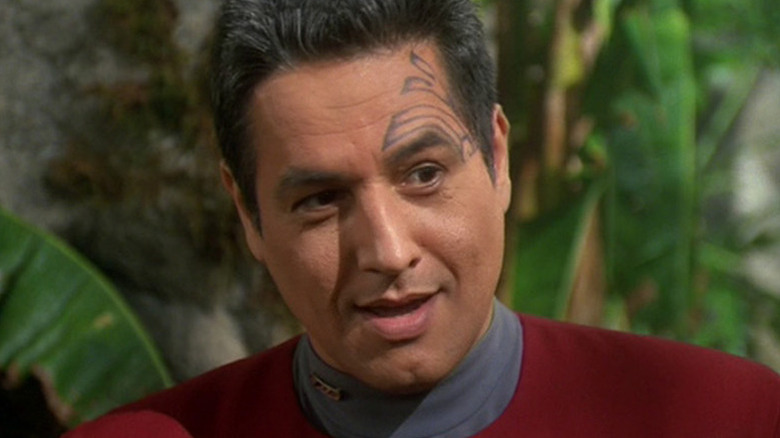
One of the most complicated characters on "Star Trek: Voyager" was Chakotay (Robert Beltran), the ship's first officer of North American indigenous descent. One of the earliest episodes to spotlight Chakotay's heritage and history was Season 2's "Tattoo," with Chakotay leading an away team on a remote planet. Chakotay notices markings similar to ones that his father would make on Earth, then he discovers a civilization with tattoos identical to his own. This leads to the revelation that this hidden society visited Earth in the distant past, offering a blessing of sorts to Chakotay's ancestors.
"Voyager" hired Jamake Highwater as its cultural consultant for Chakotay, even though he had been discredited for faking his ethnicity years earlier. This makes any representation that the character brought to the show feel more hollow, drawing heavily from Hollywood stereotypes regarding First Nations' cultures. In the case of "Tattoo," the idea that it was an alien race that tasked Earth's indigenous populations with revering and safeguarding the environment, along with apparently giving them visible elements of their culture, felt particularly uncomfortable. Whenever "Voyager" leaned into Chakotay's cultural background, it stumbled hard, and "Tattoo" is the first major instance of this.
'Retrospect' ('Voyager')
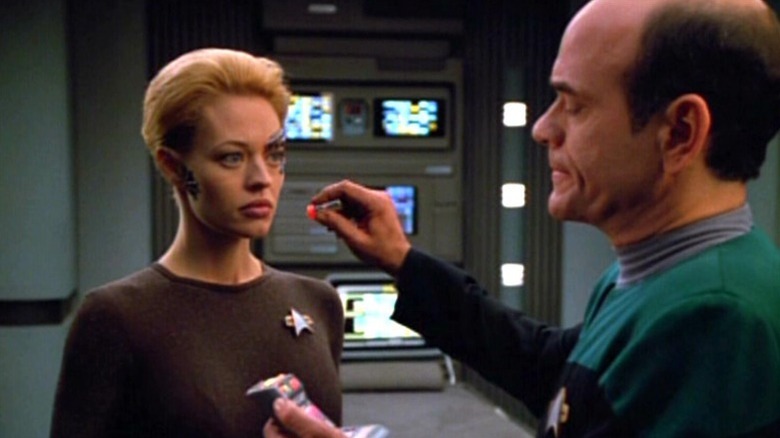
Seven of Nine (Jeri Ryan) was another "Star Trek: Voyager" main character that the series never quite treated with the full dignity that she deserved. The Season 4 episode "Retrospect" tries to address Seven's traumatic past linked to her recovery from her extended assimilation by the Borg. The Doctor (Robert Picardo) helps Seven recall repressed memories of Kovin (Michael Horton), a traveling arms dealer who forcibly removed her Borg cybernetic implants without her consent. As the Doctor and Seven investigate the matter further, they learn that Seven's memories of the incident may not be entirely reliable due to other trauma she's endured.
"Retrospect" is built around the incredibly uncomfortable concept that the memories of the traumatized are compromised. That the episode takes this messaging to a procedurally investigative context makes the association with actual assault survivors more offensive. The idea of false memories and how they are used to discredit assault survivors is a very real dilemma. This episode's handling of those comparisons and themes does actual assault survivors a disservice in its messaging.
'The Fight' ('Voyager')
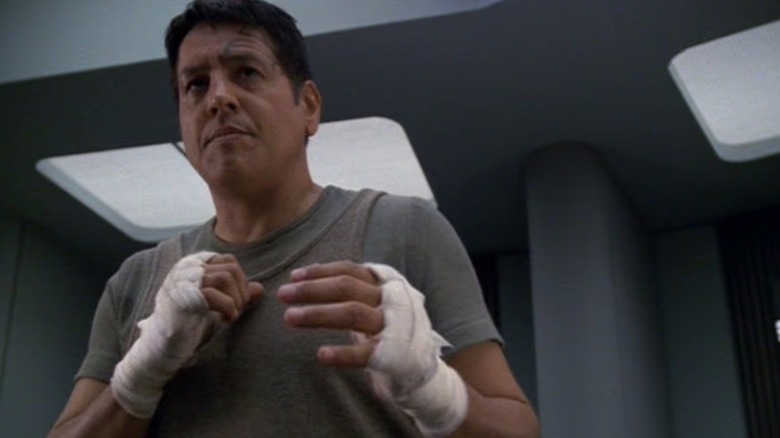
Before the series ended, "Star Trek: Voyager" had one more questionable Chakotay-centric episode up its sleeve. Season 5's "The Fight" revolves around Chakotay going on an extended vision quest after learning the ritual is his best way to communicate with aliens. This is coupled with Chakotay's growing interest in boxing on the holodeck, leading the two experiences to blur together in his mind. As Chakotay's perception of reality becomes more unstable, the Doctor identifies an inherited genetic disorder that may be the root of Chakotay's visions.
As confusing and murky as the ordeal that Chakotay endures, "The Fight" is among the show's worst episodes. Overall quality aside, the hour not only prominently features a stereotypical Native American trope of a vision quest but takes it into offensive territory. The Doctor positing that vision quests are the product of a genetic disorder somehow makes the trope's inclusion even worse. After "The Fight," Chakotay's cultural background was played more peripherally in "Voyager," which was a fortunate and overdue change.
'Into the Forest I Go' ('Discovery')
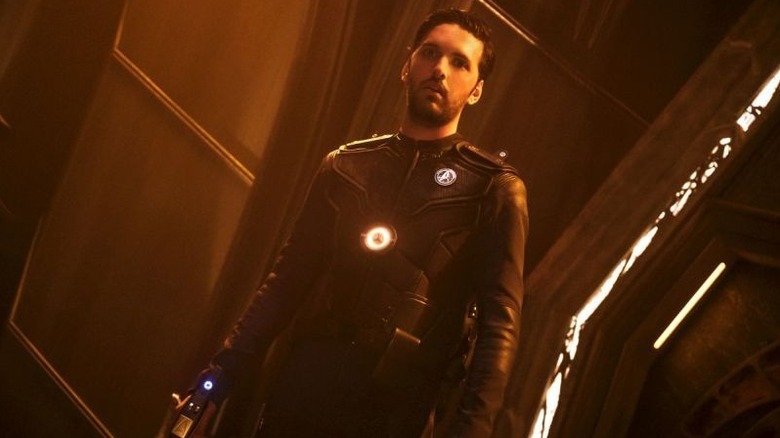
After a hiatus for more than a decade, "Star Trek" returned to television and officially entered the streaming era with 2017's "Star Trek: Discovery." Taking advantage of the additional creative freedom afforded by streaming shows compared to broadcast television, "Discovery" included more graphic violence and even the occasional swear word. However, the first season episode "Into the Forest I Go" went a step too far in pushing boundaries. In the episode, Ash Tyler (Shazad Latif) endures traumatic flashbacks of being tortured and sexually assaulted by the Klingon warrior L'Rell (Mary Chieffo) after he reunites with her.
Tyler feels like a character that "Discovery" never quite knew what to do with; he was quietly writtenout of the show after Season 2. "Into the Forest I Go" tries to provide Tyler with a painful backstory that informs his character, but it is handled clumsily and heavy-handedly. Moreover, the sexual assault aspects of Tyler's flashbacks feel forced for shock value. "Star Trek: Discovery" had a wobbly start, and episodes like "Into the Forest I Go" reveal a show struggling to find direction and tone in its early days.