

10 Best Late Night Talk Show Hosts Of All Time, Ranked
You've had a long day. You're worn out but not necessarily "tired." Or you're comfy in bed and want some light entertainment before shutting your eyes. What are you going to watch?
Enter: the late-night talk show. Built around a comedic host, topical monologue jokes, sketches, bits, interviews, and musical performances, this time-honored American TV form packages the variety show in a way that feels both familiar and intimate. While late-night faces more competition than ever — especially from Internet comedians who can riff on current events without impediment — it remains a defining part of the television landscape.
So who, among all the late-night shows, are the best hosts? We've examined the form, focusing on figures who led traditional talk shows and ruling out personalities whose programs don't feature conventional interviews (i.e., Samantha Bee, John Oliver, or Amber Ruffin). And in the fashion of David Letterman himself, we're counting down the top 10 best late-night talk show hosts of all time.
10. Jimmy Kimmel
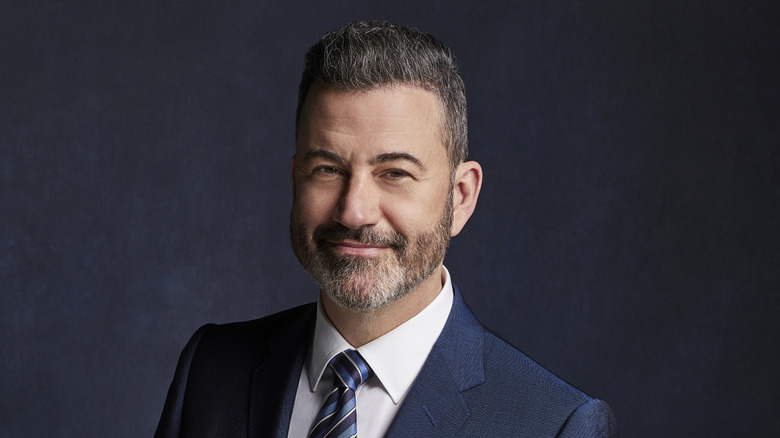
Over his 25-plus years on television, Jimmy Kimmel has undergone quite the transformation. He first broke through as co-host of "The Man Show," a crude and often problematic Comedy Central series that debuted in 1999. The show relied on broad, male-perspective humor — a far cry from the sensibility that would later define his late-night career.
In 2003, ABC tapped him to host his own network talk show, "Jimmy Kimmel Live!" Since then, we've watched him grow into a steady hand, combining the irreverence and wit of a David Letterman with the direct-address vulnerability of a Jon Stewart. His jokes are sharp, but his heart is huge — a winning combo, no matter where he started.
9. Seth Meyers
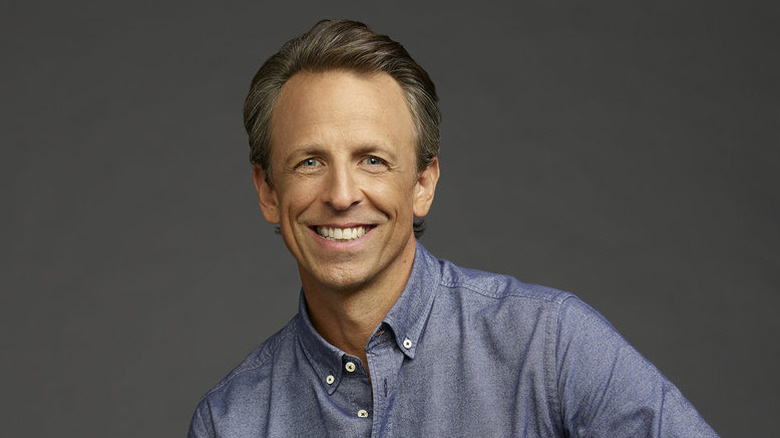
As an on-camera presence, Seth Meyers became known as a steady Weekend Update anchor on "Saturday Night Live," a show on which he also served as head writer. Viewers grew accustomed to his impeccable timing and his professional yet impish way of delivering monologue-style jokes straight to camera — as well as his ability to serve as a voice of reason, responding to the show's more bugnuts character bits with equal parts bemusement and sternness.
In 2014, all of these skills coalesced into his headlining late-night talk show, "Late Night with Seth Meyers." Meyers had big shoes to fill; the franchise was previously held by David Letterman and Conan O'Brien.
And Meyers filled those shoes by being himself. A year into his run, he began delivering the opening monologue sitting down. After returning to the studio post-pandemic, he embraced a more business-casual wardrobe and a looser rapport with his guests, as evidenced by bits like "Seth Goes Day Drinking." As a result, he's become one of late night's most dependable hosts, bringing a particular strain of comedy-nerd culture into the mainstream.
8. Craig Ferguson
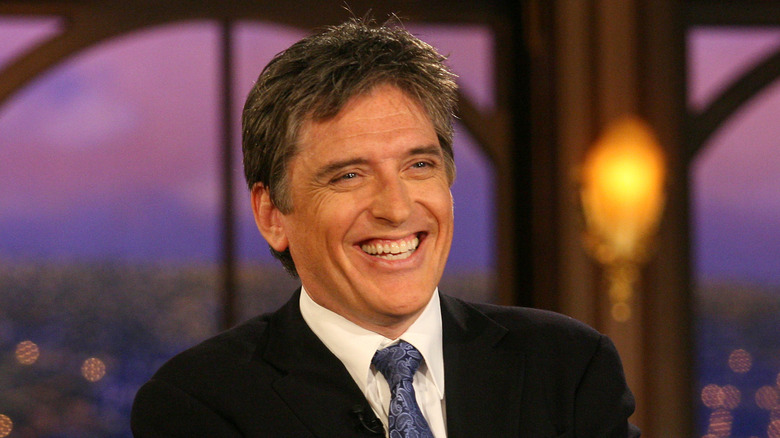
There's a lot about the late-night talk show that's formulaic, buttoned-up, slick, and "professional" (derogatory). Enter Craig Ferguson, who took over the "Late Late Show" slot originally held by Tom Snyder, then Craig Kilborn.
Ferguson, a Scottish comic best known to American audiences as a supporting player on "The Drew Carey Show," stripped the format way down. He chatted casually, relishing the opportunity to sprint into digressions and non sequiturs. His monologue was often presented in a single unbroken take, where he would walk closely to the camera and grab the lens, eradicating the border between audience and host. His interviews couldn't be bothered to promote a guest's project or follow any kind of traditional logic; instead, he leaned back and conversed wherever the muse took him. His sidekick was a robot skeleton.
All of this made for thrilling and human late-night television. Watching Ferguson felt like hanging out with Ferguson, and Ferguson built his brand as a spontaneous but smart comedy livewire, a guy who could take anything and make it interesting.
7. Stephen Colbert
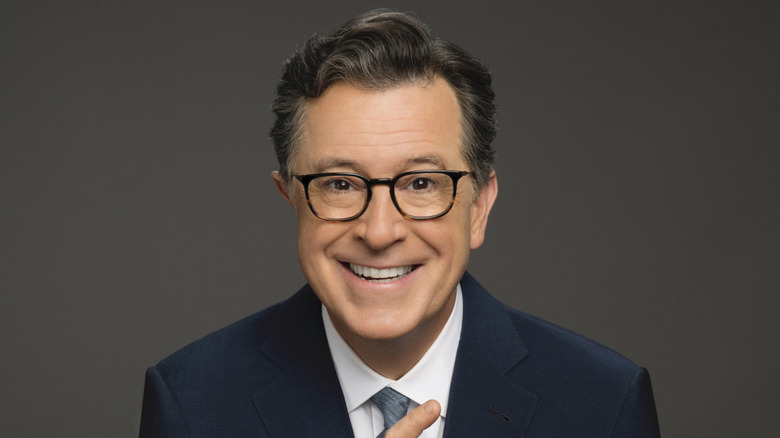
Stephen Colbert, whom audiences would have seen on Comedy Central's "Strangers With Candy" or "The Daily Show," earns a spot on this list for hosting not one but two iconic late-night talk shows: one as Stephen Colbert and one as "Stephen Colbert."
"The Colbert Report," led by a character who happened to share his name, is one of the great works of satirical comedy. Colbert plays himself as a blowhard conservative pundit, an exaggeration of the Fox News personae that flourished in the George W. Bush era. He constantly made himself the fool while insisting he was the smartest man in the room. His interviews are powerful works of comedy construction.
He then moved on to host "The Late Show," taking over Letterman's slot as himself — the real Stephen Colbert. Here, he quieted down, interviewing guests with a genuine sense of human investment and curiosity. His comedy bits still have bite, though, especially now that his real point of view can be expressed unfiltered.
He'll go down as one of the great TV hosts of all time, twice over — and CBS's decision to cancel his "Late Show" will go down as one of the network's worst.
6. Dick Cavett
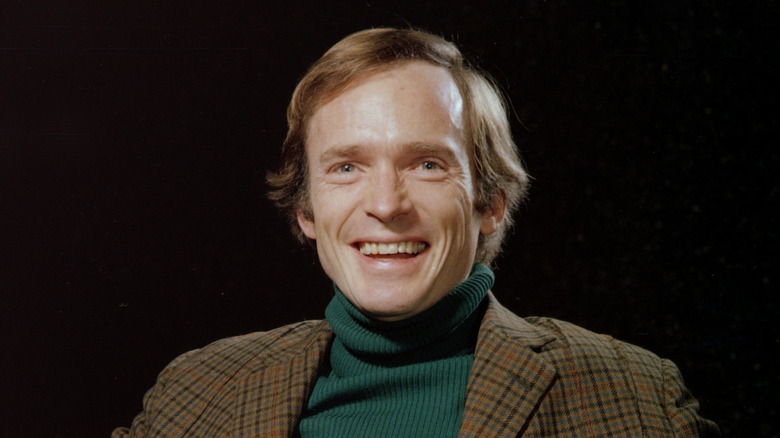
Dick Cavett is a curious figure in late-night television. Despite his experience as a stand-up comic, like many of the people on this list, his legacy isn't necessarily one that affects our conception of "comedy." Instead, Cavett's legacy might be one of "intelligence."
His "Dick Cavett Show," which aired on many networks over many years — most notably on ABC from 1969 to 1974 — featured the host sitting between notable figures of the day, moderating spirited conversation. Cavett platformed the kinds of stars we see on late-night talk shows today — actors, musicians, and the like — but he also gave a voice to figures from politics, progressive activism, and literature.
He allowed these guests to debate, sometimes about issues and sometimes about each other. "The Dick Cavett Show" aired notable explorations of still-sensitive topics like racism, and it fostered provocative arguments between figures such as authors Gore Vidal and Norman Mailer, whose on-air literary rivalry makes for compelling viewing.
Centering all of this was Cavett, a smart and well-spoken host who kept things moving and facilitated great conversations. He may have also helped influence the podcast market, now that we're thinking about it.
5. Arsenio Hall
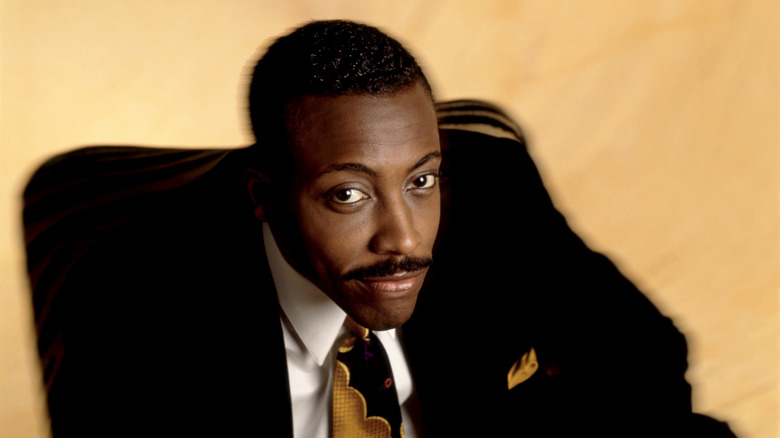
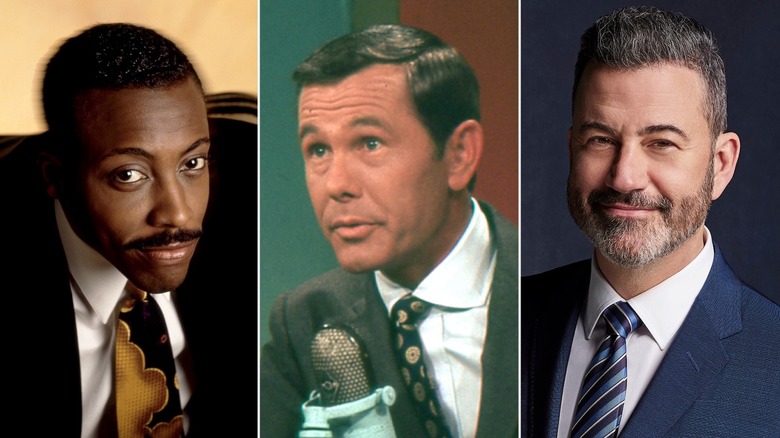
Stand-up comic and actor Arsenio Hall hosted the syndicated "Arsenio Hall Show" from 1989 to 1994, becoming the first Black man to host his own late-night talk show (he would return for a brief revival in 2013). Hall became a standout figure, and the surrounding culture rewarded him accordingly.
The biggest evidence of Hall's influence? His show was, arguably, partially responsible for the election of Bill Clinton, who was impressed by a program Hall had done addressing the post–Rodney King violence in Los Angeles. Clinton, wearing shades and one of Hall's personal ties, played the saxophone on air and connected with Hall's younger, non-white audience. "We cleaned up the youth vote, which no Democrat had done in a generation," said Clinton aide Paul Begala, "and Arsenio was crucial to that."
Hall cultivated a vibe that can only be described as "cool." His set felt like a hip downtown club, his band played jams you wanted to dance to, and his guest list was eclectic — and even downright strange at times (Hall once interviewed Jason Voorhees, the masked killer at the center of the "Friday the 13th" franchise).
Through it all, Hall facilitated as an effortless ringmaster. When he sat with his guests, he leaned forward, eyes wide with concentration, always asking interesting and engaging questions. And when he spoke to his audience, he did so with a warm smile, inviting us all into his urbane playground.
4. Jon Stewart
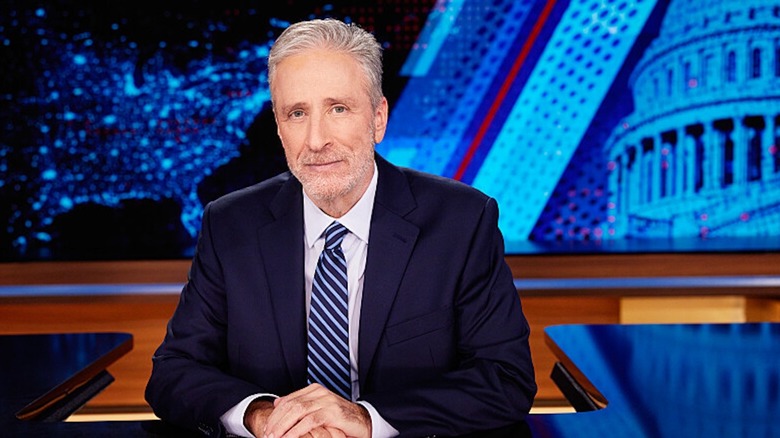
"The Daily Show" changed American culture and politics forever, and Jon Stewart stands at the center of that shift.
Stewart began hosting the Comedy Central show in 1999, taking over from Craig Kilborn. His first tenure, which ran through 2015 (until his 2024 return), shifted the show away from the superficialities of pop culture and into the meat of genuine political and news media issues.
All of this coincided with America's descent into the George W. Bush and post-9/11 era, making Stewart, to many like-minded viewers, a calming presence in an ever-stormy climate. He remained interested in making "comedy" — when he surprised himself and laughed spontaneously, you felt genuine warmth and puckishness — but he was also interested in making "points," a strategy that has influenced so many who followed.
For enlightening its audience, and for treating the most powerful people with atypical directness and irreverence, Stewart is undeniably one of the most important TV hosts of the modern era, whether in late night or otherwise.
3. Conan O'Brien
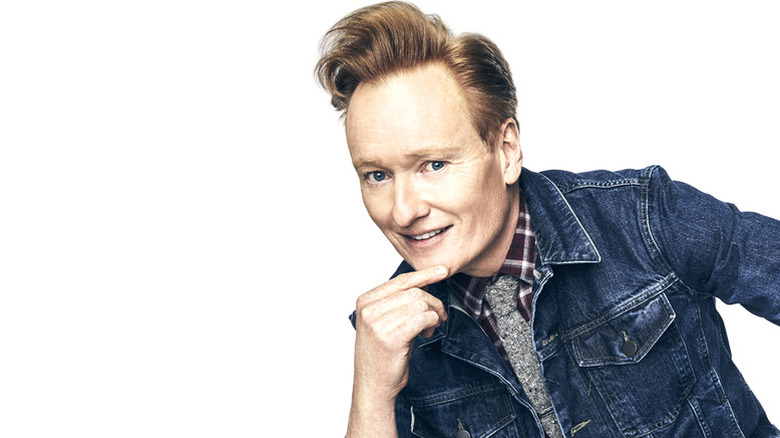
To quote a documentary made about the man, Conan O'Brien can't stop.
After stints writing on "The Simpsons" and "Saturday Night Live," O'Brien was pegged by his former "SNL" boss Lorne Michaels as Letterman's successor on "Late Night." By all accounts, his first seasons were rough, as his inexperience showed.
Thank God they let him keep going. Because O'Brien turned "Late Night" into an influential powerhouse of alt-comedy talent, taking the Letterman baton and running it into sillier corridors. And while O'Brien's self-aware voice-of-reason work often resulted in mocking a bit's own lack of quality, his interview skills were tempered by empathy and whimsy — a genuine desire to connect unpredictably with the person in front of him.
O'Brien then got the "Tonight Show" gig, then famously walked away after NBC wanted to push it to a later time slot and give the 11:35 perch back to Jay Leno, before hosting "Conan" on TBS for a decade. Now, he hosts a travel show on HBO Max and a successful podcast where he enjoys longer conversations with guests. Throughout it all, O'Brien has become something like a comedy folk hero — a high-octane generator of humor no matter what's in front of him.
2. David Letterman
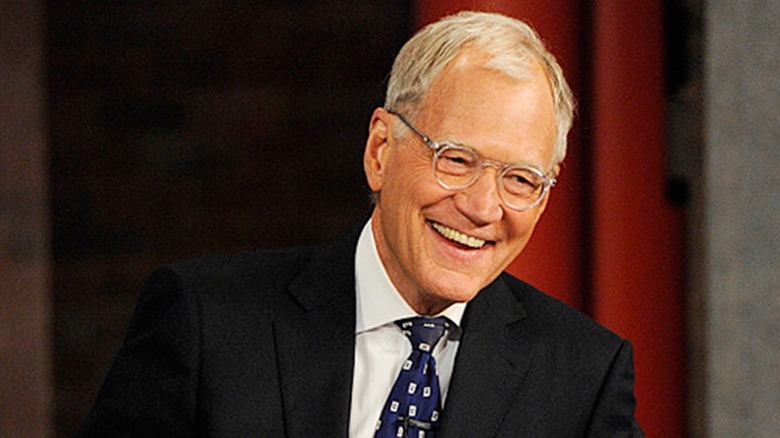
The originator of the NBC "Late Night" brand, David Letterman was the counterbalance to Johnny Carson and his flagship "Tonight Show."
Carson was smooth, accessible, and old-fashioned. Letterman, however, was sharp, acerbic, and interested in pushing the boundaries of television entertainment. His bits were prone to flights of surreal fancy, to messing with people on the street, and to deliciously crafted absurd one-liners (and that's before we mention the eternal Top Ten list). Through it all, Letterman presented a straight-laced face with a prankster's heart, resulting in a style that read "cool" even in the most familiar moments of late-night TV.
When Letterman didn't get the vaunted "Tonight Show" slot, he jumped ship to CBS and hosted "The Late Show," barely softening any edges for the earlier time slot. He stayed strange and postmodern, even turning up some of the bristliness with certain bits and interview guests. As a result, Letterman's long tenure on late-night TV influenced just about every modern comedian and talk show host you know and love — especially Kimmel, who called Letterman his "boyhood idol" when he returned to TV after the Charlie Kirk debacle.
1. Johnny Carson
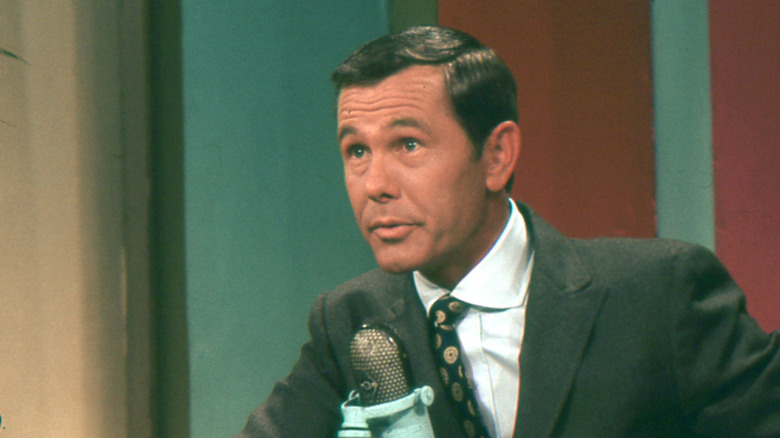
Here we have the gold standard of late-night talk show hosts: Johnny Carson, who hosted NBC's "Tonight Show" from 1962 to 1992.
There were previous hosts of "The Tonight Show," TV pioneers who made their mark on the burgeoning late-night talk show form. These include Steve Allen, quick-witted and spirited; Ernie Kovacs, experimental and bold; and Jack Paar, intelligent and stubborn.
But Carson took these varying paths and made them all point in the same direction, turning "The Tonight Show" into an influential juggernaut of entertainment, writing the playbook nearly every other host on this list still follows — and looking smooth as silk doing it.
Carson had a soft, buttery voice. He had a warm smile that turned into a wry grin when he delivered a particularly quick quip. He played the fool in sketches, even as he stayed cool. He invited his interview guests into a comfortable pool of conversation before disarming them with a well-timed ad lib.
In other words, Johnny Carson is late-night television, a host who defined every movement in the medium thereafter.