

10 Most Annoying Breaking Bad Characters, Ranked
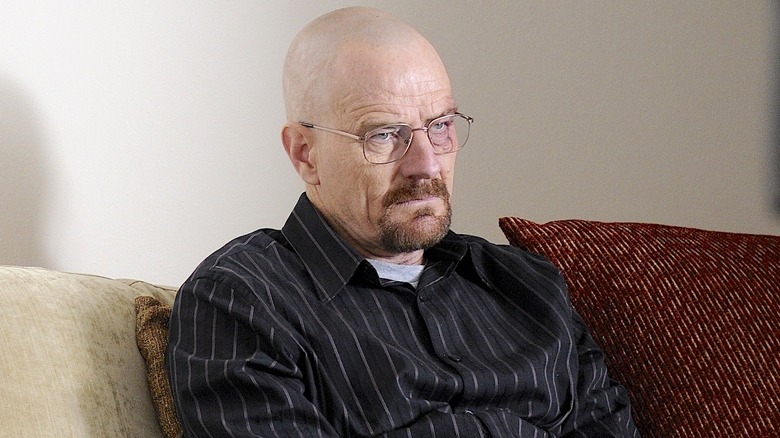
Nearly two decades have passed since the world was introduced to "Breaking Bad," the darkly comic tale of Walter White's (Bryan Cranston) transformation from docile family man to cold-blooded drug lord. Often praised as one of television's all-time greats, Vince Gilligan's masterful series earned countless accolades, spawned the equally brilliant prequel "Better Call Saul," and inspired a thrilling Netflix epilogue, "El Camino."
"Breaking Bad" is packed with unforgettable characters, powerhouse performances, and science (b***h!), and is about as close to perfect as television gets, right down to its jaw-dropping conclusion. That said, we'd be remiss not to acknowledge a few, shall we say, less-than-endearing elements. Specifically, certain characters who became increasingly grating as the show went on.
Of course, part of the genius of "Breaking Bad" lies in watching its flawed cast of characters make terrible decisions that spiral into chaos. So we use the term "annoying" loosely — many of these traits are intentional, meant to provoke frustration or discomfort. Still, some characters test our patience more than others.
With that in mind, let's take a closer look at the 10 most annoying characters on "Breaking Bad."
10. Walter White
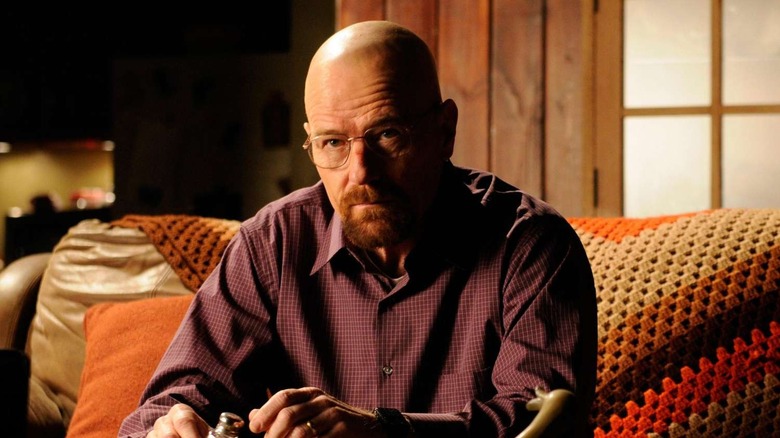
It may seem strange to call the main character of a beloved TV series annoying. Yet Walter White, while brilliant and fascinating, can also be infuriating with his constant flip-flopping. Seasons 2 and 3, in particular, show him stepping away from the drug business for long stretches, hoping to cast aside his criminality and return to family life. Attempting to lure him back, notorious drug lord Gus Fring (Giancarlo Esposito) offers multiple million-dollar deals, all of which our main man turns down again... and again... and again.
Jesse Pinkman (Aaron Paul) eventually tries to restart their operation on his own, successfully producing his own crystal-blue meth. Rather than praise his former student for showing initiative or try to guide him in a better direction, Walt flies into a jealous rage, accusing Jesse of stealing his product and creating a rift between them that never fully heals.
Walt's hubris continually overrides his reason, a fatal flaw that ultimately destroys his empire. Instead of enjoying his rise to power, we spend five agonizing seasons watching him sabotage everything he works so hard to build. He makes reckless decisions, alienates allies, and treats anyone beneath him as expendable. Granted, "Breaking Bad" doesn't work without Walt's erratic behavior, but the way he methodically decimates his own world remains incredibly hard to watch.
9. Walter Jr.
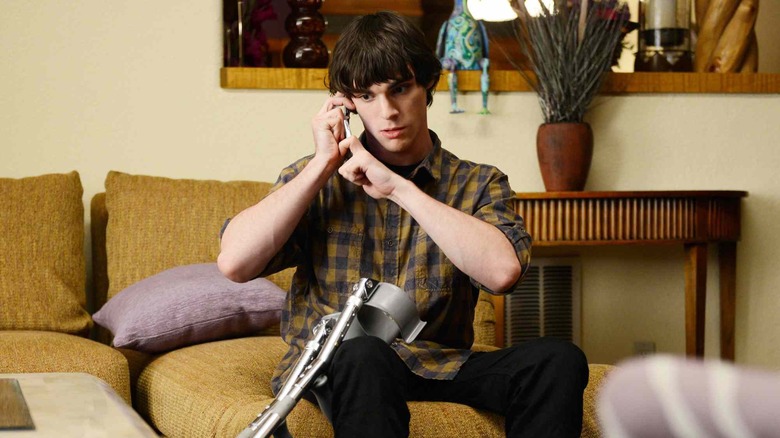
Everyone loves Walt Jr. (RJ Mitte). As Walt's disabled and mostly harmless son, the poor kid sits squarely in the line of fire without ever realizing the precariousness of his situation. Like any trusting son, he believes his parents' lies and assumes the cause of his family's turmoil boils down to bad communication. He never questions his dad's newfound persona or wonders why he's suddenly treated so coldly.
Walt is more concerned with Jesse and his growing business than with his relationship with his son, which makes it all the more annoying when Walt Jr. sides with him on practically every issue. During Walt and Skyler's (Anna Gunn) tense separation in Seasons 2 and 3, Walt Jr. repeatedly berates his mother and begs her to give Walt another chance. At one point, he even calls her a "b***h" in front of Hank (Dean Norris) and Marie (Betsy Brandt). Then when he learns the truth about Walt in the final season of "Breaking Bad," his loyalty swings the other way with equal intensity — there's little in the way of nuance.
Walt Jr. isn't a bad person — far from it — but from a viewer's standpoint, he often serves more as a narrative prop than a fully realized character. The show never gives him much to do, and he's rarely entangled in the central plot. Clearly, he's meant to embody innocence, family, and the life Walt is destroying, but his appearances too often slow the show's momentum.
8. Jane Margolis
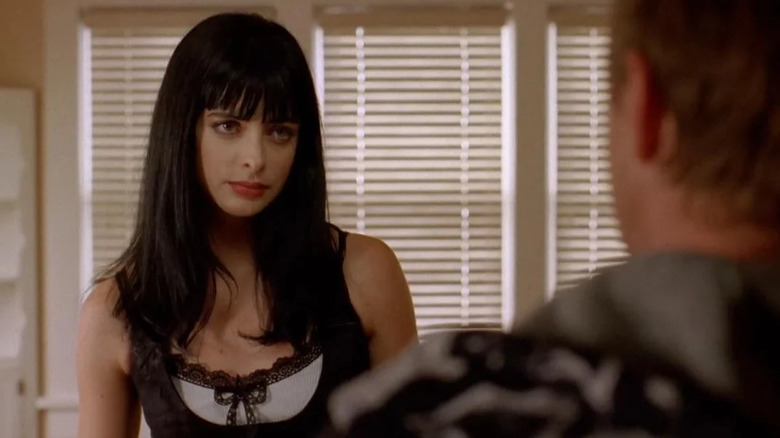
Jane Margolis (Krysten Ritter) isn't annoying in a cartoonish way. In fact, she stands as one of the most complex and tragic figures on "Breaking Bad." Unfortunately, many of her actions come across as frustrating and, at times, downright irritating. When we first meet her, Jane appears grounded and put-together. She sketches, admires Georgia O'Keeffe, and is months into recovery from drug addiction. She quickly sparks a relationship with Jesse and, at first, has a positive influence on him.
Everything changes when Combo (Christian Ortega), one of Jesse's friends, is executed by a young boy after wandering into rival territory. The murder leaves Jesse shattered, and before long, he's using again. Jane, for her part, tries to pull away but eventually succumbs to temptation, relapsing and trading sobriety for a haze of heroin and self-destruction.
Long story short: When Jesse demands his share of profits from Walt and is refused, Jane steps in with some hardcore blackmail. Sure, Jesse's addiction explains much of her erratic behavior, but she still undermines her own ideals — demanding honesty from Jesse while lying to and manipulating her father. Rather than steer Jesse toward stability, she drags him further into the muck. Their drug-fueled spiral temporarily stalls the show's momentum, and it's only after Jane's death that "Breaking Bad" regains its sense of urgency.
7. Lydia Rodarte-Quayle
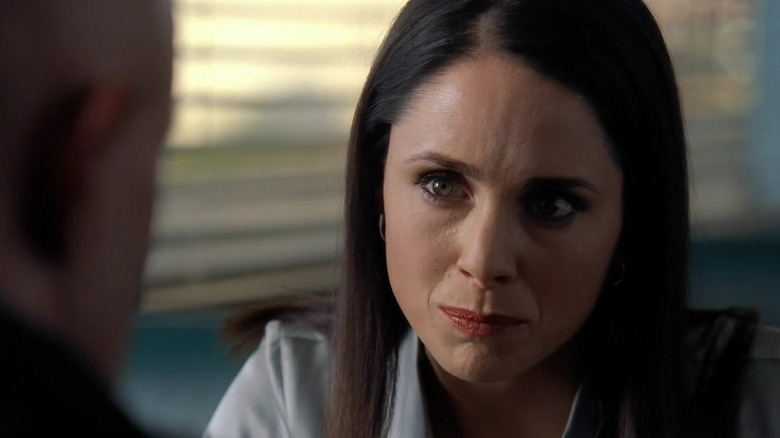
After dispatching Gus, Walt steps onto the larger stage of drug dealing and consequently runs into one of the series' most annoying individuals, Lydia Rodarte-Quayle (Laura Fraser). From the moment she appears, this duplicitous executive at Madrigal Electromotive GmbH is a bundle of nerves, constantly whispering, fidgeting, and assuming the entire world is out to get her. The more we learn about her, the less empathy we feel for her plight and for her daughter.
Lydia may appear fragile, but she's actually a master manipulator who plays both sides, aligning herself with whoever holds the most power at any given moment. She makes calculated decisions that get others killed without ever getting her hands dirty, and then justifies her actions as "necessary for business." Her go-to move is to "just kill everyone who knows anything," a tactic that, ironically, proves disastrous for business.
Her paranoid demeanor grows increasingly infuriating because she hides behind a mask of wide-eyed innocence while orchestrating some of the show's biggest crimes behind the scenes. In the end, Lydia experiences no growth, no reckoning, and no redemption. She remains the same trembling blend of fear and control right up to the bitter end, when Walt finally outsmarts her once and for all.
6. Ted Beneke

In terms of weaselly characters, you need not look much further than Ted Beneke (Christopher Cousins). Introduced in Season 2, the owner and president of Beneke Fabricators initially comes across as a kindhearted — if somewhat desperate — man. He clearly loves Skyler and welcomes her back to his company with open arms when she returns looking for work to help pay for Walt's medical bills.
And honestly, we're not too torn up about his affair with Skyler, either.
Where Ted loses our empathy is in Season 4, when he completely takes advantage of Skyler's generosity. After discovering his company's tax fraud, Skyler tries to help by giving him some of Walt's drug money. Ted, in a jaw-dropping moment of stupidity, instead buys a Mercedes and tries to restart his failing business. When she calls him out on his boneheaded decision and tells him to pay the IRS, he scoffs, claiming he wants to "do the right thing." Skyler, seeing through his phony sincerity, realizes he just wants more money and that if she doesn't pay up, the IRS will likely come after her and Walt too.
Ugh.
Ted is the human embodiment of stupidity. He's not evil, just delusional, a man so hopelessly inept he literally trips over a rug and breaks his neck trying to escape Saul Goodman's (Bob Odenkirk) goons. By his final few episodes, we began cringing every time he popped up on screen.
5. Todd Alquist
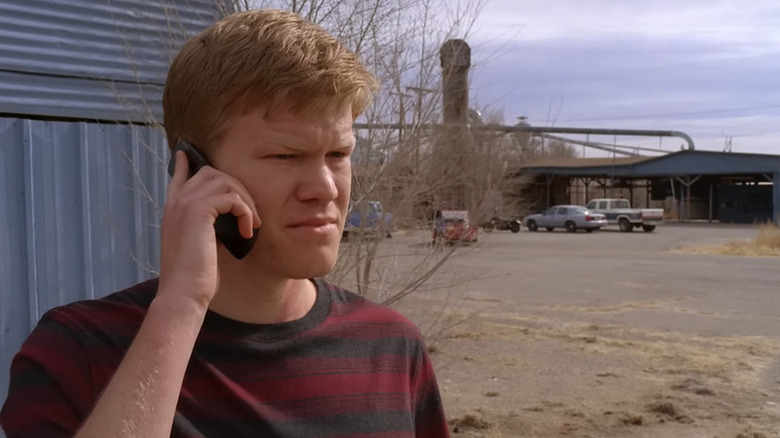
Sometimes, a character is annoying because they're too good at what they do. Todd Alquist (Jesse Plemons) is an astonishingly evil individual, seemingly desensitized to the violence he and his fellow neo-Nazis commit. He kills and tortures without hesitation, yet follows every act of brutality with a chilling politeness. He smiles, says "Yes, sir," and dutifully helps with chores right before turning around and stabbing someone in the back.
Make no mistake, Plemons is fantastic in the role, but there's simply too much of him. By the time we reach the movie spinoff "El Camino: A Breaking Bad Movie," Todd feels less like a terrifying villain and more like an annoying pest who just won't go away.
One of the main issues is his lack of complexity. This works when he's a background player, but once he steps into the role of main antagonist in the final season, his one-note sociopathy starts to wear thin. Had we learned more about his past or seen flashes of moral ambiguity beneath that polite exterior, Todd might have evolved into a truly unforgettable character. As it stands, he's almost too evil for his own good — a flat, smiling monster who never quite fits within Vince Gilligan's intricate world of flawed heroes and nuanced villains.
4. Marie Schrader
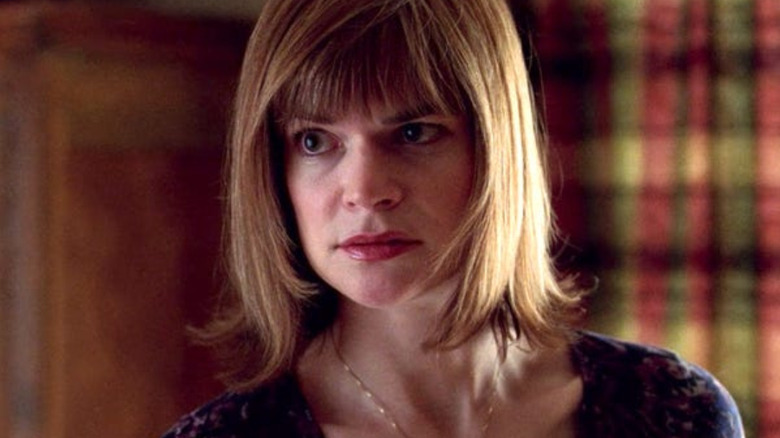
Marie Schrader is a mostly harmless supporting player best known for her bizarre fixation with purple. She certainly has her moments — dutifully supporting Hank after his near-assassination — but otherwise lingers in the background, never directly affecting the plot.
Unfortunately, when she does appear, Marie reveals a set of irritating traits that overshadow her likable ones. She's far too self-absorbed, hypocritical, and emotionally erratic. And while she often means well, her lack of self-awareness is undeniably grating.
Fittingly, Marie's most memorable moment comes in Season 5, when a distraught Skyler finally grows tired of her endless meddling and yells, "Shut up! Shut up! Shut up! Shut up! Shut up!" Skyler's emotional outburst perfectly mirrors audience sentiment. For all her gusto and kindheartedness, Marie would do well to simply listen once in a while — or, at the very least, read the room before launching into another moralizing rant.
Marie's insistence on having an opinion about everything makes her annoying. She never takes a hint and somehow turns every topic — big or small — into something about herself. Ironically, she's also one of the few characters who makes it through the show with her conscience intact... so maybe being a self-absorbed chatterbox isn't the worst strategy after all.
3. Jack Welker
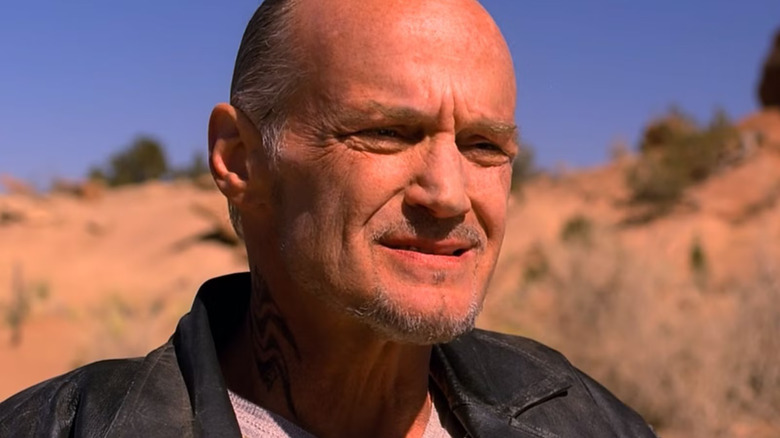
Like Todd, Jack Welker's one-note villainy quickly grows wearisome. Coming off the heels of complex baddies like Gustavo Fring, Mike Ehrmantraut (Jonathan Banks), and Hector Salamanca (Mark Margolis), the inclusion of cartoonish neo-Nazis feels more ridiculous than inspired. They resemble villains from an "Indiana Jones" movie more than "Breaking Bad" and lack any distinctive trait that makes them memorable.
Of course, Vince Gilligan likely introduced them to give audiences someone worse than Walter White to root against during his final hurrah. By this point, our suburban-dad-turned-criminal-overlord had plunged fully into the moral abyss. He murdered Mike, indirectly caused Hank's death, practically disowned Jesse, ordered the execution of 10 men, and drove Skyler to the brink of insanity.
At this stage, there was no reason left to root for him.
Enter Jack Welker (Michael Bowen) and his neo-Nazi clan. They kill without mercy, torture Jesse, and exhibit zero redeeming qualities. Hell, even Tuco Salamanca (Raymond Cruz) had more gravitas. Jack's calm, methodical cruelty makes him more irritating than terrifying, a plot device designed to make Walt seem appealing again. His death, while deserved, doesn't carry the same weight or satisfaction as Gus' or Mike's, simply because it feels obligatory.
Imagine if the show had swapped Jack's gang of neo-Nazis for something more grounded — say, a group of corrupt cops manipulated by Walt. The result could've added layers of complexity and emotion to the final showdown, giving the story's end the nuance it deserved.
2. Jesse Pinkman

Yes, Jesse Pinkman — likely the most memorable element of "Breaking Bad." His struggle with addiction and empathy for children make him a relatable anti-hero, and, yes, we cried alongside him after Jane's shocking death. We also applaud his evolution from a selfish, reckless slacker into the show's moral center.
So why is he so high on this list? Well, because for all his positive accomplishments, Jesse's immaturity, emotional volatility, and tendency to self-sabotage too often derail or hinder Walt's journey. He makes careless decisions, fails to learn from his mistakes, and carries an aura of self-righteousness that suggests he's somehow better than the other drug dealers on the show.
Does this kid know he sells meth?
Moreover, Jesse's naïveté allows him to be manipulated to an uncomfortable degree. By the time he's conned for the fifth time, you just want to slap him.
His actions often generate chaos and hurt those around him, including Jane and Andrea Cantillo (Emily Rios). By the final season, his erratic behavior leads to more death and accomplishes nothing. Yes, Walt is mostly to blame for the chaos that follows, but if Jesse had just left well enough alone, there's a good chance more of our characters could've lived to enjoy a happily ever after.
1. Skyler White
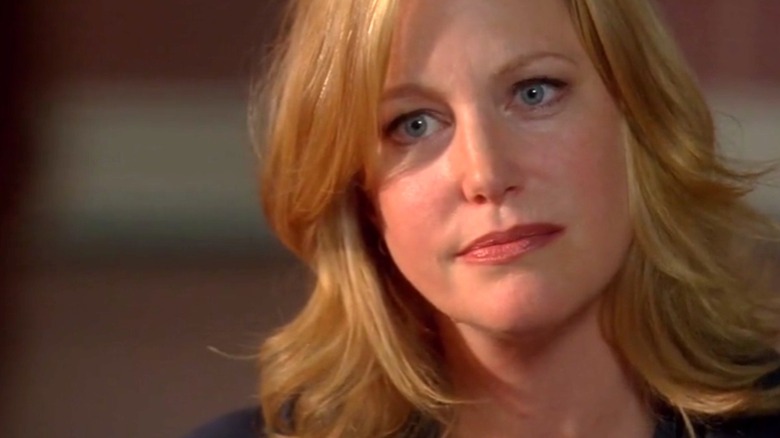
The funniest thing about this list is that many of the characters featured are annoying because they stand in Walt's way. Such is the case with Skyler White, Walt's put-upon wife, who behaves exactly as one might expect someone in her situation to behave. And yet, within the context of the show, her actions often prevent Walt from achieving his true potential... er... as a drug lord.
Skyler's questionable ethics make her appear hypocritical. She condemns Walt's lying and law-breaking while engaging in an affair with Ted Beneke and covering up his tax fraud. Later, when she reluctantly sides with Walt, she launders his money and manages his operation — so long as she's the one in control. She's logical, responsible, and often right, but she also doesn't do much to stop Walt from continuing his criminal pursuits. Even when she knows the truth, she uses her knowledge as leverage to control him, preventing him from seeing his kids or entering the house.
In fact, one could argue that Skyler indirectly contributes to Walt's downward spiral. In Season 1, she constantly hovers over him, chastises him for using the wrong bank account, and gives him little room to breathe. Their marriage was already strained, but she refuses to recognize her husband's deep unhappiness. Again, Walt deserves the bulk of the blame, but like a bad angel perched on his shoulder, Skyler's behavior often seems to make things worse rather than better.