

5 Essential The Sopranos Episodes That Everyone Should Watch At Least Once
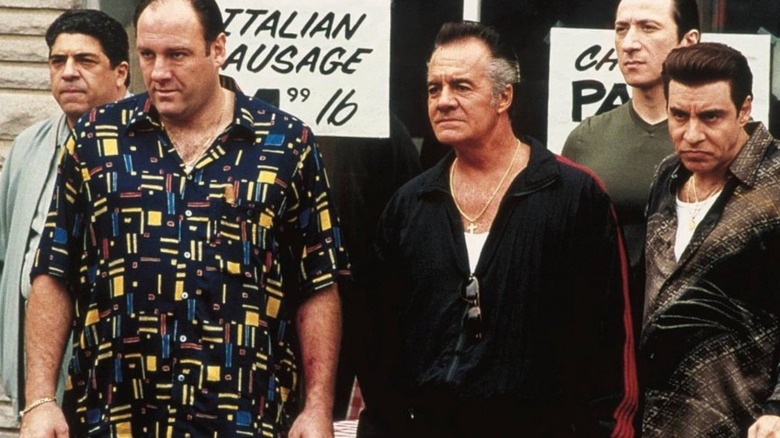
Trying to identify the best episodes from "The Sopranos" is like trying to pick the best cured meat at one of their family dinners. There's simply too much to choose from in David Chase's groundbreaking crime drama about Tony Soprano (James Gandolfini), the mob boss who suffers from debilitating, inexplicable panic attacks. Worry not, though. We've managed to find five essential episodes in one of the best TV shows of all time that (for the most part) even viewers who are brand new to the series can enjoy.
Nearly two decades after the divisive and heavily discussed finale, "The Sopranos" remains a fixture of American popular culture. In fact, Tony's now-grown kids Meadow and A.J. (Jamie-Lynn Sigler and Robert Iler) appeared in a Super Bowl commercial as recently as 2022. If we're still obsessing about this show in 2025, we'll probably still be talking about it in 2050; so, if you've felt left out of "The Sopranos" conversation up until now, it's definitely not too late to join in.
Pine Barrens
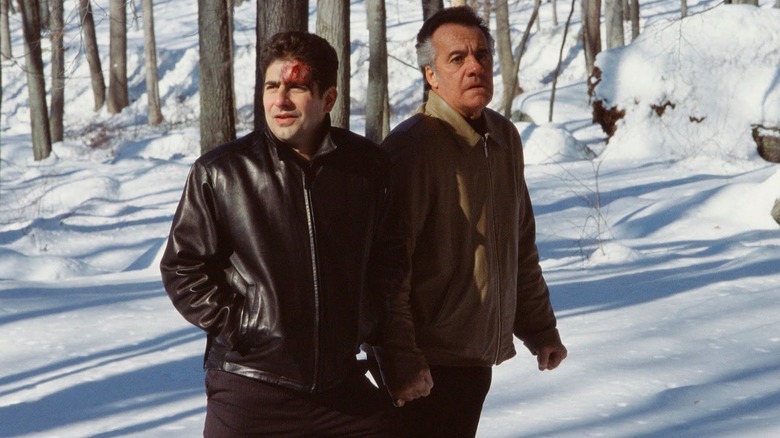
Let's get the obvious one out of the way first, shall we? Ask any upstanding fan of "The Sopranos" which is the best episode in the series, and the chances that they'll mention "Pine Barrens" are stupendously high. The masterfully sharp and hilarious 11th episode of the third season saw Tony on his last nerve after two of his best guys — Paulie "Walnuts" Gualtieri (Tony Sirico) and Christopher Moltisanti (Michael Imperioli) — bungled a simple assignment and continued to downward spiral into a humiliating misadventure in the freezing outdoors.
As bonkers as things got, the Steve Buscemi-directed instalment was incredibly balanced. Perhaps the closest thing to a bottle episode that the show ever had, "Pine Barrens" shined a spotlight on the growing friction between Paulie and Christopher as it approached its limit. More importantly, it showed us that when circumstances are at their worst, the so-called honor between made men can get lost in the snow.
Whitecaps
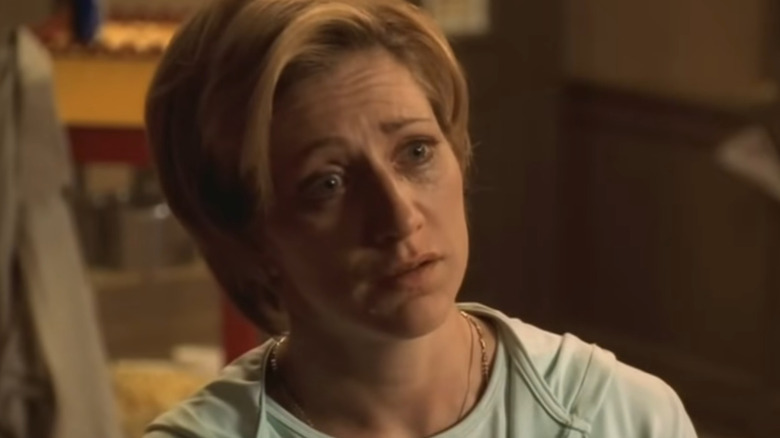
Though audiences found him charismatic and occasionally relatable, Tony Soprano was not a good man. His misdeeds ensured that he was never owed happiness, and in the Season 4 finale, "Whitecaps," one of Tony's crimes against his wife Carmela (Edie Falco) found its way home.
While the episode started with a joyous family trip to a recently purchased beach house, Tony's world quickly turned to rubble with one phone call. His former mistress Irina Peltsin (Oksana Lada) called Carmela out of the blue and out of spite to inform her of her husband's adulterous acts. What followed was one of the most raw, realistic, and emotionally charged couple's arguments ever shown on television. Secrets got revealed, walls got punched, and Tony finally found himself at a well-deserved low point.
Gandolfini delivered as expected, but the real highlight was Falco. Through rage, tears, and occasional terror, she reminded us that while Tony had his issues, as a woman married to the mob, Carmela was just as troubled.
College

While driving Meadow around Maine to tour prospective college campuses, Tony spotted a former associate who tattled to the FBI and vanished into the Witness Protection Program. Throughout Episode 5 of Season 1, between sessions of quality bonding time with his university-bound daughter, Tony stalked the turncoat until the time arrived for an unsettling, yet poignant, strangulation scene.
For the fledgling premium cable series, "College" established the dissonance between its protagonist's two lives: that of an upper-middle class suburban dad, and that of a homicidal gangster. In today's post-"Sopranos," post-"Breaking Bad," post-"Game of Thrones" world, a TV main character doing a murder is no big deal, but it was practically unheard of in 1999.
"When [HBO executives] read the script, they were afraid that the fans would turn on Tony," recalled Michael Imperioli on the "Talking Sopranos" podcast. "The first few episodes are about getting into him and liking him a lot, and then HBO was afraid that fans would turn. And David Chase actually said, 'No, the fans are going to turn if he doesn't kill this guy, because it's going to make him look weak; it's going to make him look like he's not an honorable mob guy. ... This guy turned on the family, y'know, and to live by that code, [Tony's] got to do this."
Funhouse
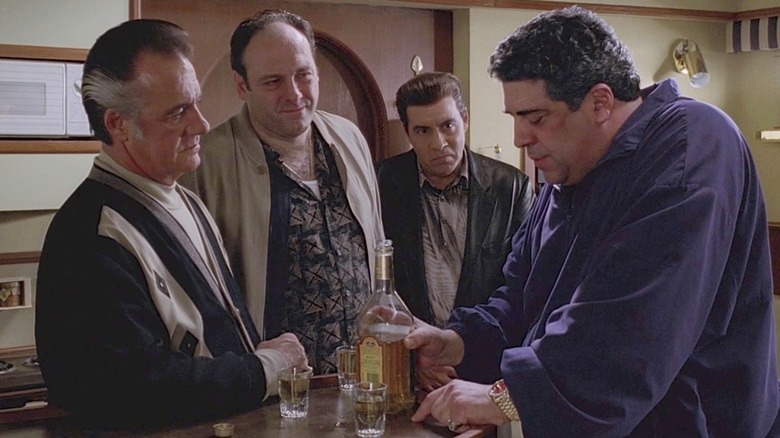
There are numerous characters who don't make it out of David Chase's masterpiece alive, but "Funhouse" let the audience know that main cast members are just about as likely to get clipped as anybody. Throughout the second season, Tony was on high alert over the possibility that a rat may be among the ranks of the family. It took a severe case of food poisoning and a dream trip to Asbury Park to convince him of the truth the audience knew for some time: Salvatore "Big P****" Bonpensiero (Vincent Pastore) — one of Tony's oldest friends — was working with the FBI.
In "Funhouse," Tony made the toughest call he had to make up to this point — and it defined his character going forward. (Without giving too much away, let's just say it's not the last time he whacked someone close to him.) The episode also included one of Tony's more memorable dream sequences, which also happened to feature the most significant talking fish in the history of prestige TV thus far.
Made In America
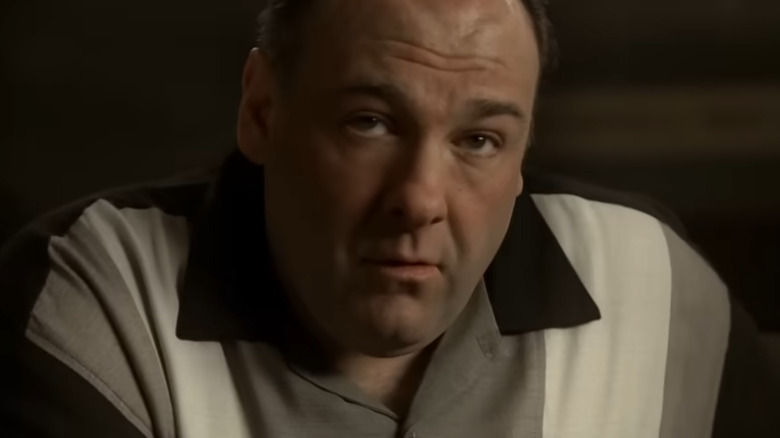
Obviously, wait until you're caught up to watch the series finale — though, given its place in pop culture history, it's likely you're already aware that "The Sopranos" ended with an abrupt cut to black as Tony, Carm, and A.J. sat in a diner booth and munched on a basket of onion rings.
Understandably, many fans who spent eight years obsessing over the nefarious exploits of Tony and his two families went apoplectic when "Made in America" aired June 10th, 2007. However, because the volcanic backlash got so much attention in the press, the finale became the most infamous episode of the show (and considering the violence in some of the other installments, that's saying something). As time went on, multiple generations of new viewers approached "The Sopranos" fully expecting the non-resolution of "Made in America."
So, if the non-ending has become too familiar to make us angry, can we discuss what it means with some objectivity? Did the Man in the Members Only Jacket burst out of the men's room and fill Tony full of bullets? Or did Tony enjoy a casual evening meal and go home unscathed?
Maybe it doesn't matter.
If it wasn't the Members Only guy, sooner or later, it would be someone else. Tony can listen to cornball classic rock anthems and stuff his face with greasy deep-fried appetizers and look just like an average nobody, but don't let that fool you — he'll always be looking over his shoulder.