

15 TV Shows Like The X-Files

Like the truth, lots of engaging, quirky, mythology-heavy sci-fi series are out there.
If you were any kind of hip TV watcher in the '1990s, you were tuning into Fox's "The X-Files." Marginalized FBI Agent Fox "Spooky" Mulder (David Duchovny), who'd been obsessed with aliens ever since he believed his sister was abducted, took on the bureau's most unusual — and often unexplainable by conventional means — cases. Teamed up with the more pragmatic, skeptical Dana Scully (Gillian Anderson), the two investigated "monster of the week" cases involving cryptids and unusual beings, while occasionally finding themselves caught up in a much larger, labyrinthine conspiracy about the U.S. government's attempts to cover up its dealings with extraterrestrials. Those episodes became known as mythology episodes.
But if you've read this far, there's a good chance you knew all that already. Let's say you've watched every episode and the two theatrical movies already, multiple times. What else is "out there" for you? Here are 15 solid shows that remind us of "The X-Files," in one way or another.
Millennium
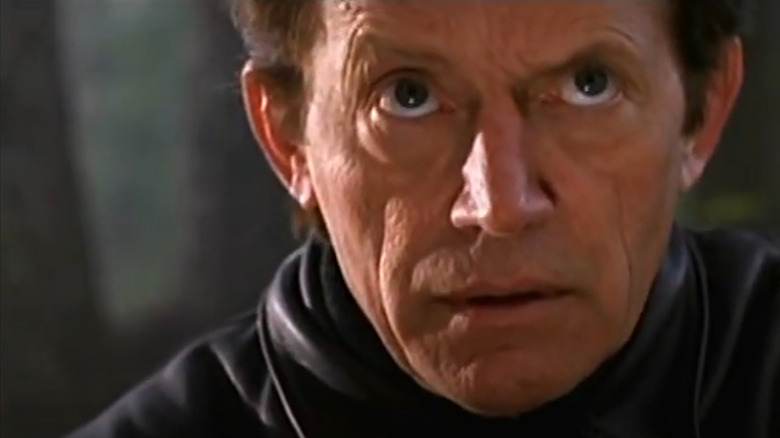
Though it has a slightly different premise, "Millennium" is the show most like "The X-Files" simply because it has the same creative team and exists in the same universe. Rather than aliens, the primary target of ex-FBI agent Frank Black (Lance Henriksen) is serial killers. In a mild rip-off of Thomas Harris' "Red Dragon," Black possesses the unique ability to see the world through the killer's eyes. His employers, the secretive Millennium Group, are a private organization with a long history and questionable goals that only get more questionable as the show goes on.
As Frank's superior in the group, a post-"Stepfather," pre-"Lost" Terry O'Quinn exudes both friendly charisma and menace, depending on the situation. The show was canceled after three seasons, before the turn of the actual millennium, but thanks to the shared universe, Frank Black finally got closure on an episode of "The X-Files." Meanwhile, "Millennium" remains an underrated show that deserves your attention.
Kolchak: The Night Stalker

It only lasted for two TV movies and a single season of TV in its initial run, but "Kolchak: the Night Stalker," a monster-of-the-week ABC series based on a novel by Jeff Rice, made enough of an impression on a younger Chris Carter that it inspired him to create "The X-Files." Like Fox Mulder, Carl Kolchak (Darren McGavin) is a bit of a weirdo and outcast, and he's the only one who believes there are bizarre, supernatural creatures walking the streets of Chicago. In his role as a reporter, he typically gains the access to defeat whatever new evil emerges in a given episode, only to be disbelieved by all his colleagues, unable to definitively prove he's right. (Fun fact: McGavin would go on to become one of America's favorite fictional dads as The Old Man in "A Christmas Story.")
Dark Skies
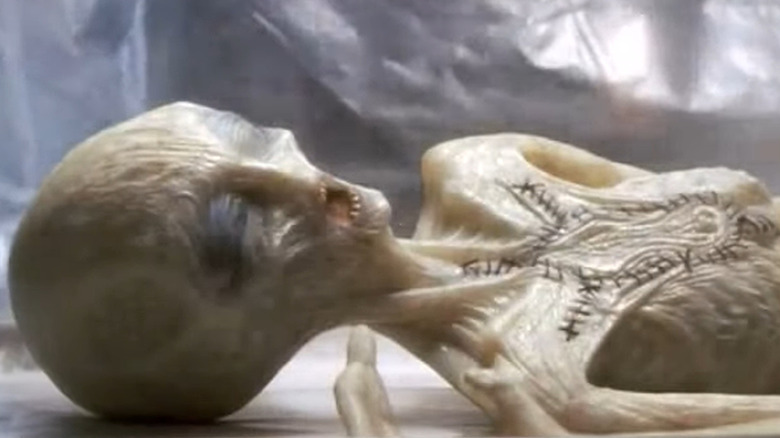
Not to be confused with the 2013 Blumhouse movie of the same name, "Dark Skies" was NBC's attempt to do its own version of "The X-Files." In a pilot helmed by "The Texas Chainsaw Massacre" director Tobe Hooper, congressional aide John Loengard (Eric Close) starts to learn that history as we know it is a lie. Together with his girlfriend Kim (Megan Ward), he begins to uncover the truth about a race of parasitic aliens called the Hive, who have manipulated world events since the 1940s in preparation for a full-on invasion. Along the way, many historical figures play significant roles, from Carl Sagan to the Beatles. The series is set in the 1960s and lasted one season; had it continued, each season would have advanced to a new decade.
Twin Peaks
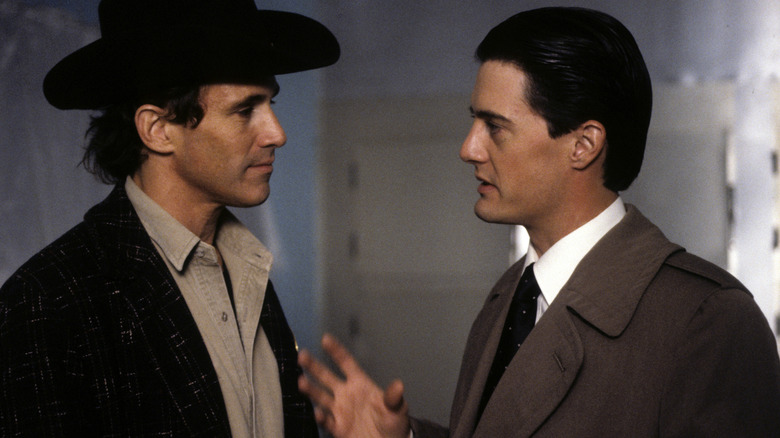
Mulder and Scully had many cases that were, like the truth, pretty "out there." Yet no FBI cases were ever as out there as the murder of Laura Palmer in the small town of Twin Peaks. Nor has any TV FBI Agent, even Mulder, been quite as endearingly weird as Dale Cooper (Kyle MacLachlan).
A mixture of soap opera, dark surrealism, erotic fantasy, social commentary, and horror, all through the dreamlike filter of David Lynch, "Twin Peaks" began with the question of who killed one of the most popular girls in school, then took all sorts of side tangents into secret prostitution rings, dreams of a little dancing man and a giant, and dark forces from a dimensional portal called the Black Lodge. When Lynch got to revisit the series years after its cancellation (on one condition), he sort of revealed that the Hiroshima atomic bomb had ripped apart the boundary to a dark dimension, letting in an evil force named Bob who had possessed Laura's father and driven him to homicide.
David Duchovny also appeared on the show, pre-"X-Files," as a trans female FBI Agent named Denise. When he returned for the reboot, Lynch as FBI director Gordon Cole uttered the now meme-viral anti-transphobia line that anyone who had a problem with Denise should "fix their hearts or die."
Also? An "X-Files" comic once suggested both shows take place in the same universe.
Counterpart
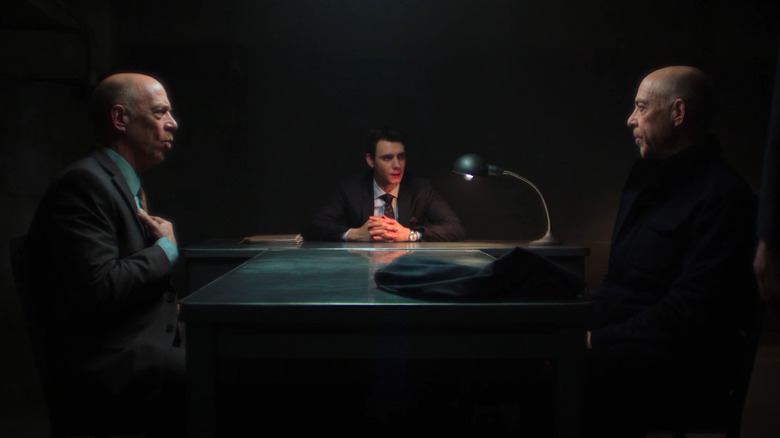
Lowly UN employee Howard Silk (J.K. Simmons) one day discovers that the unusual busy-work he's been engaging in every day is actually part of a communications system with a parallel Earth. He learns this because the parallel Howard is an accomplished secret agent who needs him to act as a decoy because an assassin from the other world is going to try to kill his comatose wife. The portal between worlds is pointedly in Berlin, created during the final years of the Cold War, and leads to another one, this time between worlds rather than nations.
Simmons is exactly the sort of character actor that "X-Files" creator Chris Carter likes to use, and the levels of conspiracy at play here might make Mulder's head spin. The final episode of Starz's "Counterpart" aired in February 2019, months before real life would mirror the show's plot point of a deadly pandemic that spawned conspiracy theories.
Sapphire & Steel
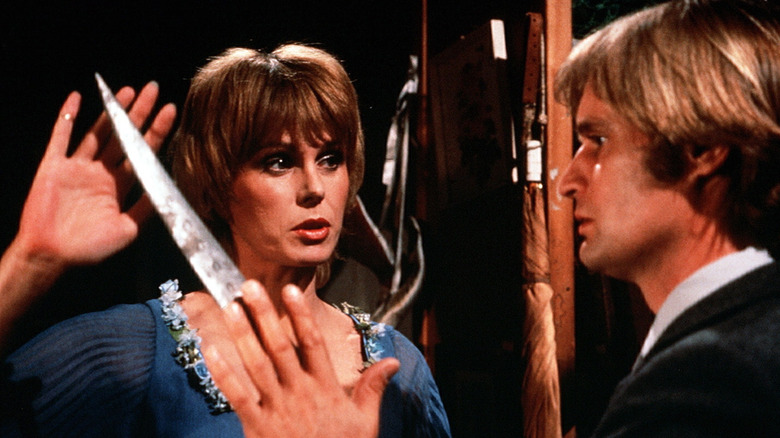
Before Mulder and Scully, Sapphire (Joanna Lumley) and Steel (David McCallum) were supernatural investigators of spooky rips in the fabric of time. They were no mere mortals, however, but living embodiments of elements, with vaguely undefined superhuman powers, and, of course, the requisite subdued sexual chemistry. Time itself appeared to be a malevolent force at times, haunting the modern world through antique objects and even nursery rhymes; creatures from the beginning and end of time would also attempt to find weak points where they weren't meant to be. Like classic "Doctor Who," the stories were told as cliffhanger serials, making clever use of darkness and very simple effects to create a feeling of otherworldly dread.
Typically of many '70s and '80s British sci-fi shows, "Sapphire & Steel" ended on a downer, with its lead characters trapped for eternity in an otherworldly gas station restaurant. It has never been deemed popular enough for a full-on reboot, though Big Finish created some more recent audio dramas. Any fans of "The X-Files" who haven't yet discovered the show, however, need to check it out.
Fringe

On "The X-Files," for the most part, only two agents investigated truly bizarre and unexplainable cases. On "Fringe," the FBI dedicated a whole new division to it, directed by Phillip Broyles (Lance Reddick) and featuring prototypical mad genius scientist Walter Bishop (John Noble) and his son, Peter (Joshua Jackson). Initially, they investigated mysterious activities that mostly seem related to a doomsday cult of scientists led by Jared Harris' David Robert Jones; later, it turned out that our universe, possibly at the behest of shapeshifters, was colliding with a parallel reality, creating spacetime singularities.
Created by J.J. Abrams, Alex Kurtzman, and Roberto Orci, "Fringe" balanced standalone episodes and a larger mythology as "The X-Files" did, with the goal of making the show more accessible to casual viewers who might not have seen every mythology episode. It worked: The show lasted five seasons despite ratings hiccups, and audiences and critics generally agreed that it got better as it went along. (Of course, bringing in Leonard Nimoy as Walter's former lab partner didn't hurt.)
Lost
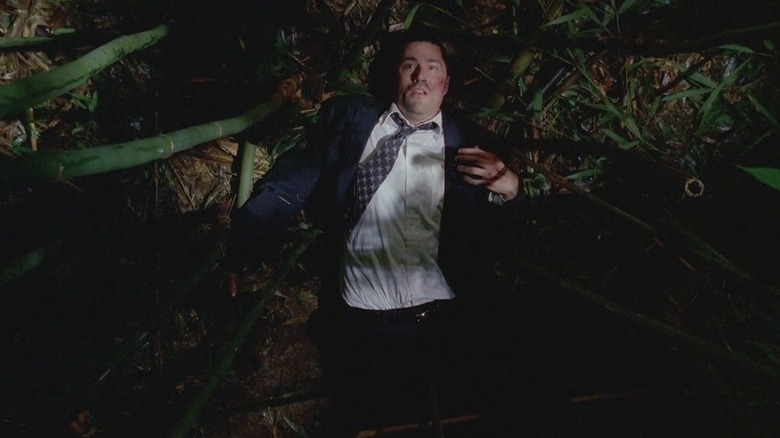
ABC's "Lost" didn't quite have its own Mulder and Scully — Jack (Matthew Fox) and Kate (Evangeline Lilly) definitely weren't it. The much larger ensemble, however, had to deal with many similar mysteries as the "X-Files" agents did, equipped only with what they might find on a magical desert island. There was a shady corporation at work, a secret hatch that blasted electromagnetic energy at regular intervals, a smoke monster, random polar bears, time travel, a steering wheel to move the island, and finally, a truly convoluted afterlife.
Like Chris Carter with his ever-more complicated UFO conspiracy, "Lost" creators J.J. Abrams, Jeffrey Lieber, and Damon Lindelof didn't seem to have envisioned an endpoint or full explanation for all that weirdness. Rather, they hoped you'd care about the characters enough that the questions layered on top of enigmas would primarily work as hooks to see what happened to the people caught up in them. Many viewers finally disagreed, and the frequently misunderstood finale (no, the whole show wasn't purgatory, but those flash-sideways scenes were) remains one of TV's most divisive.
Monsters
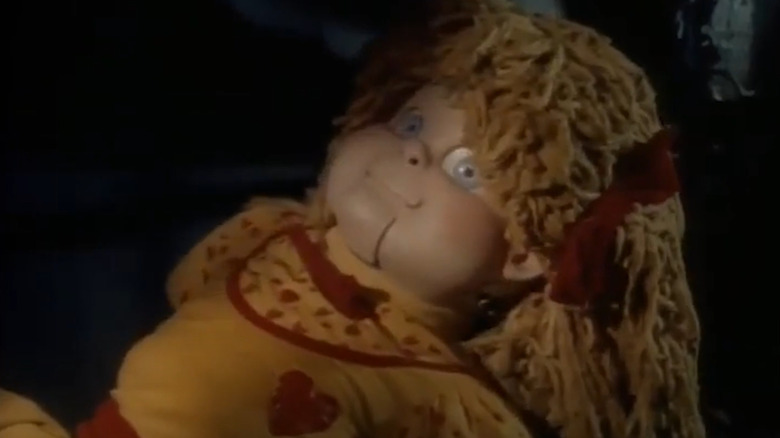
While "Lost" proclaimed itself to be not about the mysteries but the characters, "Monsters" came into existence because critics were caring too much about the plots and acting on "Tales From the Darkside," and not enough about the cool creatures and makeup effects. The solution was to create a show that was entirely about a different monster each week, although the definition stayed very loose. Ranging from zombies to aliens and bee people, the creatures were less hidden than some of those pursued on "The X-Files," but when it comes to the concept of "monster of the week," shows don't get more on the nose about it than this anthology.
Frank Gorshin, Meat Loaf, Imogene Coca, Soupy Sales, Steve Buscemi, and Rob Morrow were among the mix of veteran and up-and-coming talents who appeared on the series, perhaps showing that while it's mostly about the creatures, this show was also about the character ... actors.
Brimstone
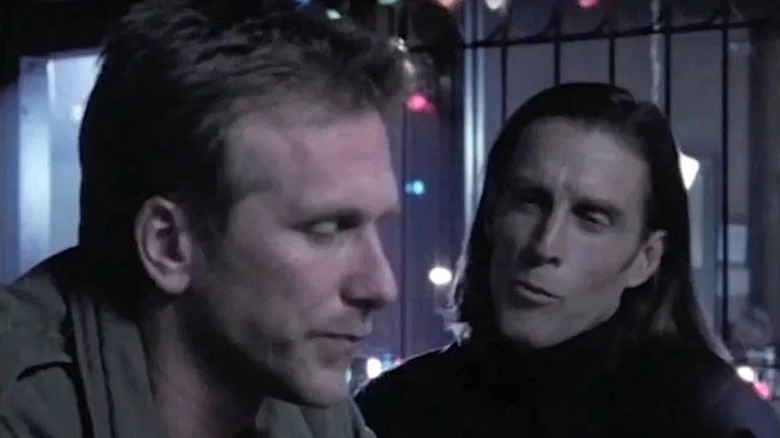
Zeke Stone (Peter Horton) faced a different human "monster" each week on Fox's "Brimstone," but their supernatural abilities all came from the same place: Hell. He was selected by Satan (John Glover) to bring back 113 escaped souls of the damned by shooting them in the eyes, thereby sending them back to damnation. Stone himself was in Hell for murdering his wife's rapist, though he retained his noble ideals, making him well-suited to hunt down the nastier ones with demonic abilities of varying degrees.
Glover's wonderfully hammy devil lightened up an otherwise highly grim and brooding show, which also featured Lori Petty as Stone's landlord and Teri Polo as an LAPD officer who's really an ancient Canaanite priestess who engineered the Hellbreak in the first place. Sadly, we only got two seasons to develop that plot; as it stands, it's still one of the better supernatural antagonist-of-the-week shows that sprang up in the wake of "The X-Files."
Westworld
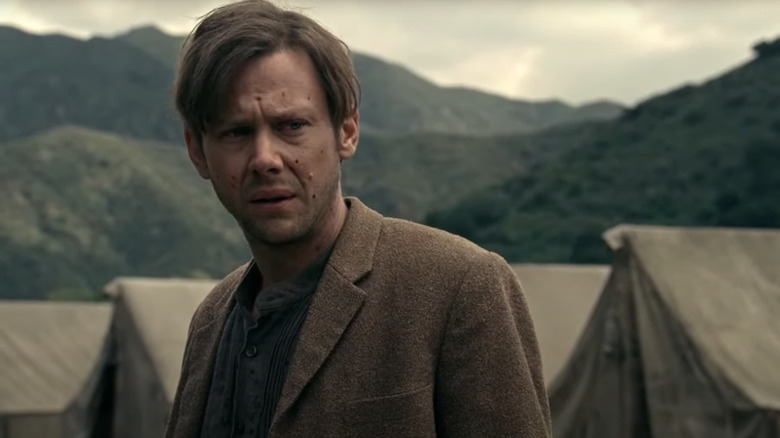
The original 1973 film "Westworld," which spawned a sequel movie and afollowup TV series, was fairly basic sci-fi — a pre-"Jurassic Park" Michael Crichton telling another tale of a theme park gone wrong, only this time the danger comes from robots whose safeguards have somehow become disabled. In 2016, Jonathan Nolan and Lisa Joy rebooted the property for HBO as a much more convoluted, time-twisting mindbender. The premise remained the same — robots, now called "hosts," who've been treated as virtual slaves in a future wild west theme park become fully aware and turn on their creators. This time, however, there's a lot more going on, with various robot characters having multiple bodies and existing in different timelines, or virtual realities, with all sorts of hidden agendas.
Even with newfound humanity, the hosts' stilted, subdued delivery and analytical manner is similar to that of Mulder and Scully. That they can also seem to trust no one is another trait they have in common.
Men in Black: The Series
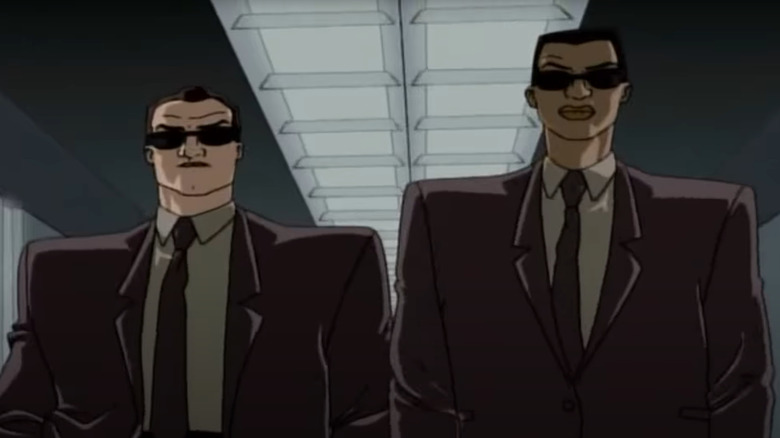
When it comes to secret agents busting crimes committed by aliens, there may be no better-known duo than J and K, the "Men in Black," played in the movies by Will Smith and Tommy Lee Jones. The TV cartoon version, which changes the storyline a bit so that K never gets his memory wiped and J remains the green rookie, features the voices of Keith Diamond as J, and Ed O'Ross (followed by Gregg Berger) as K. Keeping things loosely tied to the movies are a returning Tony Shalhoub as Jack Jeebs, and Vincent D'Onofrio as Edwin, the twin brother of giant space bug Edgar from the first film.
Friday the 13th: The Series
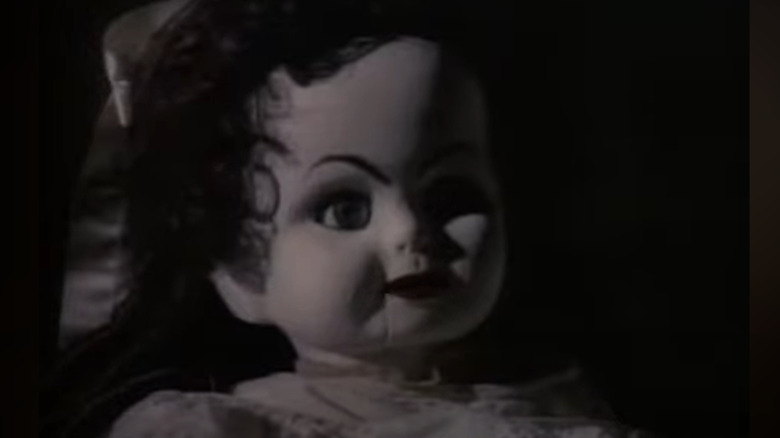
Despite its use of the familiar title and logo, "Friday the 13th: The Series" confusingly had nothing whatsoever to do with Jason Voorhees or Camp Crystal Lake. Like "Halloween III: Season of the Witch," it was intended to extend the franchise name into a more general brand associated with bad luck and curses. So instead of a hockey-masked killer of teenagers, it followed sexy cousins-by-marriage Micki (Louise Robey) and Ryan (John D. LeMay), and later Johnny Ventura (Steve Monarque) after LeMay's departure following Season 2, as they tracked down haunted objects they accidentally sold from an antique store they inherited. Each object requires human sacrifice to use its power, the result of a deal made with the devil by the duo's uncle.
The show only lasted three seasons and is a mere footnote in the "Friday the 13th" franchise. More recently, the franchise appears to have been renamed "Jason Universe" for merchandising purposes, making one wonder if a separate, new "Friday the 13th" could go in the other direction.
Baywatch Nights
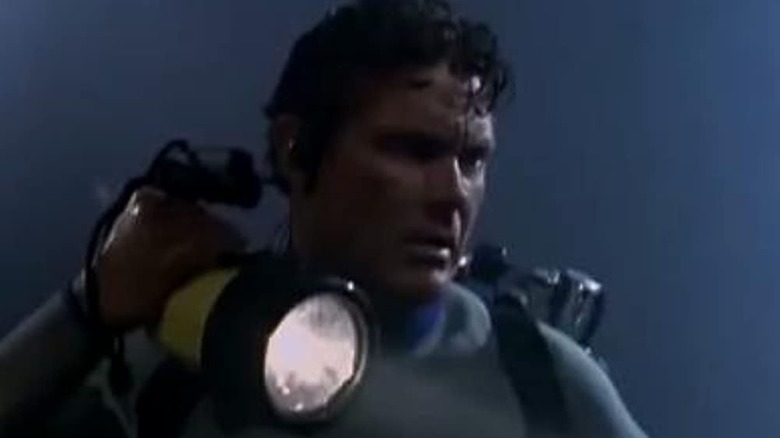
Back when "Baywatch" was one of the most popular TV shows in the world, David Hasselhoff, Douglas Schwartz, and Gregory J. Bonann tried to create a syndicated spin-off. Initially, it involved Hasselhoff's lifeguard character Mitch Buchannon forming a detective agency with regular "Baywatch" cop Sgt. Ellerbee (Gregory Alan Williams). One season in, noting lower-than-expected ratings and inspired by the success of "The X-Files," the threats the detectives investigated suddenly turned supernatural. Unsurprisingly, the idea of "Baywatch," a show centered on sexy lifeguards running in slow-motion, trying to make its own "X-Files," a cerebral show about monsters, aliens, and conspiracies, proved as ludicrous as it sounds. That said, nobody can deny that this is a show like "The X-Files," because that was the explicit intent. It just isn't good like "The X-Files."
At least the main "Baywatch" show benefited in the end, gaining Donna D'Errico, who joined the franchise as Donna Marco in episode 11 of "Baywatch Nights." When it was canceled, her character moved to the main roster.
Moonlighting
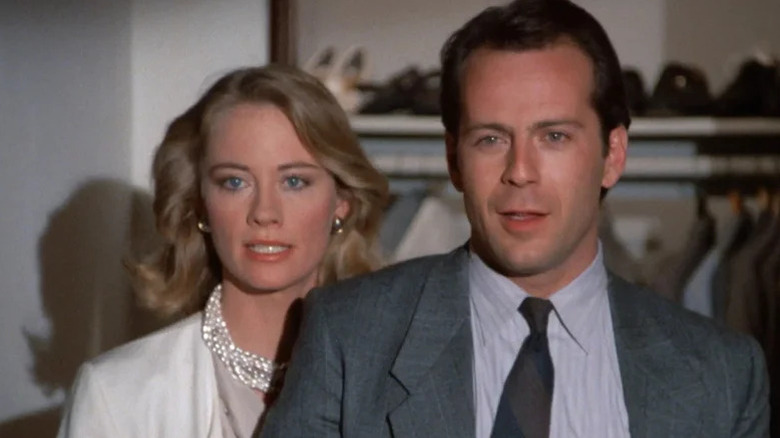
Tonally, "Moonlighting" is very different from "The X-Files." It's a broad romantic comedy that constantly breaks the fourth wall and experiments with genre. To the extent that Mulder and Scully are crime investigators with that "will they or won't they ever get together" vibe, however, they owe much to TV's most classic embodiments of that trope: David Addison (Bruce Willis) and Maddie Hayes (Cybill Shepherd). The detectives at the Moonlighting agency famously kept the sexual tension going for two and a half years before they finally consummated; Mulder and Scully smartly kept it chaste for much longer.
With Shepherd already a legit movie star and Willis becoming one thanks to "Die Hard," neither was fond of the ABC series' punishing schedule and complicated dialogue. Shepherd took a hiatus to have twins, while Willis had to bow out for a while due to injury. Supporting characters Herbert (Curtis Armstrong) and Agnes (Allyce Beasley) had to fill in as temp leads — just as Doggett (Robert Patrick) and Reyes (Annabeth Gish) eventually did for a while on "The X-Files" when Duchovny and Anderson seemed like they might quit the show.