

15 Great TV Shows With Terrible Titles
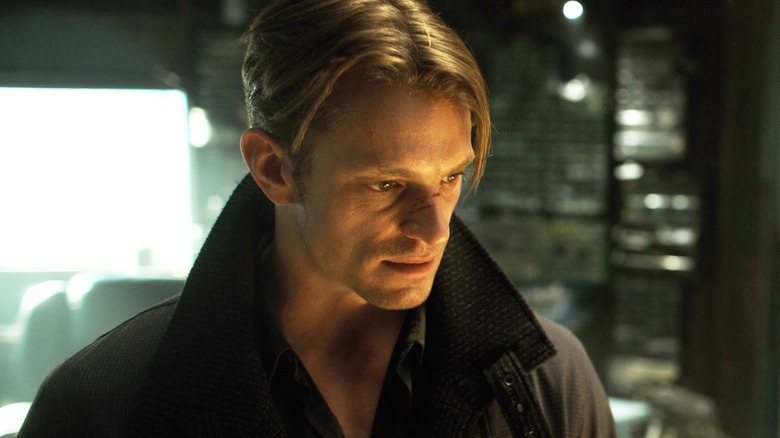
What is the most important part of any story: the plot, characters, or genre? Each matters, but perhaps the most important is the title. Surprised? Don't be. How many books, movies, and TV shows have you skipped out on because the title simply didn't resonate? Think of titles as our "first impressions" of a story. A good one can make us want to find out more, while a bad one turns us off from the start.
This is important for TV because it's so easy to change the channel (broadcast, cable) or scroll to something else (streaming) if something doesn't immediately catch your eye. Admit it, you've done it — we all have. Which is too bad, because there's a lot of terrific TV shows that had terrible titles. What are they, and what makes them so icky, meh, meaningless, boring, or just plain bad? Check out these 15 great shows with terrible titles.
The Grinder

Rob Lowe started in the second season of "Parks and Recreation" in the scene-stealing supporting role of Chris Traeger, turning what might have been a cameo into an Emmy-nominated, multi-season gig. "Parks and Rec" finished its seven-season run on NBC in 2015, but Lowe wasn't done with TV sitcoms, as his next gig debuted the following year on Fox.
Lowe plays Dean Sanderson, an actor who became famous playing a lawyer on TV, but now finds himself out of work when that show gets canceled. Rather than deal with the Hollywood grind, Sanderson moves back home to launch a law career at the family firm alongside his annoyed attorney brother (Fred Savage), despite having only played a lawyer on TV.
Sounds hysterical, and it was, so what did they name the show? "Attorney At Fraud"? "Trial & Error"? Nope, it was called "The Grinder." You see, that was the name of the show Sanderson starred in, so it was "meta humor." That title may have made sense, if you watched the show. Too bad many didn't, as "The Grinder" was canceled after only one season.
Arrested Development

The first three seasons of "Arrested Development" on Fox were a GOAT contender for "best sitcom ever." Sure, Season 3 felt a bit rushed at the end, as the creators knew they were getting canceled. And yes, Season 4 and 5 on Netflix felt underwhelming and brought down the show's standing. Still, the original run of "Arrested Development" from 2003 to 2006 was something special. Anyone who saw it loved it... but hardly anyone watched it.
Fans blame the network constantly moving its airtime, as well as marketing's inability to showcase its niche, complex comedy to a mass audience. Both are possible contributors, but they ignore one of the most important parts of TV show success: the title. "Arrested Development" is a psychological term describing emotional or psychological growth that has prematurely halted, often due to trauma, grief, or neglect. Sounds like a bucket of laughs, right? "Arrested Development" makes sense in context, once you get to know the dysfunctional Bluth family, but it's a bit too clever for its own good.
Firefly

Despite strong reviews and "Buffy The Vampire Slayer" creator Joss Whedon steering the creative ship, "Firefly" failed to fly. In hindsight, perhaps the sci-fi space western without a bankable TV star in the lead role might have been a bit too niche for a channel like Fox. On the other hand, "Firefly" was a great show that produced a passionate fanbase of "Browncoats" despite its brief run of only one season and 14 episodes. The title "Firefly" refers to the spaceship the crew travels on, the Serenity, which is a "Firefly-class" vessel. And if we're being honest, that's a pretty bad title.
You may want to defend it, but "Firefly" doesn't tell us anything about, well, "Firefly." Imagine if George Lucas named his epic space opera "The Corellian" instead of "Star Wars," or Gene Roddenberry pitched his primetime TV drama as "The Constitution," not "Star Trek." With a high-concept sci-fi series, you need to spell out what the show is about for the uninitiated. Perhaps it's no wonder that the cinematic continuation of the series, 2005's also-poorly-titled "Serenity," bombed at the box office.
The Knick
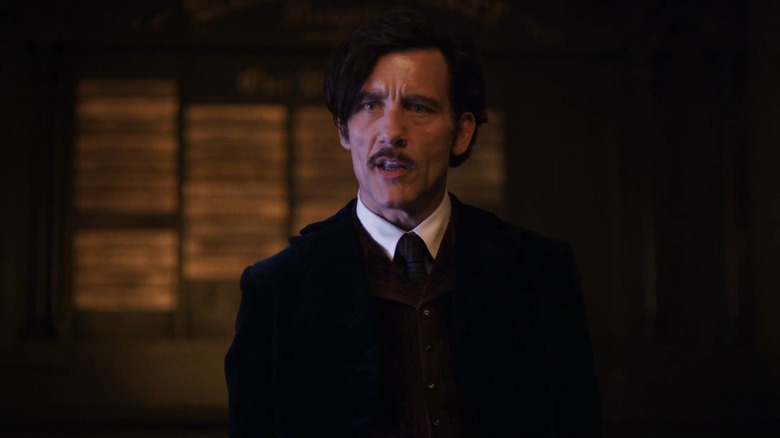
"The Knick" ran for just two seasons and 20 episodes from 2014 to 2015, right after shows like "The Sopranos," "Mad Men," "Breaking Bad," and "The Wire" inaugurated the era of prestige TV, but before streaming services like Netflix took away cable TV's crown. Basically, "The Knick" was Cinemax throwing its hat into the prestige TV arena with a show set in a 1900s hospital in New York.
Despite starring Academy Award nominee Clive Owen in the lead role and being produced by Oscar-winning filmmaker Steven Soderbergh, "The Knick" failed to find a sustainable audience. While there are likely many reasons for this, one of the biggest may be the title.
"The Knick" is a colloquialism referring to the turn-of-the-century Knickerbocker Hospital where the show takes place. It's a straightforward, solid, serviceable title, just not a very engaging one. This is a bloody drama about the gung-ho trailblazers who pioneered modern medicine. "The Knick" doesn't convey the chaos and carnage of that world in any way.
Selfie
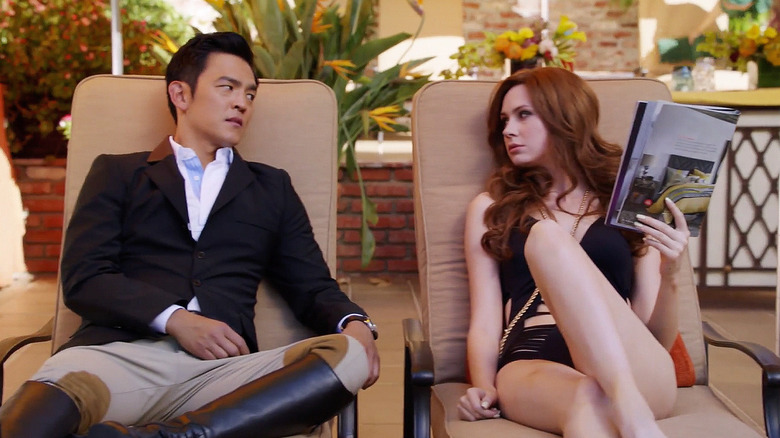
Karen Gillan got her big break playing Amy Pond on TV's "Doctor Who," and hoped to parlay her fame across the pond by starring in a hit American series. Unfortunately, that series was "Selfie." A delightful retelling of "My Fair Lady," "Selfie" retains the original's charm, with Gillan starring as an influencer named Eliza Dooley, who has millions of followers, but few real friends. So Eliza does what any image-conscious egomaniac would do, and hires a marketing whiz (John Cho) to change her image.
"Selfie" started on ABC in September 2014 (just two months after the first "Guardians of the Galaxy" movie, also featuring Gillan, came out), but was canceled after only seven episodes. Luckily, the series was able to finish its 13-episode run on Hulu. This "My Fair Lady" remake might have fared better with a different title. "Selfie" tells us practically nothing about the actual story, completely missing the mark and substituting creativity or clarity for cheap, lazy modern lingo.
Altered Carbon
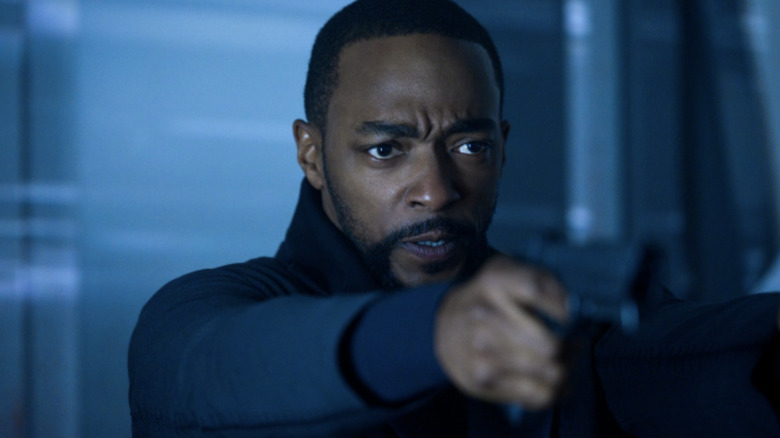
You know what they say: Two wrongs don't make a right. So just because Richard K. Morgan's cyberpunk noir novel was called "Altered Carbon" doesn't mean Netflix should have named its show the same. In Morgan's defense, his novel was targeting a more niche audience.
"Altered Carbon" was supposed to be a big hit, with an alleged budget of $7 million per episode before its cancellation. That's chump change for hit shows like "Stranger Things" or "Game of Thrones," but "Altered Carbon" didn't bring in nearly as many eyeballs as those mythology-heavy series did.
Set more than 300 years in a dystopian, techno-centric future, "Altered Carbon" is a double-entendre, literally referring to the alien material used to store a person's consciousness, and symbolically referencing a new (or altered) state of human life. Yeah, we get it, "Altered Carbon" makes sense... but it didn't make cents. The title on the tile makes "Altered Carbon" sound less like science fiction and more like a science lecture.
From
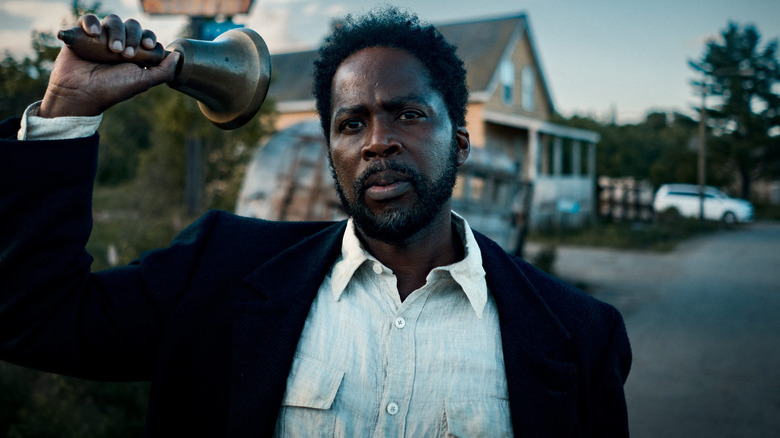
Imagine a series set in what seems to be just another small town, but in fact this sinister place houses a dark secret, for it is in reality a living nightmare that traps everyone who enters forever. The residents who remain are locked in permanent fear, for they are being held captive by a mysterious force and maniacal monsters who lurk in the shadows of the surrounding forest. But a new self-appointed sheriff (Harold Perrineau, "Lost") has had enough, and goes searching for secrets he hopes will help the residents finally find a way out of this living hell.
Sounds awesome, right? So what did they call this scary show? "Hell Town, USA"? "No Escape"? Or literally anything that gave you even the slightest indication of what it was about? Nope. "From." Huh? "From" isn't a title, it's a preposition. Grammar nerds insist you shouldn't end a sentence with a preposition, and you certainly shouldn't name your show after one. What's next? "On"? "Beside"? "Around"? Fortunately, the MGM+ series hasn't failed despite its terrible title, with three well-received seasons and 30 episodes having aired so far, with Season 4 on the way.
Don't Trust the B---- in Apartment 23
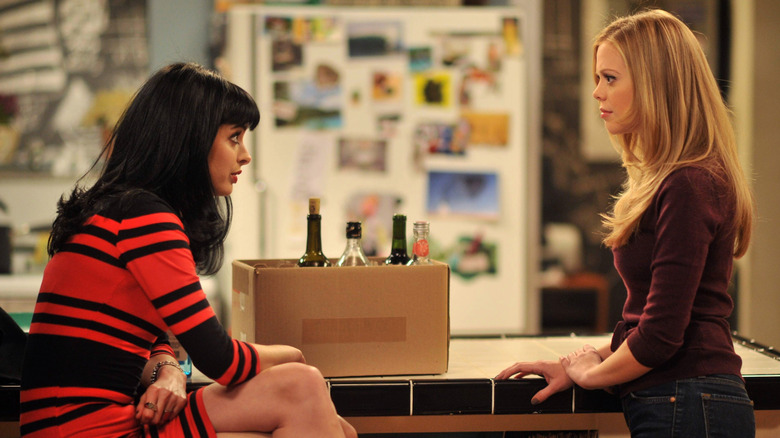
Pushing boundaries on broadcast television is a delicate act. Push too far, and you might drive your audience away. Enter "Don't Trust the B—- in Apartment 23." Running for a scant two seasons and 26 episodes, "Don't Trust the B—- in Apartment 23" was a solid sitcom with a promising premise: June Colburn (Dreama Walker) is a wide-eyed Midwesterner hoping to make it in Manhattan, but finds herself roommates with the titular B—- in Apartment 23, Chloe (Krysten Ritter), an irresponsible ne'er-do-well who deliberately drives roommates away with her party girl lifestyle. But then June and Chloe form an unlikely friendship, proving maybe you should trust the B—- in Apartment 23, after all?
If you have to bleep your title because of profanity, you may be taking things a little too far, especially when you're running primetime on ABC, the station owned by Disney. Still, "Don't Trust the B—- in Apartment 23" earned fans who fell in love with its quirky comedy, like when Chloe's best friend James Van Der Beek was played by... James Van Der Beek. Maybe it was too much for mainstream tastes, but it potentially could have worked on cable.
iZombie

As one of the biggest companies in human history, Apple is ubiquitous in our culture. But its most grating contribution is putting "i" in front of everything. iPod. iMusic. iMac. iPad. You get the idea. It also became a really cheap, easy, and lazy way for movies and TV shows to signal they were techy and futuristic. "I, Robot" gets a pass, as Isaac Asimov's novel was published in 1950. Alas, the straw that broke the camel's back was "iZombie."
The CW show starred Rose McIver as Liv Moore, a medical resident who goes to a party and gets transformed into a zombie (been there), but is determined to pass as a human, despite the fact she is now a brain-craving, walking corpse. Liv decides to help solve murders by eating the victims' brains and absorbing their memories, because while she may be dead, she's not a deadbeat. See, "iZombie" doesn't even make sense within the context of the show! Apologists say it references the autobiographical style of British miniseries "I, Claudius," but let's be honest: Most viewers will only see the Apple reference. Besides, it doesn't do justice to an otherwise solid show. Despite running five seasons and 71 episodes, the title "iZombie" still inspires the reaction: iDon'tWantToWatchThis.
Happy Endings
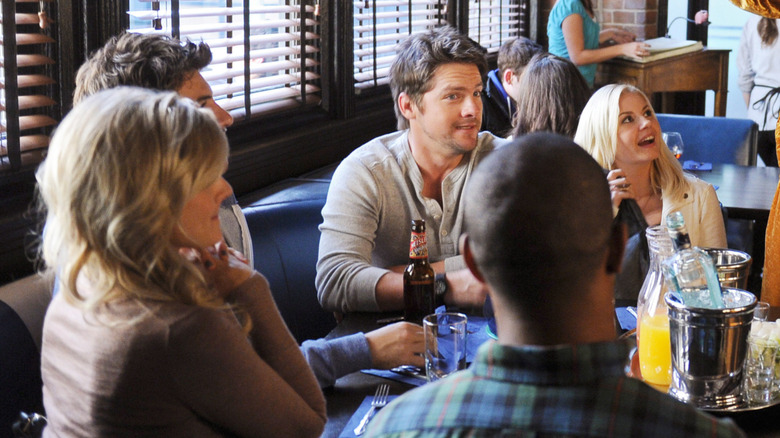
Oh boy, do we even need to talk about what's wrong with this? A not-so-subtle reference to a not-so-family-friendly act, as the title of a show that aired on ABC, owned by The Mouse House. Yep, "Happy Endings" ran for three seasons and 57 episodes in primetime on ABC with that title. Not to be prudes, but c'mon! Too bad, as "Happy Endings" was a clever show with a relatable premise that built up a cult following from 2011 to 2013.
"Happy Endings" is about the "perfect couple," Dave (Zachary Knighton) and Alex (Elisha Cuthbert), who nevertheless break up at the altar, which threatens to cause their friend group to split up. Alas, even if Alex and Dave are no longer a couple, they strive to keep their friendship intact for the sake of the group. So there, "Happy Endings" wasn't a naughty title, but refers to the "happy ending" of a story, right? Whatever the intended meaning, some ABC exec should have read it out loud. We can imagine all the parents whose jaws dropped when their kids asked them what "Happy Endings" meant.
Cougar Town

For those under 20, "cougar" doesn't only refer to large cats native to the Americas. "Cougar" is also a term that came to prominence in the 2000s and refers to a woman who targets much younger men for sexual conquest. What can we say? The 2000s were a strange time. Case in point: "Cougar Town," which attempted to capitalize on this phrase's ubiquity, while also giving Courteney Cox her big comedic comeback role after "Friends."
Cox plays Jules Kiki Cobb, a lifelong do-gooder who finds herself newly divorced, raising a son as a single mother, and navigating the world of dating as a woman in her 40s. Despite the title, "Cougar Town" doesn't turn Cobb into an older woman on the prowl, but instead explores the relatable challenges and joys of her next chapter in life. In fact, the "cougar" just references the high school mascot. Get it? Cougar Town. Anyway, despite a title that sounds like a ladies night at a sketchy small town casino, "Cougar Town" was a pleasant, even poignant comedy that ran for six seasons and 102 episodes, first on ABC and then TBS.
Animal Kingdom
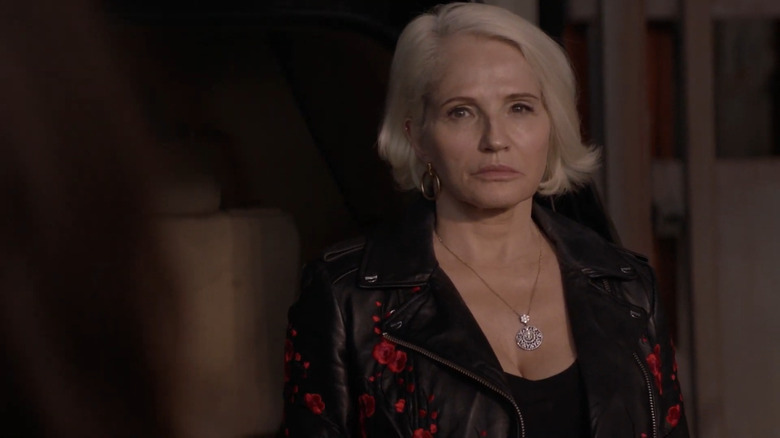
A show with the name "Animal Kingdom" may make you think you're about to watch a program following a West African safari or something set in the Australian Outback. But no, dear reader, here we're talking about a Southern California family that fuels their outrageously excessive lifestyle through criminality, specifically armed robbery.
There are titles that are on the nose, and then there are titles that slap you across the face with their analogies. "Animal Kingdom" belongs in the latter category. Oh, and the criminals also surf, so we're wondering why they didn't just make this "Point Break: The Series" and get Keanu Reeves to star as Johnny Utah.
Despite the name, "Animal Kingdom" had a darn solid run for a show on TNT during the later days of the cable network's "We Know Drama" era. It ran for six seasons and 75 episodes from 2016 to 2022, never getting the axe, but completing its story arc as the showrunners saw fit. If only David Attenborough could have narrated.
GCB
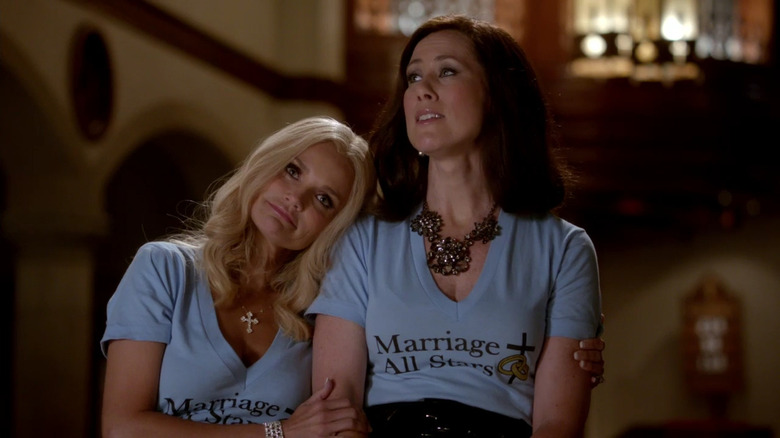
Guess 2012 was a big year for the "b" word in ABC's primetime lineup. There was "Don't Trust the B—- in Apartment 23," which lasted just two seasons with 26 episodes, while "GCB" fared even worse, lasting only 10 episodes. "GCB" was based on the book "Good Christian B****es" by Kim Gatlin. The adaptation follows Amanda Vaughn (Leslie Bibb), a former "mean girl" who loses her husband and her wealth, forcing her to return with her teenage children to the upscale Dallas area where she grew up. There she discovers her former high school classmates (victims) may not be so willing to forgive and forget now that Amanda is down.
The book and show were a clever and funny exploration of religious hypocrisy and personal redemption, especially among the well-to-do. But to the uninitiated viewer, "GCB" was a meaningless acronym that sounded like a local bank, while the full title — "Good Christian B****es" — was more likely to inspire offense than interest. It's little wonder advertisers were spooked, forcing ABC to quickly pull the plug on "GCB," which only lasted from March 4 to May 6, 2012.
Terriers
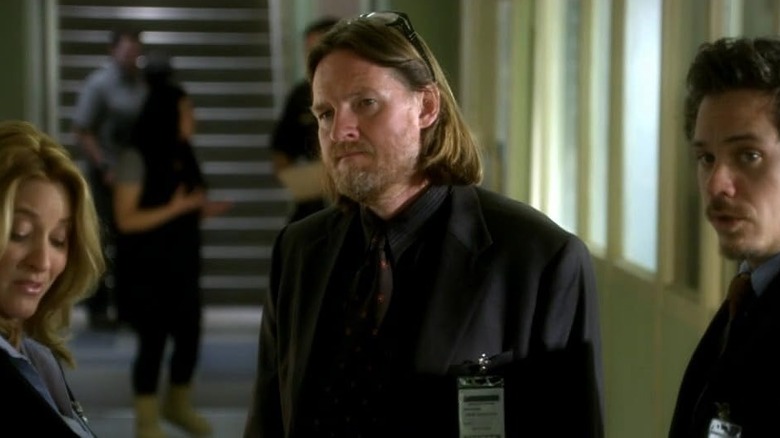
No matter how clever or cute you think your title is, it's generally best not to confuse or mislead your audience. So while potential viewers of "Terriers" were probably expecting a show about the adorable little dogs, they actually got a drama about a pair of private investigators. You see, because the PIs act like terriers in pursuit of criminals. Anyway, the 2010 series was a non-starter, even for the famously open-minded audience on FX, lasting a mere 13 episodes before being canceled.
Shame, because "Terriers" was a solid show. Donal Logue starred as Henry "Hank" Dolworth, a former cop who teams up with his best bud Britt Pollack (Michael Raymond-James), despite the fact they are afraid of any risk, have zero responsibility, and aren't even practicing with a license. The scene-stealing Logue is always welcome on our screens, so it was great to see him sink his teeth into a lead role. Too bad the title stank worse than dog breath.
God Friended Me
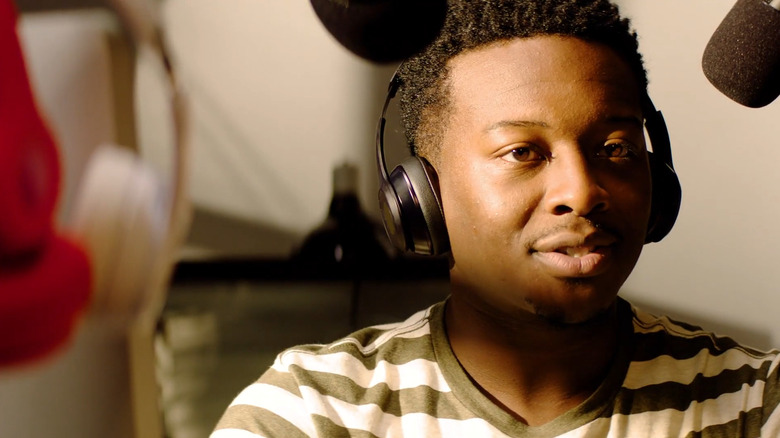
Many terrible TV titles fail to accurately describe what the show is about, thus confusing or misleading potential viewers. Then there are titles that tell you exactly what the show is about in a way-too-direct way. Case in point: "God Friended Me." That is what the show is about, but it's a mighty silly phrase to say out loud.
Miles Finer (Brandon Micheal Hall) is an outspoken atheist whose friend request from God forces him to become an agent (or should we say "angel") of change in people's lives, even while he seeks to unravel what he assumes is an elaborate hoax. Okay, so the title is terrible and the premise is odd, but yet the show is... fairly solid. It is way more earnest and sincere than you would expect, and handles its spiritual themes with a poise that is neither preachy nor dismissive. Still, it wasn't enough to save "God Friended Me" from declining viewership, as it was canceled after two seasons and 42 episodes on CBS.