

The 15 Greatest British TV Shows Of All Time, Ranked
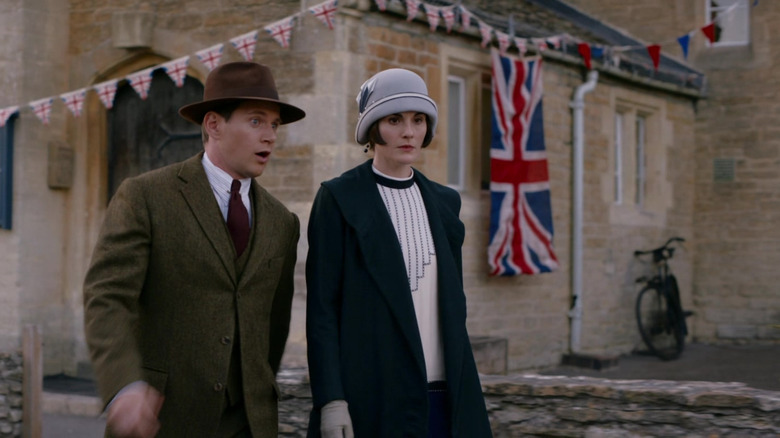
For most Americans, the first experience with a British TV show is often on PBS. For others, it may come after talking to that insufferable drama student in high school who impersonates his favorite BBC shows in a terrible English accent. Whatever the case, the great British television shows are often a cut above U.S. network TV.
It's the result of government funding (meaning no sponsors to assuage), the literary pedigree and stage training of the available talent, edgier commercial channels that want to offer a competing product, and lower budgets that require more creativity without too many special effects or location shoots. In the streaming age, we're more than catching up, but shows from the United Kingdom have a bit of a head start, and some are still running after many decades, putting more recent televised franchises to shame.
These are the best British TV shows of all time.
15. Black Mirror

"The Twilight Zone" is one of the greatest TV shows ever made, and unsurprisingly, many imitators have sprung up over the years, from "Tales From the Darkside" to "Freddy's Nightmares." Only one has arguably reached the same level of acclaim as its inspiration: "Black Mirror." It began slightly more focused than "The Twilight Zone," with stories specifically focusing on the unintended downside of future technology used casually. Any time creator Charlie Brooker felt the show was getting typecast, though, he'd change it up, trying other genres within the format like romance and a police procedural.
The expenses of shooting standalone episodes ultimately led to the show moving from Channel 4 to Netflix, where it continued to push boundaries, with an interactive movie called "Bandersnatch" that had multiple endings and supposedly a trillion possible variations. Stories could now include supernatural horror, and rather than focusing on dark possible futures, episodes could now go into the past. Robert Downey, Jr. even optioned one episode for a possible movie adaptation.
14. Downton Abbey
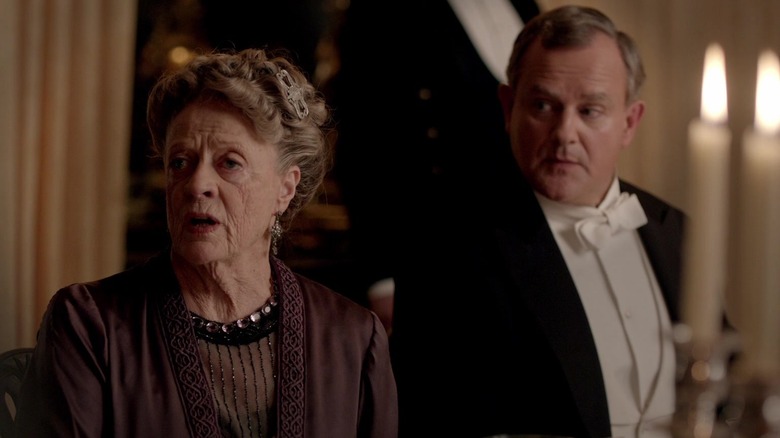
It's hard to believe, in a vacuum, that Americans in 2019 would flock to see a movie about how sincerely awesome it is for servants in a large estate to wait on the King of England. Harder, even, to imagine it would spawn two sequels. Yet they got the green light and the fan base, thanks to their preceding TV series, "Downton Abbey." A combination of historical drama, upper-class etiquette porn, and soap-opera twists (Lady Sybil married an Irishman! And then died of childbirth complications!), the five-season show hooked viewers who could never even imagine the level of wealth on display from these early 20th-century aristocrats and those in their orbit. Come to learn what a bouillon spoon looks like; stay for the late Maggie Smith's withering put-downs.
In Julian Fellowes' saga about the gradual end of the old English class system, everyone has a favorite character they hate to say goodbye to, from fussy Mr. Carson to budding liberated woman Edith. Will the upcoming (as of this writing) third movie really be the last we see of the Crawley family? Don't bet on it.
13. Teletubbies
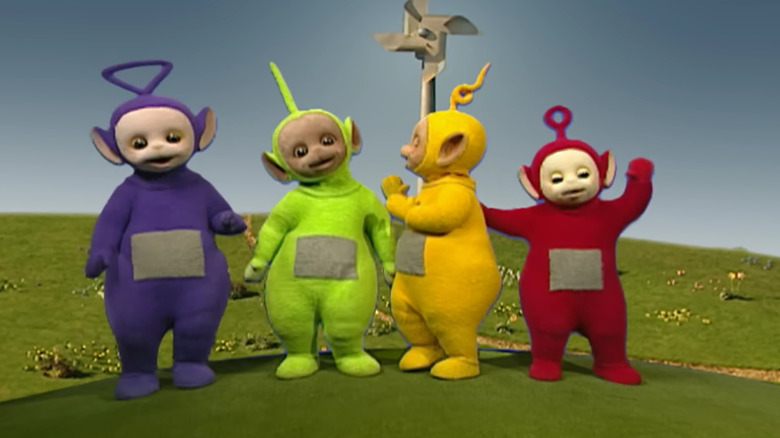
That's right; we said it. "Teletubbies."
You likely can't name another TV series designed for pre-lingual toddlers, let alone one as massively successful as this one. While it's still a controversial idea to let infants watch TV screens, or any screens, "Teletubbies" was conceived with their developing brains in mind, using bright colors, simple concepts and syllables, and characters that looked like fantasy versions of the target audience. Many of their interactions became routine, yet an unexpected event in each episode was meant to teach very young children how to deal with disruption.
At the height of their popularity, with both the intended audience of babies and the unintended audience of stoned hipsters in college, the Teletubbies moved massive amounts of merchandise and provoked a notoriously bigoted televangelist to declare that one of them was gay for carrying a handbag and displaying a triangle. They also relieved an entire generation of parents sick of getting the "Barney" songs stuck in their heads.
12. Sherlock
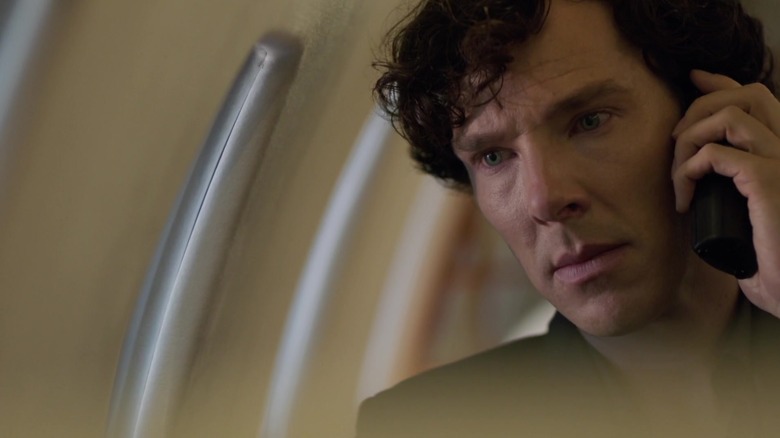
It's not the most book-accurate version of Sherlock Holmes ever, even on British TV — that'd be "The Adventures of Sherlock Holmes," starring Jeremy Brett, from 1984 to 1994 — yet considering "Sherlock" adapts the Arthur Conan Doyle stories to the present day, it's astonishing how faithful in spirit they actually are, and how well the classic tales still work with just a few tweaks and twists.
Created by "Doctor Who" veteran Steven Moffat and actor Mark Gatiss (who would also play Holmes' brother Mycroft), the updated and irreverent take conceived of Sherlock Holmes as a high-functioning sociopath, portrayed by Benedict Cumberbatch. Armed with modern self-diagnosis, all of Holmes' quirks suddenly make a lot more sense. Martin Freeman, seemingly forever born to be the perfect assistant (to David Brent in "The Office," and Black Panther in the MCU), made overt some of the aspects of Dr. Watson we might always have suspected. Rather than a comical sidekick, he's like a Holmes Whisperer, allowing his brilliant yet casually cruel friend to function in society by massaging the social graces.
11. Minder
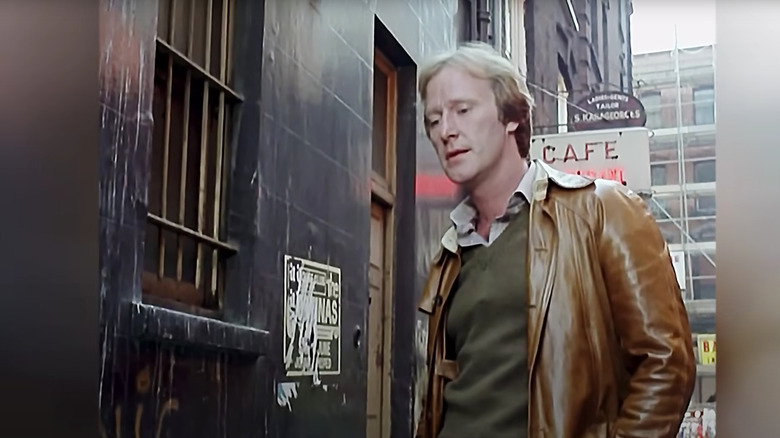
"Minder" never quite made it across the Atlantic, but it was a massive hit in England for 10 seasons, a TV movie, and a legacy sequel season. With less of a moral compass than most, it was a crime series from the point of view of two small-time criminals. Arthur Daley (George Cole) is a con-man, petty schemer, and reseller of stolen goods, while Terry McCann (Dennis Waterman) is an ex-boxer now working as a bodyguard, or "minder," for Arthur. The two frequently run afoul of aggressive cops Chisholm (Patrick Malahide) and Rycott (Peter Childs), and many of Arthur's schemes fail, but Terry usually manages to get him out of trouble. Creator Leon Griffiths intended the show to be at least partly a critique of capitalism, with the otherwise dishonest Arthur simply a more honest depiction of private enterprise in general.
Ironically, then, the show spawned comics, a computer game, and a hit single for The Firm (before they broke big with "Star Trekkin'"), and re-popularized Cockney rhyming slang in the mainstream, as well as making Arthur's nickname for his wife, Her Indoors, a catchphrase. Its influence has lingered: Arthur's favorite watering hole is the Winchester, a name Edgar Wright repurposed for "Shaun of the Dead."
10. The Fall and Rise of Reginald Perrin
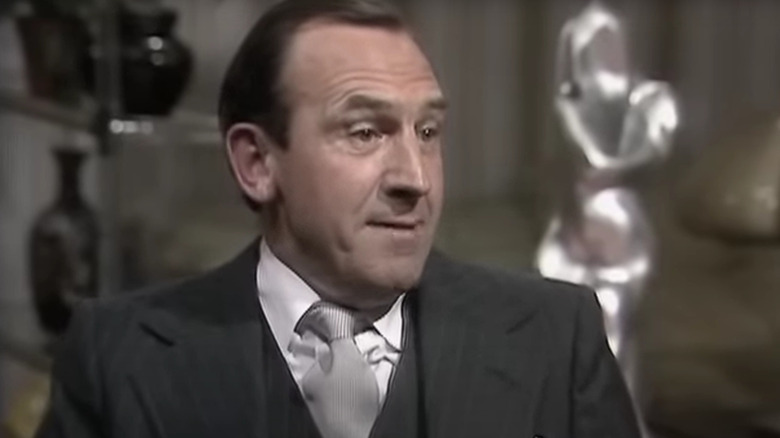
Adapted by David Nobbs in 1976 from his own Walter Mitty-esque novels, the saga of Reggie Perrin is a hilarious sitcom about mental illness and self-destruction, balancing laughs and emotional darkness as only British comedy can. Reggie (Leonard Rossiter, of "2001: A Space Odyssey") lives a mundane, routine life working at a dessert company — so routine that even his chronic lateness is always exactly 11 minutes. Much of the early comedy comes from the conflict between his audible-to-us thoughts and his actual behavior ... and then he fakes his own suicide, ultimately returning in disguise as a long-lost relative. In the second season, he establishes a store that makes useless items, but it succeeds wildly as a gag gift haven. In the third, he tries to establish a therapeutic community. By the end, he's back in a banal job, contemplating fake suicide once again.
While the satire of society and happier sitcoms is obvious, there's a lot of character and catchphrase-based humor that accumulates over the series' run (John Barron's blowhard boss CJ begins every other sentence with, 'I didn't get where I am today ...') and rewards repeat viewings. Rossiter died in 1984, but a legacy sequel season with the surviving cast aired in 1996.
9. The Young Ones
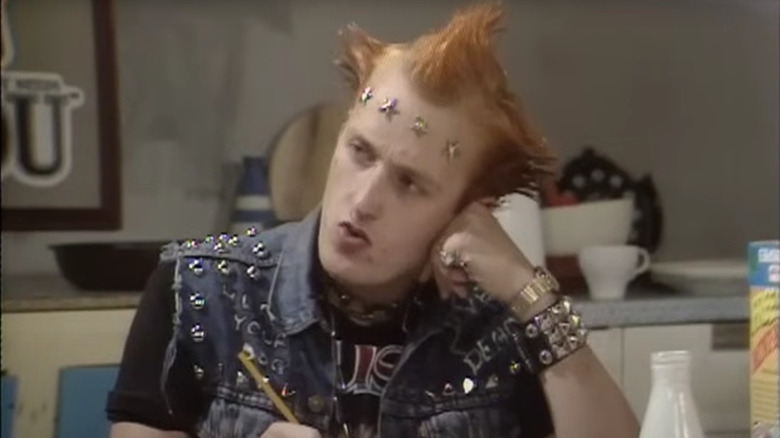
A perfect storm of timing worked for "The Young Ones," as it was the first scripted series from the Comic Strip troupe, which was beginning to define a more working-class "alternative" comedy right as the BBC realized it needed to compete for viewers with the indie-minded Channel 4. An anarchic show that ignored all sense of decorum or conventional formatting, with hip bands performing live, it captured the attention of a pessimistic youth growing up amid renewed Cold War fears and increasing unemployment.
Politically self-righteous Rick (Rik Mayall), violent punk-rocker Vyvyan (Adrian Edmondson), pacifist vegan hippie Neil (Nigel Planer), and cool guy Mike (Christopher Ryan) engaged in violent slapstick, social satire, surreal puppet sketches and more while interacting with fake Russian landlord Jerzei (Alexei Sayle) and numerous other Comic Strip and other cameos from the likes of Dawn French, Jennifer Saunders, Stephen Fry, Hugh Laurie, Emma Thompson, David Rappaport and more.
"The Young Ones" ultimately became the first show not primarily about music to air on MTV.
8. Spitting Image
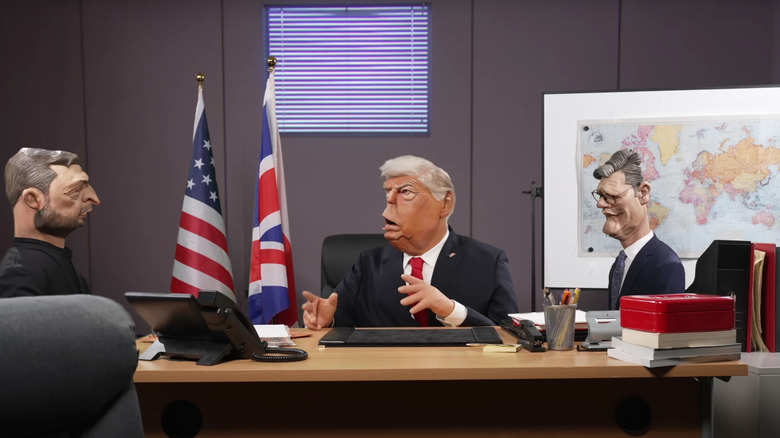
Perhaps only "South Park" has been as savage on politicians and celebrities since "Spitting Image," best known stateside for producing Genesis' "Land of Confusion" video in 1986. Via pointedly ugly, caricatured puppets, the satirical show took on newsmakers and entertainers of the '80s, depicting Ronald Reagan as a moron man-child, Margaret Thatcher as a Nazi, the royal family as clueless elites, and Pope John Paul II as an aspiring rock star. U.K. actor Donald Sinden was always shown groveling for a potential knighthood, Phil Collins sang about his receding hairline, and Leonard Nimoy desperately tried to prove he wasn't actually Mr. Spock. Nobody got it easy — even Thatcher's main opponent, Neil Kinnock, was depicted as a weak, disgusting slave to the two-party system.
After a long hiatus, "Spitting Image" was recently revived as a web series and live stage show. Even with modern satire-rife targets like Boris Johnson and Donald Trump (and Paddington Bear!), they couldn't resist bringing Thatcher back as a ghost for one last farewell.
7. Red Dwarf
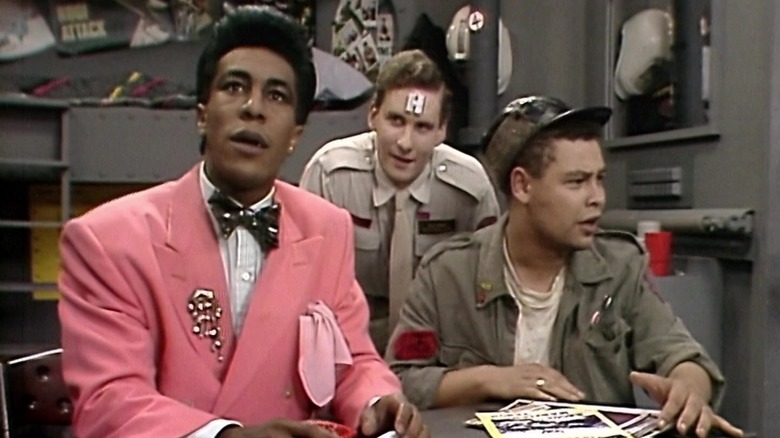
Former "Spitting Image" writers Rob Grant and Doug Naylor hit further gold with "Red Dwarf," a science-fiction sitcom about the last human left alive after disaster strikes his deep-space mining vessel and kills the rest of the crew. Layabout Dave Lister (Craig Charles) emerges from suspended animation three million years after the accident, to find the only other survivors are a humanoid being (Danny John-Jules) who evolved from his cat, the senile ship's computer (Norman Lovett), and a sentient post-mortem hologram of Lister's antagonistic supervisor, Arnold Rimmer (Chris Barrie).
With a general "no aliens" policy, the oddball crew mostly interacted with one another, though they also traveled through time and to alternate realities, adding sanitation android Kryten (David Ross and Robert Llewellyn) to the main roster. It was a strange mix of ingredients and tones that worked: First airing in 1988, it initially went on hiatus in 1999, only to revive in 2009 and run again through 2020, with most of the primary cast and creatives still intact. Inspired by Douglas Adams and John Carpenter's "Dark Star," it's a hybrid creation that remains uniquely British — two attempts to remake it for NBC have never seen official release.
6. Robin of Sherwood
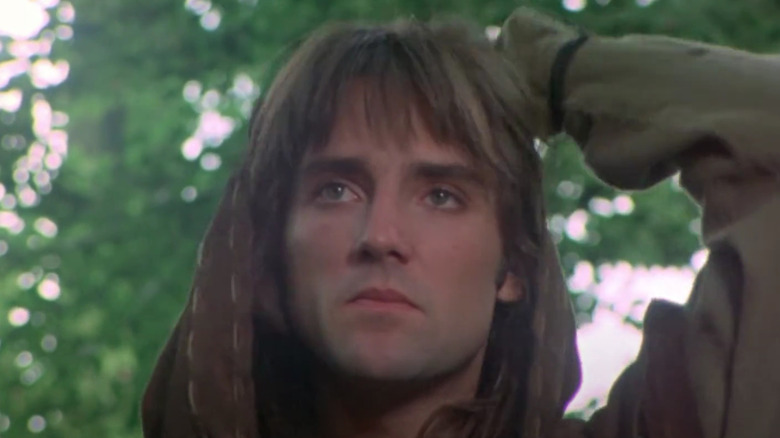
Simply the greatest live-action retelling of the Robin Hood legend ever made, "Robin of Sherwood" combined history, myth, and a dose of brutal historical realism. You think "Game of Thrones" surprise-kills characters? Imagine what audiences thought when a Robin Hood show actually killed off Robin Hood in the second season. A new Robin (or more accurately, Robert) took on the mantle the following season, but it sent a message that nobody was safe, and there was a better-than-average chance things wouldn't end well for any of the rebels. As the show was canceled before a final fourth season could be made, we'll never know.
Robin was depicted as a pagan Messiah of sorts, becoming the spiritual son of stag-helmeted forest deity Herne the Hunter. Ray Winstone had one of his first major roles as the vengeance-driven Will Scarlet. The idea, adopted by subsequent adaptations, of a Saracen being adopted into the ranks of the Merry Men began with Mark Ryan's Nasir, who memorably wielded two swords scissor-style. Most memorable of all, though, was the music by Irish folk-pop group Clannad: "Roooooobin...[dun dun] TheHoodedMan!"
5. Sapphire & Steel
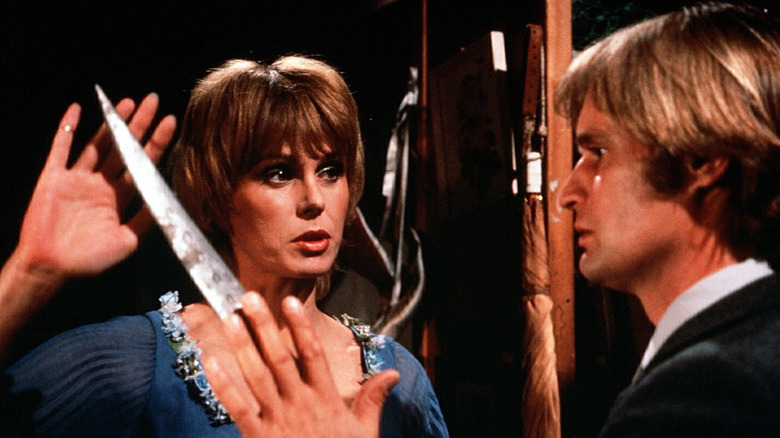
Like a darker version of "Doctor Who" for older audiences, "Sapphire & Steel" starred Joanna Lumley and David McCallum as elements in human form who police the flow of time, looking for errors or anomalies that are often exploited by malevolent forces. The dangers are often attached to antiques, or even more abstract concepts like old nursery rhymes. As with "Doctor Who" episodes that play like ghost stories, there's usually something science-fictiony at the root of the problem, but it's not always clear, even by the end of a given story arc, exactly what transpired. Likewise, both Sapphire and Steel have extra-human abilities, but their limits remain unspecified.
Many British sci-fi and fantasy shows end on what could either be called cliffhangers or outright downers — in the case of "Sapphire & Steel," the two protagonists ended the show trapped for eternity in an interdimensional roadside diner, which may have inspired a similar location in the "Sandman" comics. The story has mostly remained as stymied as the main characters; although Big Finish has done some audio dramas featuring the characters recast with Susannah Harker and David Warner, there has never been a sequel or reboot.
4. The Prisoner
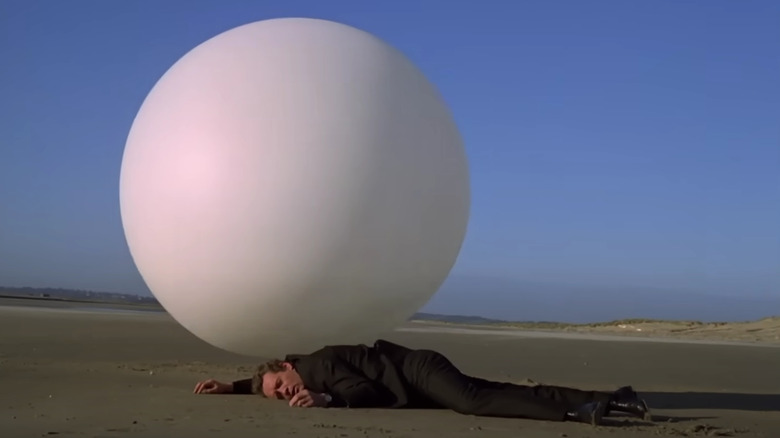
British TV seldom had Hollywood-sized budgets to work with over the years, so when it came to science fiction shows, they would compensate with weird surrealism. Write a story correctly, and a giant beach ball can look like a terrifying threat. Particularly memorable for such odd flourishes was "The Prisoner," created by and starring Patrick McGoohan as a retired intelligence agent simply named Number Six, who is kidnapped and sent to a bizarre community known only as The Village. Here, everyone is merely named with a number, and Six is periodically interrogated in a variety of overt and covert ways to try to get him to reveal why he resigned his position.
Only 17 episodes long, and leaving many questions open-ended, "The Prisoner" has gained a heavy cult and critical following over the years. Like "Twin Peaks" and "Lost," it inspired many fan theories and possible interpretations. A 2009 remake starring Ian McKellen and Jim Caviezel attempted to offer more answers, and was mostly panned; the original's uniquely 1967 vibe resonated with the counterculture then and now in a way that cannot be easily replicated, if at all.
3. Fawlty Towers
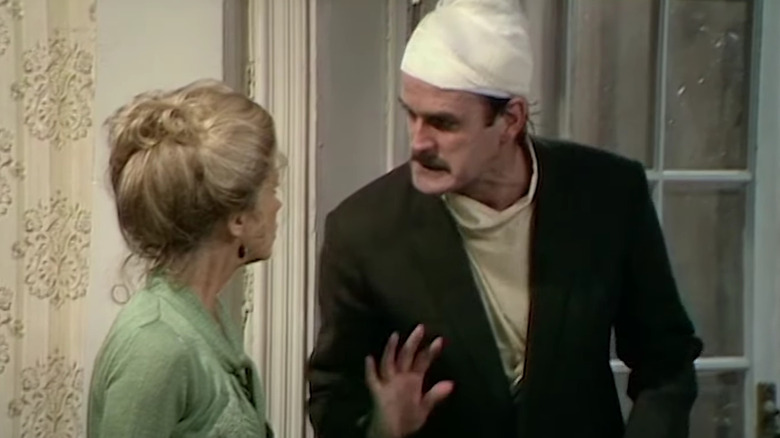
Though he first attained fame as a member of Monty Python's Flying Circus, John Cleese truly solidified his short-fuse comedic persona with "Fawlty Towers," a sitcom about an elitist, eternally frustrated hotel manager with an employee who barely speaks English and a wife he detests. Typical episodes would see Cleese's Basil Fawlty try (and usually fail) to go to great lengths to impress high-class guests, disdain or outright avoid those he deemed inferior, or do the bare minimum to grudgingly obey his wife, Sybil (Prunella Scales). Inevitably, he'd run out of patience and explode, making himself look like an even bigger fool. Cleese had always had a penchant for skewering ignorant authority figures who pretend to know everything; in Basil, he almost managed to make one sympathetic at times, simply through emphasis of his extremely human flaws.
In one of the show's most popular episodes, a concussed Basil must serve German customers without mentioning World War II, which is, naturally, the only thing he can think of from then on. It's a clever critique of censorship, which makes it ironic that this episode is often censored today, mainly due to a senile character obliviously using terrible racial slurs.
2. Doctor Who
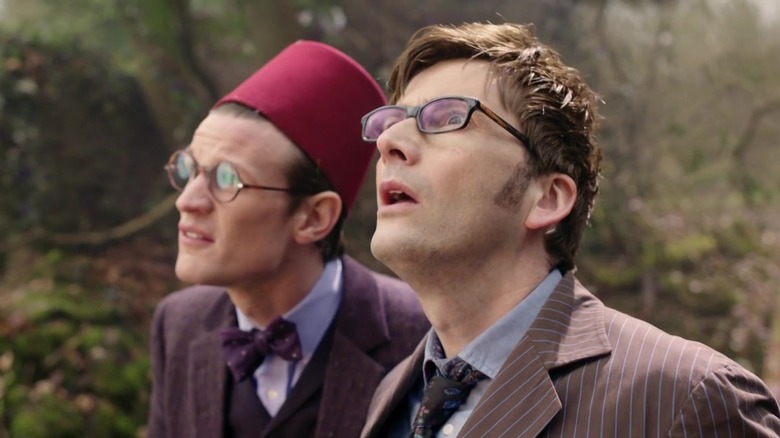
"Doctor Who," which details the adventures of a near-immortal, alien Time Lord who travels through time and space to help those in need, is the longest-running science-fiction show ever, having run on and off since 1963. This is largely due to its clever writing, open-ended premise, and convincing actors who could sell the unconvincing effects. Initially positioned as an educational program for children, it used time travel stories to teach history and outer space adventures to teach science, complete with cliffhangers worthy of older American movie serials.
Perhaps no show used its high concepts as well as "Doctor Who" did to compensate for budgetary realities. Can't build a spaceship big enough? Explain that it's disguised as a phone booth and is "bigger on the inside." Lead actor too ill to continue? Give him the ability to "regenerate" a new face! No budget for a new set for next week? Use the time machine to travel to a place that can use existing BBC props and costumes. Children famously watched from behind the couch if the cheesy yet practical monsters got too scary, while older fans ate up the lore and convoluted explanations. These days, the show has a much larger budget, but has never forgotten the vintage charm of its roots.
1. Monty Python's Flying Circus
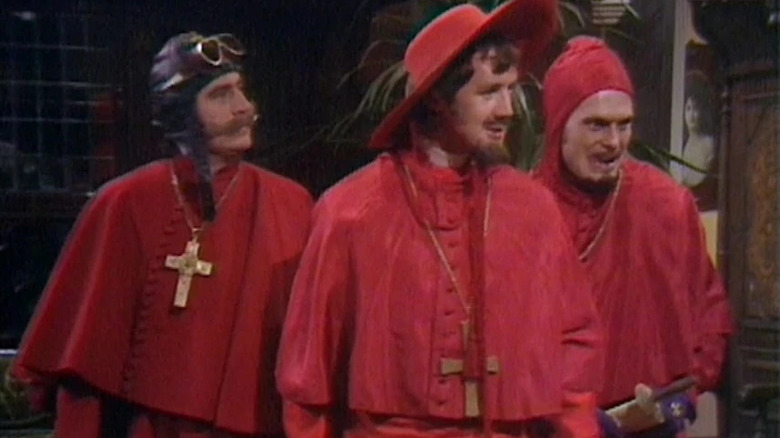
So much of the humor we enjoy today wouldn't exist if Monty Python's Flying Circus hadn't come first. They didn't invent sketch comedy, but they reinvented and deconstructed it, breaking not only the rules of what constituted appropriate content, but of structure and reality itself. Interspersed with random animation and running gags, they never dumbed down the cultural/historical/grammatical references, but also weren't afraid to go lowbrow with silly walks and cross-dressing lumberjacks.
Today's absurdist Adult Swim humor owes a great deal to the Pythons' coloring outside the lines, but that's not all. Animator Terry Gilliam would go on to redefine fantasy cinema with films like "Time Bandits" and "Brazil," while the troupe's parody movies "Life of Brian" and "Monty Python and the Holy Grail" predated the likes of "Airplane!" by a few years, and remain among the greatest comedies of all time. While Graham Chapman sadly died young, John Cleese, Terry Jones, Michael Palin, and Eric Idle all went on to become beloved comedic actors and creators, all over the world. Not bad for a show that the BBC initially hated, and the U.S. originally ignored.