

Every Star Wars TV Show, Ranked From Worst To Best
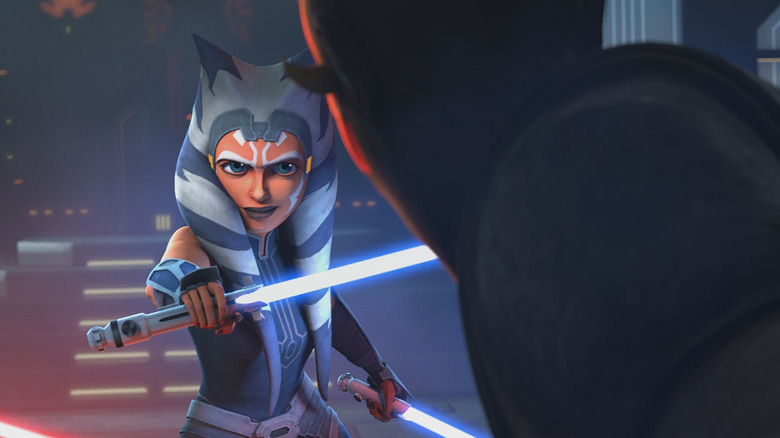
When the "Star Wars" prequel trilogy ended, George Lucas teased us with the notion of a live-action TV series, an unprecedented idea in the pre-streaming era. The show would be called "Underworld," and involve bounty hunters. Yet every year, it seemed we'd get no closer to Lucas realizing it on the budget he wanted.
After selling the company and franchise, Disney went all in on streaming, and insisted that TV shows in the Marvel and "Star Wars" realms look as good as their related movies. Since Disney+ launched in late 2019, we've had no shortage of "Star Wars" TV, with some shows being significantly better than others.
In ranking these series, we have to define our terms — we are excluding preschool Disney XD series "Young Jedi Adventures" and "Jedi Temple Challenge," the game show hosted by Ahmed Best. We've also eliminated micro-series like "Forces of Destiny" and even, alas, Genndy Tartakovsky's "Clone Wars," which is no longer canon. The following are all technically in-universe canon (though "Visions" may vary), and ranked worst to best.
14. The Bad Batch
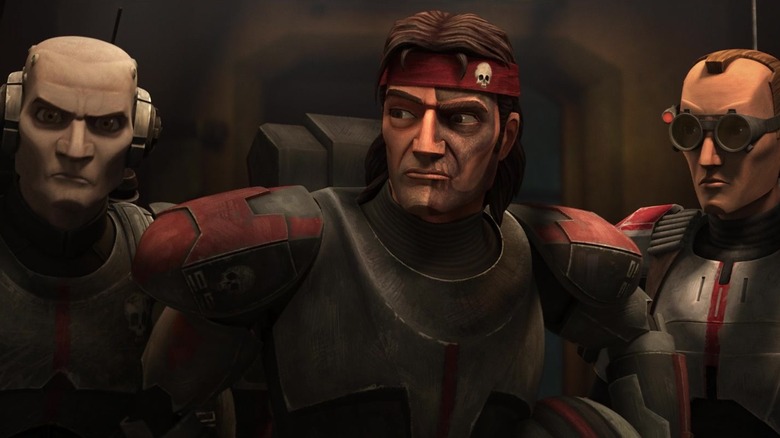
The premise of "The Bad Batch," essentially "The A-Team" in space during the years of the Empire, was solid, and the pilot pretty good. Unfortunately, it not only dropped the ball plot wise — what seemed like a Snoke origin story came to a dead end — but had a baked-in flaw from the get-go.
Simply put, in the movies, the clone troopers are all played by Temuera Morrison, a Maori actor from New Zealand. On the animated series, beginning with "The Clone Wars," they're voiced by Dee Bradley Baker, a middle-American Caucasian from Indiana. Baker's a versatile voice actor with a massive resume, and no big deal was made when he was initially cast as the Clones, since they weren't major characters at first.
In 2017, however, Hari Kondabolu's documentary "The Problem With Apu" shone a light specifically on White actors inaccurately voicing ethnicities other than their own, and the difficulty faced by non-White actors in getting those parts. In that light, Baker's casting as five of the six "Bad Batch" leads — opposite actual New Zealand actress Michelle Ang — became more overtly problematic, especially with some fans also accusing the show of lightening the Clones' skin. Baker's "Maori" accent was already flawed. Now, having added an array of exaggerated inflections, the whole thing is virtually unlistenable.
13. The Ewoks and Droids Adventure Hour
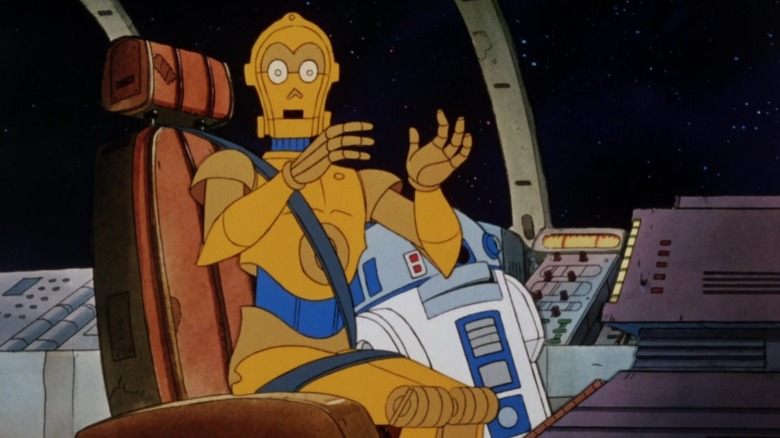
After "Return of the Jedi," George Lucas declared that future sequels and prequels were on hold. In that time, Lucasfilm tried to push "Star Wars" into the realm of TV, with two Ewok movies, and this block of "Ewoks" and "Droids" cartoons. The "Ewoks" cartoon tried to squeeze more merchandising juice out of the popular teddy-bear characters, but even the stoned-sounding theme song ("We're the e, e, e, e, Eeeeeewoks...") set an unexciting tone. A rival race called the Duloks were major villains, but were hard to take seriously with their Grinch-esque designs.
The sister show "Droids" was better, featuring the adventures of C-3PO and R2-D2 prior to meeting Luke Skywalker. Anthony Daniels wisely returned for Threepio, staking a claim that has kept him as the primary voice of the Droid in all ancillary media. He and Artoo found themselves in more traditional "Star Wars" situations, facing the Empire and bounty hunters as they traveled through space, and into the hands of different owners. It was still overly kiddie-simplified, but featured a theme song by Stewart Copeland of the Police.
12. Resistance
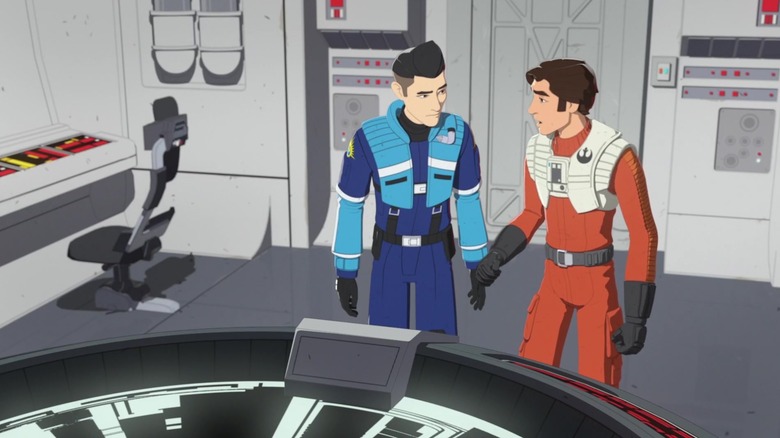
Set in the sequel trilogy era while never contradicting the movies, "Resistance" demonstrates the limitations that come with making everything canonized within Disney-era Lucasfilm. The initial premise is solid — awkward pilot Kaz (Christopher Sean) is recruited by the Resistance to be a spy aboard a large, ocean-based fuel depot called the Colossus, which also plays host to hot rod races (a nice tribute to George Lucas' fascination with the sport).
The need to tie the show in to the events of "The Force Awakens" had things take a drastic turn, as the Colossus is revealed to also be a spaceship, which takes off into Hyperspace, blowing the cover of any covert espionage. Storylines shift somewhat to focus on Tam (Suzie McGrath), an aspiring pilot seduced by First Order propaganda, though she defects back again in the finale.
While the cel-shaded animation was a refreshing change from the blocky CG look of "Clone Wars" and "Rebels," "Resistance" suffers overall from the same identity confusion that marred the sequel trilogy. Does it want to be a nostalgic callback, or something new? The bright colors and new characters initially suggested a break from the past, but the show inevitably got tied up in continuity.
11. Ahsoka

It's been a long journey for Ahsoka Tano. First introduced as a pointedly annoying teenager designed to teach Anakin Skywalker patience in "The Clone Wars" animated movie, she slowly matured, battle-hardened, and developed a conscience that forced her to leave the Jedi order. Fans cheered when she made her live-action debut on "The Mandalorian," played by Rosario Dawson. Her name-drop on the same show of Grand Admiral Thrawn suggested something even bigger.
Sadly, her own Disney+ series lacked the epic scale such a showdown suggested. While it had plenty of pleasures of its own — Ray Stevenson as a mercenary near-Sith, zombie stormtroopers, Hayden Christensen as ghost Anakin — the show misfired by making "Rebels" character Sabine Wren one of "Ahsoka's" key players. The feisty graffiti artist, now a wanna-be Jedi trainee, pines for her lost pal Ezra (Eman Esfandi), but it isn't even a romantic heartbreak. When the two finally reunite, it's as stilted and ridiculously chaste as most modern "Star Wars."
All that, and a misguided mystery box too. The whole season teases that Stevenson's Baylan Skoll is searching for something, but never actually reveals what.
10. The Book of Boba Fett
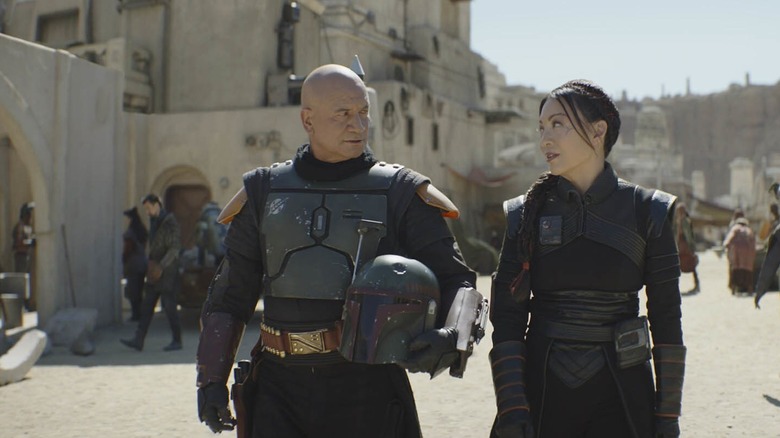
Debuting as a mysterious deceiver in an animated segment on "The Star Wars Holiday Special," before capturing Han Solo in "The Empire Strikes Back" and abruptly being swallowed up by a Sarlacc in "Return of the Jedi," Boba Fett has long been a character fans wanted more of. The Expanded Universe novels and comics had long since had Fett survive his fall into the Sarlacc, but when Disney rebooted canon, that became unofficial.
"The Mandalorian" finally brought Fett (Temuera Morrison) back. Following this was the spinoff "The Book of Boba Fett," which showed his actual escape from the Sarlacc pit and subsequent adventures as "daimyo" of the Tatooine town Mos Espa, former territory of Jabba the Hutt. It wasn't quite the spacefaring adventures of a bounty hunter, but more of a samurai-western.
Co-showrunner Robert Rodriguez had some nifty ideas, like cybernetic hot-rodders called the Mods, and Danny Trejo as a rancor keeper. However, when an entire episode omitted Fett completely to focus on Pedro Pascal's Din Djarin, and it was better received than the rest of the show, Lucasfilm might have realized it was time to pivot back to the new fan-favorite bounty hunter from there on.
9. Tales
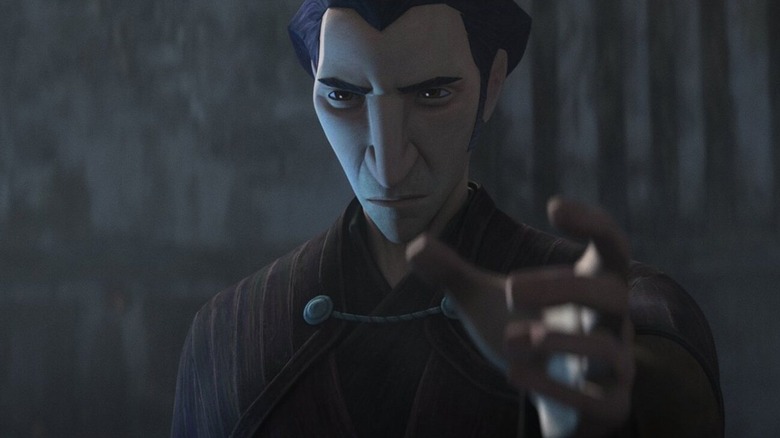
Neither great nor terrible, "Star Wars Tales" is just kind of there. It doesn't get much hype and fans don't really talk about it much, probably because it feels like a bunch of DVD deleted scenes that give supporting characters a little bit more to do. Sometimes it's a bigger name, like Ahsoka. Other times it's one whose action figures never sell, like Morgan Elspeth. Occasionally, it overshares and robs cult characters of some of their crucial mystery, as with Cad Bane and Asajj Ventress. With seasons split between two characters and short arcs that don't offer a whole lot of time for development, "Tales" isn't very accessible to newcomers, and doesn't add a whole lot more for hardcore fans. It's fun enough, but absolutely inessential.
Perhaps the best thing to come from "Tales" is the fact that the Count Dooku arc prompted Hasbro to make a toy of young Christopher Lee — even if it ended up looking more like Nicolas Cage.
8. Visions
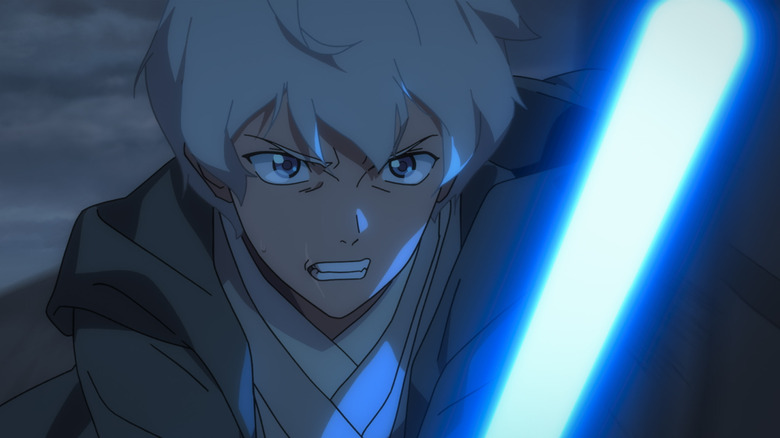
"Visions" is certainly a feast for the eyes. But is that enough? The conceit behind "Visions" is simple, and brilliant; allow international animation studios to make a "Star Wars" short in their own style. The results can be literal, abstract, fuzzy, clay, or anything else. Initially, the idea was to do the series as an anime, but the second season opened things up to other countries including Ireland, India, and South Korea.
It's great to see the "Star Wars" universe filtered through the sensibilities and cultures of different nations, but the problem is one of story. Almost everyone's dream "Star Wars" tale to tell in short form, it seems, involves a wandering Jedi (or Sith) landing on a strange planet, and encountering an entrenched local Sith (or Jedi) whom they will inevitably fight. It's hard to begrudge animators who have always wanted to do a lightsaber duel with official permission, but narratively, many of these shorts feel too samey.
7. Andor

Perhaps the most critically acclaimed "Star Wars" show, the dour, joyless "Andor" is about as far from George Lucas' retro-serial inspirations as the franchise gets. The prequel to "Rogue One," it's "Star Wars" for people who don't want lightsabers, cool aliens, humor, and swashbuckling action, but prefer a complete downer warning us about fascism at every turn. For those into grim-dark takes, it's peak franchise, showing how the Empire operates on a bureaucratic and ground level. Sadly, comic relief droid K-2SO (Alan Tudyk) is minimized to mostly four episodes — he is an expensive special effect, after all.
That said, even those who prefer lighter fare can give due credit. Season 1 briefly turns "Star Wars" into a prison flick, with Andy Serkis as ringleader. Stellan Skarsgård is the rebel you don't want to mess with as Luthen Rael. Additionally, in this mostly asexual era of "Star Wars," "Andor" gave us Cassian (Diego Luna) and Bix (Adria Arjona) getting hot and heavy, and dysfunctional Imperial social climbers Syril (Kyle Soller) and Dedra (Denise Gough) as a wonderfully uncomfortable coupling on the fascist side.
6. The Clone Wars
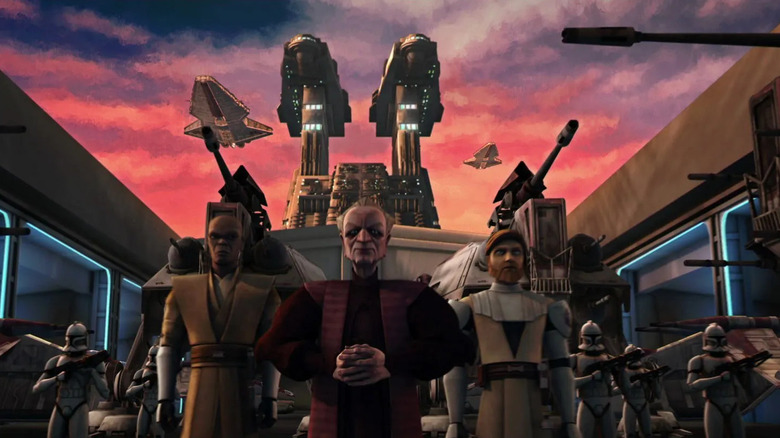
"The Clone Wars" began as an awkward animated movie. Ahsoka Tano (Ashley Eckstein) was initially annoying, James Arnold Taylor never quite nailed Ewan McGregor's English accent, and Matt Lanter kept Anakin sounding generically American rather than using Hayden Christensen's Canadian inflections. Over the course of seven seasons, however, something magical happened: this blocky woodcut-style CG animated series made the prequel trilogy better. Fleshing out characters and their choices, and finally showing the full-on galactic conflict the movies only eluded to, the show made Obi-Wan and Anakin's ultimate falling out genuinely tragic, and their battles together truly fatiguing.
Ahsoka also grew as a character, from irritating kid to wise warrior. Meanwhile, Darth Maul returned, the Hutts feuded with each other, Jar Jar Binks found love, Tarkin plotted his ascent, and a full-sized kaiju menaced Coruscant. We even got to witness the Siege of Mandalore. Not every episode was a winner, but by expanding upon moments that George Lucas had oversimplified or brushed over onscreen, "The Clone Wars" was a major win for the franchise.
5. Obi-Wan Kenobi

"Obi-Wan Kenobi" is a show that seemed almost completely unnecessary. Was anyone really thinking Obi-Wan was up to much in between heading into exile on Tatooine and resurfacing as Luke's protector? Yet fans have long wanted to see more of Ewan McGregor in the role, as did the actor himself. Thus we got a side quest with Obi-Wan protecting a very young Leia (Vivien Lyra Blair) that may help explain why, years later, he was her "only hope." Fans of "The Clone Wars" also get closure by getting to see McGregor, and a returning Hayden Christensen as Darth Vader, effectively put a bow on the whole thing.
It rankles somewhat that Kenobi beats Anakin yet again (seriously, the Chosen One is only able to beat Kenobi when the latter lets himself be killed as a decoy?) but it does spell out, in Anakin's own words, why Kenobi claims that Darth Vader "murdered" Anakin. In the final scene between Vader and Palpatine, we even get the answer to arguably the franchise's longest-nagging question: why did Vader never look on Tatooine for Luke or Obi-Wan?
4. The Acolyte
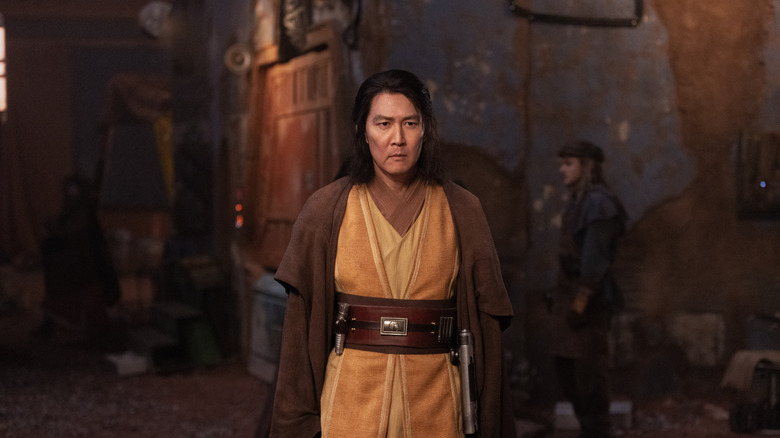
Set in a completely different time period known as the High Republic, "The Acolyte" promised a reversal of the usual "Star Wars" hero's journey. Here, a villain's story unfolds through circumstances that might seem perfectly understandable, casting the Jedi in a new light. That's pretty challenging in light of the fact that, regardless of sympathetic backstory or other mitigating factors, the Sith are clearly coded as objectively pure evil in their final forms.
That aside, it was cool to see a live-action version of a "Jedi on a mission" story in a non-war setting, and with Carrie-Anne Moss, Lee Jung-jae, and a Wookiee as Jedi masters, no less. It also makes sense that if the Force is evidently real, there would be more than one religion based on it. Having the witches of Brendok worship "The Thread" made for a nice expansion of the lore, and Amandla Stenberg's dual performance as twins Osha and Mae proved impressive. By the end of their journey, the Jedi did look pretty bad.
Those cameos by Yoda and Darth Plagueis weren't needed, though.
3. Rebels
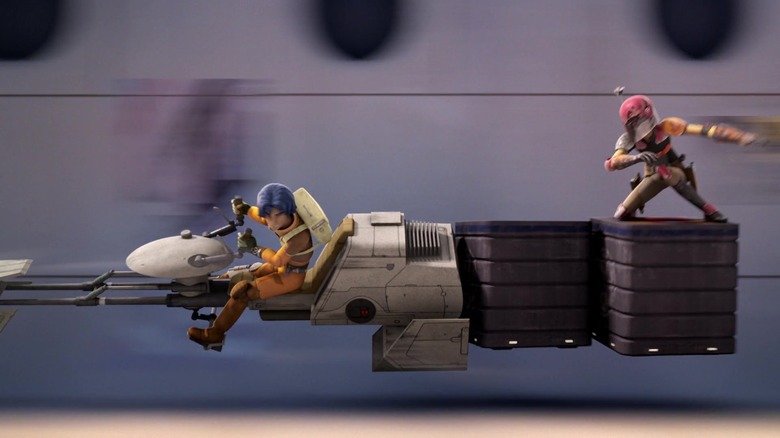
"Rebels," like "The Clone Wars," began as a kid-friendly cartoon with lots of plot armor. On the planet Lothal, young Ezra Bridger (Taylor Gray) is an Aladdin-like character who joins a motley band of rebels during the rise of the Empire. At first, this team — expert pilot Hera, Jedi Kanan (Vanessa Marshall), saboteur Sabine (Tiya Sircar), big-guy Zeb (Steve Blum), and war-criminal droid Chopper (Dave Filoni) — seem like the sort of good guys who just win every week, making you wonder how the Empire managed to take over in the first place. As the show proceeded, though, and brought back Grand Admiral Thrawn (Lars Mikkelsen) from the Expanded Universe to be an arch-villain, the stakes got higher and the missions tougher. By the end, Kanan was dead, and both Ezra and Thrawn vanished. Additionally, the show gave us what appears to be the final-final battle between Obi-Wan Kenobi and (no-longer-Darth) Maul.
The final season ran concurrently with "The Last Jedi," so fans who didn't care for Rian Johnson's cinematic big swings could instead tune into "Star Wars" content from the continuity-obsessed Dave Filoni. Legacy characters cameos, including Darth Vader, may have boosted the show, but its new crew gained such a following that many later resurfaced in live-action.
2. Skeleton Crew
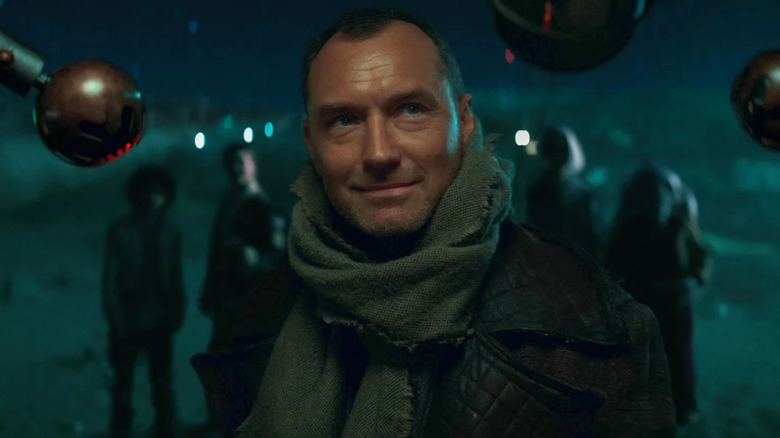
To date, "Skeleton Crew" is the only live-action "Star Wars" TV show with no obvious ties to legacy characters or existing movies (in-joke nods to "Captain Eo" aside) — and it's the better for it. Created by "Spider-Man: Homecoming" collaborators Jon Watts and Christopher Ford, the show riffs on '80s kid-adventure movies like "Explorers" and "Goonies," as four kids from a hidden planet of suburbs and finance discover a pirate ship that whisks them across space. With a highly unreliable android and a morally dubious "Jedi," they seek a way home, while learning that there are good reasons they are well-hidden from the scoundrels of the universe.
In a sea of shows consisting of endless references and nods to the past, "Skeleton Crew" is a breath of fresh air. Jude Law's pirate Jod Na Nawood may have many names, but thankfully none are familiar. At Attin is finally a new environment, rather than just another rehashed desert, ice, or forest world. We get completely new aliens like the owl-cat hybrid Kh'ymm, while antagonist Brutus canonizes the wolfman species deleted from the original trilogy special editions. Furthermore, the story itself is a complete arc, requiring no further sequels or spinoffs to satisfy, a mindset more franchise stories should adopt.
1. The Mandalorian
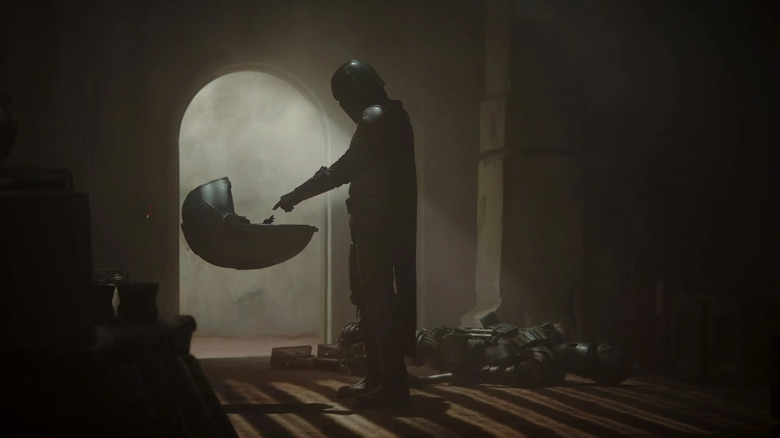
"Star Wars" nailed it so well on its first try with a live-action streaming series that every successor has struggled to keep up. Perhaps it's harder for follow-up shows to have quite the same impact. At long last, kids who grew up on the first generation of "Star Wars" toys could see follow-up stories like the ones they imagined in their heads, with a character closely resembling fan-fave Boba Fett no less. Scenarios like a Mandalorian bounty hunter fighting a Jawa Sandcrawler, or an IG assassin droid demonstrating its kill moves in battle, could now be realized. The show even resurrected the actual Boba Fett, as many had hoped. Pedro Pascal became a bona-fide A-lister as anti-hero Din Djarin, while Giancarlo Esposito added yet another iconic villain to his resume as Moff Gideon.
And then there was Grogu, a.k.a. "The Child," a.k.a. "Baby Yoda." The Porgs of "The Last Jedi" proved that "Star Wars" fans still had an appetite for cute, but the merchandise demand for this little green guy blew that out of the space-water. Mostly silent, often helpful, and always child-like, the big-eared moppet revealed the show to be a riff on the classic "Lone Wolf and Cub" formula.
It wasn't the long-promised "Star Wars: Underworld," but it was probably better.