

15 Best TV Protagonists Of All Time, Ranked
Across the history of television, cherry-picking the best protagonists is a near-impossible challenge. How do you make space for all the different types of shows out there? How do you reckon with excluding iconic heroes, ensemble leads, and trailblazers from a single list? You might read these picks and think, where's Lucy Ricardo, or Jimmy McNulty, or Michael Scott? Well, we made some hard cuts picking these characters, so it's best we go over what our criteria were for choosing them.
A TV show's "protagonist" is often regarded as the hero, but as we've learned over the past 20 years, anti-heroes are some of our most intriguing main characters. With that in mind, we chose characters from a variety of narrative shows, from long-running comedies to dramatic miniseries; spanning genres like sci-fi, period piece, coming-of-age, and workplace sitcom. We also chose characters whose entire arcs and stories across the entire show aren't just memorable and iconic, but timeless stories that, if they haven't already, will define generations of TV to come.
15. Buffy Summers
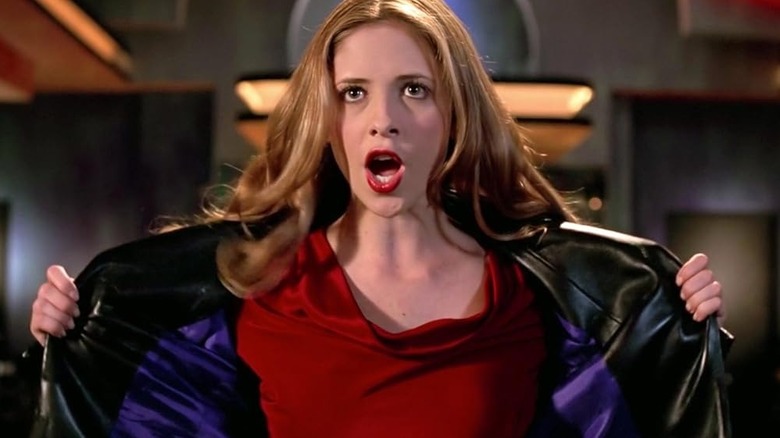
There's one big reason why "Buffy the Vampire Slayer" has endured as one of the most iconic television shows of the 1990s, and one reason only: Sarah Michelle Gellar. The actress inherited the titular role in the television adaptation of a 1992 movie starring Kristy Swanson and, in a rare instance, made her interpretation of Buffy the more memorable of the two. A teenage outcast destined to hunt vampires, Buffy navigates the life of a young adult woman whilst also saving her town of Sunnydale, which is built over a portal to the underworld.
Though "Buffy the Vampire Slayer" featured many more memorable characters aside from its lead, there's no arguing that Gellar's performance turned both the character, and the actor herself, into pop culture legends. Especially during a time where strong female leads were few and far between, Buffy stood out as an example of a non-male action hero done right. Simply put, a "Buffy" reboot without Gellar coming back would have been just be as demonic as the very monsters that Buffy slays.
14. Larry David
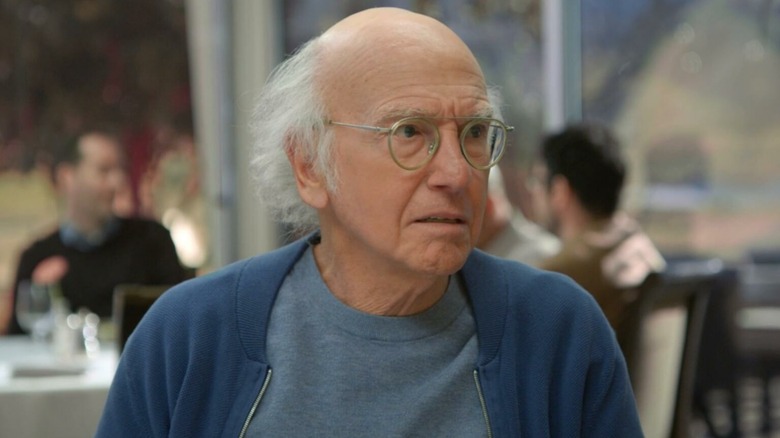
There's an argument to be made that Larry David's inclusion on this list isn't exactly fair. In "Curb Your Enthusiasm," David plays a fictionalized version of himself, the curmudgeonly co-creator of "Seinfeld." However, across the HBO sitcom's 12 seasons, which aired between 1999 and 2024, David refined all the aspects that made "Seinfeld" such a memorable sitcom, albeit without the constraints of network television. The show's version of Larry David may resemble the real-life version, but the way he navigates absurd social situations uses a type of attitude we all aspire to.
From forcing a "Seinfeld" reunion in an effort to woo his ex-wife, to sparking a rivalry with a belligerent coffee shop owner, Larry David in "Curb Your Enthusiasm" has had countlessly memorable moments that make him easily one of the funniest TV protagonists ever. Even the "Curb" series finale takes a page from "Seinfeld" by thrusting Larry into a situation that should theoretically make him remorseful of his actions, only for him to prove that he'll never change. We'd never want him to.
13. Cassian Andor
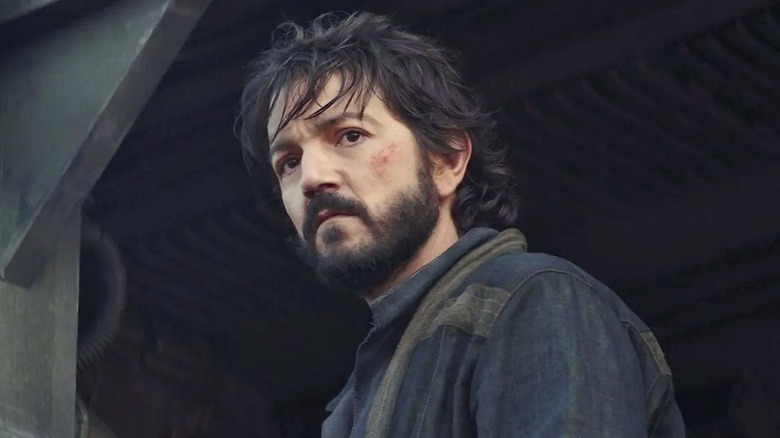
There's been a lot of great sci-fi on television, so it may seem like a cop-out to include a "Star Wars" character who originated on film in a list like this. However, anyone's who has watched "Andor" will agree that this is no ordinary franchise cash-in, but a fascinating exploration into what turns people towards revolution, and how seemingly disparate characters can unite together against an oppressive regime. Diego Luna is center-stage as Cassian Andor, a petty thief lured into the early beginnings of the Rebel Alliance, whose journey from callous criminal to "Rogue One" hero is mesmerizing, even amidst a large ensemble cast.
That cast includes many characters who help shape the arc of Cassian Andor, whether it's his empathetic on-and-off lover in Adria Arjona's Bix Caleen, or the brief role of Andy Serkis as Kino Loy, Cassian's superior at the Narkina 5 prison facility. Ultimately, Andor deserves a spot on this list just for the sheer amount of depth he's given, quietly building a very cool connection to one of the most underrated movies in the "Star Wars" universe.
12. Hannah Horvath
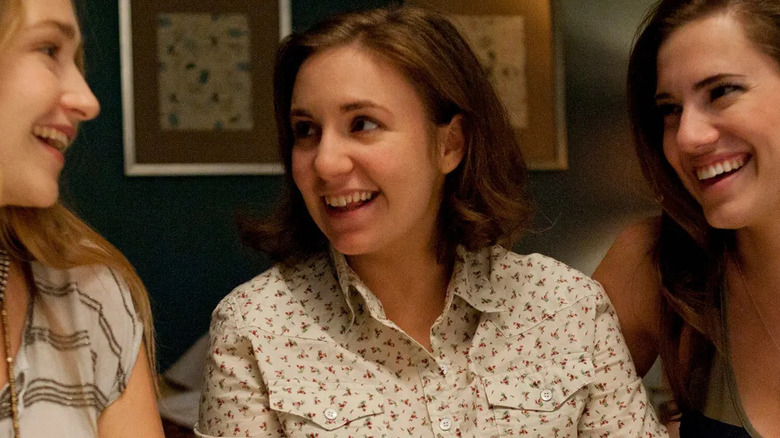
Every generation needs its "Sex and the City," whether it's the cozy antics of the cast of "Friends" or the rebelliousness of "It's Always Sunny in Philadelphia." For the 2010s, the show that defined its late millennial audience was HBO's "Girls." Created by and starring Lena Dunham, it follows Hannah Horvath, an aspiring writer in her 20s who's navigating work, life, and love in New York City after getting cut off financially by her parents. Though all of the many characters are incredible, it's Dunham's characterization of Hannah that grounds everything.
Hannah is a character of opposites, a starving artist who also paradoxically holds herself in high esteem, making her journey throughout the show's six seasons a remarkable feat of both writing and acting. It's the final season that sees Hannah's coming-of-age feel complete, by becoming pregnant and grappling with the prospect of new motherhood, and how that reshapes her own relationship with her parents. Plus, her relationships with all the other characters on the show feel multi-faceted, whether it's her on-and-off romance with Adam (Adam Driver) or her difficult friendship with Jessa (Jemima Kirke).
11. Beth Harmon
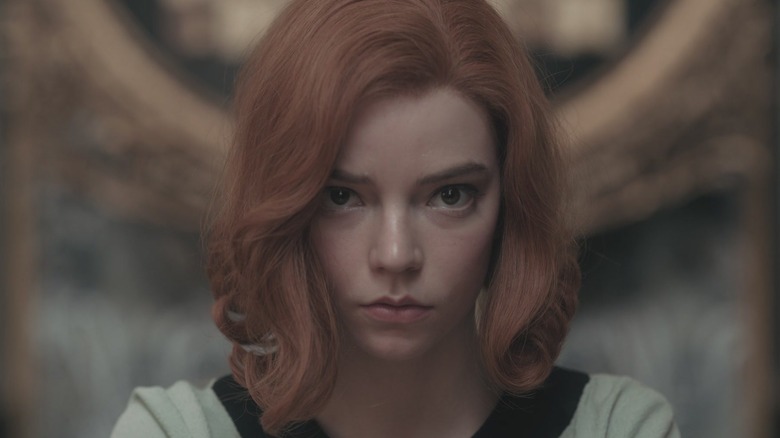
Netflix's "The Queen's Gambit" was a sleeper hit when it hit the streamer in 2020, but in only seven episodes it made an iconic TV heroine (or anti-heroine) out of Anya Taylor-Joy's Beth Harmon. An orphan who rises to great heights as a competitive chess player, Beth's trajectory may seem unrealistic or fantastical. It's balanced by her personal failures, her complicated relationship with substances, and tense relationship with her adoptive mother, Alma (Marielle Heller), herself grieving a lost child.
There's a lot of reasons why audiences got so hooked on Netflix's sexy and fascinating chess drama, but few are as obvious as Taylor-Joy's star-making performance as Beth. Where other TV characters may come off as robotic with as much genius and poise as Beth has, Taylor-Joy never loses sight of her deeply corrupted humanity. Honestly, we'd take a dozen more seasons of this show, but as a standalone limited series, maybe it's best to leave us wanting more rather than get ourselves addicted to the ups and downs of Beth's life.
10. Barry Berkman
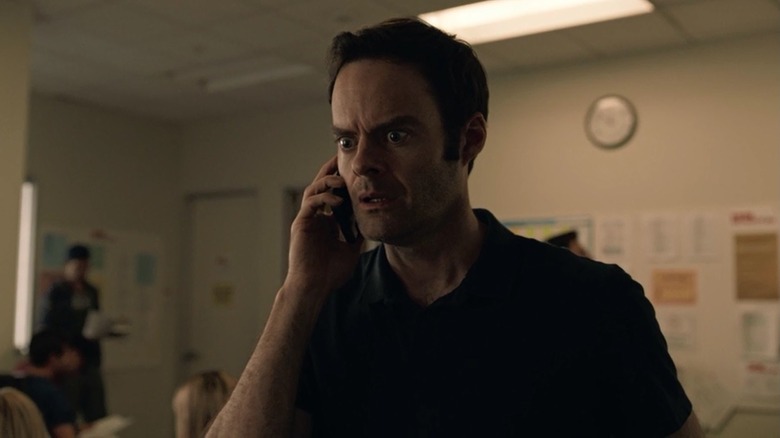
When Bill Hader left "Saturday Night Live" in 2013, few could've predicted he had a show like "Barry" in him. As co-creator, writer, director, and star, "Barry" feels like a proper use of all of Hader's greatest strengths as a performer, combined with some of the best drama, action, and cinematography HBO has ever aired (and that's saying a lot). "Barry" is the story of a titular hitman, who follows a mark to an Los Angeles acting class and becomes inspired to pursue a new passion. Still, he's never truly able to cut his ties with warring mafia families, much less reckon with his own violent tendencies.
The show may start off as a simple dark comedy, but as the seasons progress, the writing of Barry Berkman evolves into something magnificent. The character fits as well into comedic scenes where his naïveté is on full display as he does in painful moments of his hitman life closing in around him. The final season sends Barry's characterization into the stratosphere, feeling so unexpected in Barry's choices and actions that we can only sit and marvel at how this is the same guy who played Stefon on "Weekend Update."
9. Fox Mulder & Dana Scully
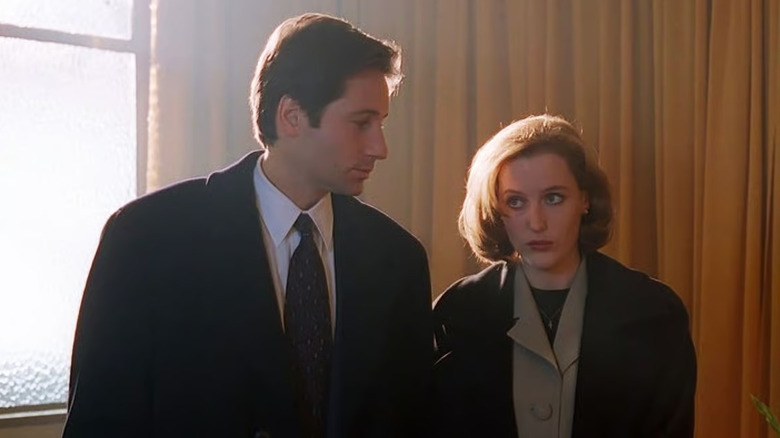
Yes, we know they're technically two characters, but it doesn't feel right to split these iconic FBI agents-turned-lovers. Debuting in 1993, "The X-Files" is a procedural sci-fi drama where paranormal skeptic Dana Scully (Gillian Anderson) and supernatural-obsessed Fox Mulder (David Duchovny) team up to solve crimes that seem too fantastical to be true. The best episodes of "The X-Files" are often the ones that center on the duo's relationship, whether it be tied to an ongoing plot or its simpler "case-of-the-week" format.
Sure, "The X-Files" has entire seasons that aren't so great, but those seasons also correlate to the ones where either Mulder, Scully, or both, are absent. There's a reason these two were "shipped" so aggressively by fans even in the early days of the Internet: their dynamic and chemistry was off the charts. While we have no idea if Ryan Coogler's "The X-Files" reboot will ever get off the ground, just the prospect of seeing Duchovny and Anderson reprise their roles is enough to keep us hungry for more Scully and Mulder in our lives.
8. Liz Lemon
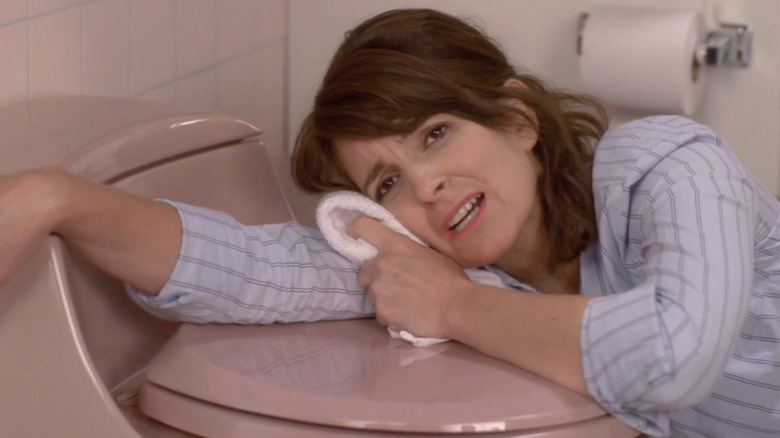
"30 Rock" might be one of the most prescient sitcoms of the 2000s, given that its satirical take on the state of network television seems not-so-absurd in light of recent events. That all speaks to the strength of the show, which was the brainchild of its creator and star, Tina Fey, and loosely based on her experience working for "Saturday Night Live."
"30 Rock" follows the workplace happenings of a fictional NBC sketch comedy series, "The Girly Show," filmed in the studios of the titular New York City building, after the assumption of power by the conservative and business-minded executive Jack Donaghy (Alec Baldwin).
Tina Fey plays the show's protagonist, Liz Lemon, the head writer of "TGS," who challenges a lot of norms about female sitcom stars. Unlike the women of "Friends," or the likes of Mary Tyler Moore, Liz Lemon is a basket case, often struggling to balance her chaotic life outside the show with the absolute chaos going on inside of it. Often the straight man of the antics happening at "30 Rock," Liz is also incredibly smarmy and quick-witted, as uncomfortable with her own sexuality as she is with the ever-watching eye of Donaghy.
7. Hawkeye Pierce
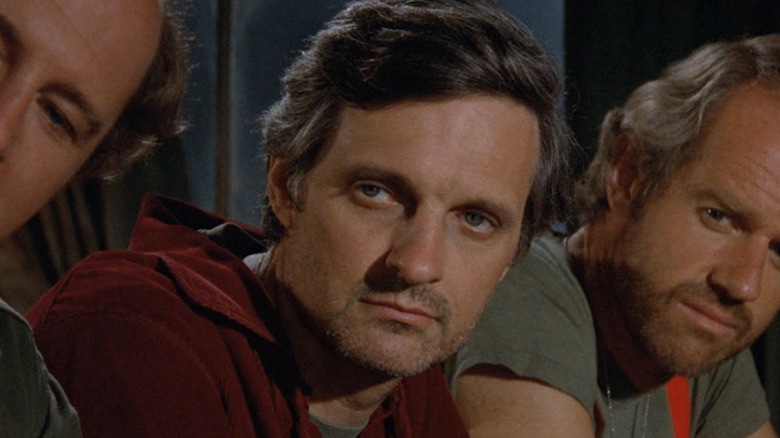
While we're speaking about landmark sitcom characters, let's take a moment to talk about Hawkeye from "M*A*S*H." Based on Robert Altman's 1970 war comedy, the 11-season CBS series centers on a team of doctors stationed in South Korea in the early 1950s, led by the wise-cracking Benjamin "Hawkeye" Pierce. Yes, we've seen plenty of chauvinistic braggarts in the history of workplace sitcoms, but Alan Alda's Hawkeye stands out for one simple yet integral reason: he's a damn good doctor.
Though he can sometimes come off as unlikable or annoyingly rebellious, Alda plays the character with such infectious charm that you can't help but root for him. Still, none of that would get Hawkeye a spot on this list without the absolute heart-wrenching series finale of "M*A*S*H," where Hawkeye experiences a mental breakdown as his time in war ends. Even though this finale aired over 40 years ago, it remains one of the most impactful moments in television history, all the more unexpected coming from an otherwise formulaic sitcom character.
6. Midge Maisel
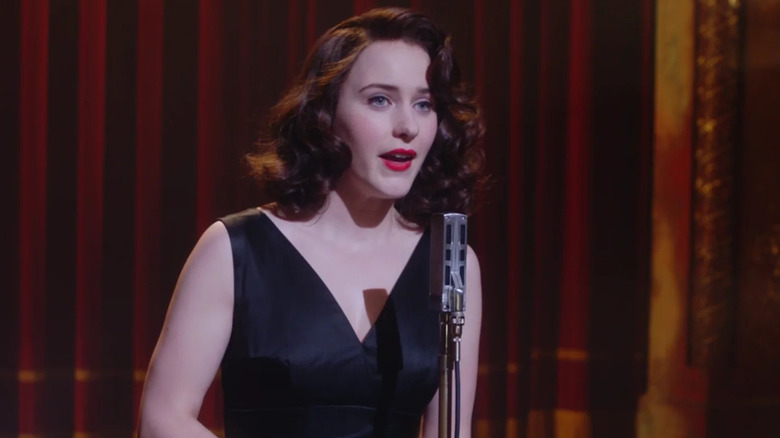
With Rachel Brosnahan enjoying a new slew of fans after she was crowned the new Lois in James Gunn's "Superman," it's about time people go back and rewatch her stunning work in "The Marvelous Mrs. Maisel." Brosnahan plays Miriam "Midge" Maisel (née Weissman), an uptight woman in 1950s New York City who, after being blindsided by her husband leaving her, stumbles into a Greenwich Village comedy club. After drunkenly venting to the audience, club manager Susie (Alex Borstein) decides to help mold her from a flawed housewife into a professional stand-up comedian.
Through all the twists and turns that await Midge in her journey across the show's five seasons on Prime Video, it's all anchored by a knockout Emmy-winning performance from Brosnahan. We watch a woman's timely sensibilities slowly erode as she delves deeper into the grimy underbelly of the comedy scene, risking her pride, social status, and relationships in pursuit of inevitable stardom. It's always a joy to watch her navigate life and her new career, especially when she's sharing the screen with fiery deuteragonist, Susie.
5. Walter White
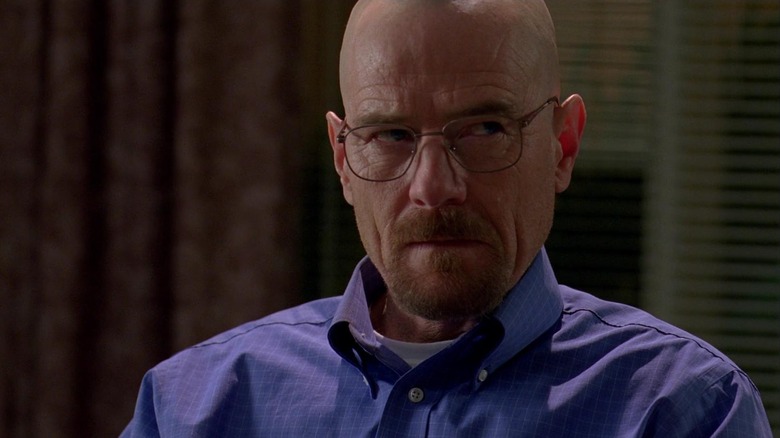
It's obvious that Walter White was going to end up on this list, it was just a matter of how high he landed. Bryan Cranston won the Emmy for Outstanding Lead Actor in a Drama Series four times during the run of "Breaking Bad," and it still feels as if he deserved more. In "Breaking Bad," Walter White begins as a meek high school chemistry teacher who uses his skills to cook crystal meth after a terminal cancer diagnosis jeopardizes his family's future. Partnering with a former student-turned-methhead, White slowly morphs from, as creator Vince Gilligan called it, "Mr. Chips-to-Scarface."
While many people idolize Walter's ascent into badassery and remain hateful of the characters who oppose him, it's worth nothing how the series finale clarifies what his character is all about. White was never really the meek good guy, and we realize he always had the shadow of his drug kingpin alter ego, Heisenberg, inside of him. Even in the most cringe-worthy "Breaking Bad" moments, Walter is himself a lab concoction of pride, delusion, and pathetic ambition. The fact his story could even be misinterpreted as the story of an anti-hero is exactly why he's one of television's all-time great characters.
4. Tony Soprano
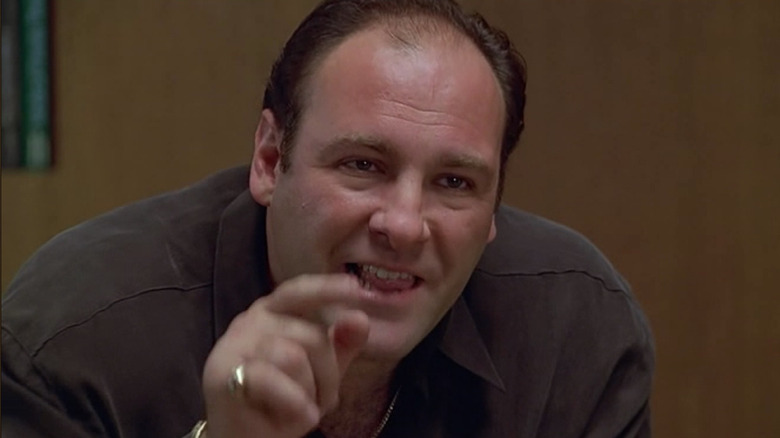
People often debate what the greatest television series of all time is, floating options like "Breaking Bad," "The Wire," and "Seinfeld," but there's a reason why we still consider HBO's "The Sopranos" prestige television even years after its finale aired. James Gandolfini excels in the role as Tony Soprano, the patriarch of a New Jersey crime family who begins psychiatric treatment for recurring panic attacks and depressive episodes. Soprano is, simply put, a marvel of a character; forever changing our perception of the tough-guy mobster thanks to Gandolfini's humanization of this monstrous, albeit complex, man.
In the series' first episode, Tony Soprano undergoes a character arc so impactful and poignant, it prepares us for just how deep it gets for Tony over the next six seasons. However, just because he's seeing a psychiatrist doesn't mean he doesn't also spend the rest of the series indulging in his worst habits, including extramarital affairs and some of the most shocking violence you'll see on TV. Don't be fooled. Tony Soprano is not a heroic figure. The compelling dichotomy between his path to self-betterment and his actions is why we still talk about "The Sopranos" to this day.
3. Selina Meyer
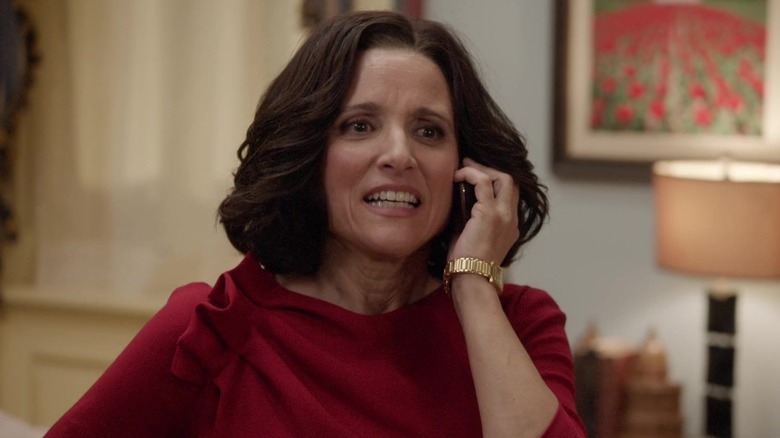
Never have we seen a despicable human being so charismatic and addicting to watch as we did when Selina Meyer ruled television throughout the 2010s. "Veep" premiered in 2012, following the chaotic goings-on of a frustrated vice president played by Julia Louis-Dreyfus, whose misfit staff struggle to salvage her political aspirations as she fights for control and political power. Unsurprisingly, Louis-Dreyfus won six consecutive Emmys for her performance, a masterclass in comedic acting as one of TV's best female presidents.
Across the show's seven seasons, Meyer's rise from powerless to powerful could be described as a slow burn, but it's a satisfying one. It's especially delicious to watch every single micro-expression and moment from Louis-Dreyfus in this role. She never comes off as comically inept, but that's because, like any politician, she wears as many masks as possible to manipulate others and get her way. It only helps that her political affiliations are always left ambiguous by the show's writers, making Meyer feel timeless as a character even as we near a decade since it ended.
2. Fleabag
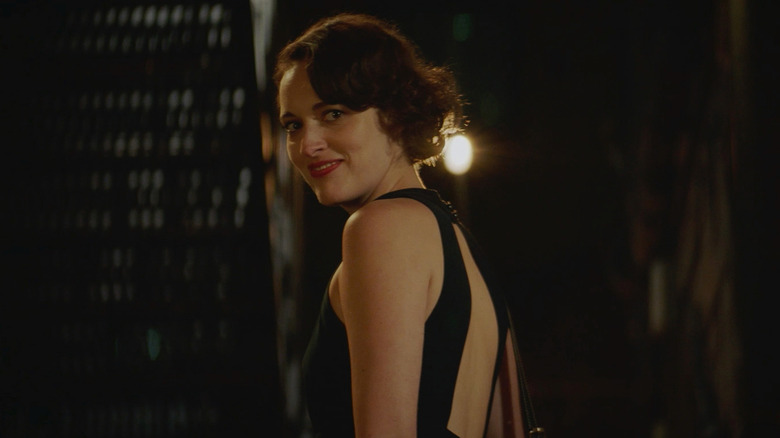
Phoebe Waller-Bridge's "Fleabag" began as a one-woman play at the Edinburgh Fringe Festival, but after seeing it adapted into two seasons of BBC's "Fleabag," it's astounding how this wasn't the original vision. Waller-Bridge plays the titular character, a directionless young woman navigating life after the sudden and tragic death of her best friend, influencing her relationships with her emotionally distant sister Claire (Sian Clifford), her verbally abusive godmother (Olivia Colman), and in the second season, an unnamed priest whom she becomes infatuated with (Andrew Scott).
Though the first season could stand alone as an incredible six-episode miniseries (and still probably earn Fleabag a spot on this list), it's the second season that feels like it explores far deeper into this compelling and contradictory character than you could have ever imagined. We'll likely never see a "Fleabag" season 3, given that the season 2 finale seems to neatly wrap up all her complex relationships with her loved ones — and the audience as well, who she often speaks to in asides throughout the show.
1. Jimmy McGill / Saul Goodman
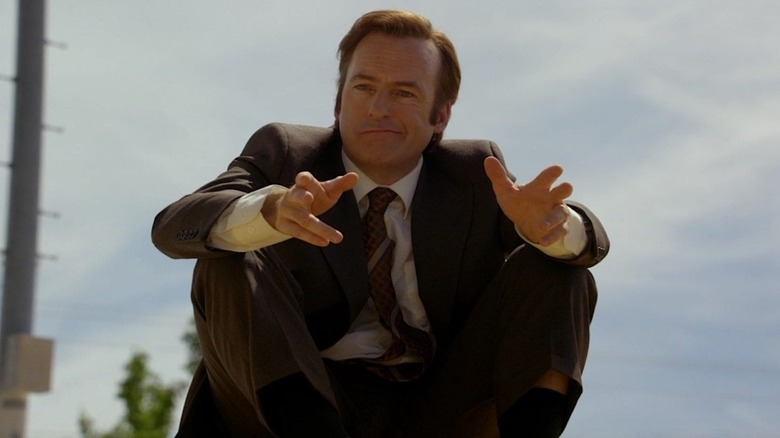
Who would've thought the greatest TV protagonist of all time would be the comedic relief supporting character from "Breaking Bad"? In spite of sequelitis, "Better Call Saul" is a stunning television masterpiece, arguably one that's even better than its revered predecessor, despite winning 0 Emmys throughout its six-season run.
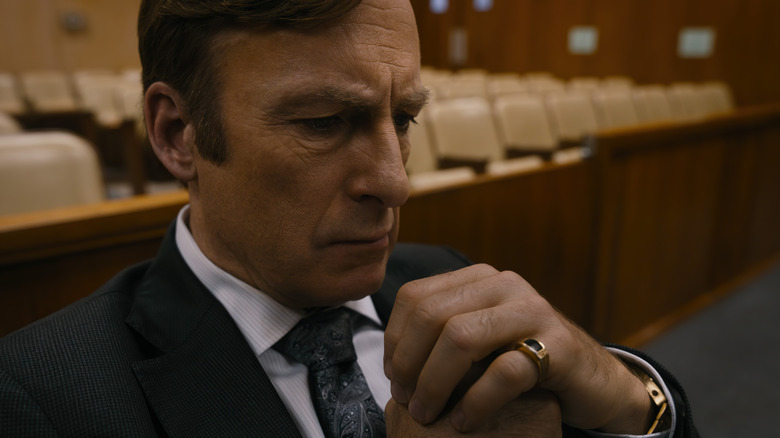
The show follows the backstory of Walter White's trusty lawyer, Saul Goodman (Bob Odenkirk), who was once a young, ambitious (albeit tricksy) pro bono lawyer named Jimmy McGill, facing rejection from the prestigious law firm co-run by his mentally unwell older brother Chuck (Michael McKean).
Though many consider the real star of "Better Call Saul" to be Jimmy's love interest and partner-in-crime Kim Wexler (Rhea Seehorn, now crushing it on Vince Gilligan's new show "Pluribus"), Odenkirk's slow-but-steady character arc as Jimmy sheds all his moral goodness to become the sleazy man we know him to be in "Breaking Bad" is nothing short of pure television magic. All that just for the finale to make a grand statement in what the show has really been about all along. It's not about the inevitability of change, like with Walter White, but the strength it takes to change for the better. That message earns the world's (second) best lawyer this coveted spot at the top.