

All In The Family Made Television History In The Most Unexpected Way Possible
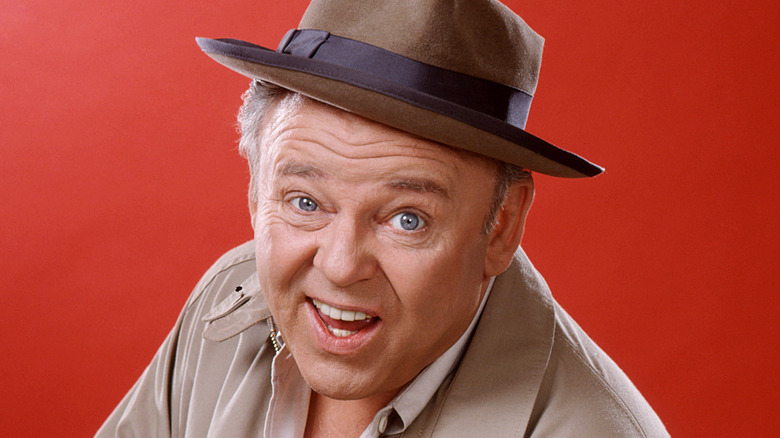
Numerous programs have played roles in television history over the years, and the sitcom format has served up its share of firsts. When people think back on the shows that fostered laughter but also helped establish what TV would look like in the ensuing decades, it's hard not to mention "All in the Family."
Archie Bunker, played by Carroll O'Connor back in 1971, was the kind of audience surrogate who's hard to completely explain now. His creation during "All in the Family" serves as the origin point for many TV dads to this very day. This is nothing short of amazing considering how much society has progressed since.
In addition to providing the mold for so many famous families on television, "All In The Family" also broke a ton of ground. One barrier the show managed to break was having the first toilet flushing sound in the history of the medium.
Famously, old shows would go out of their way not to show some of the cruder realities of everyday life. It's hysterical to think of a show like "All in the Family" breaking so many taboos of the era, like race and sexuality, but shying away from something as elementary as someone needing to use the restroom.
Literal "potty humor" has moments all across television history, and "All in the Family" was the show that really primed the pipes for some iconic gags. USA Today reported on this when they chronicled the beloved sitcom's 50th anniversary.
That same profile shared that executive producer Norman Lear modeled a lot of Archie's speech on his own father's. In fact, the popular pronunciation of "turlet" came right from the producer's dad. It was this kind of human detail that made O'Connor's performance feel so lived in.
All in the Family's firsts went well beyond flushing toilets
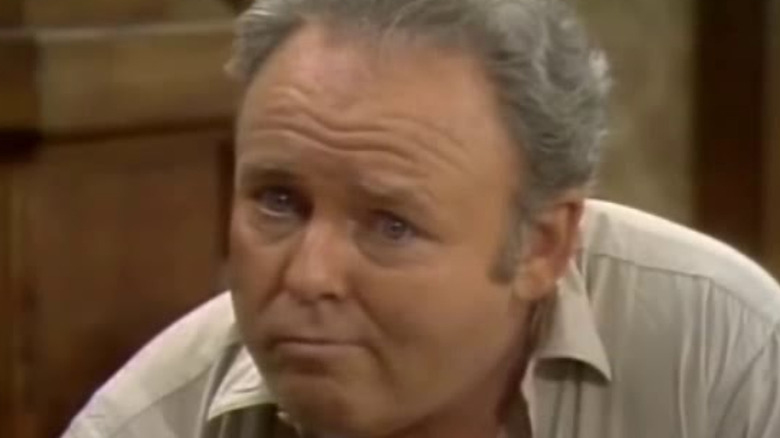
Archie Bunker was a lot of things, and one of them was "All in the Family's" resident bigot, played for comedic effect. Norman Lear made sure his title character always had some redeeming qualities, though. That need to see both sides of a person came from a place in his own family: his father.
Those formative experiences shaped how Lear approached Bunker. In an interview with NPR, the famed producer discussed how his father's peculiar nature informed one of television's true originals.
"I was a kid of the Depression. I saw my father's brothers go belly up," Lear said. "My father was always belly up because he was — it's very difficult for me to call my father what he was, so I use rascal. But he served time. He was in trouble a lot with the law."
Lear also addressed hot button social issues of the time with "All in the Family," which never shied away from controversy. In fact, most of the supporting characters around Archie and Edith Bunker, like Maude, ended up in other corners of the TV world.
As he told NPR, "I set out to make people laugh, truly to make people laugh. But we approached it seriously. Our writers read two, three newspapers a day, paid a lot of attention to their kids and families, came in to talk about everything that was affecting us in our daily lives. And that's where we got our material."
So it turns out that drawing from your own personal experiences can lead to a bunch of historic television. A lot of those moments ended up being more consequential than a toilet flushing in another room.