

10 Most Controversial Super Bowl Commercials Of All Time

The Super Bowl is obviously mandatory viewing for sports fans who will be tuning in February 8th to see if second-year quarterback Drake Maye can lead the New England Patriots to an upset victory against the seemingly stacked Seattle Seahawks. Music fans are surely the next-biggest portion of the crowd, anticipating a sure-to-be spectacular halftime show from recent Grammy winner Bad Bunny. Everyone else? They're there for the ads.
The big game is arguably the one night out of the year that people are likely to enjoy being advertised to, with companies shelling out shocking amounts of money in attempts to produce viral ads. We've already seen some of the best spots Super Bowl LX has to offer — as for the worst, we'll just have to wait and see what goes viral for the wrong reasons on Sunday night. The annals of advertising history are marred by Super Bowl ads ranging from annoying and cringe-worthy to so offensive they might've done irreparable harm to the brand they were intended to elevate. Before you brace yourself for an eye-rolling crypto ad or a lifeless celebrity cameo, we're here to show how bad it can really get with the 10 most controversial Super Bowl ads of all time.
Snickers, 'Kiss' (2007)
Super Bowl XLI — Indianapolis Colts 29, Chicago Bears 17
Snickers has a better track record than most companies when it comes to Super Bowl ads. Its 2010 spot — which featured the late Betty White as a nutrient-deficient dude trying to survive a backyard football game — is still considered one of the greatest Super Bowl ads ever made and launched the candy brand's enduring "You're not you when you're hungry" campaign. It's also produced even weirder spots that still manage to stick the landing, like the Danny Trejo-Steve Buscemi "Brady Bunch" riff that made our best of list from 2015.
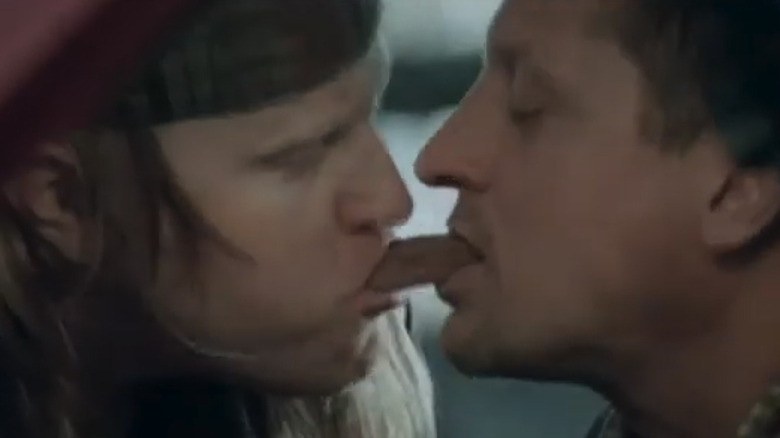
But man, did the company miss the mark with "Kiss." The ad, which aired during Super Bowl XLI in 2007, features two traditionally masculine mechanics working on a car together. When one of them pulls out a Snickers bar and begins to eat it, the other can't help himself and starts to munch on the other end. Before long, they reach the middle, accidentally touching lips — a clear nod to the classic spaghetti scene from "Lady and the Tramp" that could've been totally harmless if the company had played the rest of the scenario out differently.
Both men recoil immediately, disgusted by having "kissed," and subsequently urge one another to "do something manly" to restore their masculinity. This display of gay panic prompted spokespeople from the Gay and Lesbian Alliance Against Defamation (GLAAD) and the Human Rights Campaign to release statements rebuking the ad, with the latter arguing that the propagation of casual homophobia in professional sports creates unsafe environments for young queer people. In response, Snickers pulled the ad from circulation — though not before insisting on the ad's quality in its own statement, citing the positive reception from their target audience and media outlets covering the game.
GoDaddy, 'Shower' (2009)
Super Bowl XLIII — Pittsburgh Steelers 27, Arizona Cardinals 23
At the other end of the Super Bowl ad spectrum from the usually decent Snickers ads, there are the reliably indecent ads from GoDaddy. The internet domain registry and web-hosting company was an infamous contributor to the tradition of attention-grabbing big game ads throughout the 2000s and early 2010s, taking arguably the laziest approach by combining the general structure and tone of a comedic skit with racy imagery and messaging that wouldn't be out of place on an adult website.
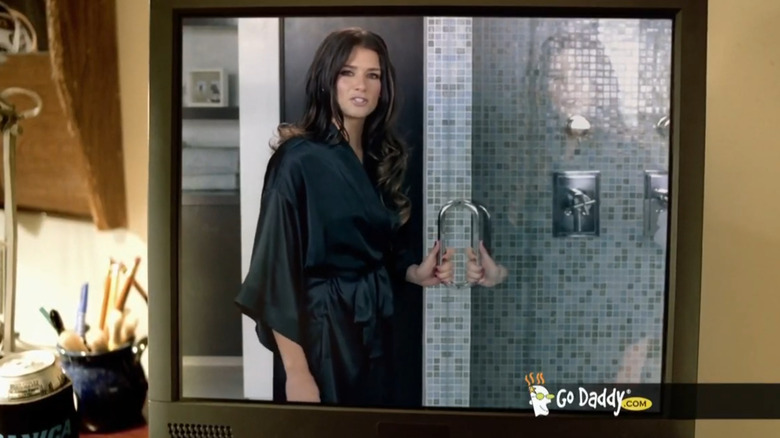
A prime example of their output is the "Shower" spot, which aired during Super Bowl XLIII in 2009. Trying to convey the inexplicable notion that GoDaddy allows its users to do anything (again, it's a site for choosing a domain name), the ad depicts three semi-stereotypically geeky men in a college dorm room somehow using the site to watch NASCAR driver Danica Patrick take a shower. It's obviously gross and painfully unfunny — especially given that this specific male fantasy has basically become a reality through AI deepfakes and image generators.
In response to the ad, the National Organization for Women put out a statement on its website urging readers to contact the president and CEO of NBC. It is unclear what, if any, action was taken. GoDaddy has thankfully altered their once grotesque advertising strategy, now producing more traditional ads like the Walton Goggins spot from Super Bowl LIX.
Focus on the Family, 'Celebrate Family' (2010)

Super Bowl XLIV — New Orleans Saints 31, Indianapolis Colts 17
At first glance, it can be difficult to see why this ad from Focus on the Family generated so much controversy. Sure, those in the know might point out that the evangelical religious organization has a long, well-documented history of controversial statements and activities that have drawn sharp criticism from advocacy groups and other Christian organizations alike. But the ad itself seems totally innocuous.
Titled "Celebrate Family," this ad (made for Super Bowl XLIV in 2010) stars Pam Tebow, the mother of famed Denver Broncos quarterback Tim Tebow. She expresses her love for her son and pride in his achievements and vulnerably shares that she nearly lost him during a difficult pregnancy. Simple and sweet, right? The only question, really, is what this ad is actually for?
After Tim bizarrely interrupts the story by forcefully tackling his mother to the ground, the ad invites viewers to learn more about the Tebows on the Focus on the Family website. There, they will learn that Pam nearly losing Tim was due to doctors recommending that she terminate the pregnancy. She refused potentially life-saving medical care to honor her faith — an unimaginably difficult choice that Focus on the Family was using to discourage abortion. Planned Parenthood made its own ad in response, praising the Tebows for sharing their story and using it to highlight the importance of maintaining a woman's right to make medical decisions for herself, as opposed to having the government or the church make them for her.
General Motors, 'Robot' (2007)

Super Bowl XLI — Indianapolis Colts 29, Chicago Bears 17
It's pretty amazing how easy it is to humanize something as inhuman as a crude factory robot through storytelling. That's a lesson General Motors learned the hard way with the ad "Robot."
Airing during Super Bowl XLI in 2007, the ad was made to hype up GM's commitment to quality through its 100,000-mile warranty pledge. To illustrate this (and perhaps subtly showcase how technologically advanced GM factories are), the company made the star of its ad a non-humanoid robot whose only seeming purpose is to fix screws into vehicles on the assembly line. When it malfunctions and drops one of the screws, the robot is "fired," the ad subsequently following it as it attempts to hold down a series of menial jobs like holding a sign or a fast food mic. It would be depressing enough even without a genuinely clever use of sound and the robot's limited movement to evoke an uncomfortably human experience.
Where the ad crosses the line for most viewers is toward the end, when it shows the robot rolling itself off of a bridge as Eric Carmen's "All by Myself" blares. (The robot then "wakes up" at the factory, implying the whole ordeal was a stress dream brought on by its desire for quality). The American Foundation for Suicide Prevention urged GM to remove the ad, which it described as "inappropriate," reporting that over 250 people contacted the group to complain after seeing it air.
If you or someone you know is struggling or in crisis, help is available. Call or text 988 or chat 988lifeline.org
Salesgenie, 'Pandas' (2008)
Super Bowl XLII — New York Giants 17, New England Patriots 14
We'll give credit where it's due — it was a bold move for InfoUSA CCO Vinod Gupta to write his own Super Bowl ad for the platform Salesgenie, as opposed to hiring an ad agency that does this sort of thing full-time. It was also a bold move for Ted Bundy to serve as his own defense attorney, which is to say that boldness was not a successful strategy for either man.
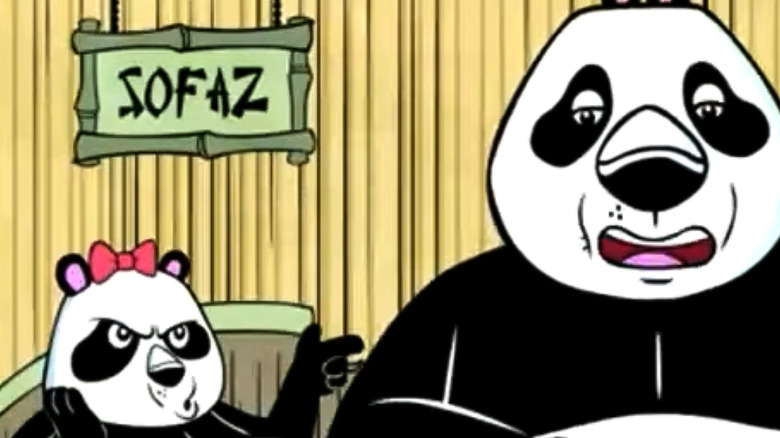
All jokes aside, the Salesgenie "Panda" ad is awful to a truly incredible degree. Having used a South Asian stereotype in the previous year's Super Bowl ad (which the executive also wrote himself), Gupta charged full steam ahead with an outrageously insensitive portrayal of panda bears. In addition to speaking in exaggerated "Chinese accents," the bears were criticized for reinforcing stereotypes about Chinese Americans.
InfoUSA and Salesgenie eventually decided to pull the ad, though Gupta was shocked it caused such a reaction. "We never thought anyone would be offended," he said in an interview with The New York Times. "The pandas are Chinese. They don't speak German."
Groupon, 'Tibet' (2011)
Super Bowl XLV — Green Bay Packers 31, Pittsburgh Steelers 25
The creative vision for this ad from Groupon's 2011 "Save the Money" Super Bowl XLV ad campaign wasn't without merit. Embracing a subtly self-deprecating sense of humor, the aim was to raise awareness for Groupon's mission — uniting people to save money — by subversively evoking PSAs that unite people in the service of more worthy, selfless causes. Doing this successfully requires a sensitive touch and careful selection of the ad's target cause. An ad featuring Elizabeth Hurley began with her speaking about the imperiled Amazonian rainforests before segueing into a celebration of a discounted Brazilian wax; Cuba Gooding Jr., meanwhile, went from saving the whales to watching them on a boat with other Groupon users.
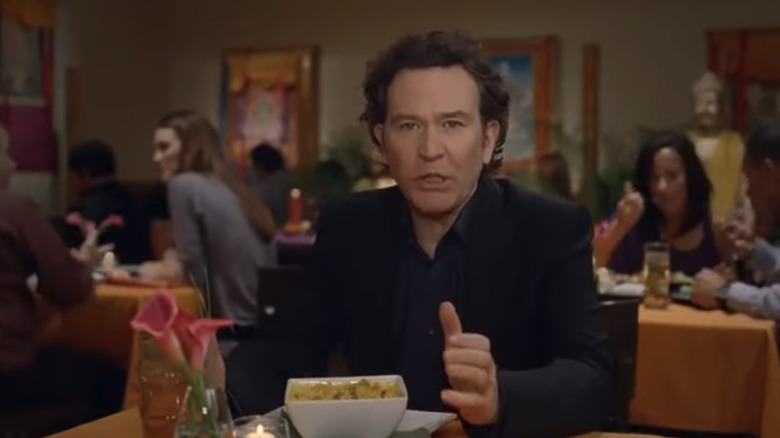
Perhaps those causes were just abstract enough in the minds of viewers not to inspire outrage. However, when Timothy Hutton spoke about the humanitarian crisis in Tibet as a setup for a joke about cheap restaurant deals, viewers were incensed. Groupon's press department was forced to respond after significant social media pressure. While the company's reps took the time to explain the idea behind the series of ads, they didn't immediately pull them off the air. Instead, the company first reached out to certain non-profits and included them in the campaign, encouraging its audience to donate to the related causes. Ultimately, however, the ads were indeed spiked.
Nuveen, 'The Future' (2000)
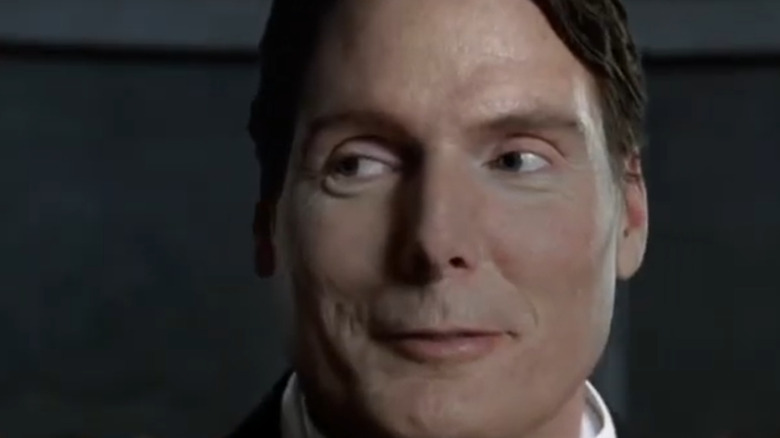
Super Bowl XXXIV — St. Louis Rams 23, Tennessee Titans 16
Not all Super Bowl ad fumbles are the result of edgy humor. In the case of Nuveen investments' 2000 ad heralding the promises of the new millennium, it seemed as though the company was earnestly — if naively — trying to inspire hope about what the future might hold.
The ad comes right out of the gate boldly implying that something akin to a cure for AIDS would be developed by 2004, followed by notable strides in the fight against cancer in 2006. This is explained to the audience via an old, seemingly wealthy man giving a presentation at an opulent, futuristic metropolitan gala as average people watch a broadcast of the speech in their homes (the whole thing feels uncanny and unintentionally dystopian from the first shot). The gala is, apparently, being held to celebrate a "remarkable breakthrough in spinal cord injuries," with the man thanking researchers and "contributors" (read: investors). He then introduces the evening's honored presenter, none other than Superman himself, Christopher Reeve — standing upright and walking onto the stage, despite being paralyzed in an accident in 1995.
Though Reeve's miraculous recovery was depicted using camera tricks and 2000s CGI, some viewers thought the actor had actually been cured. Thomas Countee Jr., the executive director of the National Spinal Cord Injury Association, reported to CBS News that he received several calls from people believing a novel treatment had actually been used to heal Reeve.
"When you go out with an advertisement like that you tread a very, very narrow line between trying to be creative ... and being misleading," said Countee.
SodaStream, 'Sorry' (2014)

Super Bowl XLVIII — Seattle Seahawks 43, Denver Broncos 8
Strangely enough, this banned Super Bowl ad for an at-home soda maker wasn't pulled because it provoked outrage among viewers at home. Made for Super Bowl XLVIII in 2014, SodaStream's "Sorry" ad features "Avengers" star Scarlett Johansson promoting the brand, toeing the line of tastefulness with a somewhat tongue-in-cheek exploitation of sex appeal to ensure the ad would go viral. What got the ad banned by broadcaster Fox was not Johansson's tastefully suggestive posing, but a single line at the end — "Sorry, Coke and Pepsi." Fox didn't appreciate SodaStream taking a shot at two of the biggest big-game advertisers out there and rejected the ad. Maybe the company should've known better, given it was rejected by CBS the year prior for almost the exact same reason.
This was hardly a problem for SodaStream, who salvaged the ad by simply cutting the line (all the free press over the "banned" version surely didn't hurt either). Surprisingly, it was Johansson herself who drew harsher, more impactful backlash for getting involved with the company in the first place. In 2014, SodaStream still operated a factory in the Israeli-occupied West Bank, with activists urging consumers to boycott the company for exploiting the occupation that breaks international law and infringes upon the rights of Palestinians. As a result of appearing in the ad, Johansson cut ties with Oxfam, having served as a global brand ambassador for the NGO confederacy since 2005. Johansson returned to the Super Bowl in 2022 alongside husband Colin Jost to promote a slightly less controversial company — Amazon.
Holiday Inn, 'Class Reunion' (1997)
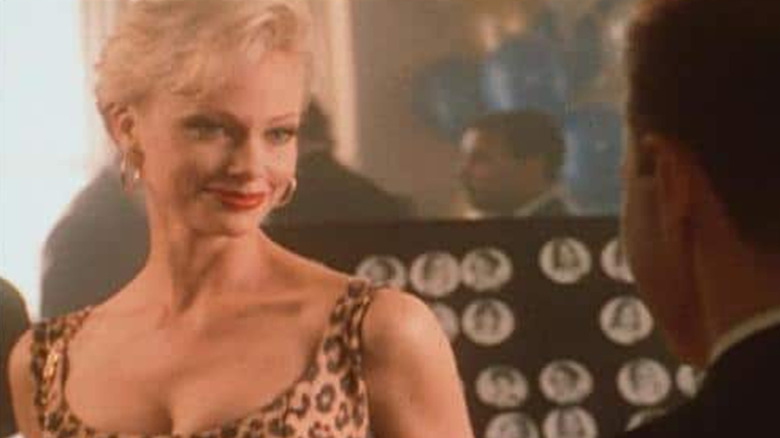
Super Bowl XXXI — Green Bay Packers 35, New England Patriots 21
The only things that will make you cringe more than this outdated Holiday Inn ad are the articles that were written about it. Titled "Class Reunion," it's hard to tell what exactly it's advertising, at first. A well-dressed, conventionally attractive woman walks through what is presumably meant to be a Holiday Inn event space. As men ogle her and women scowl with jealousy, a disembodied voice lists various body parts — nose, lips, chest — with accompanying price tags.
Just as it starts to feel like a lasciviously objectifying Mastercard "priceless" ad, one of the woman's former classmates realizes that she is actually a trans woman. "It's amazing what changes you can make for a few thousand dollars," the voice says as the classmate's (Steve Hytner, best known as Kenny Bania from "Seinfeld") face morphs from excitement to terror. "Imagine what Holiday Inns will look like when we spend a billion."
Watching the ad now, the transphobia is hard to stomach. At the time, however, the ad was primarily deemed controversial for depicting a trans woman at all. Religious leaders and outlets described the ad as morally reprehensible, their combined outrage compelling Holiday Inn to pull the ad. The Los Angeles Times, meanwhile, reported that the ad was deemed offensive to cis women. Whether considering the contemporary reaction or how poorly it's aged in the decades since its first airing, it's frankly astonishing that an advertisement for something as banal as hotel renovations was executed in a way that basically offended everyone.
Just for Feet, 'Kenyan Runner' (1999)
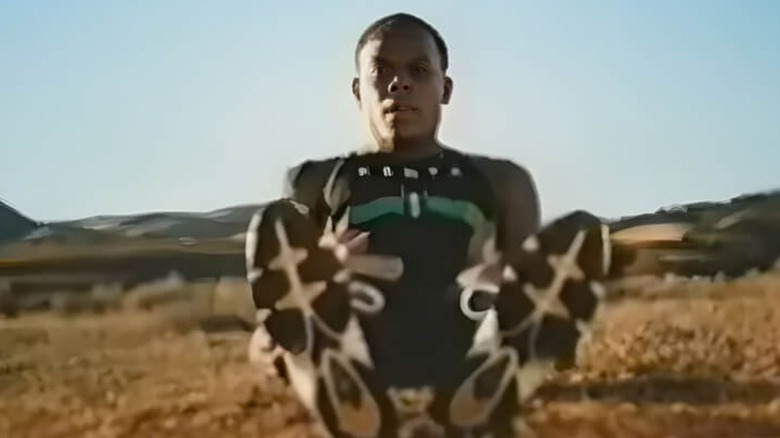
Super Bowl XXXIII — Denver Broncos 34, Atlanta Falcons 19
There's something breathtaking about the brazen stupidity of this ad produced by Just for Feet. Airing during Super Bowl XXXIII in 1999, it depicts a Kenyan professional runner racing barefoot through a desert as he is tracked and pursued by white "hunters." Throughout the commercial, the runner is framed and spoken about as though he were an animal. The hunters eventually manage to subdue the runner by offering him drugged water — when the runner awakens next, he is horrified to find Nike sneakers have been put on his feet.
Though Just for Feet was apparently apprehensive about the ad (which cost them $7 million in total), the ad agency responsible assuaged their concerns enough for the company to let it air. There was hardly a reporter or ad exec who wasn't immediately stunned by how obviously terrible it was. Chuck McBride, a prominent creative director responsible for many Nike ads, marveled to Salon at the time, "I just couldn't believe that they had done this." By the time it became clear to the company that the ad had done existential harm to their brand (one outlet referred to them as "Just for Racists" afterward), it was too late. CEO Harold Ruttenberg sued the ad agency for $10 million, though Just for Feet ultimately filed for bankruptcy less than a year after the ad aired.