

Deleted TV Show Scenes That Could Have Changed Everything
Bringing a creative work to life often requires, as the saying goes, killing your darlings. A strong scene may still fail to serve the larger plot, leading directors and editors to leave it on the cutting room floor. Some scenes get cut because producers worry that audiences won't respond to them. On network television, time constraints are a significant factor, as commercials dictate the length of episodes.
Editing is one of the most important elements of television and film production. If every single filmed moment were included in a television show, it probably wouldn't be very good. The central plot could get lost, episodes could run too long, or ill-advised creative choices might draw unnecessary attention. Still, it's hard not to wonder how certain shows might have felt if deleted scenes had been left in. From deepened character motivations to disappointing finales, deleted scenes can unlock TV's most frustrating mysteries.
We love getting to peek behind the curtain, uncovering how the TV sausage gets made. What follows is a roundup of deleted scenes that could have changed a lot if they were included in the final episodes. Whether these scenes were rightfully cut or should have been kept remains up for debate.
Cersei's miscarriage on Game of Thrones
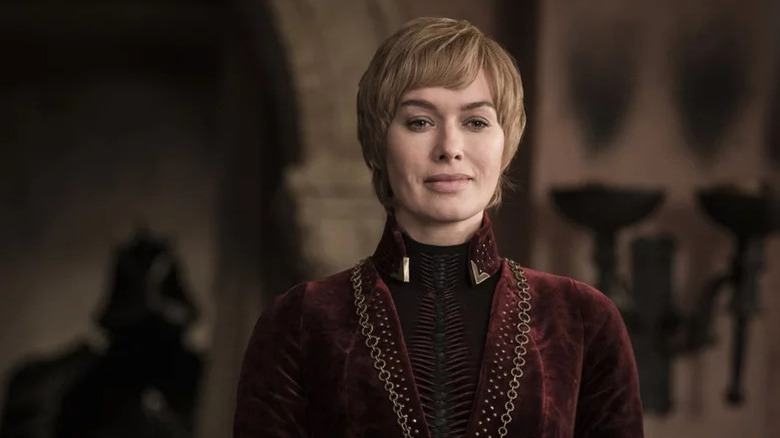
Fans have many complaints about the "Game of Thrones" season finale and the last season as a whole. While Daenerys' (Emilia Clarke) poorly plotted transformation into the Mad Queen has been widely discussed, Cersei's (Lena Headey) storyline is similarly frustrating. She spends most of the season crying and drinking wine, only to be killed most unceremoniously – by falling bricks. We also never got confirmation of whether Cersei was actually pregnant with her brother Jaime's (Nikolaj Coster-Waldau) baby.
According to Headey, Cersei was pregnant, and the audience could have learned this in a very emotional moment. According to The Wrap, at a fan convention in Germany, Headey revealed that she filmed a scene in which Cersei had a miscarriage, calling it "a really traumatic, great moment for Cersei." The scene was slated to appear in the penultimate episode, "The Bells," in which Cersei and Jaime meet their deaths in a cellar. Without the cut scene, it's unclear whether Cersei died pregnant.
Some fans believed Cersei was faking her pregnancy to manipulate Jaime, while a long-standing fan theory suggested she would become the Mad Queen instead of Daenerys. Cersei's miscarriage could have served as motivation for her descent into madness, but with Daenerys positioned as the Mad Queen, Cersei's storyline ultimately had nowhere to go.
Shauna Malwae-Tweep's happy ending on Parks and Recreation
An hour of television is not a long time to wrap up seven seasons of storylines, so it's understandable that the producers of "Parks and Recreation" made some cuts. Thankfully, NBC released a "Producers Cut" of the finale that includes several unaired scenes. Our favorite involves long-suffering reporter Shauna Malwae-Tweep (Alison Becker). Shauna was unlucky in love throughout the series, with Leslie (Amy Poehler) once describing her life as being filled with "romantic disasters too horrific and numerous to catalogue."
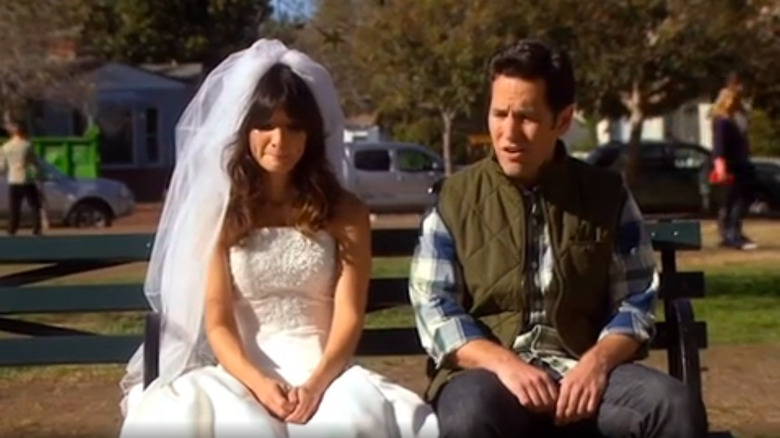
In a cut scene from the "Parks and Recreation" finale, Shauna finally gets her happy ending — after yet another rejection. We find Shauna crying on the bench after her fiancé leaves her at the altar. Bobby Newport (Paul Rudd) tries to comfort her by offering her a piece of gum, and they get married five hours later. Though not the sharpest tool in the shed, Bobby is completely guileless and makes perfect sense for a woman who's spent her entire life being hoodwinked by men.
Speaking to The Hollywood Reporter, Mike Schur explained the scenes involving Shauna and Jeremy Jamm (Jon Glaser) were "miserably tough to cut," but they ultimately had to axe certain scenes involving certain characters. "With only 43 minutes in the series finale, we had to give as much time as we possibly could to the cast who has been in 125 episodes," Schur explained.
How I Met Your Mother's alternate finale
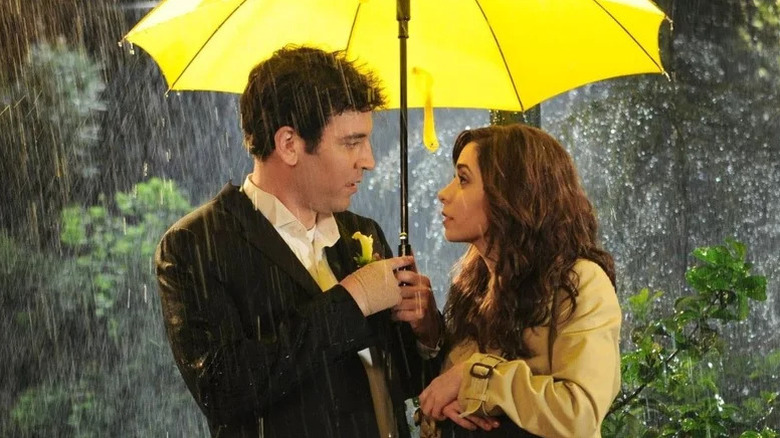
The finale of "How I Met Your Mother" is high up on our list of the worst TV series finales of all time. In case you've wiped it from your memory, here's a brief refresher. The final season of the show depicts the lead-up to Barney (Neil Patrick Harris) and Robin's (Cobie Smulders) wedding. Ted (Josh Radnor) finally meets the titular Mother, a woman named Tracy (Cristin Milioti). However, older Ted, voiced by Bob Saget, reveals that Tracy died from an illness. Barney and Robin, whose wedding was the focus of the entire season, get divorced, and Ted's kids encourage him to pursue Robin.
The ending infuriated many fans, who found it both pointless and insulting. Why spend an entire season on two characters getting married only for it to end in divorce? What's the point of nine seasons of buildup about the Mother's identity, only to kill her off?
Though the writers have stood by the finale, an alternate ending does exist. They only filmed one scene, but editing and different narration allowed them to create two endings. In the alternate ending, Tracy doesn't die, and she and Ted get their happily ever after. Ted also suggests that Robin and Barney may have repaired any issues with their marriage. It's not as unexpected as the official ending, but it's what many fans would have preferred.
Christopher builds a life outside of the mob in The Sopranos
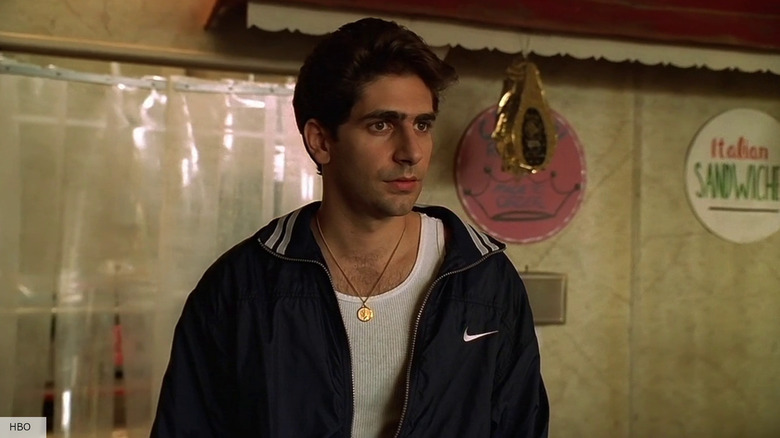
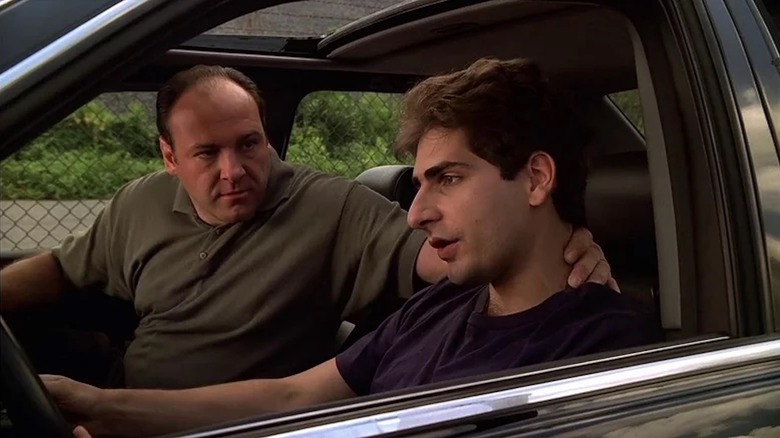
Christopher (Michael Imperioli) is one of the most compelling characters on "The Sopranos." Though deeply flawed, Christopher strives to be a better man, often falling short of other people's expectations. In Season 6, Tony Soprano (James Gandolfini) suffocates Christopher after they get into a car accident caused by Christopher's drug use. A tree branch impales a car seat meant for Christopher's daughter, and the close call gives Tony the justification he needs to kill his cousin.
However, a deleted scene from Season 6 adds another layer to their relationship and potentially changes Tony's motivation for killing Christopher. In the clip, Tony and Carmela (Edie Falco) stop by Christopher's house unannounced. Christopher is hosting a small party with his neighbors and a couple of folks from the movie business. Tony is taken aback that Christopher is hanging out with a group of people he doesn't know. "Who are these people?" he asks Carmela as they sit in the car.
The scene gives more context to the rift that develops between Tony and Christopher this season. It also suggests Tony killed Christopher not because he couldn't control his drug addiction, but because Christopher was building a life outside of Tony's orbit, which Tony couldn't tolerate.
The Seventh Doctor's evolution in Doctor Who
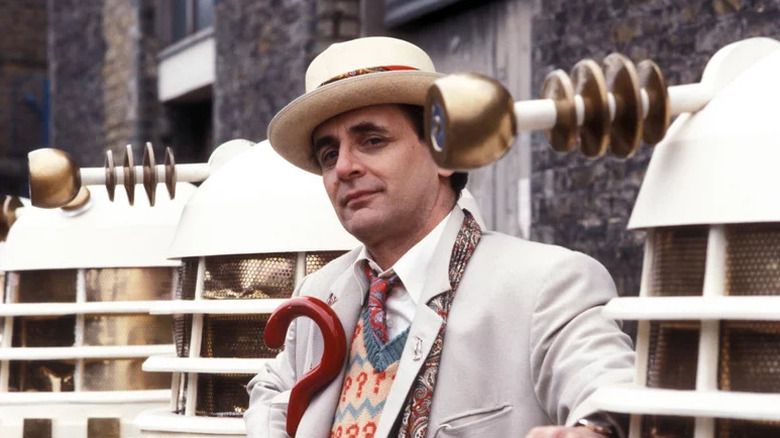
In 1989, "Doctor Who" almost made a significant canon change that would have affected the series for years to come. In a deleted scene from the final episode of the show's original run, the Master suggests that the Doctor (Sylvester McCoy) is no longer a Time Lord. Rather than refuting his greatest enemy, the Doctor agrees with him, noting that he has "evolved" into something else. In the previous season, the Doctor makes a similar claim in another deleted scene, telling Davros (Terry Molloy) that he is "far more than just another Time Lord."
If that scene had aired, it would have had significant implications for "Doctor Who" lore, though fans wouldn't get another season for sixteen years. That's a mighty long time for the questions brought up by the Doctor's proclamation to go unanswered. However, "Doctor Who" has made similar updates to Time Lord canon in more recent years.
The Timeless Child plot suggests that the Doctor is actually the first Time Lord and the reason other Time Lords exist, with Gallifreyan scientist Tectuen using his genetic code to create a planet of Time Lords. Considering how perplexing this TV retcon turned out to be, it's probably a good thing the writers decided to leave things alone back in 1989.
The racy scenes in Bates Motel
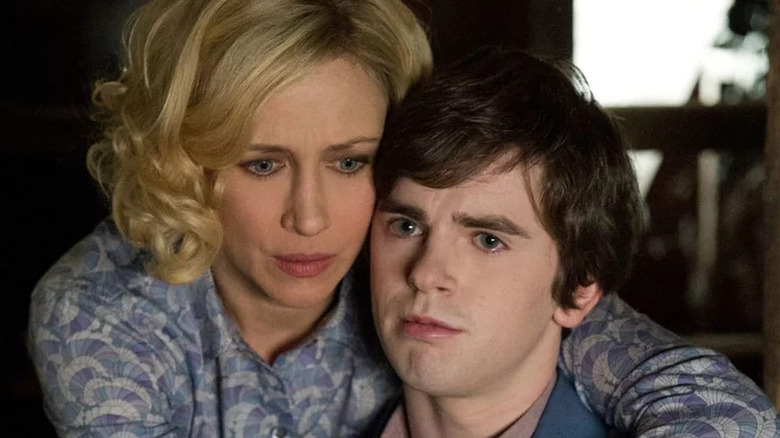
The entire plot of "Bates Motel" is predicated on the bizarre, intense relationship between Norman Bates (Freddie Highmore) and Norma Bates (Vera Farmiga). Norma buys a seaside motel so the pair can start a new life after the death of her husband, but Norman's fragile mental state and Norma's often violent desire to protect her son make that fresh start difficult.
The precise nature of Norman and Norma's relationship often remains unspoken, hovering on the edge of incest. However, according to the cast, they did film some scenes that more or less went there. Series star Vera Farmiga told TVLine that she and Highmore shot some "pretty racy things" that viewers never got to see. "There was a really intimate moment that never ended up making it on to the show," Farmiga explained.
The acting and writing on "Bates Motel" were consistently excellent, so we feel confident that the scenes Farmiga was referring to weren't necessary to tell the story of Norma and Norman. Indeed, Farmiga and Highmore were able to illustrate the shockingly intimate nature of their relationship without any sexual contact — the emotional transgressions were clear.
San Junipero's kindergarten scene
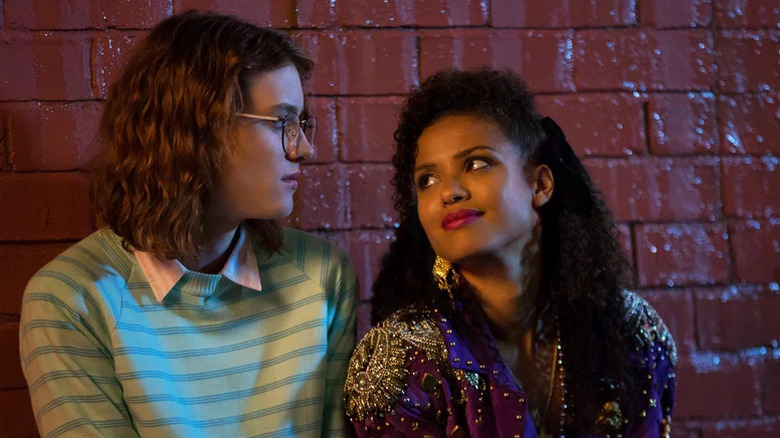
Arguably, "San Junipero" remains one of the best "Black Mirror" episodes ever made. Unlike most "Black Mirror" episodes, technology is ultimately portrayed as a positive force in "San Junipero." The episode takes place in a simulated reality. Within the world of San Junipero, the socially awkward Yorkie (Mackenzie Davis) meets the more outgoing Kelly (Gugu Mbatha-Raw). They quickly fall in love, but hit a small snag. They both need to die to be together forever, as San Junipero functions as a digital afterlife that can also be visited by the elderly.
"San Junipero" differs from many other episodes of "Black Mirror" in that it has a happy ending, which in part accounts for the strong fandom that has emerged around it, particularly within the queer community. However, the episode could have taken on a more somber tone if one deleted scene had made the final cut. "Black Mirror" co-creator Charlie Brooker told Refinery 29 about a kindergarten classroom scene he ultimately decided not to include. The issue with the scene is that it forces viewers to confront the fact that all the children in the classroom have died. "It was so heart rending [that] it destabilised everything else," Brooker explained.
The Big Little Lies ice cream cone scene
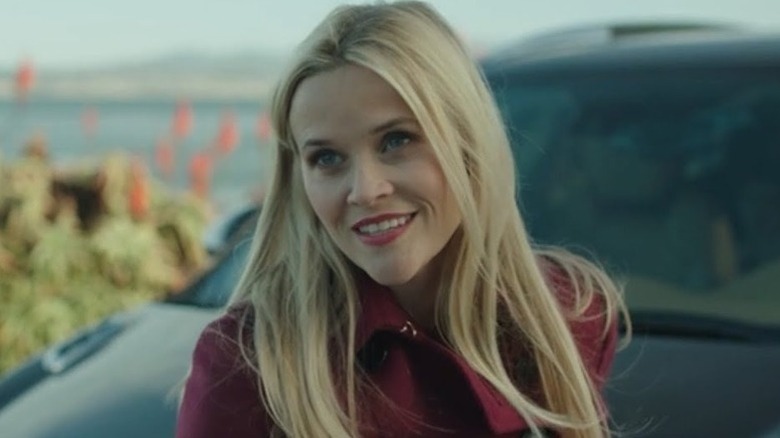
We'll be the first to admit that this deleted scene doesn't quite fit the brief for this list. It probably wouldn't have changed the plot of "Big Little Lies" much if Reese Witherspoon had thrown an ice cream cone at Meryl Streep, but who knows? Maybe it would have totally transformed our understanding of the season.
Before the release of Season 2 of "Big Little Lies," which follows the residents of a wealthy seaside community in the aftermath of a murder, paparazzi photos from the set began circulating. One particularly striking photograph quickly went viral. It depicts Reese Witherspoon, who plays busybody Madeline, throwing an ice cream cone at Meryl Streep, who portrays the infuriating mother-in-law of Nicole Kidman's character. Witherspoon wears an unforgettable grimace in the photo, and it's no wonder people became obsessed with the image.
Sadly, the scene in question wasn't included in Season 2, much to the chagrin of fans. HBO president Casey Bloys shared his theory with TVLine as to why the scene was cut. "My guess is it made for a funnier meme on social media than [an actual scene]," he said. We won't argue with Bloys here, but wouldn't it have been so satisfying to see a sniveling character like Mary Louise get her just desserts?
Negan kills Maggie in The Walking Dead
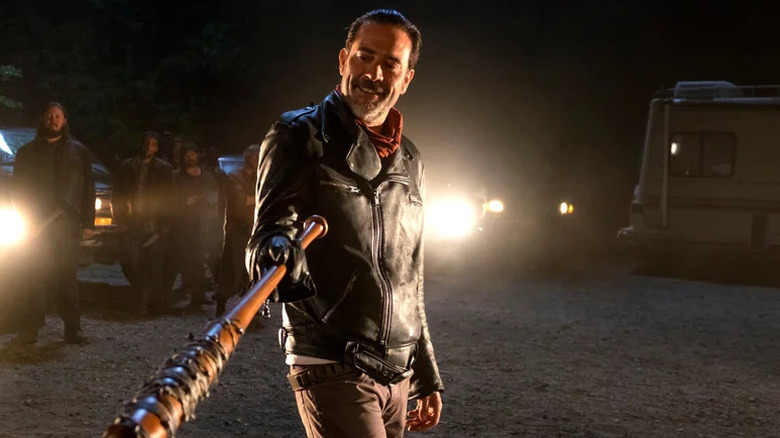
"The Walking Dead" left fans with a brutal cliffhanger between Seasons 6 and 7. In the Season 6 finale, viewers watched with bated breath as Negan (Jeffrey Dean Morgan) prepared to use Lucille, his beloved barbed-wire-wrapped bat, to smash in the head of someone in Rick's (Andrew Lincoln) group. As the dictatorial leader of the Saviors, Negan intended to punish Rick and his team for taking out so many of his men. But who died at Lucille's hand? Fans who followed the comics may have known, but others had to wait until "The Walking Dead" Season 7 premiere to find out.
The premiere revealed that Negan's deadly game of "eeny, meeny, miny, moe" first landed on Abraham (Michael Cudlitz) and then on Glenn (Steven Yeun). But a leaked scene released before the episode aired reveals a different fate. The clip depicts Maggie (Lauren Cohan), Glenn's pregnant wife, being beaten to death. Negan makes the same quip, "Ooh, look at that. Taking it like a champ," that appears in the episode.
Though Abraham and Glenn were the only characters killed in the episode, each actor filmed a death scene. These scenes were used to show Rick's visions of their possible executions. It's unclear whether Glenn and Abraham's deaths were planned from the start, but the showrunners could have killed off any of these characters in the editing room.
Hannah Montana's flashback
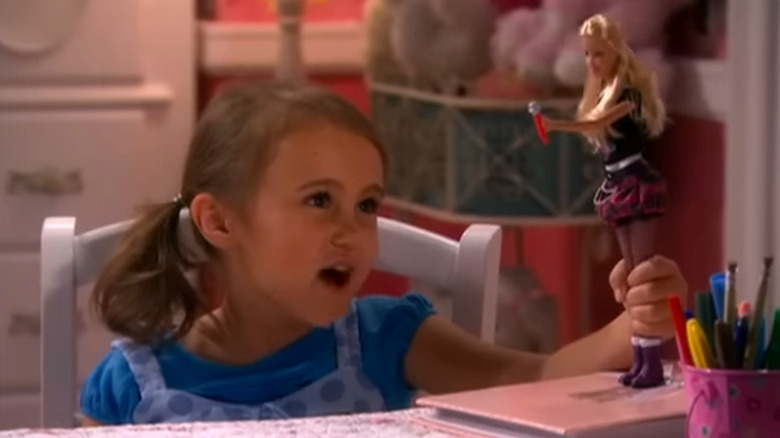
The alternate ending of the Disney Channel series "Hannah Montana," starring Miley Cyrus, iither a meta take on the show or a reversal of everything that came before it. The show follows Miley Stewart (Cyrus), a teenage girl who lives a double life. Her schoolmates know her as a dorky girl named Miley, but she also has an alter ego: Hannah Montana, a successful teen pop star.
The last episode of the series ends with Miley and her best friend Lily (Emily Osment) going their separate ways, with Lily heading to college and Miley traveling to Paris to film a movie. In the final scene, Miley changes her mind and flies back to the States to attend college with her BFF. However, the alternate ending turns back the clock twelve years. A young girl identified as Miley Cyrus is singing with her doll when Billy Ray Cyrus, who plays her father on the show, and Tish Cyrus, Miley's real mother, walk in. Young Miley describes her dream of becoming a pop star, and her parents tell her they believe in her.
Some viewers have interpreted the alternate ending to mean that the entire series was a fantasy conjured up by young Miley. But the more likely explanation is that this scene represents Miley Cyrus' dream of becoming a pop star, not Miley Stewart's. In that case, the scene breaks the fourth wall and suggests that "Hannah Montana" was a dream come true for the real Miley.
Seinfeld's alternate courtroom verdict
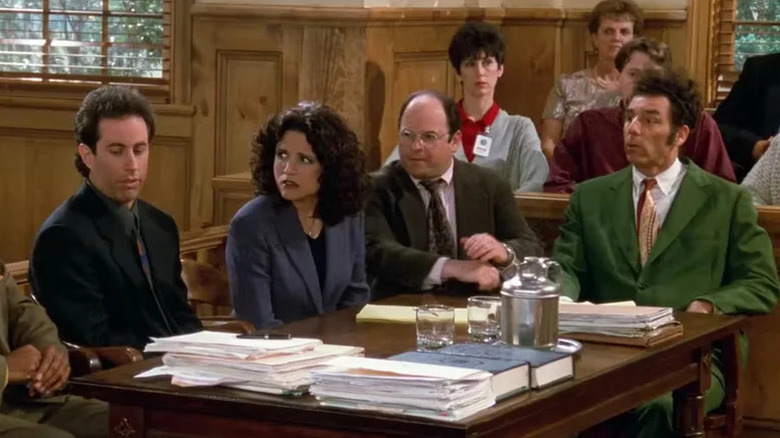
Along with "How I Met Your Mother," the ending of "Seinfeld" is often considered one of the worst TV finales of all time. For nine seasons, "Seinfeld" was an irreverent comedy "about nothing," as the show was often described. However, in the final episode, the series takes on an unexpected air of moral seriousness. After failing to help a man being carjacked at gunpoint, the gang is arrested for their lack of action. The episode concludes with the foursome in prison, having been convicted under a Good Samaritan law.
While the characters in "Seinfeld" often exhibited selfish, even cruel behavior, the moralistic ending rubbed many viewers the wrong way. Plus, despite its extended runtime, "The Finale" was relatively short on jokes. However, on the Season 9 DVD, you can find an easter egg that shows an alternate ending. Instead of finding the gang guilty, the jury declares them not guilty while the judge looks on in disappointment. They're never sent to jail, and we're left to imagine if they'll ever learn their lesson.
Breaking Bad's Malcolm in the Middle crossover
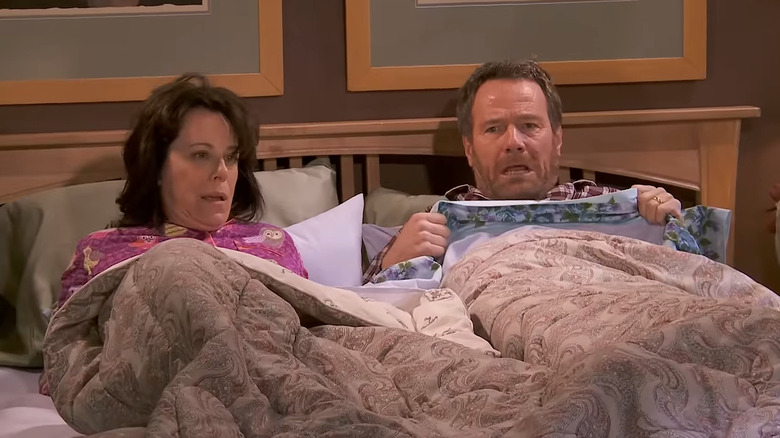
The finale of "Breaking Bad" provided a satisfying conclusion for most fans, tying up loose ends and giving the characters the endings they deserved. We don't have many complaints, frankly. But a crack ending included on the complete series DVD box set provides a hilarious alternative to this dark and bloody denouement.
The scene depicts Bryan Cranston dressed as Hal, his character from the sitcom "Malcolm in the Middle," alongside Hal's wife, Lois, played by Jane Kaczmarek. Hal has a nightmare and shakes Lois awake so he can tell her about it. In the dream, he was a meth dealer who hung out with a man who "always looked like he was wearing his older brother's clothes" and used "the b-word a lot," a clear reference to Jesse (Aaron Paul). He tries to get frisky with Lois and uses Walt's famous line: "I'm the one who's knocking."
This alternate ending suggests that the entirety of "Breaking Bad" was a dream that occurred in the universe of "Malcolm in the Middle," similar to the it's-all-a-dream finale of "Newhart." Of course, this scene was never really intended to be the ending of "Breaking Bad," but it's a pretty funny gag.
Greek's flash-forward
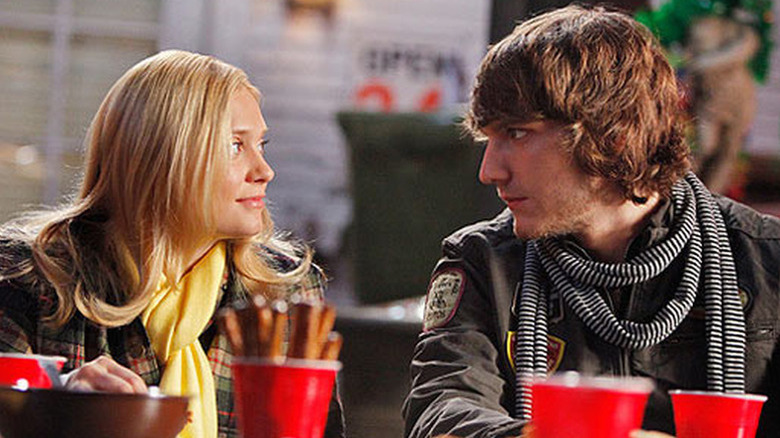
One of only a handful of shows to try to accurately depict college life, "Greek" is considered one of ABC Family's best shows. The series ended after four seasons, with the seniors graduating from Cyprus-Rhodes University. The Kappa Tau Gamma fraternity house is demolished, driving home the theme of new beginnings. Casey (Spencer Grammer) and her on-again, off-again boyfriend Cappie (Scott Michael Foster) drive off into the sunset, headed for Washington, D.C.
However, the showrunners also filmed a flash-forward that was included on the DVD. It would have served as the Season 3 finale had the show not been renewed for a fourth and final season. The scene takes place two years in the future, as Casey and Evan (Jake McDorman) return to CRU for Rusty's (Jacob Zachar) graduation. Casey and Cappie aren't together, but they reunite and grab a drink. Evan is engaged to someone outside the group. Rebecca (Dilshad Vadsaria) and Beaver (Aaron Hill) are together, and Rusty remains with Dana (Martha MacIsaac). Because the show ultimately aired a fourth season, this alternate finale never became canon.