

Desperate Housewives' Success Was More Important For ABC Than Audiences Realized
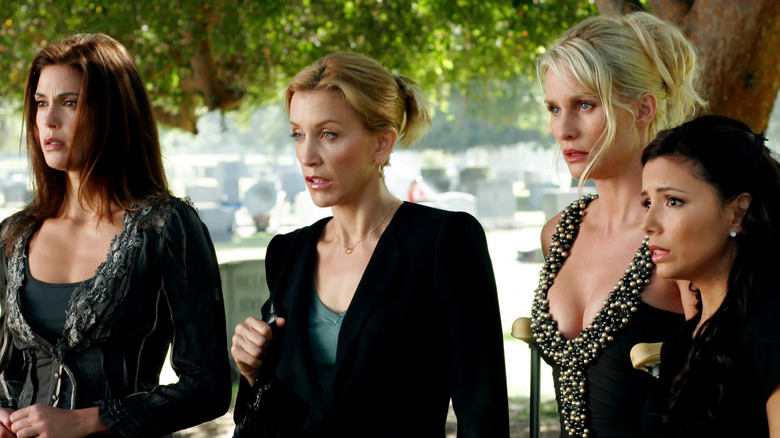
ABC had a lot riding on "Desperate Housewives," and the show became a load-bearing series for the broadcast network in the early 2000s. People tuning in for "Desperate Housewives" the first time probably weren't aware that the network had made an immense bet on the show. That success went on to help define the decade for ABC. During the earlier part of the decade, gameshows like "Who Wants to Be a Millionaire," which premiered in 1999, were still dominating the popular consciousness, and ABC decided to ride that hot ratings streak for as long as it could.
After a few years, "Millionaire" was not keeping ABC competitive with CBS, Fox, and NBC. As a result, the network needed to take some big swings in 2004. In Entertainment Weekly's oral history of "Desperate Housewives," ABC president Susan Lyne gave her read of the situation. "Lloyd [Braun, chairman] and I agreed: We're in fourth place, so let's really swing for the fences this time," she told the outlet. "Let's go for shows that — if executed perfectly — could be massive hits. 'Desperate Housewives' was that kind of show."
ABC prioritized Lost and Desperate Housewives
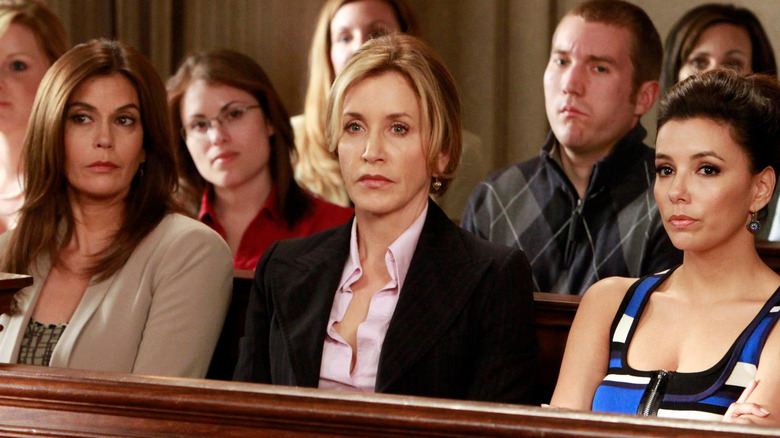
With things looking dire for ABC, the network made a bold decision to sock most of its marketing budget into two scripted series. The 2004 series in question included "Lost," from J.J. Abrams, Damon Lindelof, and Jeffrey Lieber; and Marc Cherry's "Desperate Housewives."
ABC president Stephen McPherson told Entertainment Weekly just how big the gamble on "Lost" and "Desperate Housewives" turned out to be. He explained, "We put almost 90% of our fall marketing budget against 'Lost' and 'Desperate Housewives.' We figured after that we could build on the success of those and use them as marketing platforms. That fall was really the change from what we had done previously."
Stakes were high for the ABC lineup headlined by "Lost" and "Desperate Housewives." But, as luck would have it, things fell into place for the broadcast giant. In an era where audiences were becoming inundated with reality shows and contest series, these two programs stood out in a big way.