

Why CBS Didn't Want Desi Arnaz To Star In I Love Lucy
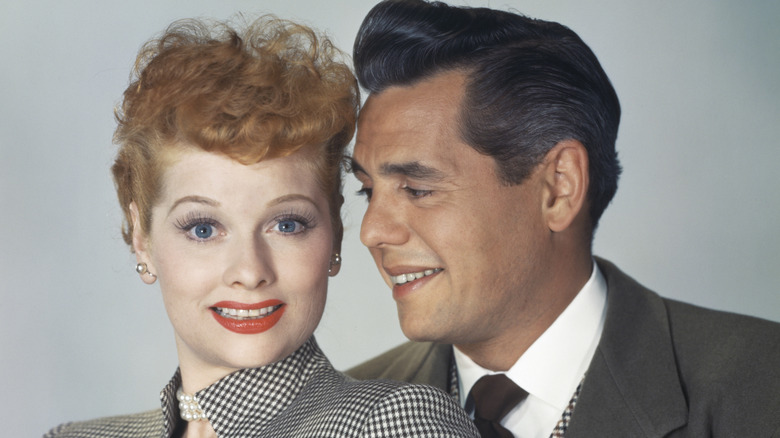
"I Love Lucy" may have had Lucille Ball's name in the title, but the show was the product of her relationship and business partnership with her husband, Desi Arnaz. The two worked together to adapt Ball's radio program (and later, a CBS sitcom starring Joan Caulfield and Barry Nelson) "My Favorite Husband" into what would become the groundbreaking TV comedy classic starring the real-life couple as husband and wife. For Ball, this was a perfect opportunity to work with her husband, lending authenticity to the show.
However, CBS brass was not onboard with casting. In a 2011 interview with the Television Academy Foundation, Ball and Arnaz's daughter, Lucie Arnaz, explained how network executives were "absolutely" against casting the Cuban-born bandleader and actor as the fictional Lucy's spouse. "The networks, they were not going to let them do the show at all," said Arnaz. "They said, 'Who's gonna believe that an all-American girl like you would be married to a Cuban?'"
Ball fought for her husband — and to prove the CBS executives wrong — refusing to do the show if Arnaz was not cast. To prove that audiences would respond well to their obvious chemistry, Ball and Arnaz went on the road with a vaudeville act based on "My Favorite Husband." It was successful, and the network relented. While their "mixed marriage" was the subject of some controversy, it didn't hold the series back from becoming one of the biggest hits in TV history.
Lucille Ball and Desi Arnaz broke barriers on and off screen
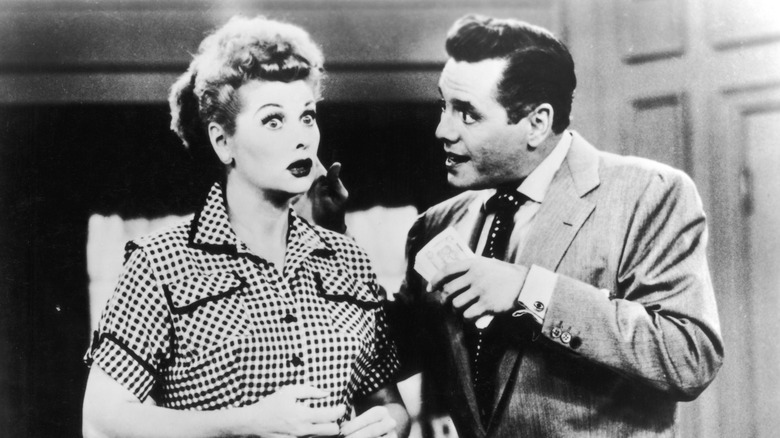
Over 75 years later, it's easy for modern audiences to take "I Love Lucy" for granted. The black-and-white, multi-camera sitcom about a husband and wife may seem old fashioned today, but in the 1950s, "I Love Lucy" was a revolutionary piece of programming. Lucille Ball and Desi Arnaz bringing their interracial marriage to network TV was a radical act in the 1950s, a time when Hollywood rarely, if ever, dared to show nonwhite characters in love. The couple took things one step further when Ball became pregnant in Season 2. She and Arnaz wanted to introduce a pregnancy storyline into the show, once again blending reality and fiction. Sponsor Philip Morris was not pleased, pressuring the network to block them from anything more than a passing reference to the impending birth.
In producer Jess Oppenheimer's memoir, "Laugh, Luck ... and Lucy: How I Came to Create the Most Popular Sitcom of All Time," he shares the story of how Arnaz fought Philip Morris and won. "Desi sat down and fired off a letter to Alfred E. Lyons, chairman of the board of the Philip Morris Company," Oppenheimer writes. "In it he pointed out that until then, with the creative decisions in our hands, we had managed to give Philip Morris the number one show in the country" (via Vanity Fair). Philip Morris backed down, and the show was allowed to depict the Ricardos "expecting" a child. (These events are dramatized in the Aaron Sorkin film "Being the Ricardos," starring Nicole Kidman as Lucille Ball and Javier Bardem as Desi Arnaz.)