

Why Carroll O'Connor Decided Edith Had To Die For His All In The Family Spin-Off
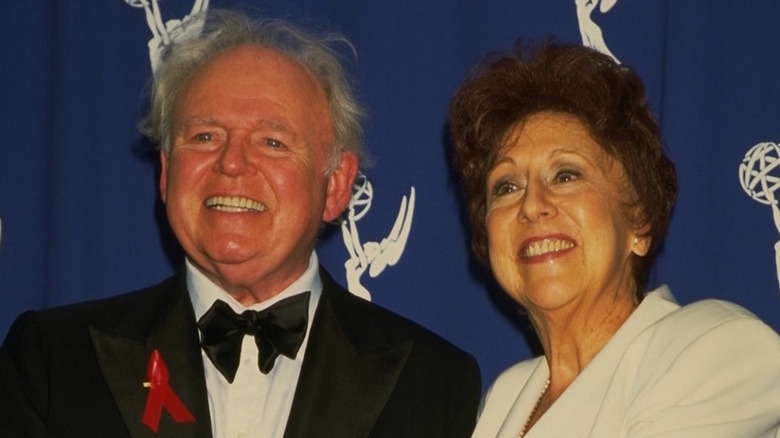
"All in the Family" made TV history but after nine seasons as Edith Bunker, Jean Stapleton wanted to move on. This wasn't terrific news for CBS entertainment executive Robert Daly, who was hoping for more "All in the Family." So, Carroll O'Connor (Archie Bunker) and creator Norman Lear started talking about how to continue the story in a spin-off without Stapleton.
Lear initially pushed to keep Edith around in a diminished capacity; the show would focus on Archie at a bar, and the audience would almost never see or hear his wife. O'Connor didn't like that idea.
"I said, 'Jesus Norman, that's crippling the show. I think Edith must die,'" O'Connor told the Television Academy in 2010. Lear disagreed strongly and "negotiations broke down that night."
But O'Connor stood his ground. He recalled telling Daly, "I can't do this show with a nonexistent Edith. We'll have to write a show in which she dies ... and then go on with Archie without her."
After that, Lear agreed to make Archie a widower. In 1980, Lear explained the dilemma to the New York Times. "Edith Bunker would simply not get a divorce. That was especially true of Archie Bunker, nothing could diminish his need of her," he said. "So death was the only option."
Edith's death from an off-camera stroke was revealed in the Season 2 premiere of "Archie Bunker's Place."
Jean Stapleton went back to stage acting after leaving All in the Family
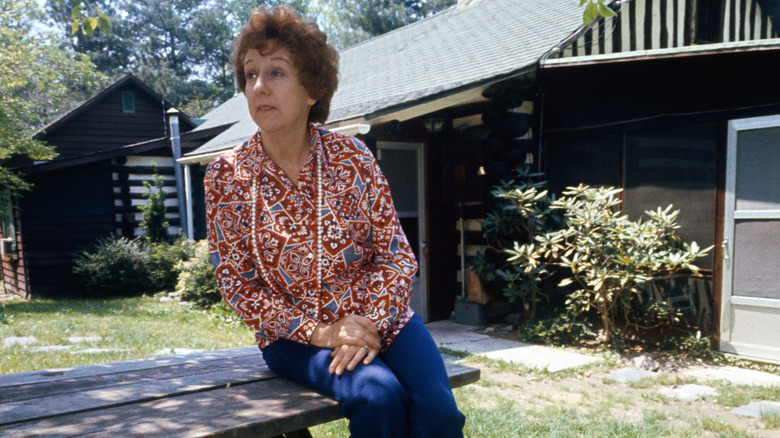
In an interview with the Television Academy Foundation, Jean Stapleton recalled signing off on Edith's death with Carroll O'Connor and Norman Lear. Stapleton added that when Edith's death was revealed on "Archie Bunker's Place," she was in North Carolina for a theater performance. She said that the morning after the episode aired, her hotel housekeeper came to clean her room and was shocked to see the Emmy winner upright and fully functional. Stapleton recalls that the housekeeper "dropped her jaw and said, 'My God, I thought you were dead.'" Stapleton died in 2013 at age 90.
In 1980, Lear's Tandem Productions memorialized Edith with a $500,000 donation to the National Organization for Women in support of the Equal Rights Amendment. The New York Times quoted Lear at a press conference noting that "The E.R.A. represents everything Edith believed in and stood for. It appealed to her innate sense of decency and fairness."