

10 Netflix Shows That Are Better On A Rewatch
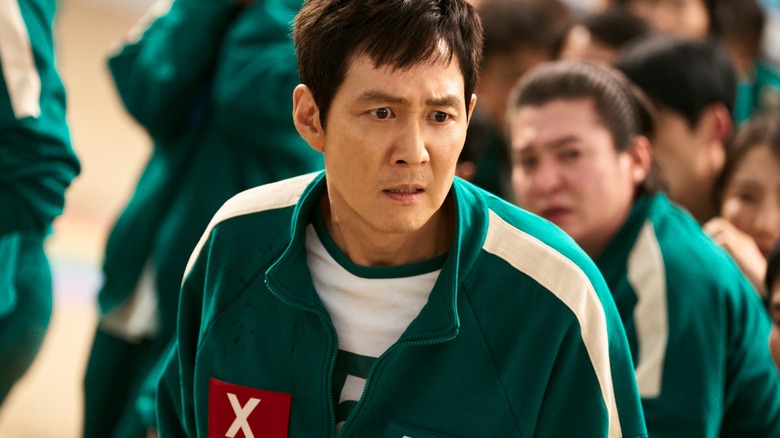
Picture sleeping in a room where the walls show how someone will eventually meet their end. That is the dormitory in "Squid Game," where the games are painted on the walls all along, out of view behind rows of bunks that are cleared away as players are eliminated.
Those smaller details are easy to miss the first time watching a new show, which is a big reason some series get better the second time around. These 10 Netflix originals all do, whether that means spotting the ghosts creator Mike Flanagan hid in the background during episodes of "The Haunting of Hill House" or noticing the slowly changing environments of "Russian Doll."
The payoff takes different forms. Sometimes, it's a twist, as in "Dark," that transforms earlier scenes into clues in hindsight. Other times, as with "Kaleidoscope," it's through a narrative structure that hits differently depending on how viewers move through the show's episodes. Fair warning, though: Understanding why these shows improve during a second watch means encountering a few spoilers.
The Haunting of Hill House
Viewers counting the ghosts in "The Haunting of Hill House" during a first watch probably won't get further than the Bent-Neck Lady. The Crain children already have enough to deal with. Creator Mike Flanagan's reimagining of Shirley Jackson's book follows the five siblings as adults, each still carrying emotional damage from the summer their parents, Hugh (Henry Thomas) and Olivia (Carla Gugino), moved the family into Hill House with plans of fixing it up and reselling it.
Flanagan told Bloody-Disgusting the show's sets have a hidden purpose. "The interior was designed so that it could hide ghosts," he said. "If you go back and watch the series again, in every episode there's probably somewhere between eight and 10 ghosts that are just hidden in plain sight that we called no attention to but they're there."
The Bent-Neck Lady arguably becomes the best reason to rewatch "The Haunting of Hill House," since many of her scenes read more as moments of grief than jumpscares once her identity is known. The hidden ghosts also become more meaningful, as spotting them mirrors what the Crains experience, living for years alongside what they once refused to see. That turns a devastating family drama into a scavenger hunt of sorts, and it's one more reason the series remains head, bent neck and shoulders above the rest of Flanagan's Netflix shows.
Dark
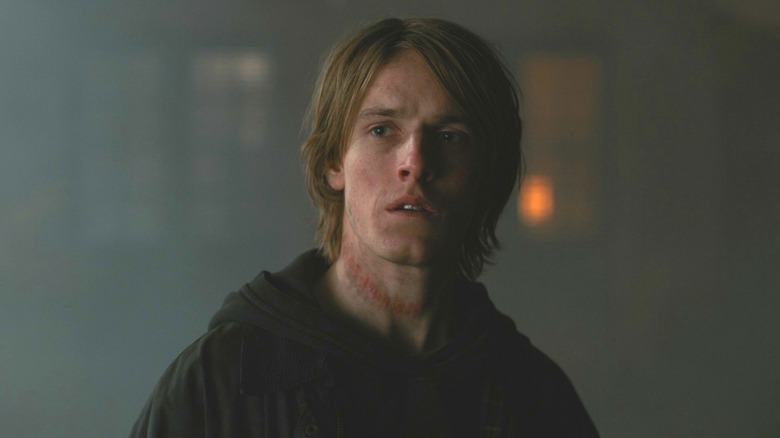
Viewing "Dark" for the first time means tackling a family tree pop quiz, of sorts. The series kicks off with the disappearance of a young boy from Winden, Germany. The search eventually pulls four families into a time-travel mystery that spans three centuries. Between the different time periods, the bloodlines, and various actors playing characters as they get older, a lot of the first watch is spent simply keeping track of eras and whose parent is whose.
Co-creator Jantje Friese has said the ending is teased throughout. "Some people have already found a lot of the imagery and paintings we used [throughout the series]," she told The Hollywood Reporter. "There are all of these images, and even in dialogue, hints that give it away. But you can only read it once you see how it ends." During a rewatch, details like Jonas' raincoat start to look more like the signposts they are.
Knowing the answers changes what kind of show "Dark" is: a puzzle the first time, a distressing tragedy the second. In scenes between Jonas and the older stranger who turns out to be him, viewers watch a man try and fail to change his past, and conversations between characters who don't know they share a bloodline have a weight to them that no first-time viewer can ever fully feel.
Russian Doll
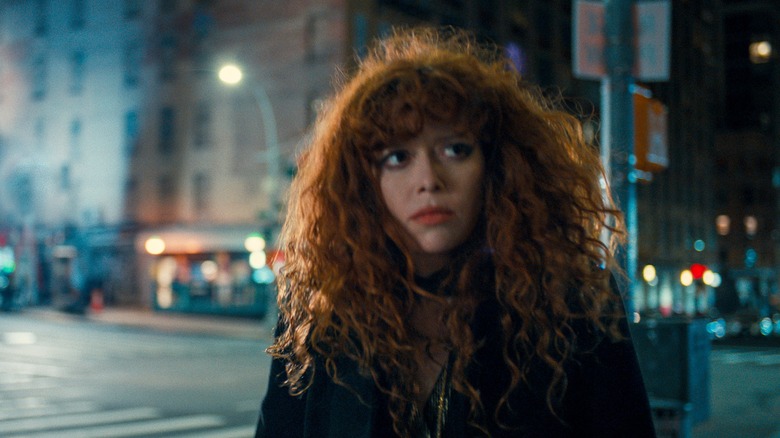
Nadia (Natasha Lyonne), who is stuck in a time loop, dies a lot in "Russian Doll," but what happens to everything around her is just as interesting. Each time she wakes up at her 36th birthday party, more of her world goes missing. The guests thin out, flowers wilt, fruit rots, and eventually, the mirrors vanish. With so much going on in Nadia's head, it's easy to miss it all the first time.
All those subtle changes were by design. Co-creator Leslye Headland told Filmmaker Magazine the subtractions start in the premiere. "Once we decided to take things away, we had to really track," Headland said. "You only really start to feel it in [Episodes] 6, 7, and 8, but things are being taken away since Episode 1."
Watched again, "Russian Doll" reads more like a frantic countdown, as Nadia's world shrinks well before she actually notices. The loop that once played out like a cosmic joke at the expense of a careless woman becomes an existential deadline. Scenes that seemed like Nadia stalling, whether she's chasing her missing cat or dodging her ex, start to feel like time she doesn't have. Meanwhile, the show's eventual pairing of Nadia with Alan (Charlie Barnett), a stranger also stuck in the time loop, feels like the rescue it was made to be.
Squid Game
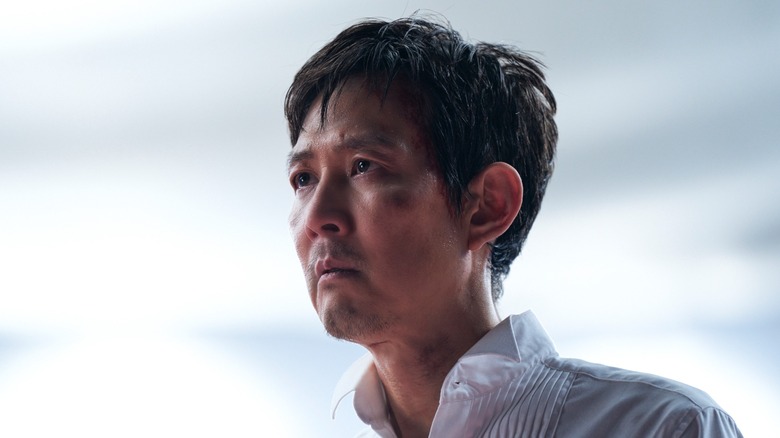
It's hard to look at Oh Il-nam (Oh Yeong-su) the same way while pondering the questions posed by the "Squid Game" Season 1 finale. In the show's first season, 456 contestants buried in debt compete in a string of children's games for cash, and anyone who loses is killed. The oldest in the group, Player 001, comes across as frail and a little confused, even easy to root for. When creator Hwang Dong-hyuk developed the character, he thought of Oh Yeong-su. "More than anything, he was an unknown actor, even in Korea," he told Deadline. "So, I think he really embodied that new and mysterious vibe that Il-nam had."
Once the twist is known, the show's breadcrumb clues feel more obvious, from the way Il-nam recognizes the setting for the marbles game to the handcuffs that never actually lock during tug-of-war. Even his swings between sharp and seemingly impaired, which come across as frailty at first, start to look like calculation.
Seeing Il-nam for who he really is counts as one of the most compelling reasons to go back. The marbles episode, "Gganbu," in which Seong Gi-hoon (Lee Jung-jae) cheats his elderly partner and weeps over it, plays as one of the show's most tender hours the first time. But going in knowing Il-nam's identity renders it the cruelest: a desperate man being toyed with by the person who masterminded the game.
BoJack Horseman
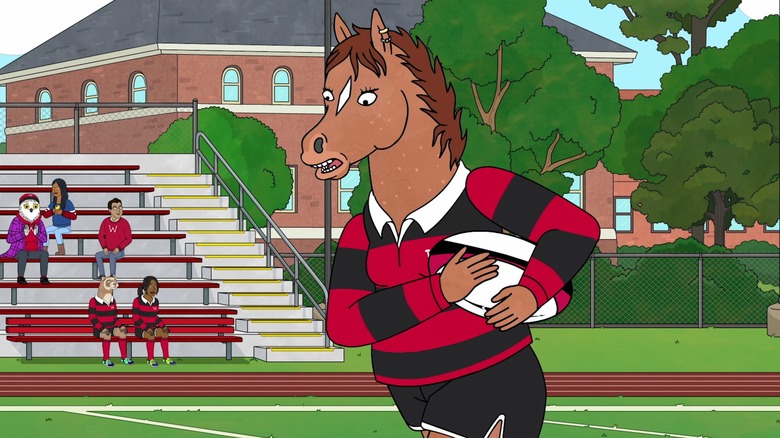
Years after the fictional sitcom "Horsin' Around" ended, its former star, a horse named BoJack Horseman (Will Arnett), is still living in the shadow of its success. "BoJack Horseman" follows him as his questionable choices gradually come back to haunt the people in his life, including Sarah Lynn (Kristen Schaal), the former child star who grew up on his show. Creator Raphael Bob-Waksberg always knew Sarah Lynn's tragic fate. "It's heavily foreshadowed in her first appearance, and it was more of a question of when," he told Variety.
In the Season 1 episode "Prickly-Muffin," Sarah Lynn muses that she doesn't need to work on herself, but simply keep hangers-on around until she eventually dies at a young age. The line lands very differently once viewers realize it's actually prophetic, and BoJack letting Sarah Lynn party in his house isn't the set-up for a gag anymore. It's really the first in a string of wrong choices that ends for her in the Season 3 episode "That's Too Much, Man!" at the planetarium.
The show's backgrounds also deserve another look, thanks to production designer Lisa Hanawalt, who tucked a slew of smaller touches, like signs, posters, and animal gags, into scenes. "I want to draw something that will make people look again," Hanawalt told Slate. Once viewers revisit the show, the smaller details become half the fun.
Dead to Me
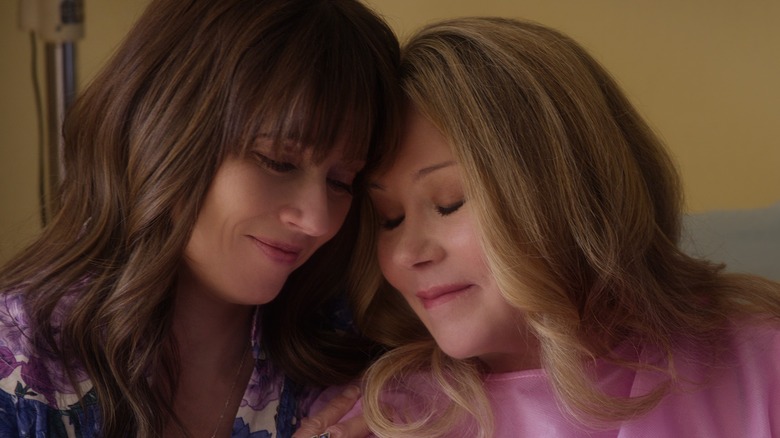
In the series premiere of "Dead to Me," recently widowed real estate agent Jen (Christina Applegate) has just bonded with Judy (Linda Cardellini) at a support group, when the episode throws a curveball. The Mustang that killed Jen's husband is sitting in Judy's storage unit. Cardellini told Entertainment Tonight that while the show couldn't immediately give away what Judy did, there are clues. "If you go back, there are indications," she said. "Then, in the second episode, the audience is in on it with Judy, so there's a little bit more of a range to play and the comedy comes from watching her squirm."
More twists follow. On the night of the accident, Judy was driving, and her fiancé at the time, Steve (James Marsden), made her keep going. Viewers who know the full picture come to see Judy's jitteriness as guilt and Steve's easy grin as that of a man used to getting his way.
Judy's generosity across Season 1, from moving into Jen's guest house to doting on her sons, seems like acts of kindness from a lonely woman in need of a friend. But knowing what she's hiding transforms every favor into a moment of penance. "Dead to Me" never stops being funny, but the second time through, it's clear how much of the friendship is really Judy trying to pay off a debt Jen doesn't even know exists.
Midnight Mass
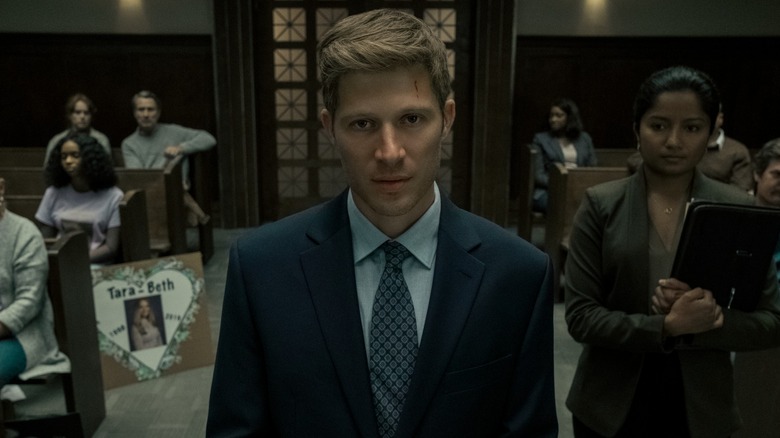
The miracles in "Midnight Mass" come once Father Paul (Hamish Linklater) arrives on Crockett Island. A paralyzed girl walks again, and an older woman looks decades younger. Creator Mike Flanagan's seven-episode series holds off on explaining why, though Father Paul's confession in Episode 3, one of the show's best monologues, drops a major hint. Once the truth comes out, the sermons, Bible readings, and communion wine arguably take on a much darker meaning.
Flanagan told The Wrap that the questions he asked during Bible study as a child found their way into the show. "These are ideas I found interesting and that they coexisted with beautiful ideas of forgiveness and of love for our neighbor," he said. "That the God of the Bible would be capable of such incredible beauty and love, depending on which book you're reading, and then such horrific things, especially in the Old Testament, is something that I find fascinating about Christianity, about religion in general."
On a second viewing, the religious language does double duty. Bev Keane (Samantha Sloyan) quoting Scripture to excuse cruelty has more significance once her motives become clear. Meanwhile, the communion wine, which Father Paul serves at Mass, is doing far more than symbolic work. Watched once again with the ending in mind, the show turns into a study of how locals on the island would rather rationalize what's in front of them than really question it.
Behind Her Eyes

The ending of "Behind Her Eyes" feels like it was made to send viewers back to the beginning. At the outset, Louise (Simona Brown), a single parent, kisses a man she's just met, who turns out to be her new boss, David (Tom Bateman). Soon, she's hiding two things: an affair with David and a friendship with his wife, Adele (Eve Hewson), that David doesn't know about. From there, the six-episode limited series moves toward a huge twist. Author Sarah Pinborough, whose novel the show adapts, explained her approach to plot. "Everything had to have dual meaning, so that no one could say this character lied," she told The Irish Times.
The show takes Pinborough's rule to heart. Once the finale reveals what really happened to Adele, earlier scenes change meaning. The lucid-dreaming lessons Adele gives Louise to help with her night terrors may seem like a side plot at first, but gain importance as a trap. David's drinking and coldness toward Adele, which could come across as habits of a bad husband, become the behavior of a man who believes he's covering for a killer. Meanwhile, Adele's interest in her husband's mistress turns out to be the plan from the start. Though a second watch of "Behind Her Eyes" makes a strong case that the show ultimately played fair, viewers may still need to talk about that ending.
1899
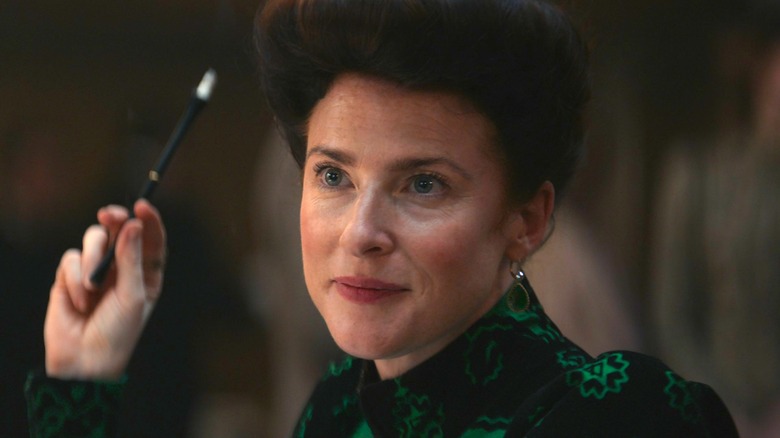
From "Dark" creators Baran bo Odar and Jantje Friese, "1899" strands a crowd of emigrants, many of them European, aboard a steamship bound for New York. While crossing the Atlantic, they encounter the Prometheus, a vessel that vanished months earlier. However, the ghost ship becomes the least of their problems.
The finale holds a huge twist, which the show teased from the start. "We always wanted to plant computer wording," Odar told Tudum. "For example, the room number 1011 is binary code. All these hints subconsciously or consciously trigger something in your head." Even the scene in the premiere when every passenger lifts a teacup at the same time has a deliberate glitch according to Odar.
That twist makes "1899" feel like an entirely different show during a rewatch. On a first pass, the series plays out as a slow-burn mystery. But once the simulation is revealed, the same scenes become a search for the seams, including the recurring geometric symbol and the ship's hatches, which dump characters into reenactments of their worst memories. While Odar and Friese had once hoped their show would span three seasons, "1899" was canceled at Netflix after Season 1. That leaves a rewatch as the only way back into the show.
Kaleidoscope
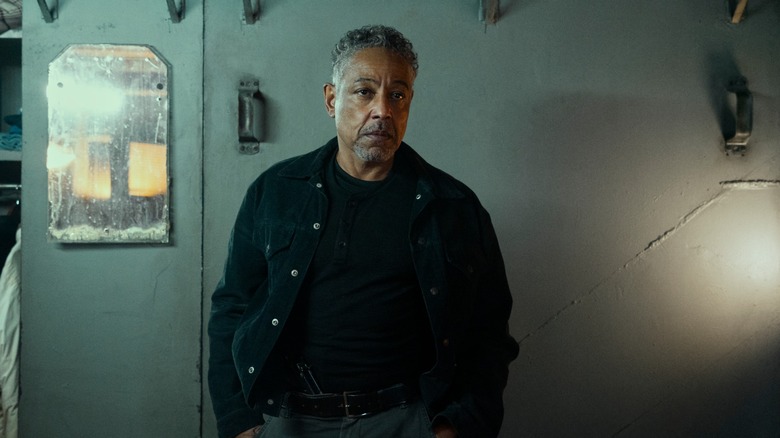
In Eric Garcia's heist drama "Kaleidoscope," Giancarlo Esposito plays Ray Vernon, aka Leo Pap, a thief who recruits a crew to break into a security firm's vault and steal $7 billion in bonds. Everyone starts with the primer "Black" and finishes with "White: The Heist," which reveals whether the heist goes off without a hitch. The seven episodes in between hop across nearly 25 years, and viewers pick the order themselves.
Garcia explained to The Wrap why this flexible viewing approach made sense. "When I started exploring it, we started bringing them together and realized that this structure was maybe the best way to tell a story about heists in which characters aren't necessarily who they say they are, don't necessarily have the motivations they think they have," he said. "And you could get at it from different angles."
Watching in a different order means learning key details at different moments, which changes how characters and their betrayals unfold. Roger Salas (Rufus Sewell), the security executive whose vault is the target, comes across as the mark, but once viewers reach "Violet," they realize the heist is revenge for Roger's own betrayal, one that cost Ray his wife and his freedom. Meanwhile, Hannah (Tati Gabrielle), an employee at the security firm, reads as either a plant or a daughter with her own plan, depending on when viewers learn she's really Ray's child. In that way, "Kaleidoscope" is the rare show that rewards viewers for revisiting it any way they like.