

5 Big Bang Theory Jokes That Didn't Age Well
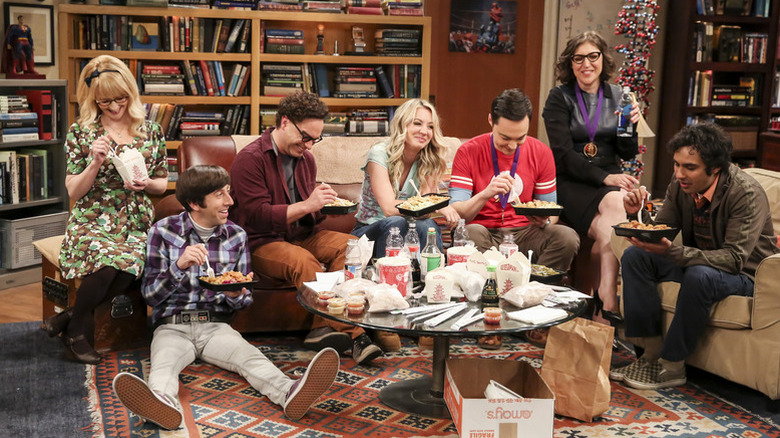
The broken elevator is a long-running gag from "The Big Bang Theory" that works so well because the frustration of the situation is relatable. That's also why it's so satisfying for the elevator to finally be fixed by the series finale. Sheldon Cooper (Jim Parsons) having a designated spot on the couch is an effective bit because of how well it illustrates his personality and demeanor. So, when he (temporarily) gives it to Howard (Simon Helberg), the act takes on great meaning. But not all of the jokes on "The Big Bang Theory" can be as purposeful and creative as the aforementioned ones.
Some jokes from "The Big Bang Theory" are just as memorable as Sheldon's "Bazinga!" catchphrase, but not in a good way. Certain comedic efforts by the Chuck Lorre show go too far. Instead of being funny, they're offensive or overdone. Rather than being amusing, they seem distasteful or lazy. The following examples are a few jokes from "The Big Bang Theory" that haven't aged well.
Sheldon's behavior in The Egg Salad Equivalency
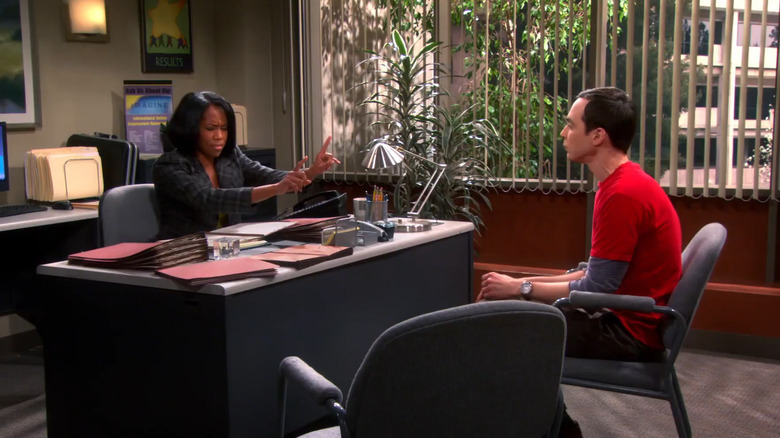
"The Big Bang Theory" often highlights how Sheldon's social ineptitude and awkwardness hinder his interactions and relationships — even when harm and condescension aren't intended. But the show goes too far with that in Season 6, Episode 12: "The Egg Salad Equivalency." When speaking with his research assistant, Alex (Margo Harshman), Sheldon recalls an egg salad sandwich joke his dad would make with a punchline that describes women as "full of eggs and only appealing for a short time." He then explains how the joke showcases women as "slave(s) to [their] desire to reproduce."
That interaction shows how Sheldon doesn't always have the social awareness to recognize what makes comments rude or offensive. He might consider it a harmless comparison with a scientific explanation, but reducing women to reproductive beings isn't a joke. That instance alone could have been enough for Sheldon to learn from his mistakes. But taking the bit one step further and having him revisit the slave comment to a Black woman in human resources is taking things too far.
By repeating the discriminative comments, which come from a white man who views himself as superior because of his intelligence, "The Big Bang Theory" crosses the line instead of finding a balance between highlighting Sheldon's social ineptitude, making jokes, and showcasing offensive comments.
Howard's degrading, objectifying approach to women
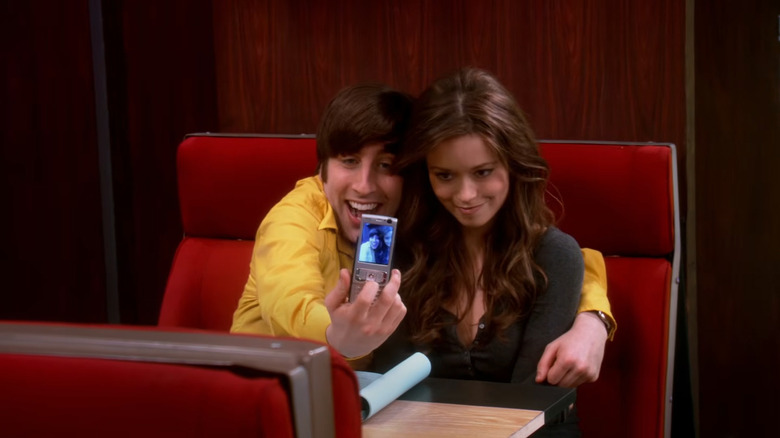
By the series finale of "The Big Bang Theory," Howard has two kids with his wife, Bernadette (Melissa Rauch). It's a departure from the ladies' man mentality he has at the show's start. That mindset is one way Howard stands out from his friends, who aren't as forthcoming or eager with women. But his approach to women always comes off as creepy more than confident.
He has concerning encounters with models from "America's Next Top Model" and actress Summer Glau. When having dinner at Sheldon and Leonard's apartment in Season 2, Episode 4: "The Griffin Equivalency," Howard makes comments that make Penny (Kaley Cuoco) uncomfortable and asks whether he's creepy in a good or bad way. It's not funny to need clarity about whether you're being creepy, especially toward women.
Bernadette eventually helps Howard learn to be respectful to women, but it isn't without difficulty. Before getting married and starting a family, they go through a breakup caused by Howard's virtual sexual encounter while playing "World of Warcraft."
Because he's so lecherous, Howard continually makes comments and decisions that make him an off-putting misogynist who objectifies women. Despite his character growth, it's tough to see any of his remarks or actions as humorous.
Howard's overweight mother
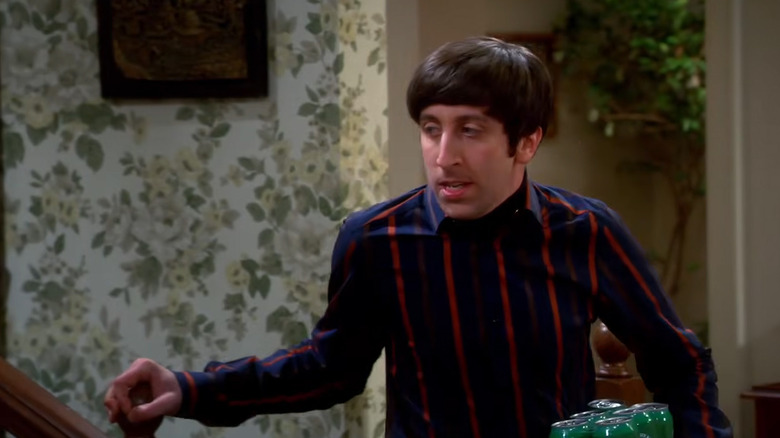
The entire concept of Howard's mother, Debbie Wolowitz (Carol Ann Susi), is a running gag. She's a faceless character with a raspy voice who Howard finds annoying. Another major part of the long-running bit is her obesity. Aside from a rooftop overhead view and brief glimpses, "The Big Bang Theory" never actually shows her. The limited perspective means the audience has to trust that the jokes and criticism about Debbie are true, but regardless of their veracity, fatphobia isn't funny. The show ignores obesity as a health condition in favor of using it for comedy. But what makes the bit even more distasteful is the fact Mrs. Wolowitz dies in Season 8, Episode 15: "The Comic Book Store Regeneration."
"The Big Bang Theory" wrote off Howard's mom with a death storyline after Susi died from cancer. Debbie dies in her sleep, so it's a peaceful passing. That choice, at least, prevents her death from being used to make another fat joke. But it doesn't make up for the offensive approach to the character.
Penny as the dumb blonde from a Nebraskan farm
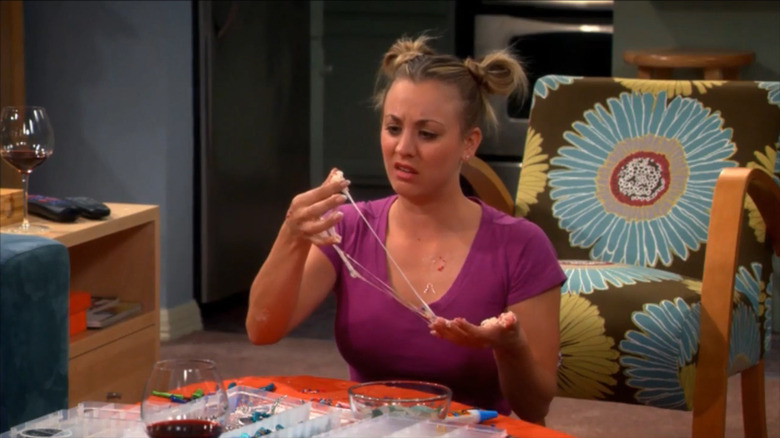
From her first appearance in "The Big Bang Theory" pilot, Penny is set up as a stereotypical contrast to Leonard (Johnny Galecki) and his friends. She's the beautiful-but-dumb blonde woman across the hall. Her character is used as a narrative tool that, ultimately, proves the nerd (Leonard) can end up with the conventionally attractive woman. Penny's Nebraskan farm origin also reinforces the stereotype because of the cliche that residents of rural areas are uneducated. As the series goes on, Penny becomes so much more than the dumb blonde, but the bit becomes tired.
For example, in Season 3, Episode 10: "The Gorilla Experiment," Sheldon insults Penny by implying KoKo, a gorilla who learned sign language, is smarter than her. In Season 7, Episode 7: "The Proton Displacement," Penny doesn't know how to use glue because she was a pre-school dropout. Just by the nature of Sheldon, Leonard, and the core group of friends in "The Big Bang Theory" being in fields that require higher intelligence, Penny is already seen as less smart. So it feels cheap and lazy to make the character known for her stupidity in such varying degrees. It also downplays the emotional intelligence and social skills she offers.
Girls and women don't like comic books and geeky subjects
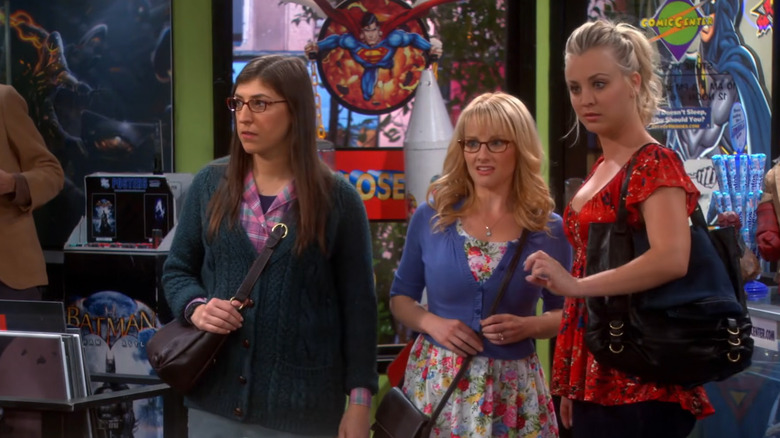
"The Big Bang Theory" leans into the stereotype that superheroes, comic books, science fiction, and other similar "geeky" subjects are for boys and men. Similarly, the show treats those topics as foreign concepts to girls and women. When the comic book store has been featured in the show, women are treated like aliens who men are fascinated by. It's not funny, it makes women feel less welcome in such spaces, and it makes women seem like they don't have the agency to have their own interests.
In the shop's first appearance, Penny is met with stares of shock while shopping for a gift for her nephew. When a "hot girl" named Alice (Courtney Ford) is at the store in another episode, Raj asks, "What is she doing in a comic book store?" as though the concept of a woman (let alone one viewed as attractive) being there is unfathomable. Comic book media is more prevalent than ever, and media and information are more accessible than ever. So there's no reason to think girls and women don't develop an interest in those topics.
In later seasons, the show seemingly tries to remedy that by introducing Denise (Lauren Lapkus), the assistant manager of the comic book store. There's even a storyline where Stuart (Kevin Sussman), the store's owner, tries to get women to visit his shop. But the business still features an overwhelmingly male clientele throughout the series.