

The 10 Worst Episodes Of The Sopranos Ranked
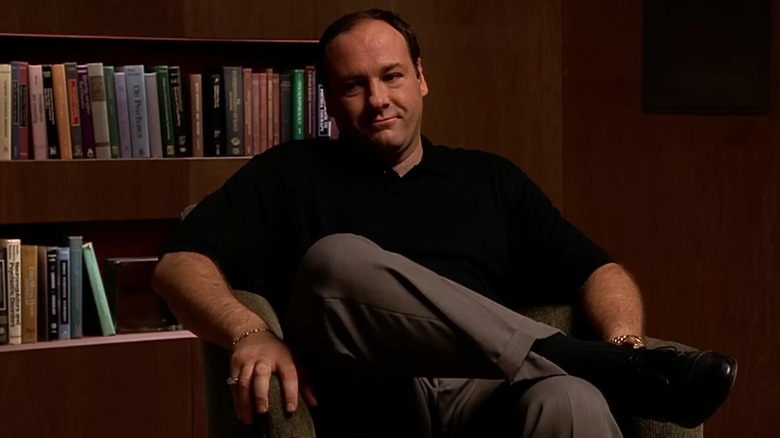
Are there really any bad episodes of "The Sopranos"? The hit 2000s crime drama is rightfully considered one of, if not the best television show ever written, not to mention the peak of HBO's peerless output throughout the network's lifespan.
Certainly, even the worst episodes of "The Sopranos" are better than most of what you'll find on TV — after all, how bad can any story be when it's anchored by the legendary performance of the late James Gandolfini? Compared to the series' best moments, however — the blistering fights of "Whitecaps," the tragedy and horror of "Long Term Parking," and, of course, the tight thrills (and chills) of "Pine Barrens" — several episodes fall a little flat. Whether because they divert focus from more interesting storylines, rush through key character beats, or fail to maintain the audience's suspension of disbelief, the 10 worst episodes of "The Sopranos" range from flawed-but-respectable to downright skippable.
10. The Pilot (Season 1, Episode 1)
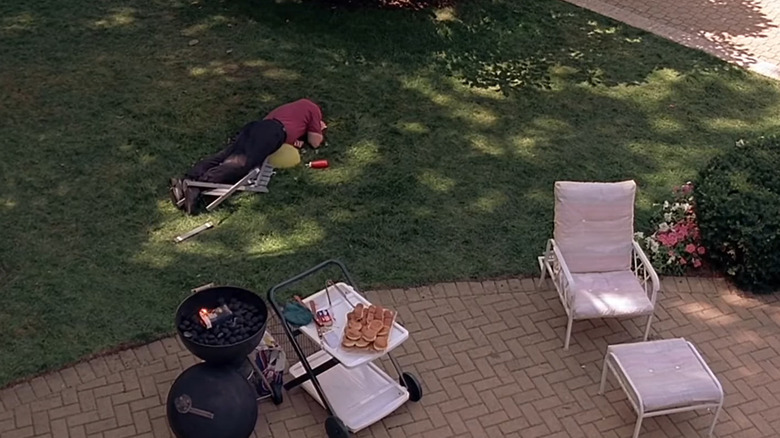
"The Sopranos" is widely known for its divisive and oft-debated final episode, with some viewers regarding it as a brilliant and profound hour of television and others remembering it as one of the worst series finales of all time. For how endlessly dissected this important moment in the series still is, almost nothing is ever said about the episode that started it all — for our part, we'd argue that's largely because it's not a very interesting episode to begin with.
Even the best TV pilots can feel like outliers compared to the rest of their respective series, using a different narrative formula that allows for the introduction of characters and storylines at a quicker pace. In the case of "The Sopranos," the necessary focus on building the world of Tony Soprano from the ground up does rob the returning viewer of much of the subtlety, visual style, and unexpected scene work that makes the rest of the show special. As for new viewers, it's easy to imagine the selection of storylines as being tonally repetitive and potentially hard to get invested in.
Tony's first therapy appointments are used as a framing device to show the audience the realities of mob life, which, in this episode, include him shaking down an insurance worker who owes him a gambling debt, dealing with the fallout from Christopher (Michael Imperioli) executing a competitor, and trying to convince his Uncle Junior (Dominic Chianese) not to stage a hit at the restaurant owned and operated by his childhood best friend Artie (John Ventimiglia). It's a fine selection of stories to ease the audience into this world, but none of them are memorable compared to what the rest of the series has to offer.
9. Mergers and Acquisitions (Season 4, Episode 8)
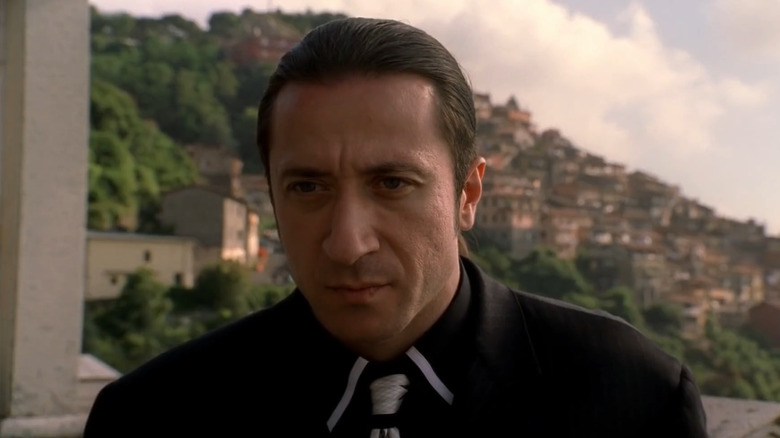
In many ways, "Mergers and Acquisitions" feels like the beginning of the final act of several overarching storylines in Season 4. By the season finale, the show brings some of its most jaw-dropping twists yet: Furio Giunta (Federico Castelluccio) leaves the series for good after nearly assassinating a drunken Tony in "Eloise." Tony himself brutally beats Ralph Cifaretto (Joe Pantoliano) to death after a fire suspiciously claims the life of their shared racehorse Pie-O-My in "Whoever Did This." Arguably, in the most consequential turn of them all, Carmela Soprano (Edie Falco) finally throws Tony out of the house for his unrepentant philandering.
These are massive moments for a series with such deliberate and delicate pacing, which means that, unfortunately, episodes like "Mergers and Acquisitions" have to bear the weight of re-establishing all that conflict before it gets resolved. The centerpiece of the episode is, appropriately, Tony and Carmela's deteriorating relationship, which finds a depressing and toxic stasis as they both silently agree to ignore the ways they mistreat each other. While well-written and acted throughout, the "understanding" they settle into — that Tony will keep cheating, and that Carmela will keep using his blood money — isn't a surprising or even novel development for their marriage. (It's basically the same quandary she's been living with explicitly since Season 3's "Second Opinion.")
Similarly, Tony's reluctant affair with Ralph's girlfriend is as forced and overly familiar as Ralph's fetishes are uncomfortable to hear about. Meanwhile, Paulie Walnuts' (the late Tony Sirico) attempts to help his mom fit in at the Green Grove "retirement community" are forgettable filler for an episode with only one meaningful highlight: Furio's brief and sudden flight to Napoli.
8. D-Girl (Season 2, Episode 7)
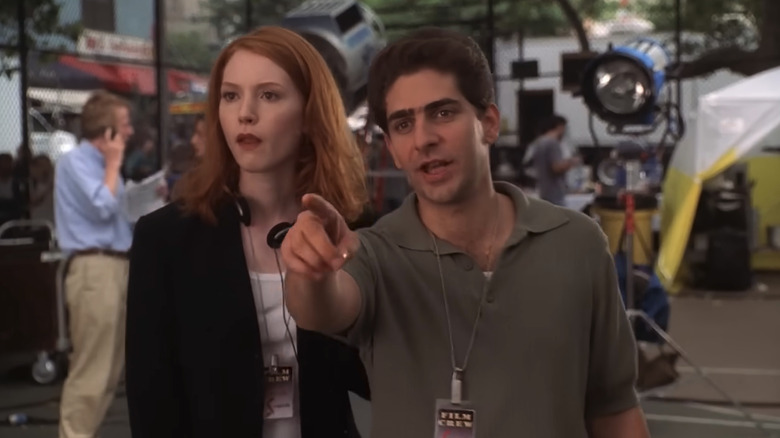
The fact that "D-Girl" feels like such a jarring fantasy for Christopher is either the episode's biggest strength or greatest weakness, depending on the viewer. As the hotshot Tennessee Moltisanti continues to work aimlessly toward a side hustle in the entertainment industry, his cousin introduces him to his fiancée Amy (Alicia Witt), a development executive in Hollywood who claims she can get Christopher's work-in-progress mob screenplay in front of the right people.
From their first meeting, it's fairly predictable based on the show's formula that Christopher will somehow wind up romantically involved with Amy — after all, she (like almost every other woman written on the show) is improbably attracted to his brash masculinity and the danger of his connection to the mafia. Even Jon Favreau (who guest-stars as himself, shooting a fictional mob thriller he wants Christopher's perspective on) is swept away for a few scenes by Christopher's apparent mystique. The way this episode tries to get viewers to buy in to how Christopher sees himself almost works in a quasi-metaphorical sense. The full and immediate submersion into his ideal Hollywood lifestyle serves to make the heartbreak when Jon and Amy inevitably abandon him all the more devastating, basically emotionally and psychologically shattering this possible escape from his life of crime.
At the same time, for a show that is as unforgiving and grounded in every other aspect as "The Sopranos," it's hard to square how someone as obviously obtuse as Christopher manages to be so magnetic in this new setting. It requires a dumbing down of everyone around him that strains the show's credibility after a while.
7. In Camelot (Season 5, Episode 7)
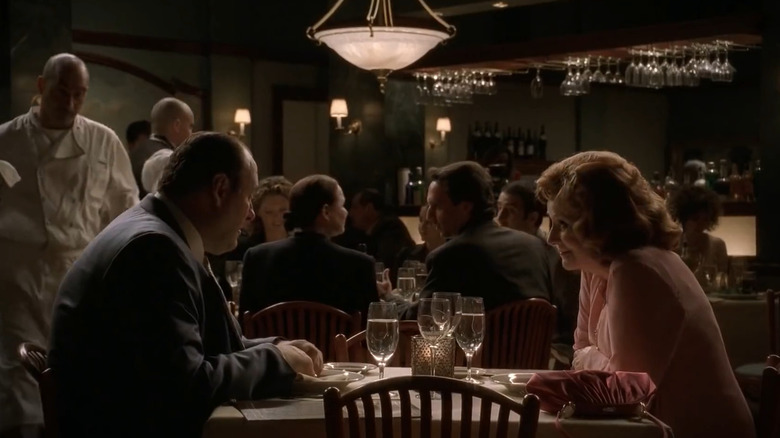
"In Camelot" might be one of the most haunting episodes of "The Sopranos" — and for all the wrong reasons. At a relative's funeral, Tony unexpectedly connects with a woman named Fran Felstein (Polly Bergen), his father's mistress from when Tony was a young child. Despite this being an incredibly awkward dynamic on paper, there is something compelling and revealing about how easily they take to one another as friends, with Tony clearly comparing her to his late mother Livia.
Because series creator David Chase altered Livia's planned demise at the end of Season 1, essentially to allow actor Nancy Marchand to work on the series as long as she was able, the character exited the series relatively suddenly along with Marchand when she passed in 2000. "In Camelot" earns some points for using a comparative figure like Fran to further explore Tony's relationship with his mother even in her absence, interrogating the origins and complexity of their mutual animosity, as well as the trauma they both suffered by relying on Tony's father Johnny (Joseph Siravo). That being said, chasing character development from previous seasons can't justify how little this episode adds to Season 5 overall.
Especially since the episode thwarts the forced momentum of the one before it, "In Camelot" is a chore of a detour that gets harder to watch the longer it goes on. (No amount of character study is worth watching the stomach-churning scene of Tony being serenaded by Fran in the JFK hat.) It's also worth mentioning that the supporting storylines are particularly weak — Junior's funeral-hopping is inconsequential, while Christopher and his recovering screenwriting friend J.T. Dolan (Tim Daly) retread the Season 2 episode "The Happy Wanderer" beat-for-beat, right down to J.T. selling his car.
6. Sentimental Education (Season 5, Episode 6)
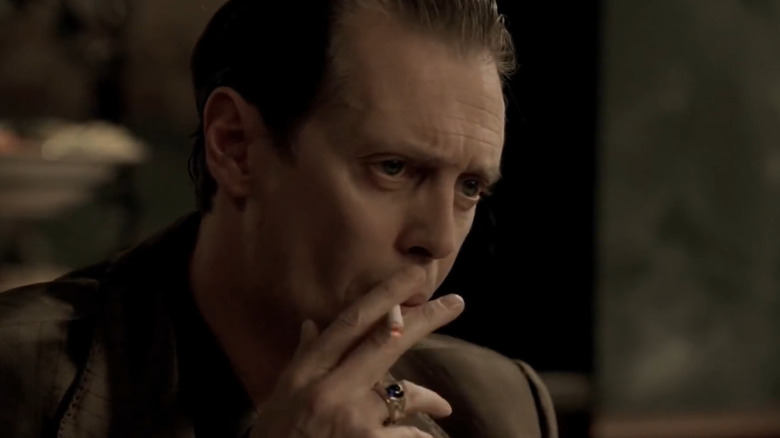
The episode that directly precedes "In Camelot" is, sadly, even harder to defend. Certainly, there are moments in "Sentimental Education" that stand out: Paulie has an all-time one-liner at The Bing that's so perfectly accentuated by an ahead-of-its-time smash cut, props have to be given to director Peter Bogdanovich (who also plays Dr. Melfi's therapist Elliot throughout the series) and writer Matthew Weiner (the future creator and showrunner of "Mad Men"). It can also be said that, as a standalone story that attempts to blur the line between television episode and short film, "Sentimental Education" is exemplary. You could show it to someone who's never seen the series up to that point, and they could still be moved by and engaged with what it has to offer.
But in the context of the overarching narrative of Season 5, this episode unforgivably rushes through the somewhat predictable, yet inevitable downfall of Tony Blundetto (Steve Buscemi). After being released from prison at the start of the season, Tony B. is clearly set up to be the spark for the season's deepest conflict; despite his pacifistic demeanor and desire to avoid crime forever, his unresolved personal history with his cousin and his dangerously high intellect make him a threat perfectly hidden in plain sight, where new viewers can follow each step he takes toward his old life.
Or, instead, the writers can brush through a season's worth of character development in an hour through contrivance and borderline character assassination. Tony B.'s sudden influx of cash is as unbelievable as his immediate moral bankruptcy, and the fact that the series could have given an extra episode to this storyline instead of to "In Camelot" only adds insult to injury.
5. A Hit Is A Hit (Season 1, Episode 10)
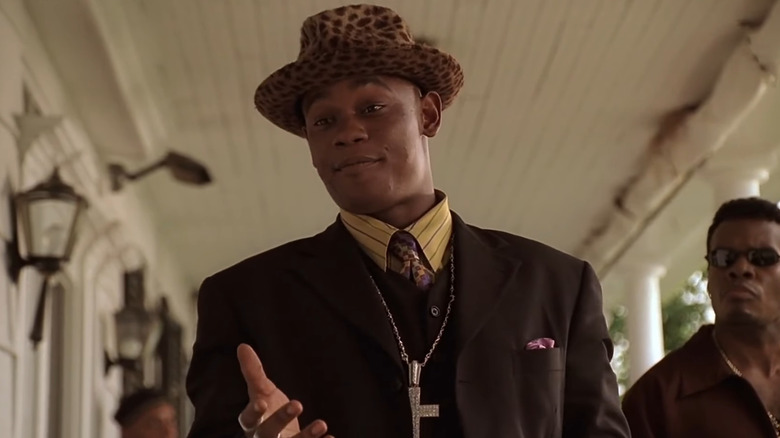
The best thing you can say about "A Hit Is A Hit" is that, if you choose to view it as such, it's probably the most nakedly comedic episode of "The Sopranos" Season 1. Whether that's intentional or unintentional is up for debate.
The core stories of the episode revolve around Massive Genius (Bokeem Woodbine), a musical artist who ingratiates himself with Christopher for two reasons — one, to organize a meeting between himself and mob associate Hesh Rabkin (the late Jerry Adler) to resolve a decades-old dispute regarding unpaid music royalties; two, to try to sleep with Chris' girlfriend Adriana (Drea de Matteo). Chris, initially oblivious to Massive's second goal and eager to make Adriana happy with as little real effort as possible, tries to use this new connection to jumpstart a hilariously misguided producing career for her. From her horrendous taste in music to her total lack of self-awareness throughout (coupled with Christopher's own inability to support her, which ultimately results in him beating one of her musicians with a guitar), the whole storyline is so uncharacteristically farcical that it's hard to tell if we're laughing with the show or at it. In this way, it's a strange sort of companion piece for the aforementioned "D-Girl."
If the arc weren't as transparent and predictable, resolving in a fight once Chris discovers that Massive is only interested in sleeping with Adriana, it might be possible to forgive this episode as a charmingly early detour. The subplot in which Tony hangs out with his mafia-obsessed "Medigan" neighbors is similarly amusing — though also similarly unsatisfying in its emotional impact.
4. Calling All Cars (Season 4, Episode 11)
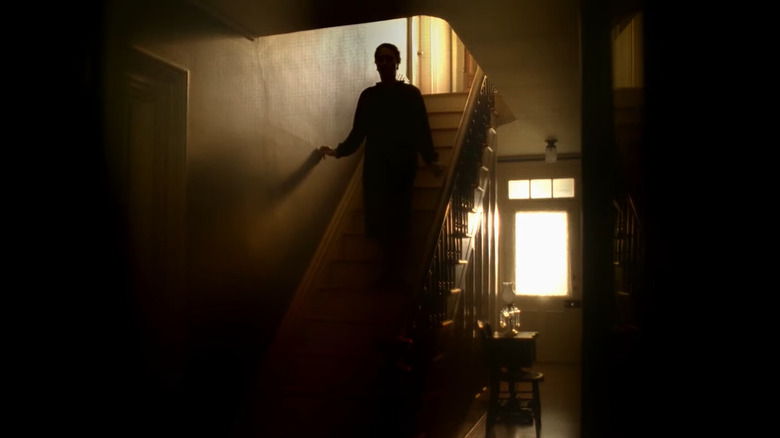
As hardcore fans of the series know, it isn't necessarily a bad thing for an episode of "The Sopranos" to feel like a fever dream. Indeed, the actual dream sequences featured in "Calling All Cars" have all the compelling, abstract, and interpretive imagery we love to see streamed from Tony's infinitely complex subconscious. But even after Tony wakes up to spend the majority of the episode firmly planted in the real world, the actual plot developments that unfold around him feel just as listless, disjointed, and circumstantially vague.
It's an hour of TV a lot like "Mergers and Acquisitions" before it in this very season. Heading into the final two episodes of Season 4, "Calling All Cars" serves to steady the pace of the overarching narrative with a less explosive story. In performing this necessary function, however, all it has to offer Tony — unfortunately separated from and/or entirely unaware of storylines that will directly impact him, like Carmela's emotional infidelity or Johnny Sack's (Vincent Curatola) scheming — are vague dreams, familiar emotional beats regarding his dissatisfaction with therapy, and a very loose and thematically bare plot where he goes to Florida to ask for Little Carmine's (Ray Abruzzo) support in an inter-family dispute.
The most solid of the stories in this episode, from a structural standpoint, is the most reprehensible. "Calling All Cars" carefully tracks Janice Soprano's (Aida Turturro) cruel manipulation of Bobby (Steven R. Schirripa) and his children, as she tries to insert herself into their family. It's an intentionally awful plot that receives no balance from the rest of the hour.
3. Kaisha (Season 6, Episode 12)
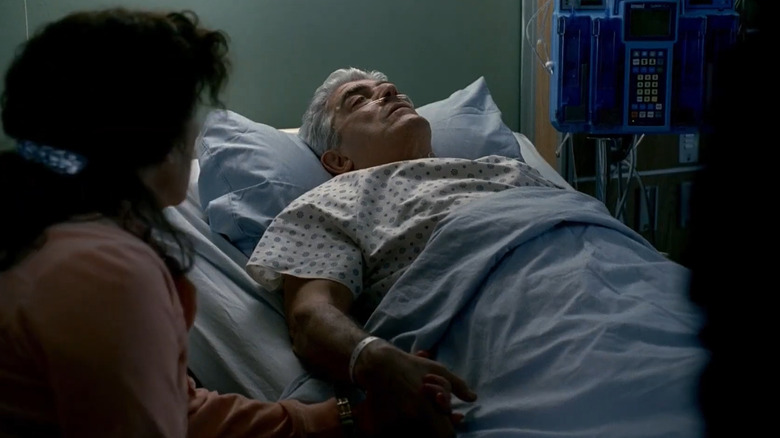
In hindsight, the first half of the hyperextended, two-part final season was such a mixed bag (especially compared to the second half) that one can't help but wonder if they really needed that many episodes to send "The Sopranos" into its final blackout. On the one hand, stories like Tony's hospitalization and Vito's (Joseph R. Gannascoli) disappearance are high points of the series overall, and they likely wouldn't have had the same impact if constrained to a single episode (like "Sentimental Education"). On the other hand, much of Season 6A is so self-contained and meandering that there's almost nothing for its final episode, "Kaisha," to pay off. As a result, it stands as the most empty season finale of "The Sopranos" overall.
"Kaisha" splits Tony's attention between two storylines, leaving his impact muted in both. His conflict with Phil is superficially and momentarily quelled by convenience and a somewhat passable callback to the revelations Tony had after surviving his gunshot wound. Meanwhile, Tony struggles from afar to make peace with the fact that Christopher is suddenly (and, again, very conveniently for the plot) dating the corporate realtor he's attracted to (played by Julianna Margulies). At best, these two threads feel like shrug-worthy starts to stories that will admittedly be paid off quite explosively further down the line. The rest of the episode is similarly disappointing, bizarre, and even shallow at times: Carmela immediately gives up worrying about Adriana once she's able to move forward with her house project; Chris' relapse tragically reminds the audience of his increasingly predictable fate; and A.J., ever the rebel, is now dating a woman 10 years his senior and raising her child as his own.
2. Do Not Resuscitate (Season 2, Episode 2)
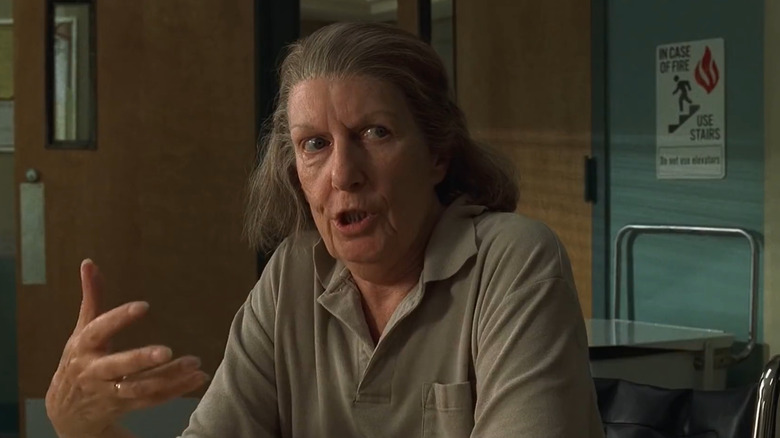
Though Janice Soprano's story in "Calling All Cars" is arguably the lowest point for the character, her story in "Do Not Resuscitate" is almost as unbearable. She's a very specific kind of television character — a person who is so selfish, delusional, and cravenly opportunistic that she appears irredeemable at first glance (even though she ultimately does rise to be a compelling and moving part of the narrative).
And while she shares this trait with much of the "Sopranos" ensemble, her late introduction — void of any redeeming or meaningfully empathetic moments — makes her especially unlikeable here. "Do Not Resuscitate" is done zero favors by the amount of focus given to Janice's attempts to manipulate her family mere moments after reappearing in their lives (the shot in which Livia is depicted as a "South Park"-esque stick figure falling down a flight of stairs also stands out as the show's most awkward stylistic choice of the season).
The remainder of the episode is a mess, narratively speaking, focusing on Junior's struggle to work around the legal system, a shaky and on-the-rails plot that merely takes the necessary steps to establish his status quo for the season. Surprisingly, it's Tony who feels like the recipient of the filler plot here, tasked with handling a fraudulent labor dispute that has no impact on the series overall. If it weren't for buckets of exposition clumsily heaped on the audience throughout, "Do Not Resuscitate" would be entirely skippable.
1. Chasing It (Season 6, Episode 16)
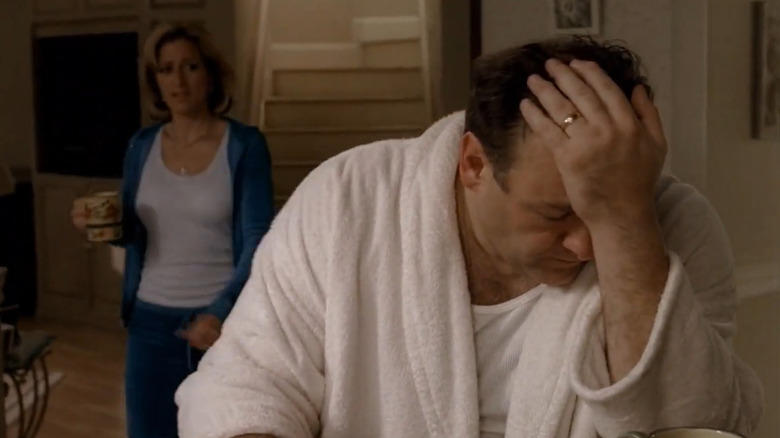
It is shocking how suddenly "The Sopranos" dives into what we consider its worst episode overall in the midst of the otherwise flawless Season 6B. Fascinatingly, it manages to combine some of the missteps that plagued other episodes on this list. Like "Sentimental Education," it takes the series' short-film mentality too far and rushes through a momentous storyline that comes out of nowhere. Similar to "Calling All Cars" and "In Camelot," the characters are so morally vacant that it borders on cringe-inducing, with the lack of tonal balance in other plotlines making for an unpleasant viewing experience; and, like "A Hit Is a Hit," the plotting is so abrupt, turbulent, and cartoonishly wicked that it would be comedic if the subject matter weren't so dark.
In "Chasing It," after six seasons of seemingly having no real relationship to gambling beyond visiting games and placing the odd bet here or there, Tony descends into full-blown gambling addiction, potentially to the point of harming his family on a serious financial level. To make the situation even worse, Tony's losing streak hits at the same time Vito's family is seeking his help to relocate in the wake of the mobster's traumatizing death. Overall, this episode is a slog with few redeeming qualities; it's an incredibly ill-timed detour, as it's sandwiched between "Remember When" (already a more compelling, consequential, and coherent exploration of how far gone Tony is) and "Walk Like a Man" (for all intents and purposes, the final bow of Christopher Moltisanti). New fans will want to see it once to complete the series. After that, there is nothing worth revisiting in "Chasing It."