

15 Best Comedy Central Shows Of All Time, Ranked

In the late 1980s and early '90s, as TV fans were being presented with the new Wild West of basic and premium cable, two channels were available for comedy junkies: The Comedy Channel and the simply named Ha! Then, in 1991, these two channels merged and became Comedy Central.
While the enterprise took some time to earn an audience, mostly airing syndicated reruns of sitcoms and sketch comedy shows, it began to break through in the mid-'90s with shows like "Mystery Science Theater 3000," "Politically Incorrect," "The Daily Show," and something you may have heard of called "South Park."
Comedy Central has since become a major player and influencer in the comedy space, giving our popular culture unprecedented access to stand-up, sketch, and narrative comedy, and giving burgeoning talents, no matter their preferred medium, room to shine. It's become one of the key architects of 21st-century television and comedy, and it is absolutely worthy of our study.
So let's bust some guts and slap some knees as we run down the 15 best Comedy Central shows of all time, ranked.
15. Stella

In the years just before YouTube and the proliferation of bite-sized chunks of absurd comedy, comedy trio Stella — Michael Ian Black, Michael Showalter, and "Childrens Hospital" co-creator David Wain – garnered a cult following from producing short sketches that communicated their bold voice fearlessly. A Comedy Central series was inevitable, combining the best components of both their short films and live act to make an unprecedented season of TV that mixed elements of the sitcom, sketch show, and Marx Brothers-adjacent gag-a-second movie.
The 2005 series, called simply "Stella," put Black, Showalter, and Wain in suits, a New York City apartment, and a series of asinine plot lines to give them room to purvey their studied version of anarchy. Continuity and reason always came second to surrealism, stupidity, and hairpin turn character choices. While the show wasn't popular enough to gain a second season, its impact on the comedy space, especially once YouTube began, can't be understated.
14. Inside Amy Schumer

Stand-up comic Amy Schumer co-created and hosted her own Comedy Central sketch show "Inside Amy Schumer" for four seasons, starting in 2013. (A fifth revival season was later produced for Paramount+ in 2022). As the title suggests, Schumer's work was frank and vulgar, certainly, but also incisive and critical of our pervasively broken society.
"Inside Amy Schumer" particularly sang when examining the tendrils of American sexism, especially within the media space. One notable sketch involves a trio of famous women joining Schumer — Patricia Arquette, Tina Fey, and Julia Louis-Dreyfus — as they all discuss something we would politely refer to as "the last day society at large considers them worthy of sexual intercourse."
And then, on May 5th, 2015, "Inside Amy Schumer" dropped what might be its finest half-hour. For the entire episode's running time, the creative team produced a parody of the classic film "12 Angry Men" with a litany of incredible actors, all male (Jeff Goldblum, Paul Giamatti, and John Hawkes, just to name a few), discussing earnestly whether Amy Schumer is hot enough to be on TV. It's startling, confident satire delivered at the highest level.
13. Kroll Show
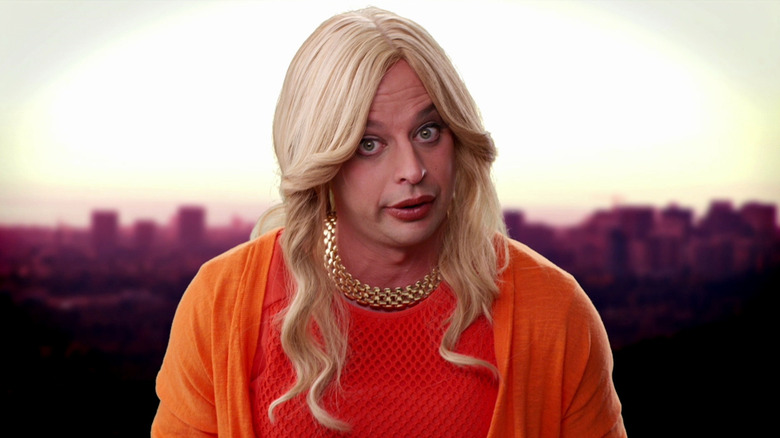
By 2013, America was absolutely inundated with mind-numbing "content." YouTube was churning, TV was stuffed with a proliferation of micro-genres, and platforms like Vine and Instagram were delivering jolts of contextless comedy and commentary at a breakneck pace.
Enter co-creator and versatile star Nick Kroll, an alt-comedy mainstay who took his many talents and zeroed in on the behemoth of pop culture with startling accuracy in the hidden gem "Kroll Show." Co-created by sketch comedy icon Jonathan Krisel ("Portlandia") and TV comedy tastemaker John Levenstein ("Arrested Development"), "Kroll Show" delivered impeccably constructed sketches in the world of every single piece of media you can think of. Viewers were bombarded in the best way possible, a sensation represented by the show's opening titles, which designed the words "Kroll Show" in as many identifiable brand logos as possible within a short amount of time.
Iconic sketches include "PubLIZity" with Jenny Slate, "Too Much Tuna" with John Mulaney, and "Ref Jeff," the relatively quiet character study of a basketball referee who just needs a friend.
12. Strangers With Candy
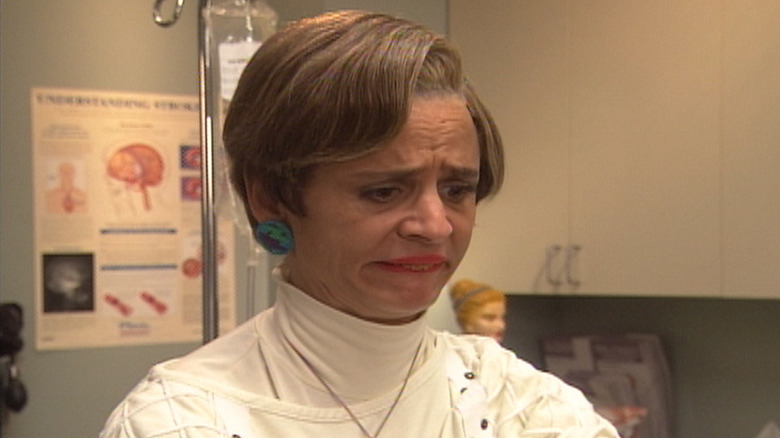
If you like contemporary comedians like Cole Escola, John Early, or Kate Berlant, you owe it to yourself to head to the mecca of influence that is "Strangers With Candy."
Originally airing over three seasons from 1999 through 2000, "Strangers With Candy" stars co-creator Amy Sedaris as Jerri Blank, a woman who is very obviously in her 40s, who decides to go back to high school to clean up her act after a life full of drug addiction and poor decisions. Sedaris and her co-creators, Stephen Colbert, Paul Dinello, and Mitch Rouse (all of whom also collaborated on the Comedy Central sketch series "Exit 57") styled the series after the iconically melodramatic after-school specials of the 1970s and '80s.
It plays many of these elements completely straight, even as its characters (which include Colbert and Dinello as teachers who are very obviously into each other, homoerotically) descend into blunt absurdism bordering on cruelty. It's also a ferociously un-PC show; its leading Black performer, Greg Hollimon, literally plays a character called Principal Onyx Blackman.
This provocative combination of edge with Vaseline lenses makes "Strangers With Candy" a continuously alive and fiery show to reckon with.
11. Detroiters
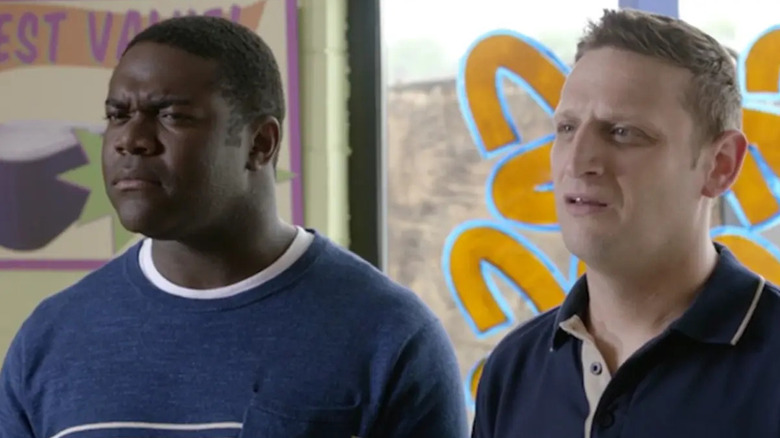
If you like "I Think You Should Leave" and the family of loud alt-comedians that have emerged as a result of that cultural touchpoint, then it's time to head to the Mitten to see that crew hone their comedic voices in a more traditional sitcom setting. (Although "traditional" is being used lightly here.) Two-season wonder "Detroiters," like much of Tim Robinson, Sam Richardson, and Zach Kanin's work, is palpable with unchecked silliness and absurdity, its characters quick to yell with a full-throated intensity over their various inadequacies.
But unlike other great yell-coms like "It's Always Sunny in Philadelphia" or "Curb Your Enthusiasm," "Detroiters" doesn't have a mean bone in its body. There's a level of childlike joy and glee in every episode of its two seasons that makes the whole enterprise feel, quite authentically, like best friends lucky enough to play pretend for a living.
And if you're actually from Detroit, my goodness, does it feel good to see such traditions and touchstones represented positively onscreen.
10. Drunk History

Derek Waters' "Drunk History" is an irresistibly simple premise that's obviously and repeatedly comedic while assuming, quite refreshingly, an inherent curiosity and intelligence in the average American's purview.
Inspired by a Funny or Die web series, the six-season Comedy Central show has quite the formula. Get a comedian or celebrity super drunk (guests like Natasha Leggero, Paget Brewster, and Amber Ruffin). Get them to tell a favorite true story from history, including every single stumble, forgotten fact, and sloppy paraphrasing. Then get a cadre of comedians and celebrities to reenact these drunken stories verbatim, lip-syncing to every single oddity (reenactors include Weird Al Yankovic, Aubrey Plaza, and Alia Shawkat).
The resulting episodes are an irresistible fusion of high and low culture. It is, without exaggeration, one of the most successful "educational TV shows" ever made, shining a light on some of the most interesting occurrences and people with a delicious twist of inebriated buffoonery. Sometimes the vegetables are the candy.
9. The Daily Show
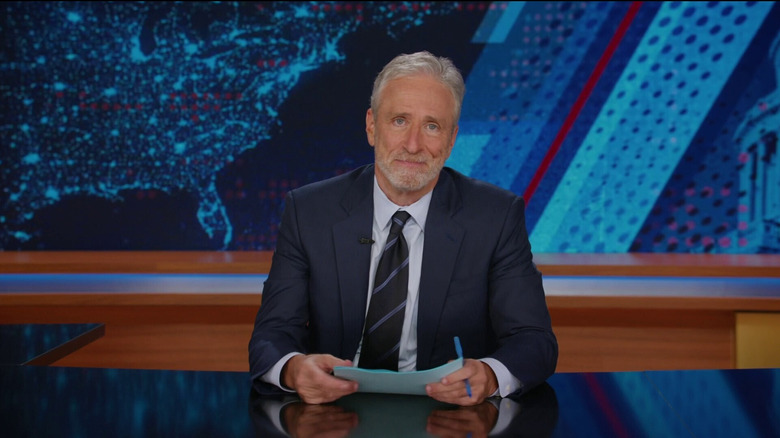
When "The Daily Show" first began in 1996 with a reliably sardonic Craig Kilborn as host, it felt a little like "Talk Soup," a spiky satirization of the inanity of pop culture with regular and aggressive dunks on whatever aired on TV the day before.
Then, in 1999, when Jon Stewart took over hosting duties, everything changed. Stewart's "Daily Show" tenure coincided with the election of controversial President George W. Bush, and the Stewart administration zeroed in on hard-hitting political satire that regularly blurred the lines between "comedy" and "journalism." Throughout the 2000s, with culture-shifting events like 9/11, Hurricane Katrina, and Abu Ghraib, Stewart and his team of soon-to-be-famous correspondents (Steve Carell, Stephen Colbert, and John Oliver, among others) became a national touchstone, giving Comedy Central an air of respectability among its more jocular programming.
Stewart first left the show in 2015, and Trevor Noah took the hosting reins from then through 2022. Now the show has a litany of rotating hosts, including a returning Stewart, and while it might not have quite the same impact, its influence on American culture cannot be overstated.
8. South Park

"South Park" is likely the most popular and influential show that will ever air on Comedy Central, the show that put it on the map as a power player of culture-shifting works.
Debuting in 1997 and still going strong (it's one of the longest-running scripted TV shows ever), "South Park" comes from creator-stars Trey Parker and Matt Stone. In the small Colorado town of South Park resides a group of elementary school kids, including the emotionally articulate Kyle (Stone) and the clinical sociopath Cartman (Parker). These kids, and a whole mess of dysfunctional adults, deal with all kinds of events and issues, often surprisingly topical and ripped-from-the-headlines satirical, with a vulgar verve, a lack of inhibitions that either plays as refreshing or problematic, and sometimes both simultaneously, depending on your politics and sensitivities.
There are some seasons of "South Park" that play better than others, with consistency being an issue with any long-running narrative show (see: "The Simpsons"). But as long as Parker and Stone's magnum opus continues to take huge swings and enormous, culture-shifting potshots at any and everything, we are going to keep going on down to "South Park" to have ourselves a time for many years to come.
7. Dr. Katz, Professional Therapist

Another animated sitcom that changed our pop cultural landscape, though in a much quieter register than "South Park," was "Dr. Katz, Professional Therapist." The series aired on Comedy Central from 1995 through 2002, giving its audiences a peek into the raw, surprisingly emotional world of comedians like never before.
Rendered in a delightful animation style called Squigglevision — where the lines of all the characters quite literally squiggle — "Dr. Katz" stars comedian Jonathan Katz as a therapist who speaks with regular patients while navigating the relationships with his difficult son (H. Jon Benjamin) and receptionist (Laura Silverman).
His patients are all played by famous or soon-to-be-famous stand-ups of the era, including Ray Romano, Marc Maron, and Janeane Garofalo. And their sequences with Katz, the bread and butter of the show, were primarily recorded using improvisation around a series of broad outlines, making these scenes feel effortlessly funny because of their clumsy realism.
Without "Dr. Katz," we don't have many of the comedic shifts and properties we now take for granted. Adult Swim, "Bob's Burgers," the entire comedy podcast industry — all of these and more owe "Dr. Katz" more than his usual co-pay.
6. Key & Peele

Consistency in television is difficult. Consistency in comedy is even harder. And consistency in sketch comedy is an impossible order; there's a reason you probably only watch "Saturday Night Live" sketches based on what goes viral the day after. But for five seasons from 2012 to 2015, co-creators and stars Keegan-Michael Key and Jordan Peele pulled off the impossible with their sketch comedy show, "Key & Peele."
The duo, familiar to sketch fans already thanks to their work on "Mad TV," attacked their sketches with fearless commitment. Whether they were satirizing the racial politics of President Barack Obama, putting their observant eye to note-perfect genre parodies, or simply playing a couple of enthusiastic valet attendants who absolutely loved Liam Neeson, Key and Peele believed every second of every sketch, eschewing all of the "cool" from previous sketch icons like Bill Murray in favor of theatricality and joy.
It's especially interesting to draw the line from this influential sketch show into Peele's contemporary career as a horror auteur. There is no "Get Out" without "Flicker."
5. Chappelle's Show

Already on his way to becoming one of the great stand-ups, Dave Chappelle pivoted to sketch in 2003 with "Chappelle's Show," and pretty instantaneously co-created one of the greatest sketch comedy shows of all time.
"Chappelle's Show" is a fearless work of art, a relentless shock to the system willing to satirize any and everything in its wake. Its very first episode ends with a long sketch about a blind and Black white supremacist, whose disability prevents him from knowing he, himself, is Black, and thus preaching hatred against himself. It's all gas, no brakes, and it remains a remarkable, smart, and sublimely vulgar work.
After two seasons of excellent work, "Chappelle's Show" notably ended with controversy as its star left the show abruptly in the middle of Season 3's production because he felt he was starting to produce work that the white powers that be enjoyed with unironic, racist glee. Thus, the show's legacy ends with an ellipsis rather than an exclamation mark (not to mention Chappelle's contemporary controversies), but it cannot erase such a powerful splash.
4. The Colbert Report
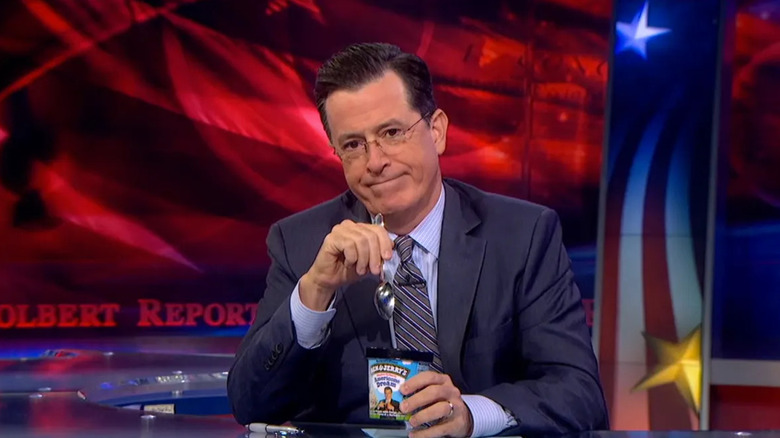
After working as a correspondent on "The Daily Show" for eight years, Stephen Colbert got his own spin-off daily political talk show called "The Colbert Report" (but you better pronounce "Report" with the same French affect as "Colbert").
Whereas Jon Stewart hosted "The Daily Show" with righteous earnestness, Colbert played a buffoonish character who just happened to be named "Stephen Colbert." Colbert's "Colbert" was a composite of the worst impulses of conservative politics and media at the time, a Bill O'Reilly who saw himself as Chuck Norris, a dumb-dumb who asked very respected guests if President George W. Bush was either a "great president" or "the greatest president," with no other options.
As such, Colbert figured out a formula for high-level consistency and success, hitting satirical points not even Stewart could achieve. "The Colbert Report" ran from 2005 to 2014, following "The Daily Show" with a heightened sense of anger, bravado, and even whimsy. It's a high benchmark for political comedy in any medium.
3. Broad City

Inspired by their web series of the same name, Ilana Glazer and Abbi Jacobson's "Broad City" was a fleet and punchy sitcom that nailed the peculiarities and proclivities of its generation.
Over five seasons from 2014 through 2019, Glazer and Jacobson's fictionalized versions of themselves sprinted through the horrors and pleasures of New York City in an attempt to hustle their way through any kind of personal success. It was frank, self-critical, silly, and highly influential in both its content (say it with me: "In da clerb, we all fam") and the way its content was made (if you've seen any contemporary web series about UCB-trained comedians trying to make it, thank "Broad City").
When we put together the great canon of art about Millennial Malaise, we must exalt "Broad City" as a particularly high-strung magnum opus. Put it another way: if "Girls" was Miles Davis' "Kind of Blue," "Broad City" was "B***hes Brew."
2. Review
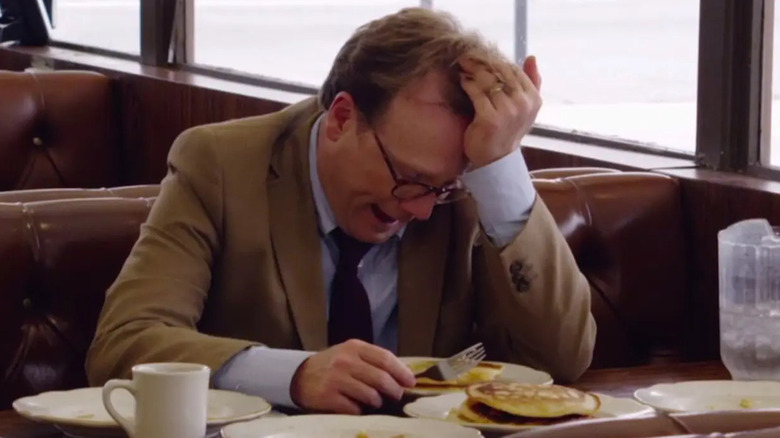
For three seasons, Andy Daly, one of the most deranged comedians who happens to look like one of the most milquetoast comedians, co-developed and starred in a masterpiece of hilarity, cringe, and even tragedy. "Review" is a work that scorches the earth, using a silly high concept to plumb the depths of human nature more than most prestige dramas.
Presented in a mockumentary format, Daly stars as Forrest MacNeil, a professional critic who has taken it upon himself to review every single life experience. If that sounds absurd, it is! But Forrest attacks his task with commitment, taking any user-submitted "thing to do," no matter how innocuous, dramatic, or incoherent, and seeing it to its bitter end — all so he can rate it on a five-star scale.
Forrest's tasks very quickly scramble his personal and professional life out of control, but he simply will not drop the job. To him, analyzing and reviewing "life" is a near-religious cause, no matter the self-sabotaging, Jobian consequences.
If you're gonna check out just one episode to see if it's for you, give "Pancakes; Divorce; Pancakes" a watch. To this critic, it's an easy five stars, and maybe one of the best episodes of television ever produced.
1. Nathan For You
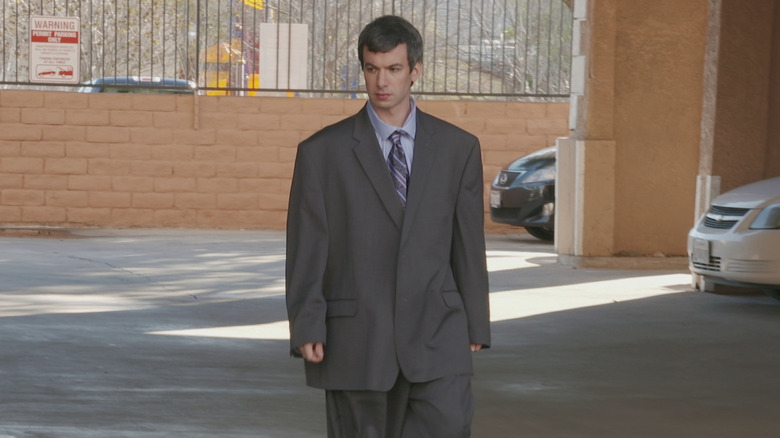
"Nathan For You" is, thus far, the peak of Comedy Central programming. It gave an interesting, developing comedy talent, Nathan Fielder, the platform to provoke the system and explore his comedic impulses with unfettered control. And the results, over four seasons, are masterful, influential, and unhinged to a degree we'd never seen on television before.
Fielder hosts the pseudo-reality series as an unblinking version of himself who professes business acumen and offers to help struggling businesses get on the map with a series of absolutely bugnuts schemes. It is constantly funny, and constantly cringe-inducing, to watch Fielder quietly influence his equally eccentric subjects into following all kinds of clearly absurd ideas to the bitter end. It's satirical, silly, and oftentimes profound — even, and especially, when Fielder stumbles upon, say, a business owner who apparently (and seemingly regularly) drank his grandson's urine.
"Nathan For You" was lightning in a bottle, a testament to Comedy Central's approach to television working at its highest level. And if you're trying to binge it, we'd recommend washing it down with a nice Dumb Starbucks latte.