

15 TV Shows Like The Big Bang Theory
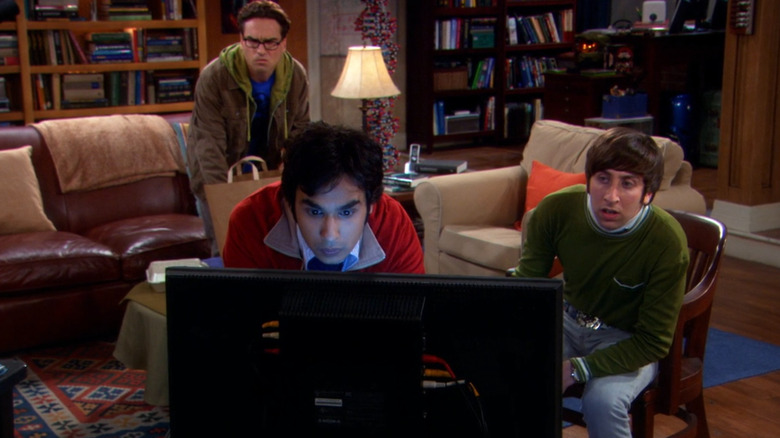
For more than a decade, from 2007 to 2019, CBS' "The Big Bang Theory" kept the network sitcom alive. Even while studios and audiences made the switch over to streamers, the sitcom kept audiences who didn't cut the cord engaged with geeky jokes and plenty of will-they/won't-they romances. And when the show finally called it a day, the series finale racked up 18 million viewers, something that's hard to come by in an increasingly segmented entertainment landscape.
Watching all 279 episodes is no easy feat, but no doubt plenty of you have done it. You might be wondering where to turn to now that you don't have Leonard (Johnny Galecki), Sheldon (Jim Parsons), and the rest of the friend group to hang out with. You don't have to worry, as there are plenty of other shows like "The Big Bang Theory" that focus on friends hanging out or nerdy outcasts trying to find their place in life. Plus, there are a couple of "Big Bang Theory" spin-offs, so you don't have to fully say goodbye to this universe.
Young Sheldon
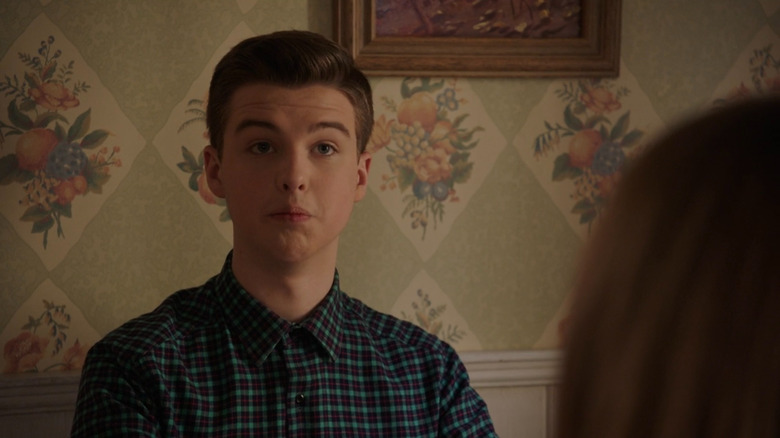
CBS likely knew there was going to be a big bang-sized hole in the center of their programming once "The Big Bang Theory" was gone, so they fortunately got things rolling on a spin-off before it was even over. "Young Sheldon" premiered in 2017, a prequel show focusing on the early life of Sheldon Cooper, played by Iain Armitage, but Jim Parsons still provided voiceover as adult Sheldon.
But "Young Sheldon" was more than a cash grab. It's a show that broke apart from its predecessor by utilizing a single-camera format rather than the traditional multi-camera setup. There also wasn't a laugh track. While "Young Sheldon" was still plenty funny, it took a more grounded approach in depicting the Cooper family, focusing on heartfelt stories rather than jokes about superheroes (although there's still the latter). It's a must-watch for long-time fans, especially since there are numerous "Big Bang Theory" Easter eggs on "Young Sheldon" that even the most eagle-eyed viewers might've missed.
Friends
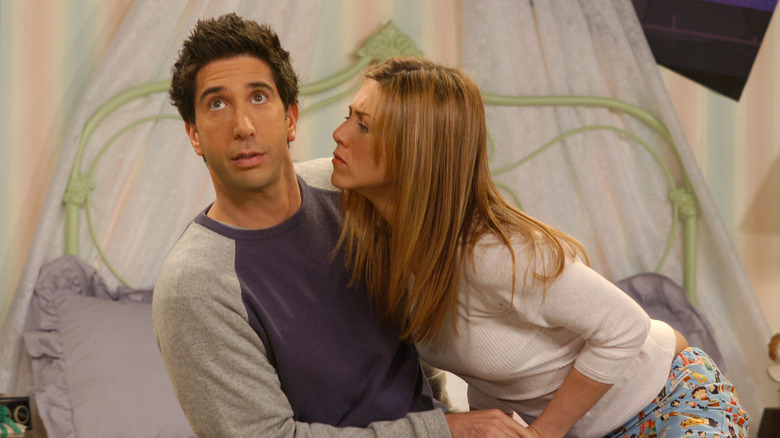
Part of the appeal of watching a long-running sitcom like "The Big Bang Theory" is seeing these delightful characters navigate friendships, careers, and romances over many years. If you want more of that, you need to go back to the blueprint, which is naturally "Friends." The series laid the groundwork for numerous sitcoms that followed in the decades since its debut, and many still find it to be an enjoyable comfort watch.
There are more than 200 episodes to get through, but you can stick with some of the more iconic "Friends" episodes if you're short on time, like "The One Where No One's Ready," where none of the friends can get their act together to leave for Ross' (David Schwimmer) big event. There was certainly continuity, especially when it came to tracking relationships, but a big joy of watching "Friends" is seeing people get into shenanigans and crack wise. It's a simple template that shows can dress up however they want, but "Friends" really perfected the formula.
New Girl
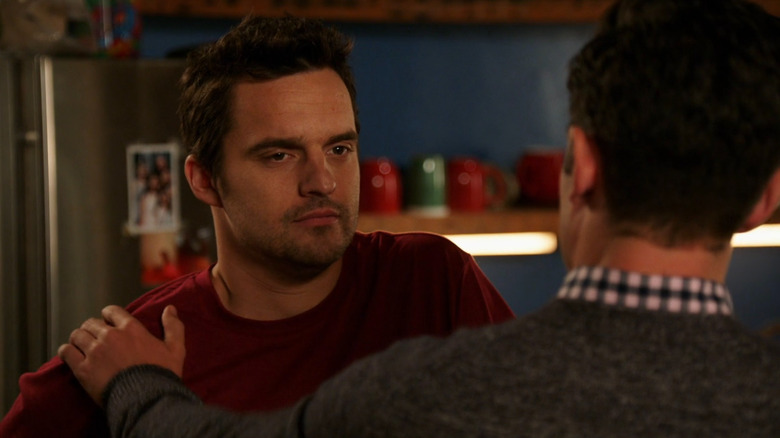
When you think about it, "The Big Bang Theory" and "New Girl" have incredibly similar set-ups. Both shows involved a group of friends living together whose lives get upended when an attractive young woman moves in nearby. For "The Big Bang Theory," Penny (Kaley Cuoco) is across the hallway, while Jess (Zooey Deschanel) is a legit roommate on the latter show. This new girl then strikes up a will-they/won't-they romance with one of the guys, and the two eventually marry by the show's end.
Both shows also have an emphasis on the idea of found families. The bonds these friend groups have with one another are just as valid as any family bonded by blood. The introduction of a new character to the group's lives may upset the balance initially, but she functions to get them out of their comfort zones and pursue their dreams. "New Girl" also happens to be deeply hilarious. You have to have a funny bone made of stone not to consistently crack up watching Season 4's "Background Check."
Two and a Half Men
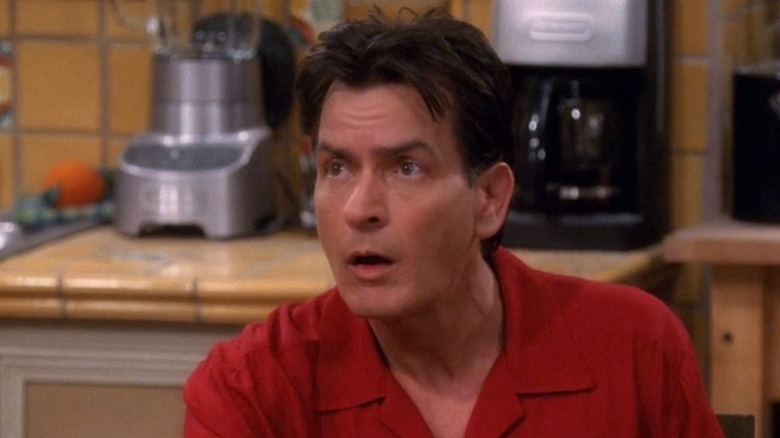
Chuck Lorre has been behind some of the best sitcoms of the 21st century, including "The Big Bang Theory." If you like the style of humor, you also owe it to yourself to watch "Two and a Half Men." This is yet another comedy juggernaut that ran for more than a decade. Not even Charlie Sheen's behind-the-scenes antics and subsequent firing could slow it down, as the show merely brought in Ashton Kutcher to replace him.
The sitcom sees uptight Alan (Jon Cryer) and his son (Angus T. Jones) moving in with the former's brother, Charlie Harper (Sheen), whose womanizing ways don't always sit well with how Alan wants to raise his son. It's a different setup, but it exemplifies many of Lorre's comedic trademarks, with strong characters who make broad jokes anyone can enjoy. There's nothing high-concept about these premises, but when you have multiple series that last for more than 200 episodes, you're clearly doing something right.
The IT Crowd
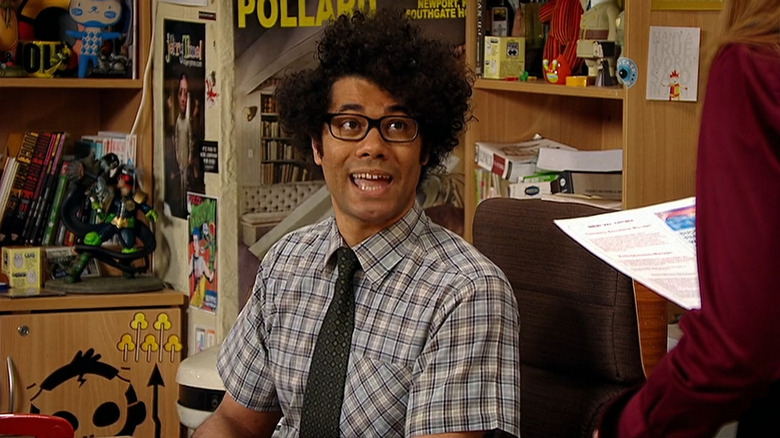
Nerds are funny, so anyone who enjoys the antics of Sheldon Cooper will want to see what Maurice Moss (Richard Ayoade) does on "The IT Crowd." The series checks in with the often unappreciated workers in a company's IT department and how the only human interaction they often get is from people who don't know how to plug in a computer. Technician Roy (Chris O'Dowd) would often recommend turning something off and on again before proceeding any further, so if you've ever tried that technique yourself, you probably have this show to thank.
"The IT Crowd" is more than just tech jokes, as it offers a slice-of-life look at the often-awkward politics of working in an office with some extreme personalities. If for no other reason, you should watch it to be introduced to Matt Berry's larger-than-life persona as Douglas Reynholm. The way Berry pronounces certain words will scratch an itch in your brain you never knew you had before.
Silicon Valley
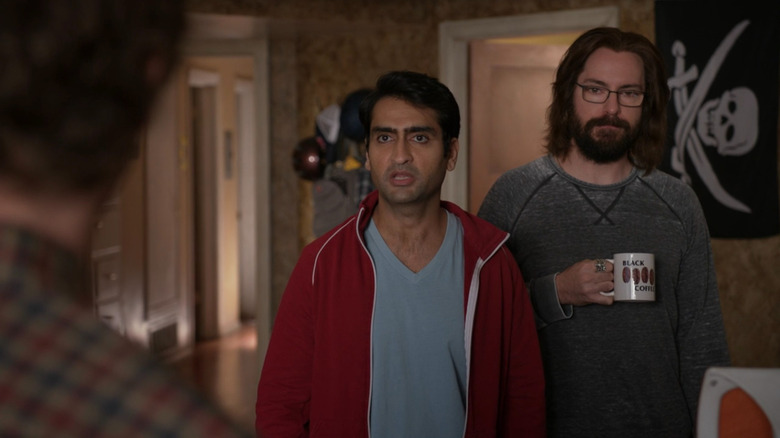
"The Big Bang Theory" was a show the whole family could watch. That's definitely not the case for "Silicon Valley." As an HBO show, it can get away with all kinds of naughty language, but if you don't mind that, it still focuses on very smart people trying to do great things in the tech industry. It's not always easy, and there are countless people who want to take advantage of whatever the main cast creates, but no matter what, it's always hilarious.
"Silicon Valley" may seem exaggerated, but the show actually got individuals from the tech industry to consult on storylines. It's more real than you might think, and the jokes aren't always at the expense of geeky guys doing geeky things. It's a pointed satire of the entire modern tech ecosystem and how something can get designed with good intentions but wind up just another cog in more nefarious designs.
"Silicon Valley" is the more high-brow "Big Bang Theory." Whereas the latter relied heavily on traditional sitcom conventions, "Silicon Valley" presents its nerds as real people who just so happen to do ridiculous things, all in the name of social satire.
Freaks and Geeks
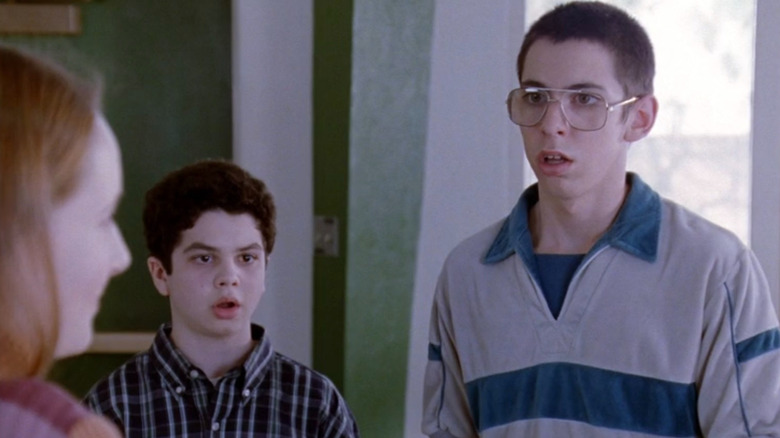
Despite being one of the best teen drama series of all time, NBC's "Freaks and Geeks" was canceled criminally short at just one season. While it's indeed classified as a drama, make no mistake, there's still plenty of comedy to be found in this show about kids navigating high school. It's no surprise the series helped launch the careers of comedic maestros like Judd Apatow and Paul Feig, as well as actors like Seth Rogen and Jason Segel.
Any humor that comes out of "Freaks and Geeks" is a result of its relatability. Plenty of fans probably grew up not being all that popular in high school. Even those who were can understand feeling isolated, wondering how to navigate a new friendship, and dealing with social pressures like smoking marijuana. The relationships are realistically complex, with the nature of friendships changing from one episode to the next. "Freaks and Geeks" could've had a legendary run, but instead, it's now legendary for how quickly the network was willing to bail on it.
The Goldbergs
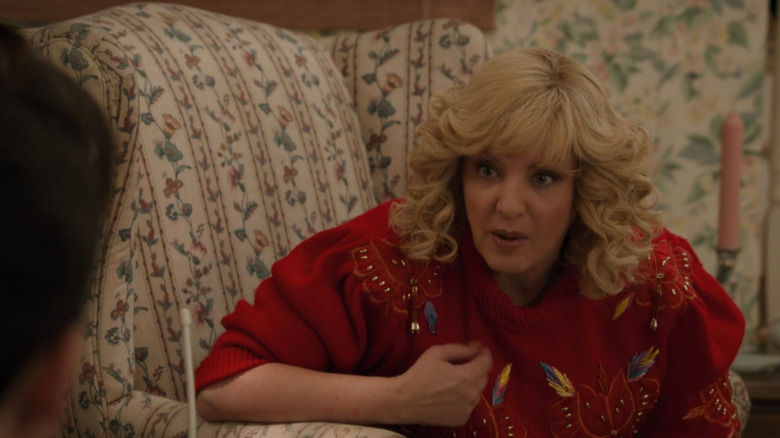
From "Stranger Things" to "GLOW," many series in recent memory have relied on 1980s nostalgia to sell their premises. The same goes for ABC's "The Goldbergs," which mainly focuses on a family navigating the decade. Most of the stories center on Adam Goldberg (Sean Giambrone), a stereotypical nerd who likes "Star Wars" and wants to film everything he can. For some extra nerd cred, the series is narrated by Patton Oswalt as an adult Adam from the future.
The family dynamics, particularly the brash nature of Adam's mother, Beverly (Wendi McLendon-Covey), provide a good deal of the humor, but it also heavily relies on pop culture references from the '80s. "The Goldbergs" maintains a floating timeline, so without a specific year being given, the show can use whatever '80s joke is needed for a given situation. This puts it in the same camp as "The Big Bang Theory," which sees the central nerds making jokes about superheroes, "Star Trek," and everything in between.
Community
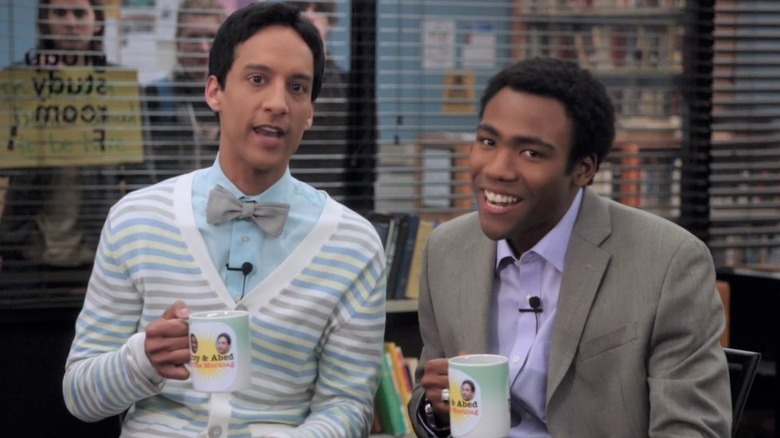
"The Big Bang Theory" is a solid, straightforward sitcom, but you might find yourself a little bored with such affairs. Maybe you know all of the cliches and tropes and want something that speaks to you as a true connoisseur of television. "Community" is the meta sitcom for those folks who don't mind when a show messes with the formula and actively calls out played-out plotlines. For instance, a lot of older sitcoms have clip shows, and while "Community" does as well, they're clips you haven't seen before to focus on a more interesting story happening in the present.
Even if the meta angle doesn't do much for you, "Community" hones in on the study group made up of people from all walks of life. They couldn't be more different, and while that often leads to copious arguments and discussions of the study group breaking up (particularly in the later seasons), it also leads to some sweet moments. A found family can still bicker like any other family, but they also look out for each other, even in the midst of an epic paintball competition.
Atypical
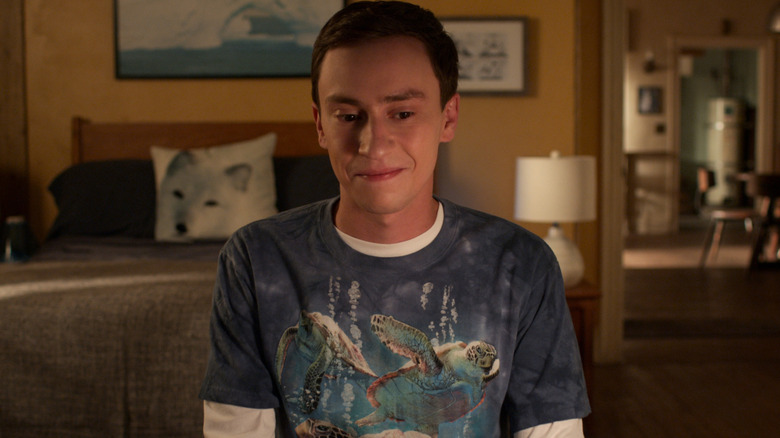
Numerous articles online posit that Sheldon Cooper is on the autism spectrum. He's never received an official diagnosis, but people point toward his personality and interests and how they correlate with certain aspects of the condition. It's an interesting rabbit hole to go down, but if you want a comedy series that isn't afraid to discuss autism, then you need to watch "Atypical."
The Netflix series sees Sam Gardner (Keir Gilchrist) navigate life as an 18-year-old with high-functioning autism. He has trouble socializing and often takes people too literally. It feels like the kind of show "Young Sheldon" could've been if its creators wanted to take it in a slightly more serious direction. But it's probably for the best that "Atypical" is its own show, able to discuss issues surrounding autism without any additional baggage. TVLine praised "Atypical" when it premiered, saying how the show "warms the heart, with a cast full of sweet-natured characters, a bracing dose of melancholy and a terrific lead performance from Keir Gilchrist."
3rd Rock From the Sun
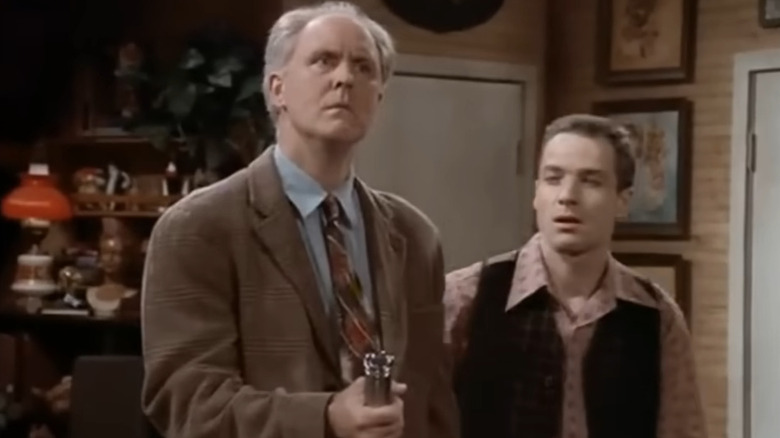
Many sitcoms get a ton of mileage out of "fish out of water" storylines. That certainly applies to the nerdy group on "The Big Bang Theory," but nowhere is it done better than "3rd Rock From the Sun." The show sees a group of aliens disguised as humans live on Earth and try to assimilate into modern culture. This leads to numerous hilarious misunderstandings, like the episode "Dial M for Dick," where the family goes to a murder mystery adventure but believes an actual murder has transpired.
A show like this runs the risk of feeling stale after a couple of seasons, but "3rd Rock From the Sun" stays surprisingly great throughout its entire run. This can no doubt be attributed to the main cast of John Lithgow, Joseph Gordon-Levitt, French Stewart, and Kristen Johnson never being afraid to make complete fools out of themselves. The physical comedy is on point, too, especially when Harry (Stewart) unexpectedly lifts up his arms to report a message from the Big Giant Head.
The Orville
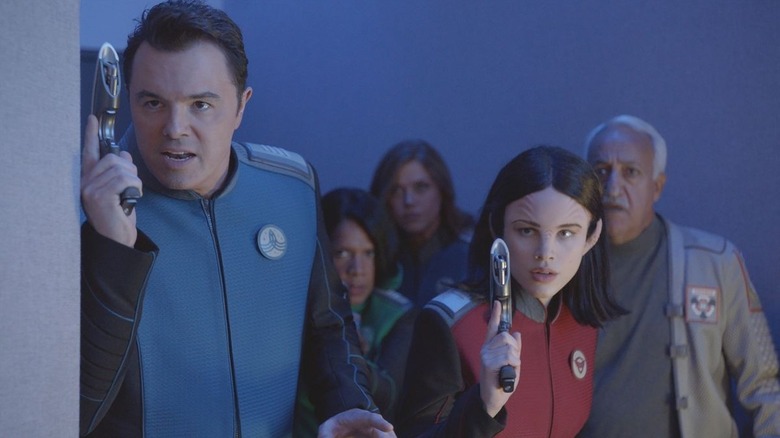
"The Big Bang Theory" had copious "Star Trek" references, even getting franchise actors like Leonard Nimoy and Wil Wheaton to make an appearance. (Unfortunately, William Shatner initially turned the show down.) There's a good chance you're already familiar at least somewhat with "Star Trek" proper, but if you like your space adventures with a bit more comedy, then "The Orville" is the solution.
Seth MacFarlane, who made a name for himself creating animated series like "Family Guy" and "American Dad" and voicing characters on those shows, finally shows up in front of a camera to lead the series as Captain Ed Mercer. He and the crew go on various adventures, meeting wacky aliens along the way. But MacFarlane still shows off his sitcom chops, particularly when it comes to the fact that Ed commands the ship with his ex-wife, Kelly (Adrianne Palicki), as his first officer. Make no mistake, "The Orville" isn't making fun of "Star Trek." It's a celebration of the franchise and could've easily been a regular spin-off of the series in its own right.
Futurama
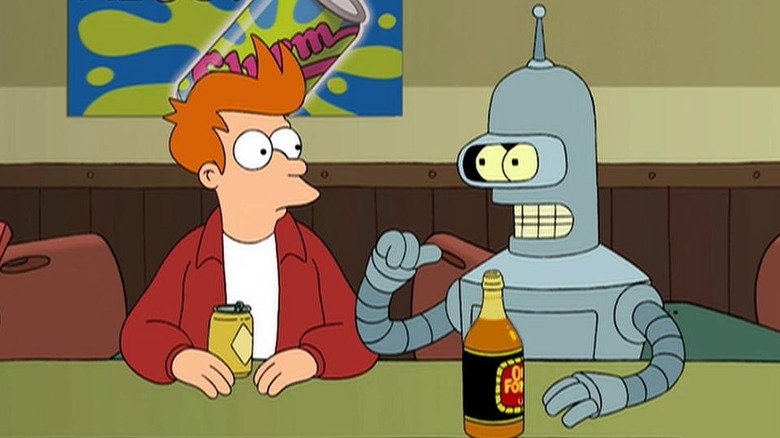
No TV writers' room is smarter than that of "Futurama." The show even created its own mathematical formula for the episode "The Prisoner of Benda," which has been dubbed Keeler's Theorem for writer Ken Keeler. "Futurama" is filled with smart humor that people with PhDs can enjoy, but don't worry. There are still all of the classic sitcom tropes one might expect, just with robots and aliens in the mix.
"Futurama" pays tribute to all kinds of science fiction properties, from "Star Trek" to "Minority Report," and it's often in service of satirizing modern issues that are still plaguing the 31st century. But smart jokes will only get you so far. The thing that has kept fans coming back as the show has been repeatedly canceled and renewed over the years is the central relationships, particularly between Fry (Billy West) and Leela (Katey Sagal). It doesn't matter if you like smart or dumb jokes; "Futurama" has something for everyone.
Frasier
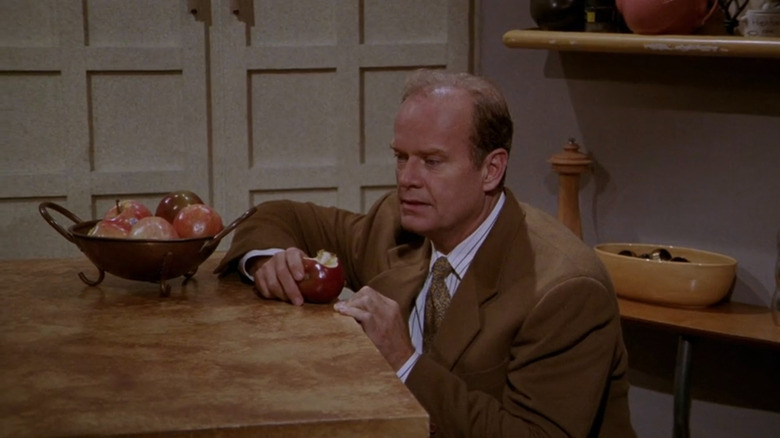
"The Big Bang Theory" wasn't the first show to last beyond 10 seasons by heavily utilizing the premise of intelligent characters finding themselves in socially awkward situations. "Frasier" already held that crown, and even though it ended its run in 2004, it's aged incredibly well. The show, a spin-off of "Cheers," follows Frasier Crane (Kelsey Grammer), who hosts a psychiatry radio talk show. But when he's not on the air, he's getting into trouble with his brother Niles (David Hyde Pierce) and father Martin (John Mahoney).
"Frasier" made a name for itself with its incorporation of high-brow humor. One thing that's pretty remarkable about the show is how it often feels like a theatrical play, almost like you're watching a classic comedy of errors. Even if you don't understand all the geography and philosophy references, "Frasier" dabbles in universal storylines and the feeling of being out of place in your own family. Anyone can get on board with those stories, giving them a timeless feel.
Georgie & Mandy's First Marriage
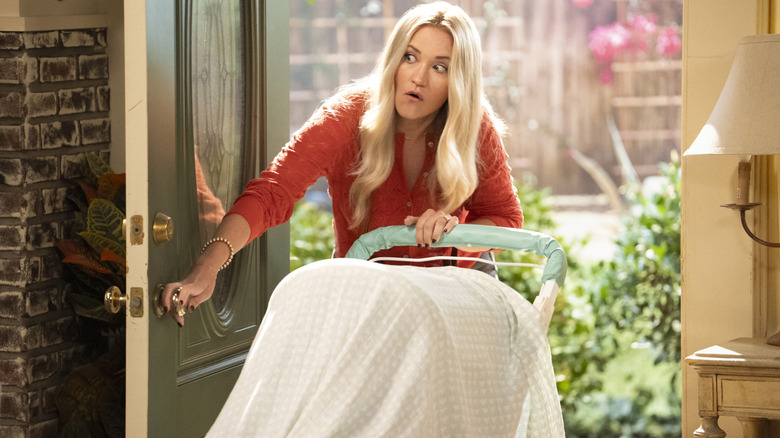
This list began with a "Big Bang Theory" spin-off, and it's going to end with one, too. "Georgie & Mandy's First Marriage" keeps the universe alive by offering a sequel to "Young Sheldon," except Sheldon doesn't really factor into the equation here. Instead, the focus is on his older brother Georgie (Montana Jordan) and his wife, Mandy (Emily Osment). The two have a child together and fight to make their relationship work, even with Mandy being 12 years older than Georgie.
The show's a departure from the two that preceded it. It's no longer really interested in following nerds with social issues. It's about trying to make a family work and dealing with intergenerational divides, as the couple lives with Mandy's parents, who aren't always easy to get along with. After more than a decade of nerdy superhero jokes, some fans may be ready for a pivot — but for anyone who misses that side of "The Big Bang Theory," the upcoming "Stuart Fails to Save the Universe" offshoot may be more your speed, as it focuses on "Big Bang" side character Stuart Bloom (Kevin Sussman). The actual Big Bang gave rise to a never-ending universe, and now, "The Big Bang Theory" has created a never-ending universe of its own.