

Why HBO's Rome Was Canceled After Just Two Seasons
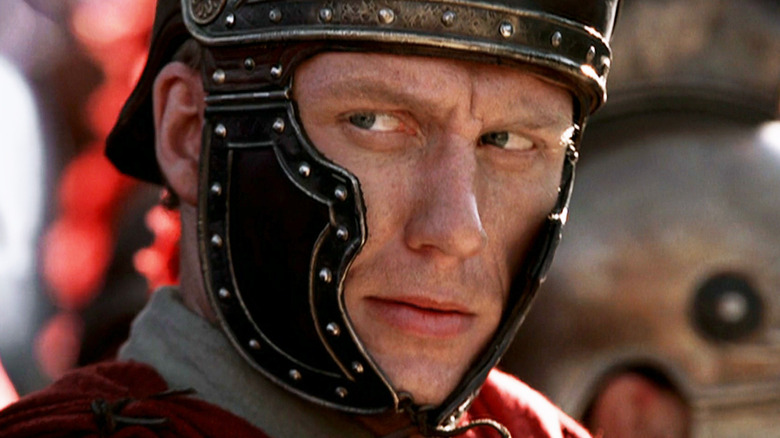
A co-production between HBO and the BBC, "Rome" was a massive undertaking that remains one of the best prestige television shows despite being so short-lived. Created by Bruno Heller, John Milius, and William J. MacDonald, the series detailed Rome's transformation from a Republic to a sprawling Empire in the first century. The show featured an expansive cast — including Kevin McKidd as Lucius Vorenus and the late Ray Stevenson as Titus Pullo — and some of television's most elaborate set pieces built at Italy's historic Cinecittà Studios. So, why was the show canceled so quickly? In short, it was too expensive.
Reflecting on its cancellation, Bruno Heller told Entertainment Weekly in 2014 that "'Rome' was the first show HBO shot out of country with [a] large budget that was period," making it somewhat of a precursor to "Game of Thrones." But unlike that widely successful fantasy series, "Rome" wasn't quite the cultural phenomenon it needed to justify what was, at the time, an exorbitant production cost.
Airing from August 2005 to March 2007 on both HBO and BBC Two in the UK, "Rome" received positive reviews and seven Emmys during its time on television. With high ratings and critical acclaim, "Rome" seemed destined to become one of HBO's long-running premium series. But those high production costs ultimately prevented the series from lasting beyond its two seasons and 22 total episodes, sealing "Rome's" fate before it had a chance to truly flourish.
Rome was successful but terribly expensive
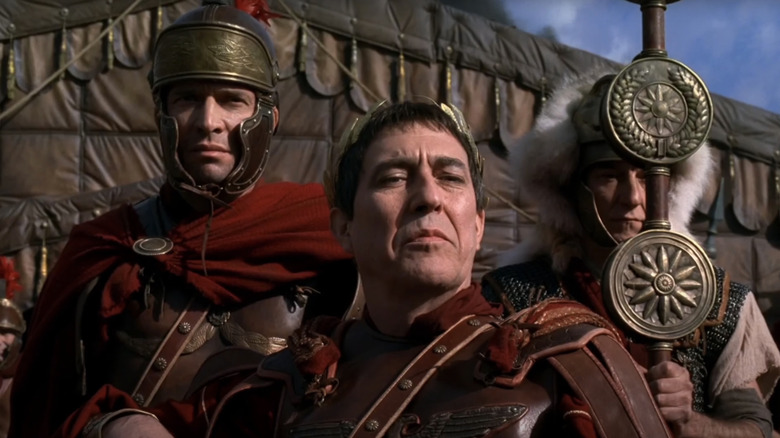
"Rome" fared quite well during its first season, helped immensely by having "The Sopranos" as its lead-in. But come July 2006, Broadcasting & Cable reported that HBO had opted not continue the show into a third season, effectively canceling the series before Season 2 even began to air. According to the outlet, then HBO CEO Chris Albrecht explained the decision as a purely economic one, citing the high production cost as the smoking gun. Contemporary reports put the first season's budget at around $100 million (or about $10 million per episode); a colossal price for any network to pay.
According to Albrecht, "Rome" was developed with the BBC as part of a two-year contract, with the British network opting to pull its funding. Initially envisioned as a miniseries, "Rome" only received a second season due to the high quality of scripts — though the positive ratings and critical response surely factored in as well. By the time HBO pulled the plug, the show had yet to build the significant following it ultimately found upon its DVD release.
Still, not everyone at HBO was terribly pleased to cancel "Rome." In 2014, an Entertainment Weekly article claimed that at least some HBO suits privately expressed regret over canceling "Rome," a claim later echoed by series star Kevin McKidd. In 2020, McKidd told Den of Geek that some HBO execs regretted canceling the show by the time Season 2 aired. "[But] they couldn't go back on that," he noted, "or felt they couldn't."
Multiple factors played into Rome's cancellation
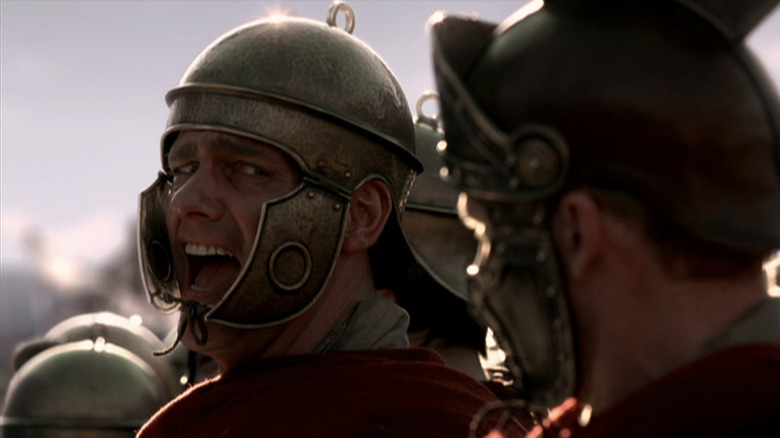
Interestingly enough, McKidd also speculated that Italian business practices may have had something to do with the show's spiraling budget. "I heard enough to know [about] the scaffolding," the actor added. "I remember one of the earlier conversations was, 'We need to buy this much scaffolding.' And the people at Cinecittà were like, 'You can't buy that much scaffolding, but you can rent it from my brother.'"
Another contributing factor may have been that Heller and his team didn't follow a roadmap, which didn't bolster much confidence among network executives. "The mistakes we made are the mistakes 'Game of Thrones' learned from," Heller revealed in the aforementioned EW interview. "One of the challenges from HBO's point of view was 'Rome' had a large and ambitious structure, but we were making it up as we went along instead having those wonderful books." Without a clear plan in place, the suits may not have been all that confident in the show's future.
Not long after "Rome" ended, Heller revealed to The Hollywood Reporter that he and the writers crammed their future plans into the show's remaining episodes. "I telescoped the third and fourth season into the second one," he explained, "which accounts for the blazing speed we go through history near the end." While there were talks of a continuation film, the project never materialized. Nowadays, "Rome" remains one of the best two-season TV shows ever — both ahead of and canceled well before its time.