

15 Best Historical TV Shows Of All Time, Ranked
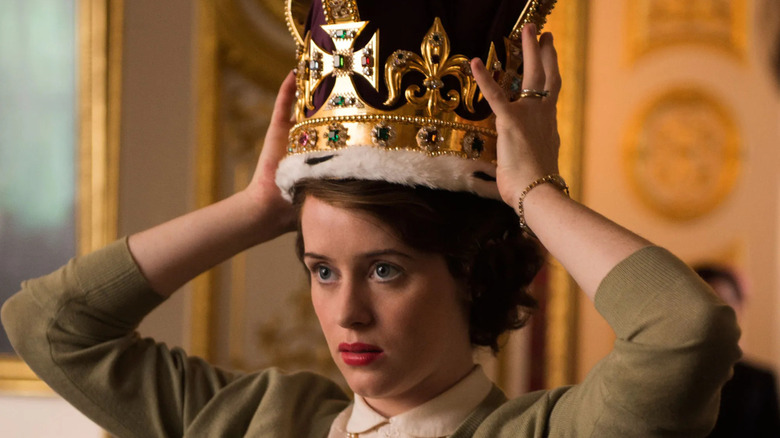
We don't always watch TV with the hope of learning something, but there are plenty of shows that are as engaging to watch as they are educational. Period pieces dramatizing historical events and figures, both ancient and modern, have had a constant presence on television since the beginning. These days, however, shows are more heavily scrutinized for their historical accuracy, even when the creators express an intent in diverting from true events for the sake of captivating television.
These series all share a basis in historical fact, though realize their respective subjects in different ways. Some dramatize real-life figures through fictional characters, while others re-interpret well-known history through an entirely new lens. A real-life setting may be merely a backdrop for some of the freshest TV drama ever seen, but in other instances, the stakes are lifted directly from the history books. Whatever their approach, these 15 shows all share one thing in common: they're some of the best TV the medium has had to offer.
15. Vinland Saga
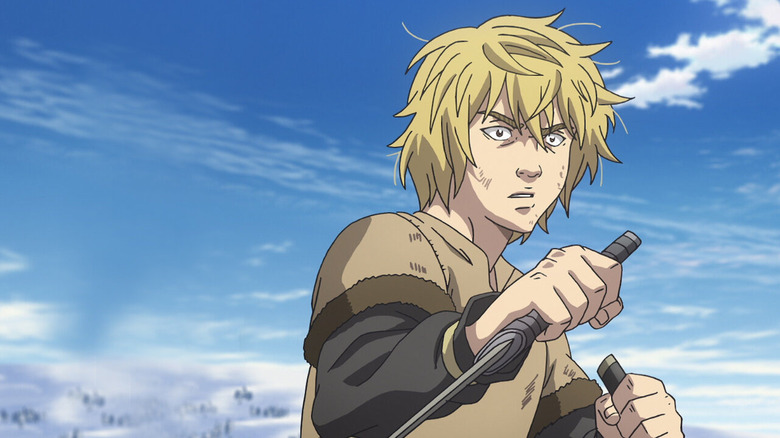
Kicking off this list is a rather unconventional choice: an anime series. Japanese animation isn't exactly known for its historical accuracy, but this adaptation of Makoto Yukimura's manga series that began in 2019 is an exception. The show is set during the age of Vikings, taking a more realistic approach in depicting the northern European nomads. It centers on Thorfinn (Yûto Uemura), a young boy driven towards revenge after the death of his father at the hands of Askeladd (Naoya Uchida), who adopts Thorfinn into his band of mercenaries in spite of the child's motives.
With only two seasons (albeit with 24 episodes each), "Vinland Saga" might not have the reputation of more essential anime series, but its grounded storytelling and basis in Viking history makes it a must watch for anyone even remotely interested in that brutal era. Thorfinn himself is loosely based on a real Icelandic explorer who sailed to present-day Nova Scotia, a story that's more focused on in the second season.
14. Dickinson
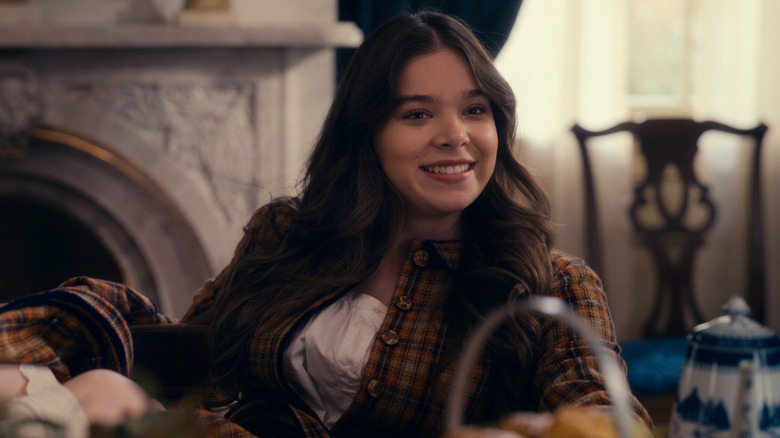
Many scholars have differing opinions on the personal life of Emily Dickinson, a prolific poet whose work was recognized posthumously, particularly in regards to Dickinson's purported sexuality. That speculation is front and center in the Apple TV+ comedy "Dickinson," starring Hailee Steinfeld as the young writer, who harbors an illicit romance with her best friend Sue (Ella Hunt), who is betrothed to her older brother Austin (Adrian Blake Enscoe). Also starring is Jane Krakowski as Emily's subservient mother and Wiz Khalifa as the personification of Death, whom Emily frequently writes about.
Across three seasons, "Dickinson" received praise for its clever writing, LGBTQ+ themes, and Steinfeld's shining lead performance. Plenty of comedians guest star as Dickinson's literary contemporaries, including Ziwe as Sojourner Truth, John Mulaney as Henry David Thoreau, and Chloe Fineman as Sylvia Plath. The "Dickinson" series finale in 2021 re-established that, while there may not be much historical fact in the show, it's a love letter to one of the great American poets.
13. The Knick
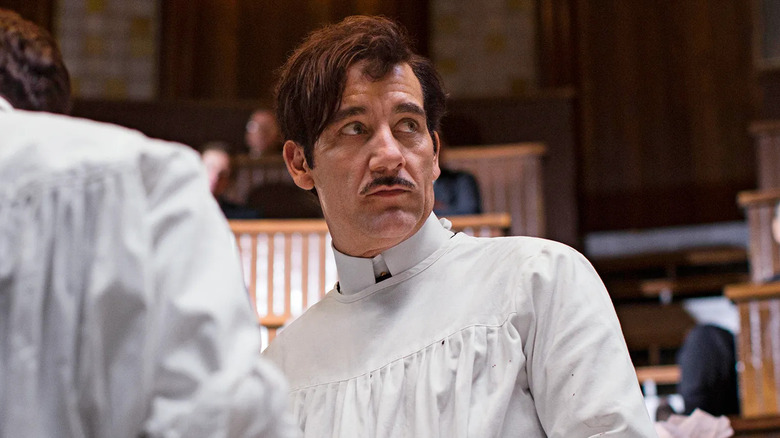
One of the great tragedies in recent TV history is "The Knick" being cancelled after two seasons, ending one of the most unique medical dramas from one of our great contemporary directors, Steven Soderbergh. Named after the real-life Knickerbocker Hospital from early 20th century New York City, "The Knick" stars Clive Owen as Dr. John Thackery, a surgeon who spends his off hours battling a fierce addiction to opioids. Also in the cast is André Holland as a surgeon navigating racial tensions of pre-Civil Rights America and Cara Seymour as a Catholic nun who illicitly conducts abortions.
Despite being snubbed across its run at major award shows, only garnering one production design Emmy win (where it tied with "Boardwalk Empire") and a single Golden Globe nod, "The Knick" is as addictive as any of Thack's drugs. There may still be hope for a spin-off series according to co-creator Michael Begler, centering on Holland's character, but we'll certainly miss witnessing Owen's fascinating performance evolve.
12. Rome
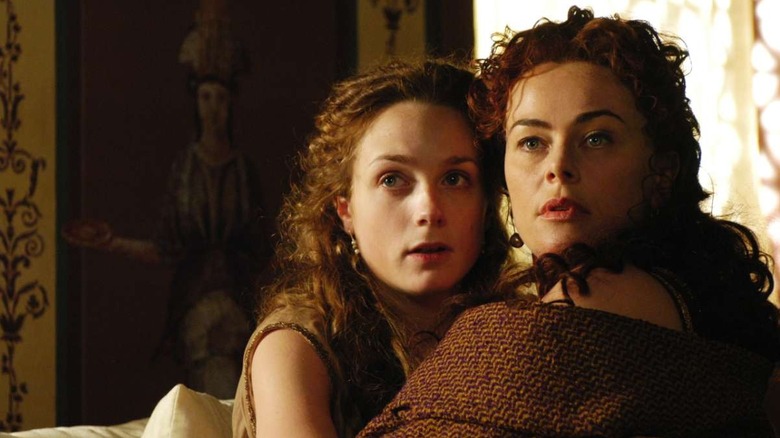
Question: do men really think about the Roman Empire every day, or are we just thinking about the HBO drama "Rome?" This series only aired between 2005 and 2007, but it lasted 800 times less seasons than the Roman Empire did in years. The show features an ensemble cast led by Ray Stevenson and Kevin McKidd as Titus and Lucius respectively, two soldiers in a Julius Caesar-led Rome. The rest of the cast consists of noblemen and women as well as commoners, and Caesar himself played by Ciarán Hinds.
Most of the cast portray real-life figures, though the events of the show are largely fictionalized with the exception of some of the juiciest real-world moments in Roman history, including Caesar's assassination and the romance between Cleopatra and Mark Antony. It's sad that the series had such a short life given it covers an era of history begging to be dramatized on screen, but at least we have those two seasons of great television to look back on.
11. The White Princess
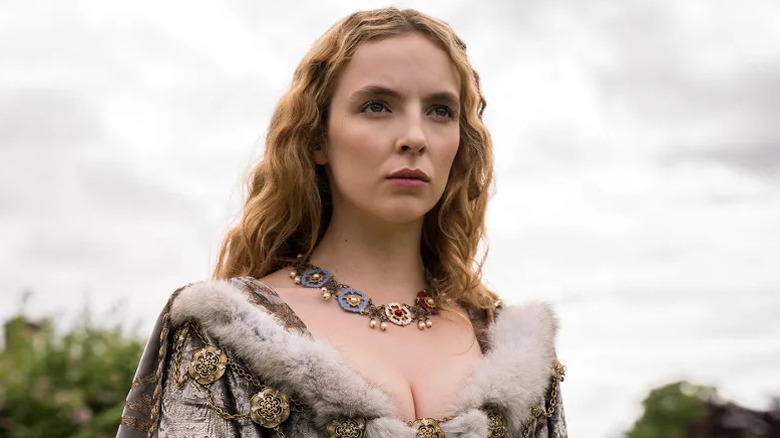
Jodie Comer broke out into mainstream success by wearing the best outfits as Villanelle in BBC's "Killing Eve," but only a year earlier she garnered acclaim for her leading role in the Starz drama "The White Princess." As only an eight-episode miniseries, Comer plays a drastically different role from Villanelle as Elizabeth of York, the queen of England to Henry VII (Jacob Collins-Levy), eventual mother to the notorious Henry VIII (check out "The Tudors," which just barely didn't make the cut here, for more about him).
"The White Princess" is a surprisingly compelling enemies-to-lovers drama between Elizabeth and Henry, whose marriage ostensibly ends the War of the Roses that raged through England throughout the late 1400s. If you miss the days of early "Game of Thrones" when the show was more about a struggle for political power rather than dragons and frozen zombies, "The White Princess" may give you the historical nostalgia you've been yearning for.
10. John Adams
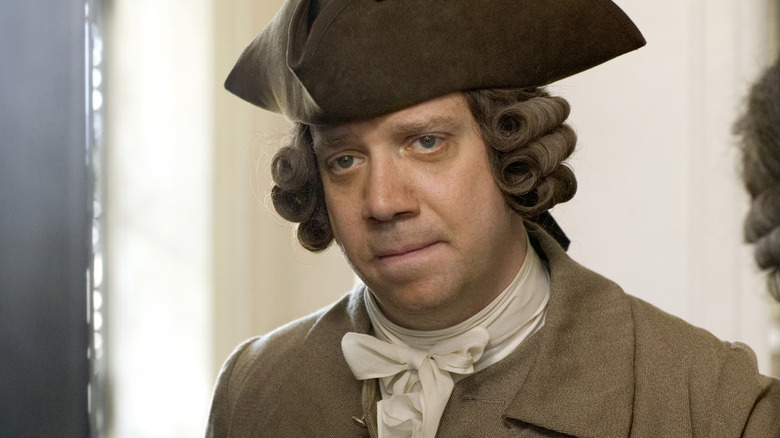
Taking place roughly 300 years after the events of "The White Princess" (a little more than present day and the American Revolution), HBO's "John Adams" is another miniseries we had to include. Paul Giamatti stars as the titular first Vice President of the United States, tracking his involvement in the aftermath of the Boston Massacre in 1770, his diplomatic work with France during the Revolutionary War, his fractured relationships with George Washington's cabinet, and his own presidency and subsequent death.
Although it takes inspiration from David McCullough's 2001 biography, many creative liberties from real-life history are taken in an effort to dramatize Adams' life story. While Giamatti is stellar as always, extra props should go to Laura Linney, who plays Adams' wife Abigail, and Stephen Dillane, who brings depth to Adams' Democratic-Republican rival Thomas Jefferson. "John Adams" is simply a must-watch for anyone interested in early American history.
9. The Great
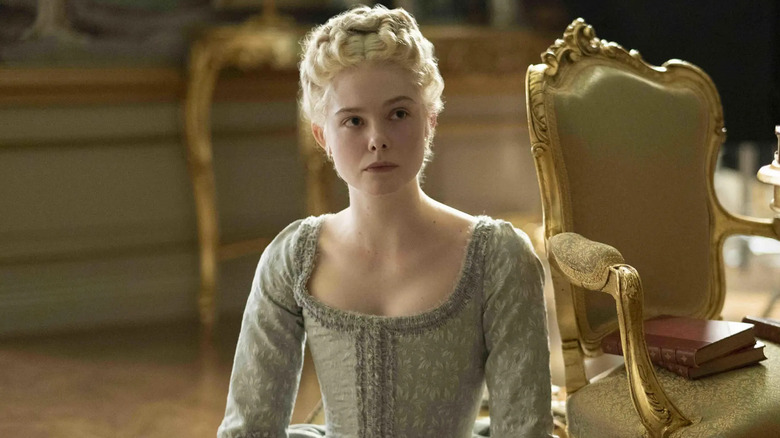
If this year's "Sentimental Value" and "Predator: Badlands" have put you on the Elle Fanning hype train, you'll sadly have to take a backseat for those of us who were in her corner after "The Great." The Hulu comedy stars Fanning as Russia's Catherine II, and takes a satirical look at the dethroning of her husband, Peter III (Nicholas Hoult), via regicide. Though it is about as true to real life history as Fanning's phony Russian accent, the actress forges new ground for historical fiction in TV with her charming and wild performance.
It might not be ideal for history buffs seeking an actual dramatization of Catherine the Great's reign, but "The Great" might make those otherwise uninterested in the Russian monarchy fascinated by the empress's actual truths. Plus, the show was created by Tony McNamara, who also penned the Oscar-nominated screenplays for Yorgos Lanthimos' "The Favourite" and "Poor Things." Pairing him with these dynamite actors makes you wish you had seen this sooner.
8. The Gilded Age
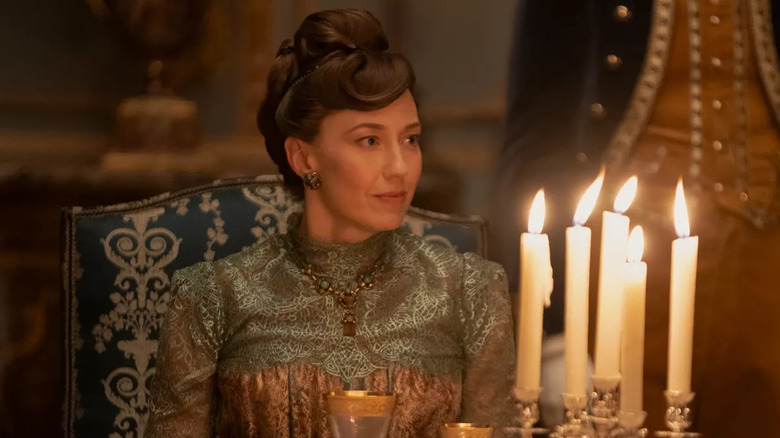
The "gilded age" was an era spanning the late 1800s and a notable period of industrial growth. "The Gilded Age" on HBO is set amidst this vast societal change, following an ensemble of upper-class characters in New York City from differing economic backgrounds. Carrie Coon stars as Bertha, the matriarch of the "new money" Russells who are wealthy from railroad manufacturing, and a supporting cast including Morgan Spector as Bertha's husband and Christine Baranski as the "old money" van Rhijn's matriarch Agnes.
Despite following a fictional family, the show takes many cues from its real-life titular era, including the financial turmoil following the end of the Civil War, as well as the appearance of figures like President Chester A. Arthur (Randall Passman) and socialite Caroline Astor (Amy Forsyth). The show has aired for three seasons as of 2025, with a fourth confirmed to be in production (where it may possibly cross over with another great TV period piece, "Downton Abbey").
7. Vikings
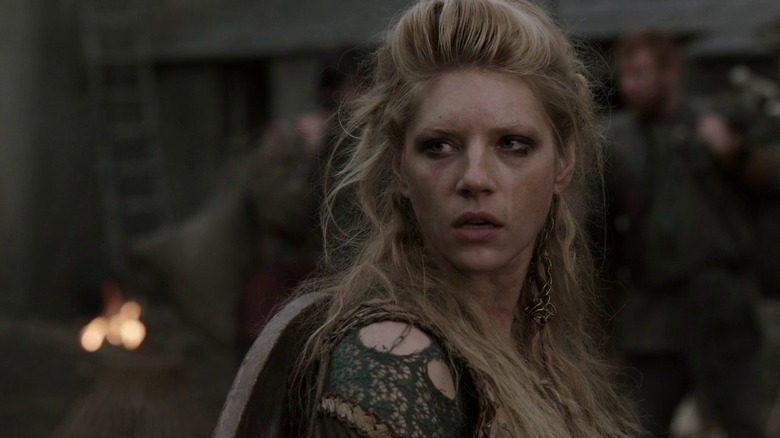
Much like "Vinland Saga," the History Channel's "Vikings" takes a more realistic approach to depicting Nordic folklore. Travis Fimmel stars as Ragnar Lothbrok, a legendary Viking hero, whose conquests are center-stage for a majority of the series. Also among the cast, and much more integral in the final two seasons, is Katheryn Winnick's ruthless and heroic Lagertha, Ragnar's wife who eventually inherits the throne following his shocking death.
Although the show faced some criticisms for its factual inaccuracies, it's easily one of the most thrilling historical dramas ever aired. Its violence rivals "Game of Thrones," without getting bogged down in confusing lore and suspension of disbelief. Sure, Ragnar Logbrok may not have had tattoos on his head in real life, but Fimmel's take is still a cool character to root for. If you want less pillaging and more exploration from a Nordic-based series, there's also a spin-off, "Vikings: Valhalla," which was cancelled after three seasons on Netflix, covering the adventures of Leif Erikson (Sam Corlett).
6. Shōgun
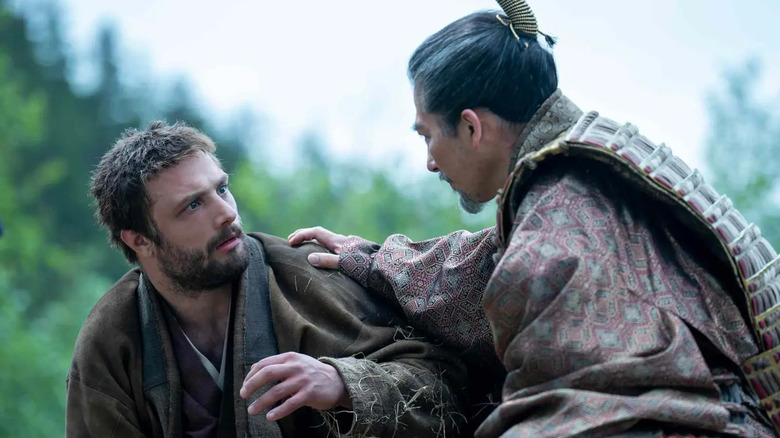
Despite only having one season as of this writing, FX's "Shōgun" has earned its place among the best historical fiction in recent memory. Assuming it doesn't drop the ball in future seasons, it'll certainly be deemed must-watch TV for years to come. Based on James Clavell's novel of the same name, it follows American ship pilot John Blackthorne (Cosmo Jarvis) who, after a shipwreck on the coast of Osaka, becomes a captive of Japanese lord Toranaga (Hiroyuki Sanada). Blackthorne learns the ways of the samurai and fosters a romance with translator Mariko (Anna Sawai).
The show's first season has garnered massive acclaim, making Emmys history as the first non-English series to nab outstanding drama series, one of its record-breaking 18 Emmy award wins, including acting victories for Sawai and Sanada. With "Shōgun" season 2 confirmed at FX, hype for the show will hopefully only grow bigger as time goes on, as it's a long-needed deep dive into an area of history largely ignored by western television. And judging by the acclaim its received in both Japan and America, it's safe to say that everyone involved in capturing the Asian country's feudal history more than succeeded in their mission.
5. The Crown
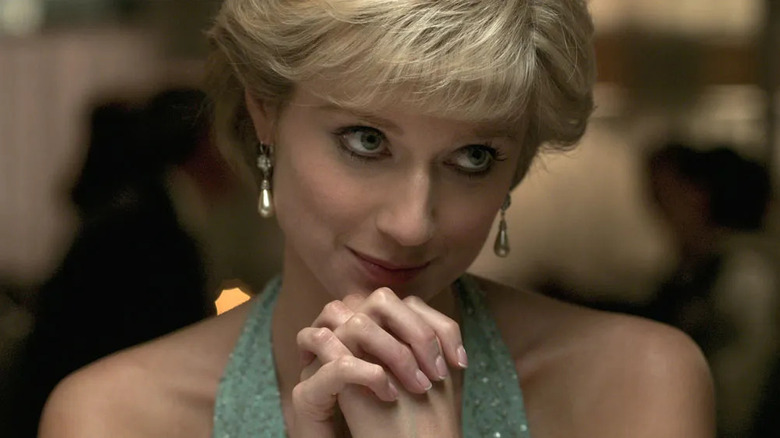
"The Crown" may have been a standard serialized drama, but it essentially operated like an anthology series chronicling the history of the British royal family, with different actors sharing various roles. It starts with Princess Elizabeth's (Claire Foy) betrothal to Prince Phillip (Matt Smith, Tobias Menzies, Jonathan Pryce) and the majority of her reign as Queen of England (Olivia Colman and Imelda Staunton). But by the end, "The Crown" explores Princes Charles' (Josh O'Connor and Dominic West) fraught marriage to Diana Spencer (Emma Corrin and Elizabeth Debicki), and his subsequent re-marriage to Camilla Parker Bowles (Emerald Fennell and Olivia Williams) in 2005 after Diana's untimely death.
Though the later seasons of "The Crown" garnered criticism for betraying real-life history (despite praise from certain members of the family themselves), it nonetheless became a staple of prestige television across the late 2010s and early 2020s. "The Crown" series finale especially paid tribute to the prior iterations of its subjects from earlier seasons, featuring cameos from Colman and Foy as younger versions of the long-reigning monarch.
4. Peaky Blinders
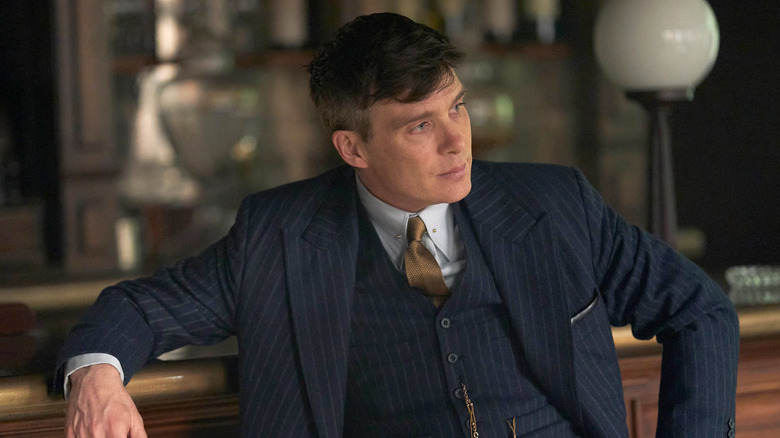
Believe it or not, the Peaky Blinders were a real street gang in 1920s England, even though Cillian Murphy's now-iconic Tommy Shelby is a complete fictionalization of the BBC series. Premiering n 2013, "Peaky Blinders" chronicled Shelby's highs and lows in organized crime, including his romance with an undercover agent named Grace (Annabelle Wallis), and Shelby's own struggles with depression and post-traumatic stress disorder. There's a reason why Cillian Murphy's Oscar win for "Oppenheimer" was so long overdue, and that's because his gripping portrayal of Shelby had long established him as an A-list talent.
Whilst its events are fictional, the series includes appearances from many historical figures, such as Winston Churchill (Andy Nyman and Neil Maskell), Oswald Mosley (Sam Claflin), and Jessie Eden (Charlie Murphy). Still, the most intriguing part is witnessing a protagonist so rich in history that few outside of England may know about receive such a spotlight. Now is the perfect time for a binge-watch, since a film set after the finale and a newly-announced sequel series from Steven Knight, both coming to Netflix, are on the way.
3. Roots
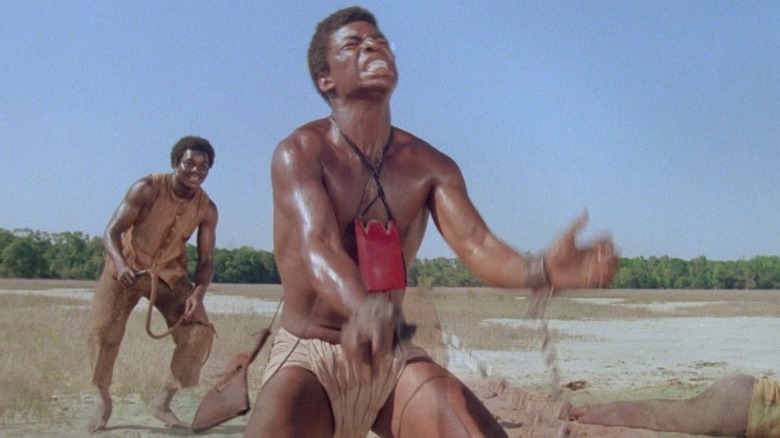
It's hard for a lot of younger TV viewers to comprehend the significance of "Roots" when it premiered almost 50 years ago. The seminal 1977 eight-episode historical drama miniseries followed a line of African-American descendants throughout the country's first century. Among them is colonial slave Kunta Kinte (LeVar Burton and John Amos), his daughter Kizzy (Leslie Uggams), and her biracial son George (Ben Vereen).
It's far from the easiest watch, considering its harsh depiction of violence both physical and sexual, but it's the type of story that cannot and should not be ignored, especially by American television audiences. In addition, it proved a breakout performance for LeVar Burton, who'd continue leaving a profound impact on generations of TV viewers in "Reading Rainbow" and "Star Trek: The Next Generation."
Even nearly 50 years later, "Roots" remains poignant and truthful, even if the specific stories of Kunta Kinte and his descendants were fictionalized in both the series and the book it was based on by Alex Haley. Even the 2016 remake of "Roots" on the History Channel made for one of the best TV projects of its entire decade.
2. Band of Brothers
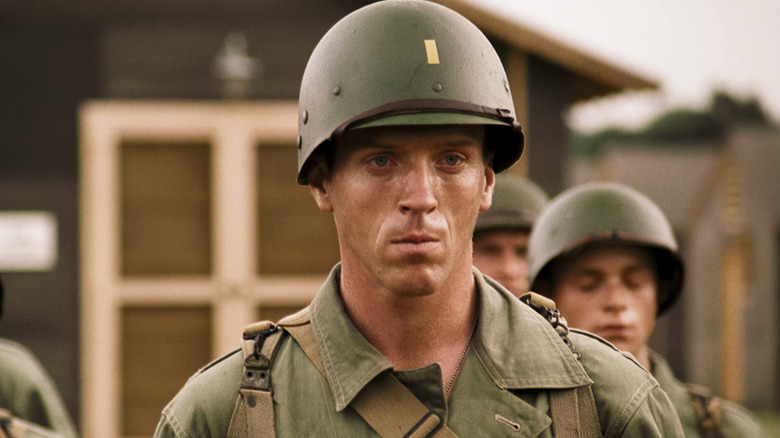
It's a shame that our last few entries are miniseries, as we could've watched hundreds and hundreds more hours of them, in spite of their grueling subject matter. Few are better examples of this than HBO's "Band of Brothers," a drama miniseries from Steven Spielberg and Tom Hanks (the latter also directing one of its 10 episodes). "Band of Brothers" dramatizes the story of an American military battalion throughout World War II, with an ensemble including Damian Lewis, David Schwimmer, Michael Fassbender, Rami Malek, and Andrew Scott.
Like Spielberg and Hanks' "Saving Private Ryan," "Band of Brothers" is one of the most unflinching depictions of World War II in media, whilst simultaneously acting as an oddly optimistic story about the heroism of complete strangers working together. More so than that, it was an ambitious show during an era where television was rarely on such a scale, paving the way for a generation of pristine television to come.
1. Chernobyl
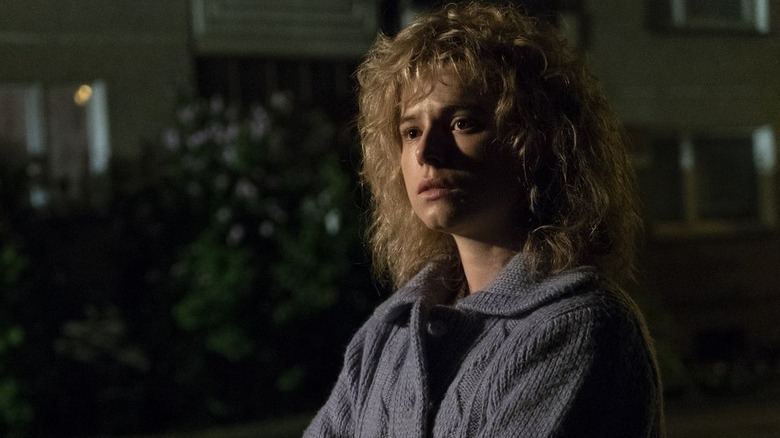
In the history of shows about, well, history, it might surprise some that we'd put a comparatively newer series at the top spot. However, if you were tuned into HBO while "Chernobyl" was airing in 2019, you'd know this is more than deserved. Creator and writer Craig Mazin crafted some of the most engaging television episodes to date out of one of the biggest tragedies in world history: the 1986 nuclear plant meltdown in the Soviet Union. The show follows an ensemble of characters, experiencing both the frontlines of the disaster and its horrifying side-effects.
In case you're unaware of the catastrophic event itself, "Chernobyl" is the rare case in which its historical accuracy is so close to the real events (pardoning few creative liberties like some composite characters and dramatizing events that did not happen), that it might as well be watched like a documentary. Add in jaw-dropping performances from Stellan Skarsgård and Jessie Buckley, and at this point, not having seen "Chernobyl" is something of a disaster in it of itself.