

14 TV Show Retcons That Didn't Make Any Sense
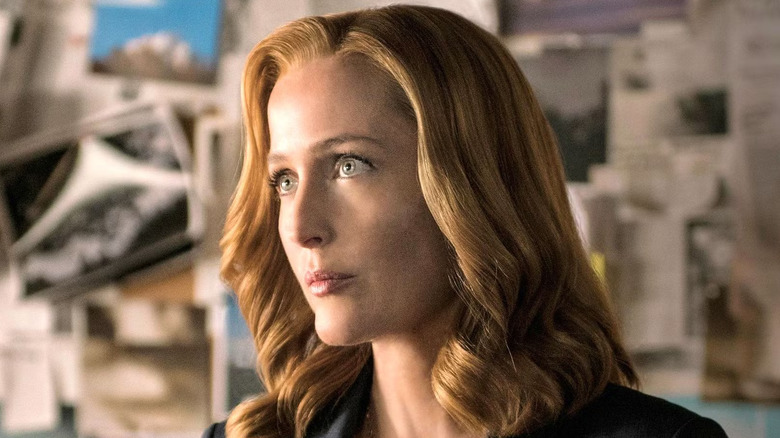
Have you ever watched a show that introduced a storyline so infuriating that you almost threw the remote at the TV? For dedicated TV watchers, it's likely happened at least once. The best television shows inspire emotional investment that grows over time. So, when a favorite TV show pulls a twist that seems antithetical to its narrative or characters, we feel betrayed.
Today, we're diving into one of the most perplexing deadly sins of TV writing — the retcon. A portmanteau for "retroactive continuity," a retcon changes an aspect of a story in a way that recontextualizes, ignores, or contradicts its established continuity.
Sometimes retcons can be useful plot devices, like when Dawn (Michelle Trachtenberg) randomly appears in "Buffy the Vampire Slayer" in service of a season-long storyline arc. Other times, these retcons seem totally random or unnecessary. Here are 14 examples of TV retcons that don't make any sense.
Principal Skinner is an imposter in The Simpsons
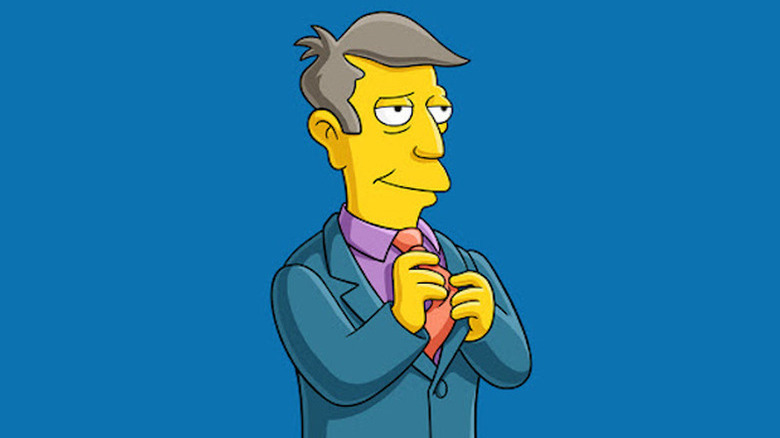
Principal Skinner is an important "Simpsons" character who, while frequently a target for Bart's pranks and ire, gets fleshed out into more than a background figure in episodes including "Sweet Seymour Skinner's Baadasssss Song" and "The Boy Who Knew Too Much," both from Season 5. Though Fox's quintessential animated series occasionally plays with its own continuity, in the Season 9 episode "The Principal and the Pauper," the writers made a change to Skinner that sparked outrage.
According to "The Principal and the Pauper," it turns out that the Skinner we know is an imposter named Armin Tamzarian who falsifies his identity after the real Skinner is seemingly killed in the Vietnam War. Many fans reacted negatively to the episode, as did Skinner's voice actor, Harry Shearer.
"I said, 'That's so wrong,'" he told SF Weekly in 2001, recalling his first reaction to the "Principal and the Pauper" script. "'You're taking something that an audience has built eight years or nine years of investment in and just tossed it in the trash can for no good reason. ... It's so arbitrary and gratuitous, and it's disrespectful to the audience.'"
The writers took note of this reaction, and later episodes include flashbacks of Skinner in his younger years, implicitly retconning this unpopular retcon.
Dan comes back to life in Roseanne
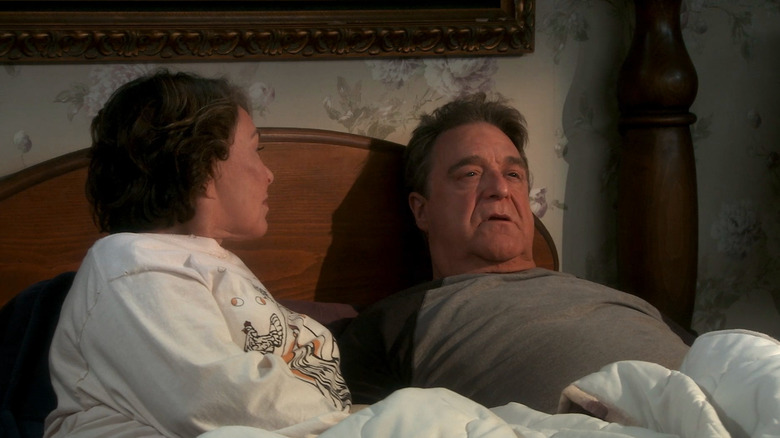
It's rare to retcon an entire season, but that's precisely what happened on the ABC sitcom "Roseanne." Widely considered the worst of the show, Season 9 of "Roseanne," broadcast during 1996 and 1997, features a series of unlikely events, including Roseanne winning the lottery and fighting terrorists. It ends on a shocking note when we learn that almost the entirety of Season 9 is a book Roseanne writes to cope with the death of her husband, Dan (John Goodman).
In 2018, ABC revived "Roseanne" after a 21-year gap, and the Season 10 premiere begins with a retcon of a retcon. Roseanne wakes up in bed with Dan and exclaims, "I thought you were dead!" Dan responds, "Why does everybody always think I'm dead?" Later in the episode, they find a manuscript of Roseanne's book, and Dan quips that it would have "sold like hot cakes if only you hadn't killed off the most interesting character." This means that the explanation at the end of Season 9 is also a part of Roseanne's book, as if this retcon wasn't already nonsensical enough.
Frasier's dad is alive
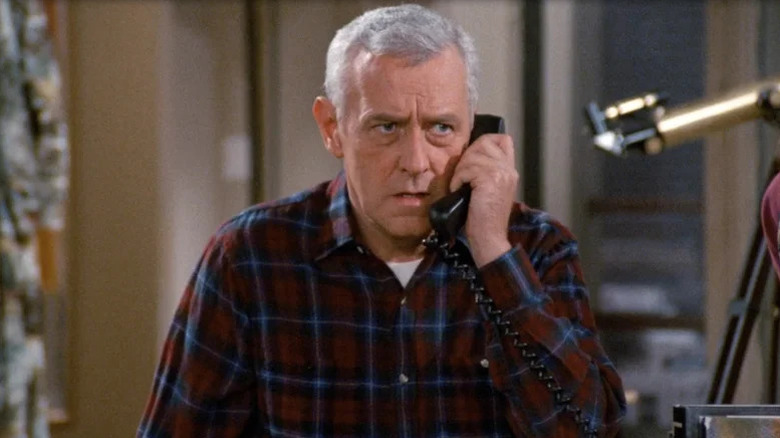
Family is an important element of the highbrow NBC sitcom "Frasier," but that isn't always the case for the titular character. Frasier Crane (Kelsey Grammer) first appears on "Cheers," a beloved '80s show set in Boston. In the spin-off, Frasier moves back to his hometown of Seattle to host a radio call-in program. When it comes to the continuity between "Frasier" and "Cheers," things get a little sticky.
In Season 8 of "Cheers," Frasier reveals that both his parents are dead, and that his dad was a scientist who inspired him to pursue his career as a psychotherapist. In "Frasier," we're introduced to two members of Frasier's family — his brother Niles (David Hyde Pierce) and his father Martin (John Mahoney). Not only is Frasier's dad alive and well, but he's a retired cop, not a scientist. Season 2 addresses the discrepancy in an episode where "Cheers" bartender Sam (Ted Danson) comes to visit. Frasier tells Sam that he lied about his father being dead because they weren't speaking at the time. He didn't lie about his mother, however, who died several years before.
The Trills get a makeover
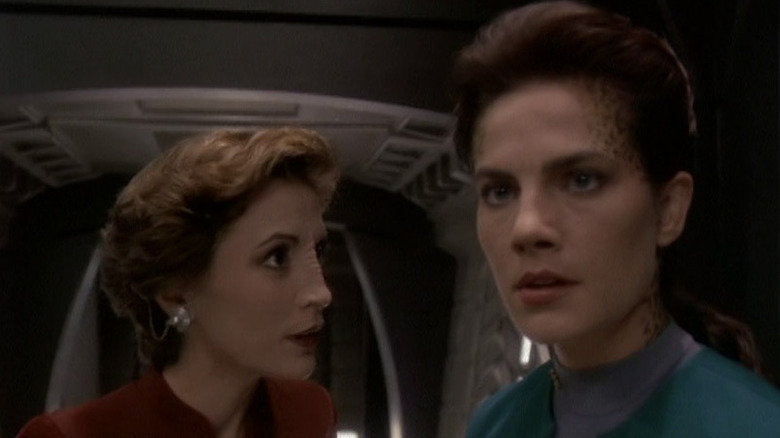
"Star Trek" is one of the most lore-heavy franchises out there, and with 12 television shows (give or take) and 13 theatrically released films in its galaxy of continuity, retcons are all but inevitable. One notable retcon involves the humanoid species known as the Trills. First introduced in "The Next Generation," which aired from 1987 to 1994, the Trills have ridged foreheads and host worm-like organisms called symbionts that control their consciousness and behavior. Trills are also prohibited from using transporters.
In "Deep Space Nine," which premiered in 1993, the Trills look different. They have spots on their foreheads and chest instead of ridges; the symbionts merge with Trill personalities rather than taking over, and they're allowed to transport. The Trills are an important part of "Deep Space Nine" as Trill Jadzia Dax (Terry Farrell) is one of the show's main characters.
The Doctor is the Timeless Child
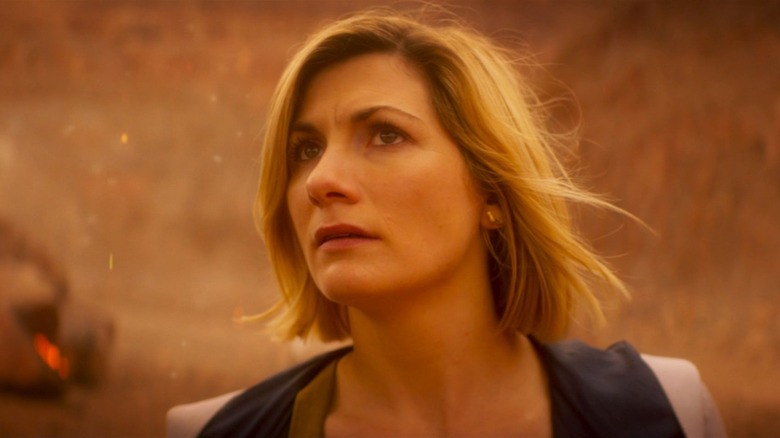
"Doctor Who" made its first broadcast on the BBC more than 60 years ago, so perhaps we can't judge the writers too harshly if they've played fast and loose with continuity every now and again. But in 2020, showrunner Chris Chibnall introduced one of the most controversial retcons in the show's substantial history.
Before the episode titled "The Timeless Children," the Doctor is described as a Time Lord from the planet of Gallifrey. Time Lords have the ability to regenerate — which basically means they can die and come back in a different body. According to the origin, the Doctor steals the TARDIS (Time and Relative Dimension in Space), leaves Gallifrey, and becomes a renegade crisscrossing the universe for adventure and good deeds. "The Timeless Children" adds a whole new prologue to this lore. In the Season 12 finale of the revival series, we learn that the Doctor is not originally from Gallifrey. Instead, the Doctor is initially discovered as a baby on Gallifrey by the scientist Tecteun. When Tectuen figures out that the young Doctor, aka the Timeless Child, can regenerate, she isolates the Doctor's genetic code in order to install regeneration into the larger population on Gallifrey — thus creating Time Lords.
This means that the Doctor is not just a Time Lord but the first Time Lord, and the reason Time Lords exist.
Sara's fake beheading in Prison Break
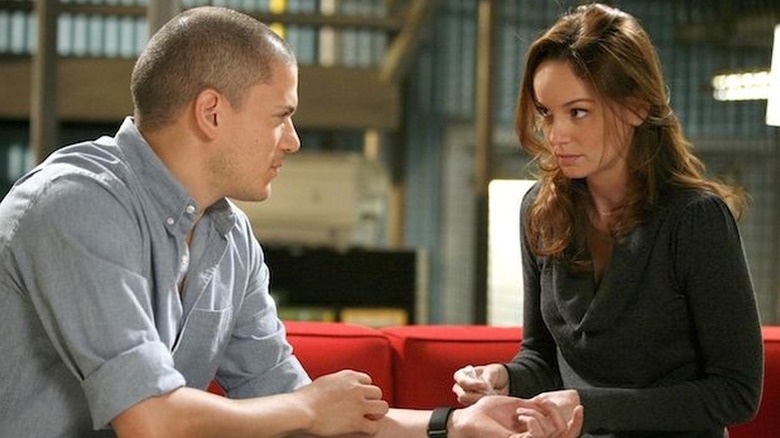
In the Fox series "Prison Break," Lincoln Burrows (Dominic Purcell) is wrongfully convicted of killing the vice president's brother and sentenced to death. Lincoln's brother Michael Scofield (Wentworth Miller) hatches a plan to get himself sent to the same prison in order to free Lincoln. The show features many twists and turns, including several shocking character deaths.
Sara Tancredi (Sarah Wayne Callies) is a physician in the prison who becomes involved in Michael and Lincoln's plot to escape. In Season 3, Sara is kidnapped and decapitated. Michael receives her head in a box soon after. However, in the first episode of Season 4, it's revealed that Sara is still alive. Apparently, the organization that kidnapped her sent a fake head.
The writers initially killed Sara off to motivate Michael, and the decision led to a contractual dispute with Callies. However, after the writers thought up a rationale for bringing her character back, Callies returned for Season 4.
"Lincoln glanced at the head in the box for a split second. That could've been anyone," said executive producer Matt Olmstead in a 2008 TV Guide interview.
It was all a dream in Dallas
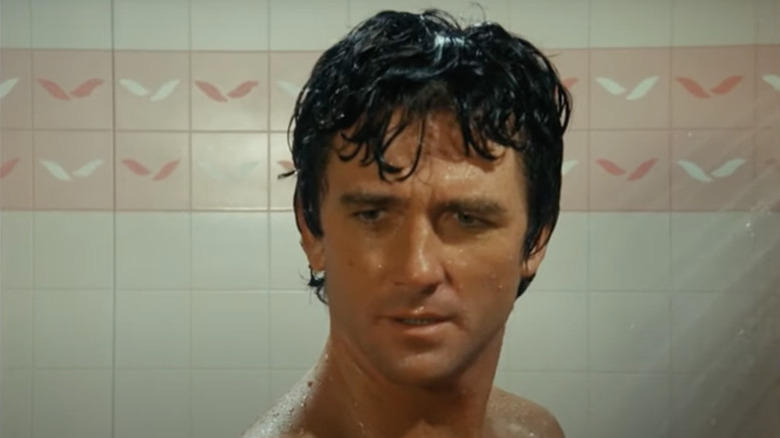
The season-long retcon in the iconic CBS soap "Dallas" is one of the wildest in TV history. At the end of Season 8, Bobby Ewing (Patrick Duffy) is killed after saving his wife, Pam (Victoria Principal), from getting hit by a car. However, at the end of Season 9, broadcast in 1986, Pam wakes up to find Bobby in the shower. It turns out that the entire season, as well as Bobby's death, was Pam's dream. This means that none of what happens in Season 9 is canon.
As it turns out, many members of the audience and some of Duffy's "Dallas" co-stars were not happy with the twist. At a reunion hosted by People magazine, Ray Krebbs actor Steve Kanaly said, "It was about a 10% audience loss, at least, from that, because people were offended to see the [death] storyline just tossed." He went on to explain that, for several of the actors, the retcon means that their characters' entire Season 9 storylines are also just part of a dream.
Walker blood is the source of infection in The Walking Dead
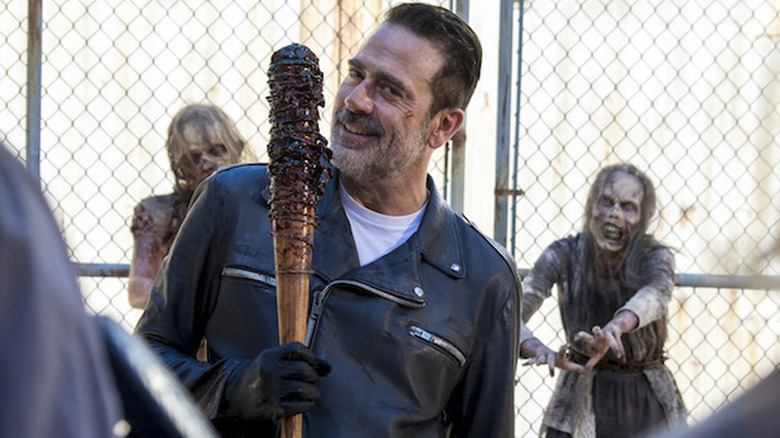
During this wildly popular horror series on AMC, numerous characters get walker blood in and on them and don't turn into walkers. ("Walkers" is the show's word for zombies.) Think back to Season 6 when Rick (Andrew Lincoln) cuts his hand with a machete that's sticking out of a walker, or when Michonne (Danai Gurira) gets covered in zombie guts in Season 3.
However in Season 8, Negan (Jeffrey Dean Morgan) tells the other Saviors that they should cover their weapons in walker blood and guts so that their enemies will become infected. "Y'all know how it works," he tells everyone. Except, for the last eight seasons, people have been routinely getting walker blood all over them and not turning into zombies, so do they know how it works? Negan's theory seems to completely change the nature of infection in the "Walking Dead" TV universe.
The finale of Will & Grace never happened
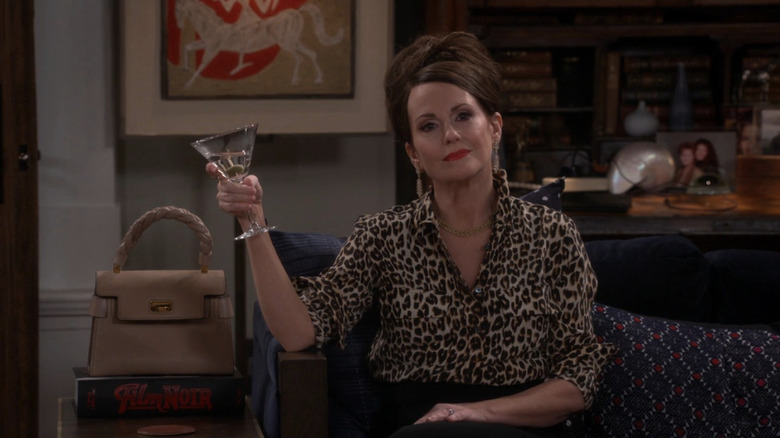
Revivals and reboots were all the rage in the 2010s. In some cases, these revivals retconned elements of their respective original series. "Roseanne" stands as a major example, and a similar change occurs in the "Will & Grace" revival, which ignores the finale of the original series.
In the then-final episode of "Will & Grace" from 2006, a 20-year time jump reveals what happens to the titular characters in the future. Grace (Debra Messing) marries Leo (Harry Connick Jr.) and they have a daughter together. Will (Eric McCormack) gets back together with Vince (Bobby Cannavale) and they have a son. At one point, Will and Grace go almost two decades without speaking.
The revival nixes that storyline in its first three minutes, when we find out that all that business about Will and Grace getting married and starting families is a dream Karen (Megan Mullally) has during a midday nap. "Oh, what a relief. Nobody wants to see you two raise kids," Karen quips.
Donna's disappearing sisters on That '70s Show
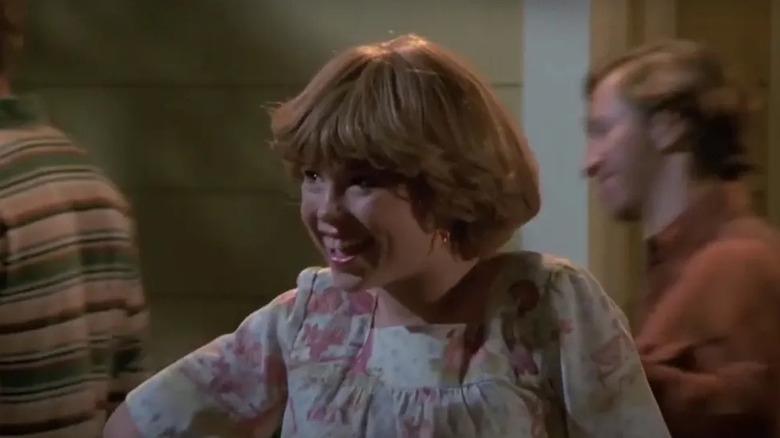
Once upon a time, Donna (Laura Prepon) on Fox's "That '70s Show" had two sisters. In the second episode of the series, Donna's mother Midge (Tanya Roberts) commiserates with Kitty (Debra Jo Rupp) as Kitty frets about Eric's pending adulthood. "When Valerie went off to school, I felt the same way," says Midge. Valerie is never mentioned again. A few episodes later, we meet Tina (Amanda Fuller), Donna's 14-year-old sister ... and we never see Tina again, either.
Season 2 includes a tongue-in-cheek meta gag about this lack of consistency at the end of the episode "Vanstock," when a soap opera-esque voiceover asks what happened to Tina. For the rest of the series, Donna is referred to as an only child.
The X-Files reboot changes the whole mythology
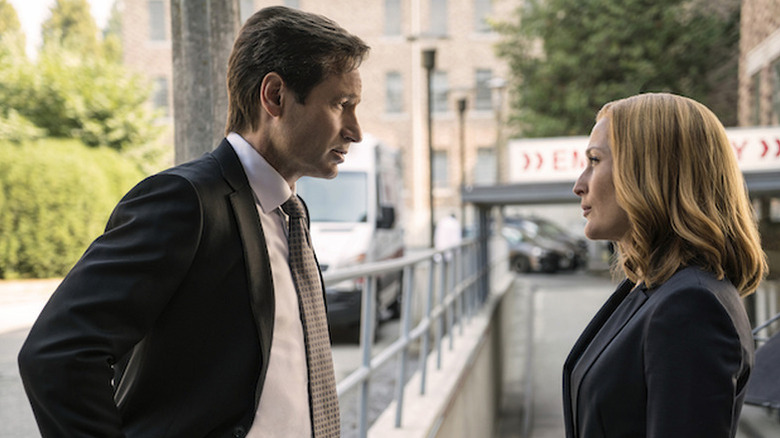
Over the course of its original nine-season run, "The X-Files" weaves a complicated mythology involving a government conspiracy and imminent extraterrestrial invasion. The shadow government works with some aliens to create a human-alien hybrid, while other aliens want total colonization, and there's even a different faction of aliens that opposes colonization. The point is ... the aliens are real.
Season 10 of "The X-Files" from 2016, the first of two revival seasons, shatters this long-held mythology. Mulder (David Duchovny) and Scully (Gillian Anderson) are given information indicating that the alien invasion story is basically all a hoax. According to this theory, the shadow government, aka the Syndicate, is responsible for everything, including an alien virus they intend to use to take over the world. All the UFO-related weirdness Mulder and Scully deal with is just secretive malicious actors within the government.
Think of the show's taglines: "I want to believe" and "The truth is out there." This twist suggests that Mulder's belief is all for nought, and that the truth isn't out there — it's here, on Earth.
Smallville gets confused about Jimmy Olsen
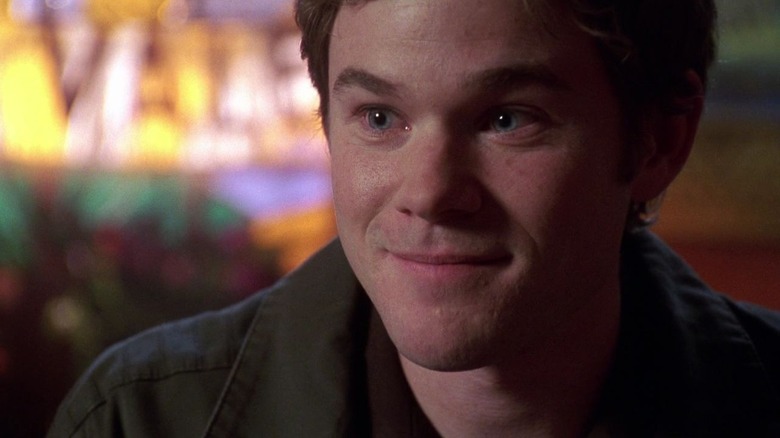
As Clark Kent's best friend, Jimmy Olsen plays an important part in the "Superman" universe. "Smallville" — which began as a WB series, then carried over when the network became The CW — follows a young Clark Kent (Tom Welling) before he becomes Superman, and introduces Jimmy Olsen (Aaron Ashmore) in Season 6. Three years later, Jimmy dies, and it's revealed that he was actually Henry James Olsen, the older brother of the real Jimmy — James Bartholomew Olsen.
We never learn why Henry decided to go by "Jimmy," when that was his little brother's nickname. To make things even more confusing, in the series finale, a flashforward depicts all the characters working at the Daily Planet. The real Jimmy Olsen appears in this scene, and he's also played by Ashmore.
Ian dies twice on Pretty Little Liars
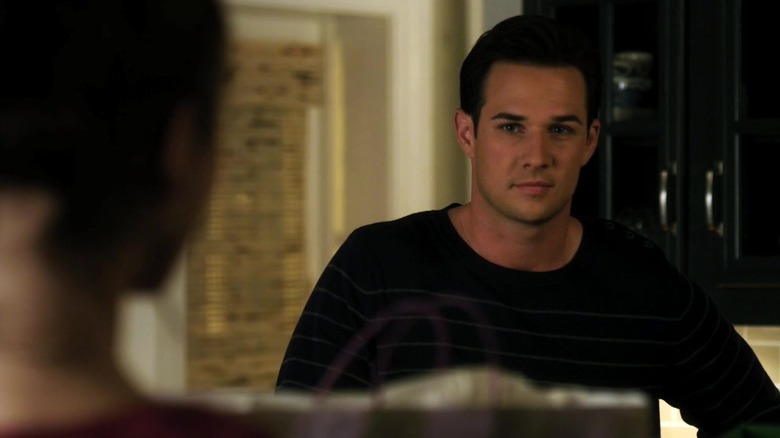
Ian (Ryan Merriman) is introduced in the first season of Freeform's "Pretty Little Liars" as the husband of Melissa (Torrey DeVitto), Spencer's (Troian Bellisario) sister. The Liars suspect him of being the mysterious blackmailer known as "A," and in the Season 1 finale, Ian almost kills Spencer in a church, only for someone in a hood to come along and push Ian off a platform, presumably killing him. However, the police don't find a body, so the Liars assume Ian remains alive ... until several episodes later when they find him shot dead with a suicide note.
All signs point to A — who, at the time, is Mona (Janel Parrish) — as the person who pushed Ian and staged the suicide. However, in Season 4, Alison (Sasha Pieterse) reveals that she pushed Ian in the church. But that still doesn't explain who staged the suicide. In an interview with Entertainment Weekly, showrunner Marlene King clarified that "Ian killed himself but Mona staged the note and the crime scene." We're still confused to this day.
Tina was faking her stutter in Glee
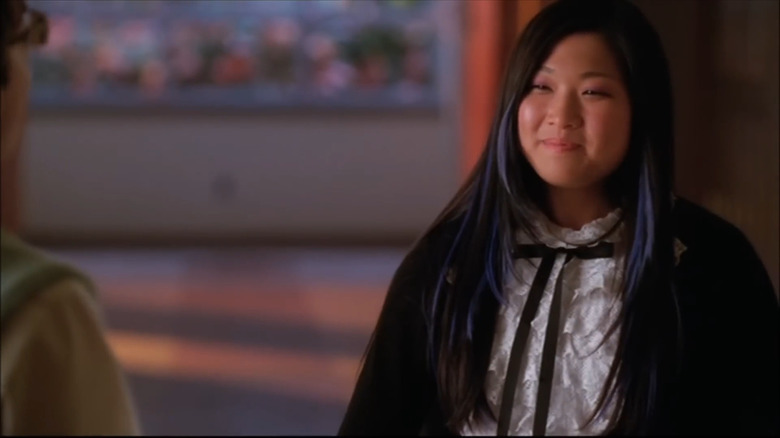
Admittedly, this retcon from Fox's "Glee" is far from the most shocking out there, but it's still a strange choice. When we first meet Tina (Jenna Ushkowitz), she stutters. In the first season, she begins a flirtation with Artie (Kevin McHale), and in the ninth episode of the season, Tina reveals that she's been faking her stutter the whole time. She first puts on a stutter in elementary school to avoid giving a speech, and after that, she keeps it up so people will think she's weird and won't bother her.
Artie, who uses a wheelchair, is upset by this revelation. He thought Tina's stutter was something they had in common — a surface-level difference that impacts the way people treat them. He's disappointed that Tina would lie about something like that, but he eventually forgives her.