

Apple TV Greenlit Isaac Asimov's Foundation Thanks To This One-Sentence Pitch
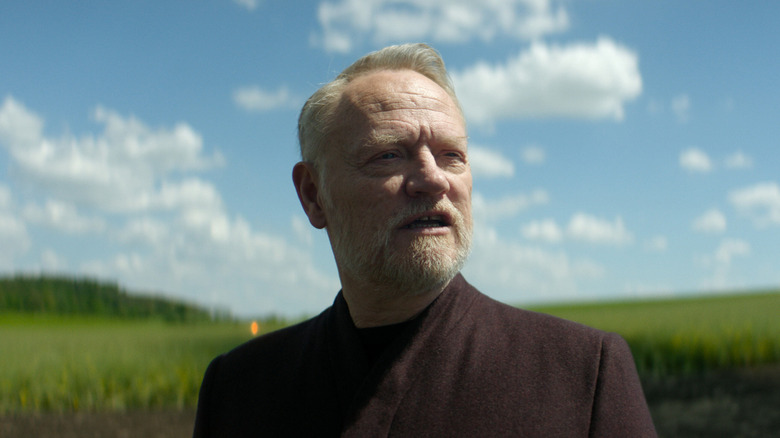
Now three seasons deep and with an overall 87% score on Rotten Tomatoes (including the rare perfect 100% for Season 2), Apple TV's "Foundation" has definitely gotten people's attention and held it. Can this streak last? Well, Season 4 will face a new challenge: The departure of "Foundation" showrunner David S. Goyer, the man who famously sold Apple TV on funding such a complex Isaac Asimov adaptation with a single sentence pitch.
"It's a 1,000-year chess game between Hari Seldon and the Empire," Goyer told Apple, according to an interview with The Hollywood Reporter. "And all the characters in between are the pawns, but some of the pawns over the course of this saga end up becoming kings and queens."
The brilliantly simple explanation encapsulates the vast complexities of Asimov's "Foundation" story. To be fair, it also hides many of the adaptive challenges inherent in this kind of project. That probably helped the show get the green light, but from there, Goyer had to turn concept into reality, deftly overcoming narrative obstacles, filling gaps, and fleshing out characters at every step.
Foundation is a truly challenging adaptation. David Goyer's understanding of the story makes it work
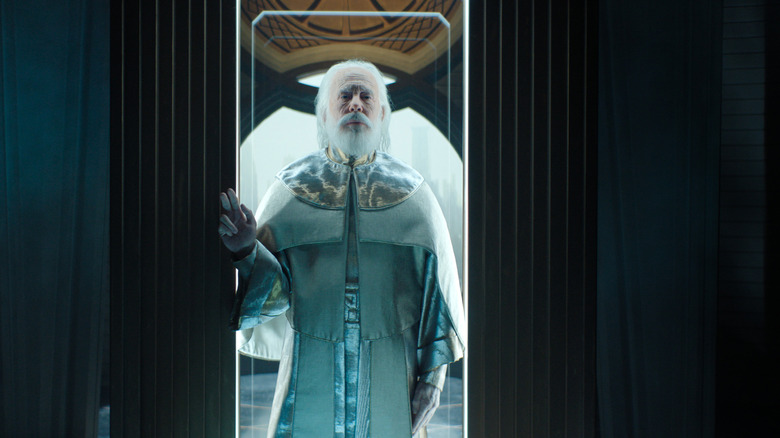
Pitching "Foundation" in a single sentence is a fun story, but it's actually not the most impressive part of what David Goyer accomplished with the show. Getting studio executives to sign off on the ideas was step one. From there, the showrunner had to adapt one of the most nuanced (convoluted?) source materials ever printed.
The original books feature a smorgasbord of smashed-up concepts, characters, and ideas. Their tone, pacing, and style vary dramatically, which is understandable, since the first book came out as a serial in a magazine starting in the 1940s and the final volume was published half a century later. The early books, in particular, are problematic for a visual medium. As Goyer's pitch implied, they skip through a millennium of storytelling, often jumping decades or even a century or more between chapters. That means people are constantly dying off, with the story focusing on big-picture concepts rather than story-driven characters. Even worse (for television, at least) is the fact that the Galactic Empire that features so heavily in the show is little more than a side note in Asimov's writing. It collapses off-screen in the books, crumbling to dust with barely a reference.
Goyer acknowledged these challenges in the same The Hollywood Reporter interview. "The anthological time element didn't take me too long to figure out. What was [harder] to figure out was: How do I make the show emotional? Because the books aren't particularly emotional and, in general with television, people watch for emotion."
Apple TV's Foundation beat the odds, but how much longer can it last?
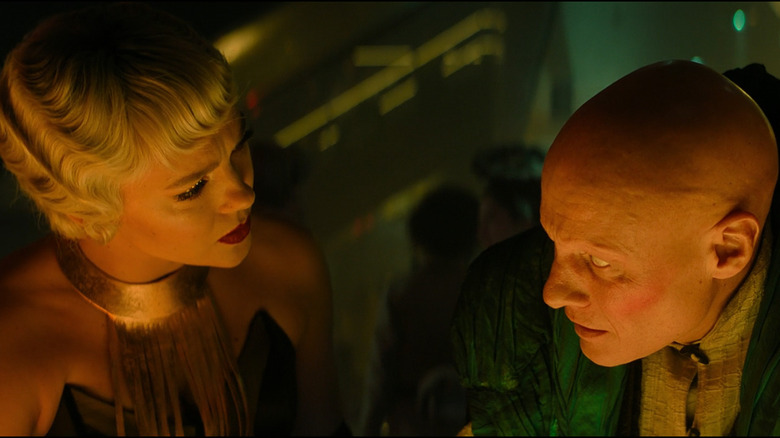
So, what was David Goyer's solution for blending Isaac Asimov's intricate, 1000-year narrative with modern TV viewers' need for consistent characters? Per the same interview, he came up with clever ways for a few key characters to survive much, much longer than they did in the books. For context, by the point in the story where Season 3 ends, characters like Gaal Dornick (Lou Llobell), Hari Seldon (Jared Haris), and Emperor Cleon (Lee Pace) are all long gone in the books.
It's also worth noting that Goyer's overall pitch to Apple TV, beyond the aforementioned sentence, was massive in scope, encompassing an 80-episode arc over eight seasons, as he told Polygon. More recently, in the wake of him leaving as showrunner, he clarified to The Wrap that he now sees potential finales at the conclusion of Season 4, Season 6, or Season 8. With the Earth and Moon revealed in Season 3's final shot and Season 4 officially coming (albeit sans Goyer), the sky is the limit for this ambitious, successful, and overall impressive adaptation, as well as one of the best TV shows streaming on Apple TV.
The truth is, "Foundation" is nothing like the books. It is a slowed-down, dramatic, character-driven story. Sure, it resembles Asimov's novels, but Goyer had to jump through some hoops to make it work in a visual medium, and he trusted his one-sentence understanding of the core story to pull him through.