

5 Must-Watch Star Trek: The Next Generation Episodes
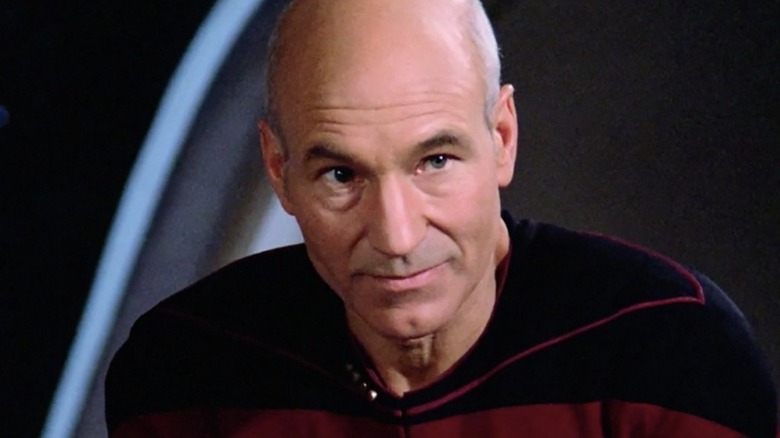
Until the slew of recent critical darlings like the light-hearted "Star Trek: Strange New Worlds" and the fun, animated "Star Trek: Lower Decks," many people were happy to boldly go to a place where they could declare that "Star Trek: The Next Generation" had little competition for the top spot among the franchise's TV shows, at least in terms of episode-to-episode quality. With the cerebral, brooding, and diplomatic Jean-Luc Picard (Patrick Stewart) in the captain's chair and crew members like Klingon security officer Worf (Michael Dorn), it was clear from the start that "The Next Generation" would be very different from the original series when it premiered on September 28, 1987.
Over seven seasons, the show proved that thesis, delivering narratively ambitious and complex stories that expanded the lore while keeping the events of "Star Trek: The Original Series" canon. In other words, "The Next Generation" is a crucial "Star Trek" show that respects the franchise's origins while still paving the path to the future. This is why any aspiring Trekkie should be familiar with at least a few of its key episodes.
It is worth noting that this is a collection of essential episodes, not necessarily the very best ones, which is why great stories like the "The Best of Both Worlds" two-parter, where Picard is assimilated by the Borg, are not included. Instead, the focus is on episodes that introduce the show's core concepts in order to get you to the right quadrant on the vast "Star Trek" space map. That said, each of these episodes stands on its own as a strong example of what "The Next Generation" does best.
Darmok (Season 5, Episode 2)
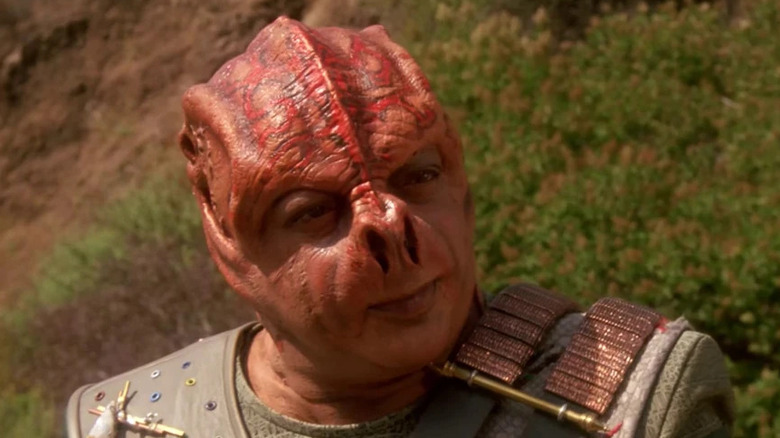
Especially when compared to James T. Kirk (William Shatner), Jean-Luc Picard is a diplomat. He's serious and fairly grumpy, sure, but also an extremely empathic person who's always willing to understand others and their problems, often going above and beyond to make sure things are as right as they can be. This is an important part of "Star Trek: The Next Generation," and no other episode demonstrates it as well as "Darmok."
Here, Picard — who has a habit of being whisked off to distant crises — ends up on a strange planet with an even stranger figure: Dathon (Paul Winfield), a captain of the seemingly hostile Tamarian race. Dathon's people are unable to communicate with humans due to their unique way of thinking and expressing themselves, which forms the episode's central mystery. Adding urgency to the situation is a ticking clock: Picard and Dathon are not alone, and an ominous monstrosity is doing its level best to kill them.
While this is a Picard-centric episode, every character gets plenty to do here, as the Enterprise-D has to juggle its captain's sudden disappearance and an impending conflict with the Tamarians. Still, the backbone of "Darmok" is the tentative alliance that Picard and Dathon form around the legends of their respective cultures, as Picard slowly understands the nature of their predicament and the reason Dathon is attempting to re-enact a particular historical scenario. The action in the episode is great, but it's the slow-burn communication mystery at its heart that lingers in the viewer's mind long after the episode is over. Dramatic, hilarious, happy and profoundly touching, "Darmok" represents "Star Trek: The Next Generation" at its finest. Like Dathon himself, the episode communicates beyond language by speaking directly from the heart.
Cause and Effect (Season 5, Episode 18)
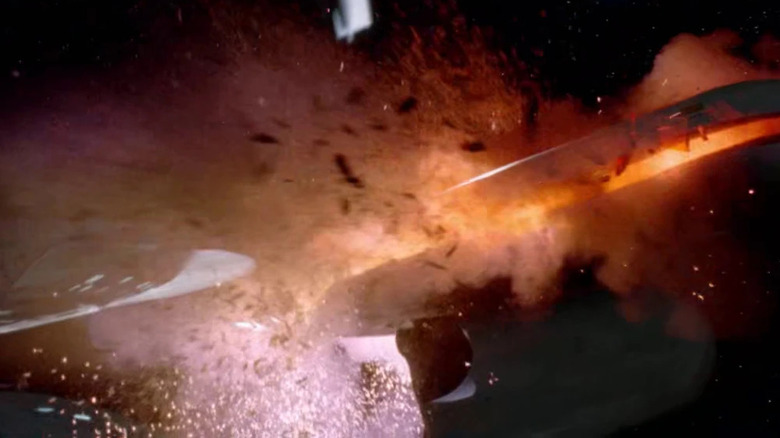
Time loop episodes are a dime a dozen these days, but "Cause and Effect" has a few things in its corner that make it stand out from the rest. For one, the episode first aired on March 23, 1992, nearly a year before Harold Ramis' genre-defining "Groundhog Day" premiered. Of course, it also doesn't hurt that "Cause and Effect" is one of the best time loop episodes on TV, full stop.
The episode bothers with very few frills when it comes to its basic premise. "Cause and Effect" opens in the middle of a catastrophe, as the Enterprise-D is heavily damaged and about to explode. The ship does exactly that, leaving no survivors, but the explosion occurs within a space-time anomaly that traps the crew in a time loop — an endlessly repeating march toward seemingly inevitable death.
Fortunately from a contemporary viewer's standpoint, "Cause and Effect" not only predates the time loop trend, but actively subverts it. Instead of slowly figuring out a way to solve one big mystery of how to break the loop, the Enterprise crew are tasked with a series of puzzle box mysteries as they first need to realize they're in a time loop in the first place. This allows the episode to play with the premise, using deja vu and subtle situational clues to gradually reveal the nature of the predicament to both the characters and the audience. As a result, much of the tension comes from the characters gradually realizing something is wrong during their daily routines, including the surprisingly charming detail of replaying the same poker game over and over again.
Q Who (Season 2, Episode 16)
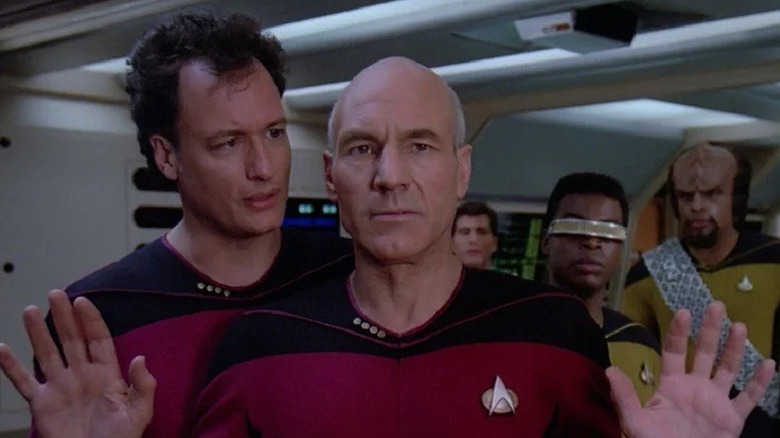
"Q Who" isn't just one of the most essential "Star Trek: The Next Generation" episodes, but one of the most essential "Star Trek" episodes across the entire franchise. This Season 2 highlight has all the makings of a classic from the very beginning; Not only does it feature a particularly malicious visit from the Enterprise crew's reality-bending frenemy Q (John de Lancie), but it also introduces the most ominous threat "The Next Generation" adds to "Star Trek" lore: the Borg.
Q returns in a characteristically dramatic way, whisking Captain Picard (Patrick Stewart) away from the Enterprise, bringing him back, and facing off with Guinan (Whoopi Goldberg) even before he fully states his business. That business turns out to be a desire to join the Enterprise crew and accompany them on their travels. Unsurprisingly to everyone but Q, Picard has no interest in hosting a trickster god aboard full-time, prompting Q to retaliate by teleporting the ship deep into the unexplored Delta Quadrant, where the Borg lie in wait.
From this point on, the episode — like most others featuring the Borg — plays out as pure horror. The brutalist, cube-shaped Borg ship and the gradual reveal of the terrors within heighten the sense of dread. The slow unveiling of the cyborg species' true nature adds to the episode's mounting tension. The stakes are heightened by the fact that the crew are far from safety and stalked by an unrelenting terror. The mood is deliciously dark, only briefly lightened by the antics of clumsy new ensign Sonya Gomez (Lycia Naff) and her hot chocolate mishaps. As Guinan warns Picard in the end, the Borg now know about humanity and will inevitably come for them.
Chain of Command (Season 6, Episodes 10 & 11)
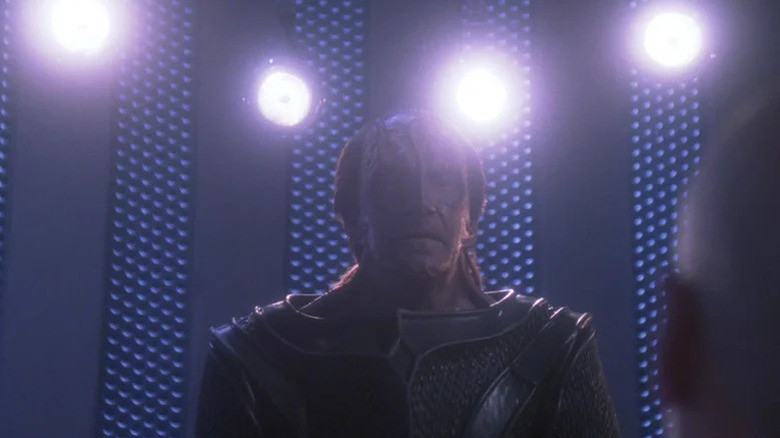
A word of warning before you dive in: "Chain of Command" features some extremely uncomfortable torture scenes, as Picard is left in the hands of David Warner's complex Cardassian antagonist Gul Madred. This is the episode that gave rise to the iconic "Star Trek" line "There are four lights," and if you have the luxury of going in unspoiled, it is well worth experiencing the ruthless truth behind those four simple words for yourself.
The appropriately titled "Chain of Command" two-parter is proof that new captains aren't always good for the ship. It sends Picard, Worf, and Dr. Beverly Crusher (Gates McFadden) away on a classified mission, but much of the story is devoted to showing what happens to the remaining crew while the captain of the Enterprise-D is away. In Picard's absence, Captain Edward Jellico (Ronny Cox) of the USS Cairo takes the reins. Jellico turns out to be an impressive micromanager, but on the flip side of the coin, he's... an impressive micromanager.
The two-part episode ultimately fights a battle on two fronts. While there is an obligatory Picard-led secret mission, most of the story's weight comes from its failure and the Enterprise crew struggling to cope with Jellico's sweeping changes and no-nonsense leadership style. There's also the underlying uncertainty of Picard's return, given the apparent formal finality of the command change. By the end of Part I, everything has gone predictably and gloriously awry, setting the stage for "Chain of Command, Part II," which delivers one of the show's most chilling Picard predicaments and significant Enterprise crew reshuffling before the protagonists manage to save the day against the Cardassians — to a certain degree, at least.
All Good Things... (Season 7, Episodes 25 & 26)
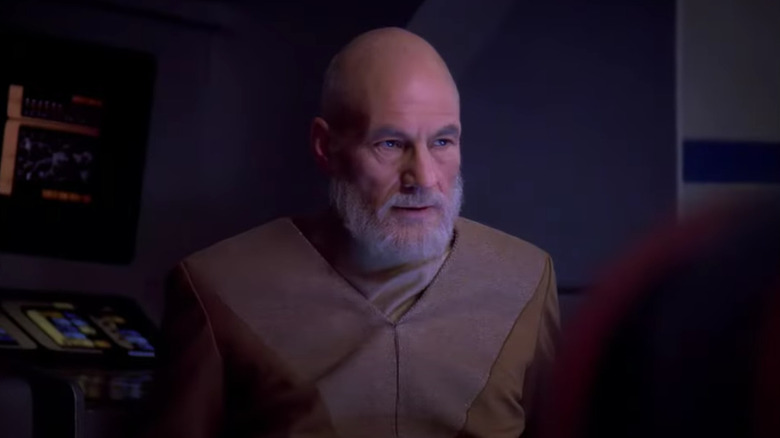
It may seem like cheating to include more than one two-parter on a list of essential "Star Trek: The Next Generation" episodes, but there really is no skipping "All Good Things..." The episode uses the incomparable chemistry between the weary Picard and the eternally meddling Q to great effect, as the latter sends the former jumping between time periods to save mankind from a threat called Jean-Luc Picard.
Because of the complex nature of the mission, Picard must execute it across three different points in time. The past is a nostalgic return to an era of the crew's very first days on the Enterprise-D. The present timeline lets much of the finale unfold with the familiar versions of the characters from the show's seven-season run, providing closure where needed and intrigue throughout. Arguably the most fascinating timeline, however, is the future, where Picard is an elderly vineyard owner who has to figure out how to get the old team back together for one more mission.
Any single one of these timelines would have been a decent finale in and of themselves. When combined into the frenetic, high-stakes structure of "All Good Things..." and brought together through the crews of all three timelines fixing the Devron system anomaly in spine-tingling unison, the story becomes something else entirely. Arguably the best Picard episode of "Star Trek: The Next Generation," it serves as a crash course in the Enterprise-D crew's lives and dynamics, while also acting as a clear precursor to "The Next Generation" sequel show "Star Trek: Picard," which later took the future timeline's "old Picard saves the day" premise and ran with it.