

Dexter's 15 Best Villains, Ranked
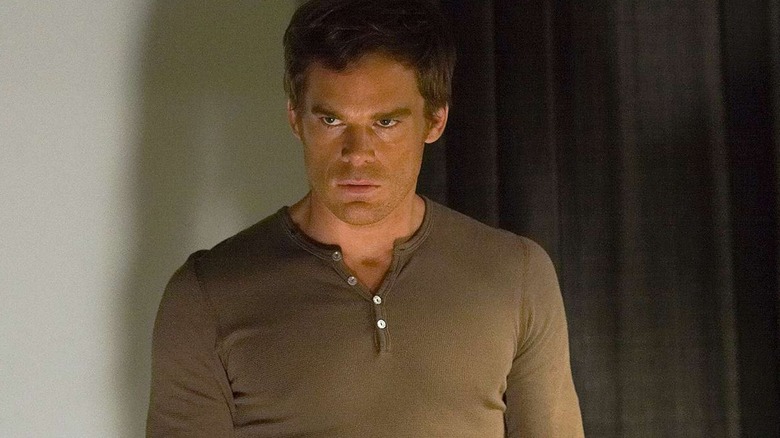
What does it take to be the ultimate villain of a series that features a mass murderer as its "hero"? That's the question we're attempting to answer as we explore the varied line-up of antagonists that helped make "Dexter" one of the most fascinating thrillers of the late 2000s and early 2010s.
Given that Michael C. Hall's Dexter Morgan was no saint, a fundamental story challenge the Showtime series faced from its inception was developing villains that the audience would somehow hate more than a literal serial killer. But rather than simply giving each season a new, even crazier foe, "Dexter" strove to make overarching antagonists as complex and even empathetic as Dexter himself, giving them the capacity to move both him and the audience despite their vile crimes. Similarly, when Dexter was forced to come up against a morally just antagonist from the law enforcement world, the series invited viewers to be skeptical of how righteous they really were.
From FBI agents to delusional psychopaths, the villains of "Dexter" were some of the best that crime TV had ever seen. We've ranked our 15 favorite suspects from his rogues' gallery, ranking them based on the danger they posed to the Bay Harbor Butcher and their impact on the story overall.
15. Jacob Elway
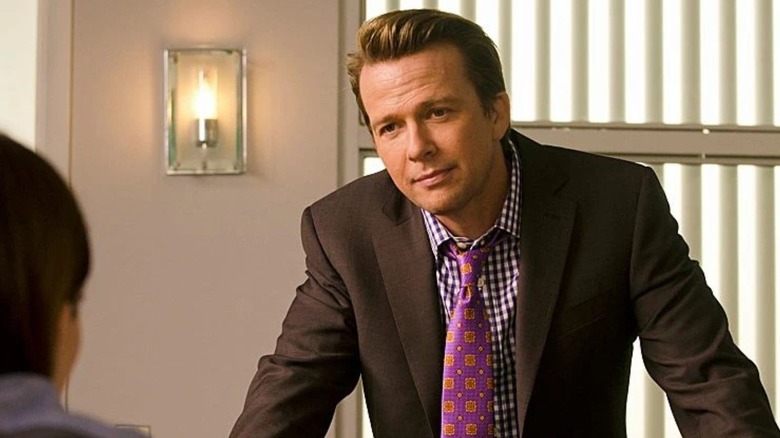
Jacob Elway (played by Sean Patrick Flanery) was introduced as a minor antagonist in the series eighth and final season, posing a larger threat to Dexter's ultimate romantic partner Hannah McKay (Yvonne Strahovski). Elway tracks her down in his capacity as a private investigator-slash-glorified bounty hunter, with some light help from the morally bereft Debra Morgan (Jennifer Carpenter).
Elway doesn't even realize how much of a villain he was in Dexter's life. By the time he confirms that Dexter and Hannah are involved, he sees himself as trying to protect an innocent father from falling prey to a killer — not as someone dangerously close to intruding on a relationship between two murderous psychopaths. That said, we'll give him credit for tracking Hannah and Dexter's son, Harrison, down to the last moment — though this creates somewhat of a plot hole for the sequel series, given that Elway knew a serial killer had absconded with an orphaned child, but apparently gave up investigating soon after.
14. Joey Quinn
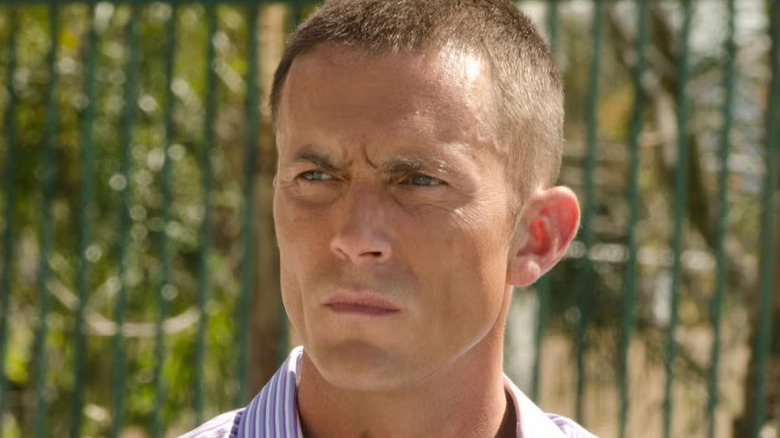
The antagonistic turn of Joey Quinn in Season 5 was one of the first signs that "Dexter" was deteriorating. It wasn't so much that it was an objectively bad creative decision or even out of character for Desmond Harrington's morally malleable police detective — it was just handled in such an uneven manner that it made the storyline feel like creative guesswork rather than an interesting development.
Having proven himself to be untrustworthy and corrupt, yet with ambitions of growing into an upstanding cop, Quinn becomes suspicious of Dexter much the same way that his predecessor James Doakes (Erik King) did. The series brings nothing new to the dynamic. Like Doakes, Quinn just doesn't like Dexter's vibe, put off by his unemotional reaction to his wife Rita's (Julie Benz) death.
The extent of Quinn's impact is uncovering the Kyle Butler-Trinity connection and hiring a better villain to bother Dexter. He almost immediately tries to backtrack, cementing his underwhelming and uncharacteristically timid attempt at bringing Dexter to justice.
13. Stan Liddy
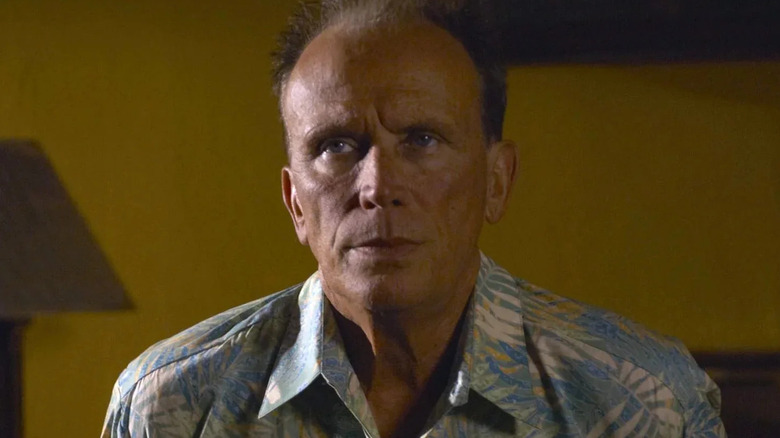
Stan Liddy is proof that a great actor can make an otherwise uninteresting character feel important. There's no reason that, five seasons in, "Dexter" viewers should be excited in any capacity by the introduction of a private investigator. In terms of the threat he could pose to the titular serial killer, the only novel element of danger is that he could trail Dexter without Dexter being aware of it. Valid, but that alone doesn't make for the most interesting side dish in a series that regularly features complex psychopaths and vigilante homicide as its main course.
Enter, Peter Weller. The iconic "RoboCop" star is punching way below his weight class as Stan Liddy, out-acting anyone he shares the screen with as he transforms a collection of private eye cliches — loosely held together by a Hawaiian shirt — into something that's at the very least entertaining to watch. Story-wise, he's equally thwarted by the non-committal handling of this storyline overall. But Weller's masterful delivery of some truly baffling dialogue almost makes the whole thing worth it.
12. Santos Jimenez
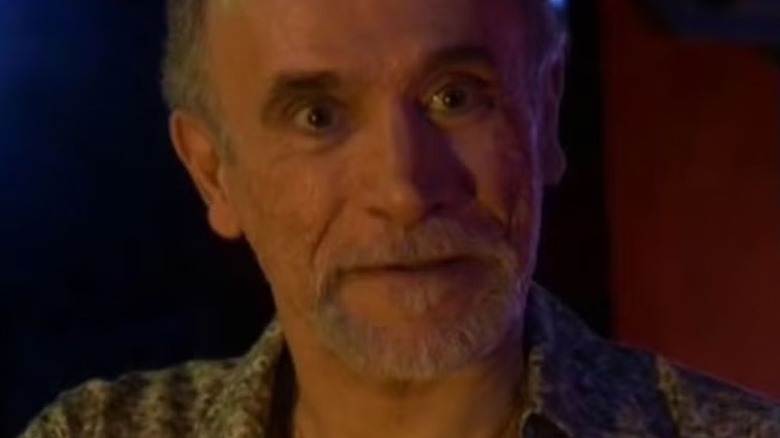
The original villain of Dexter Morgan's tragic life, Santos Jimenez had a striking impact on the series despite limited screen time. The cartel enforcer (Tony Amendola) brutally dismembered Dexter's mother, Laura Moser (Sage Kirkpatrick), in front of him and his brother, Brian, after learning that she had been informing on the operations of drug kingpin Hector Estrada (Nestor Serrano) to the police.
Decades after he turned state's witness himself to avoid jail time, he is tracked down by Dexter — though this was during the latter's attempts to control his murderous impulses in Season 2. This makes Santos a perfectly complicated minor antagonist for Dexter, as he is presented as the one man audiences would most empathize with Dexter for wanting to kill, yet at a time when they're rooting for him to be better. It's a narrative choice that immediately absorbs viewers into a very complex psyche.
11. George King
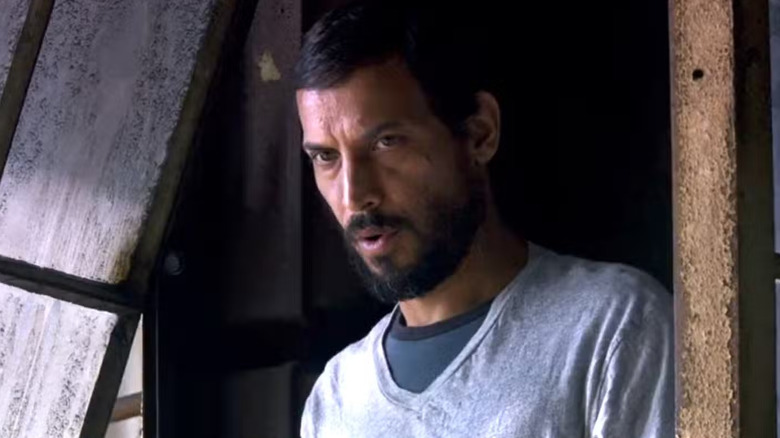
George King (Jesse Borrego) bears the distinction of being the least memorable overarching serial killer on "Dexter." He's also deceptively easy to psychoanalyze.
The former soldier is the secondary antagonist of Season 3, wholly overshadowed by Jimmy Smits' Miguel Prado, who was introduced to expose the true motivations behind Dexter's blood lust. Though King is ostensibly only killing and torturing his victims as a means of tracking down a debtor, Dexter's own reckoning with his true motives allows him to challenge King's — throwing the latter off long enough for the Bay Harbor Butcher to take him out. King's rage at being called a monster is fascinating, if under-explored.
10. Travis Marshall
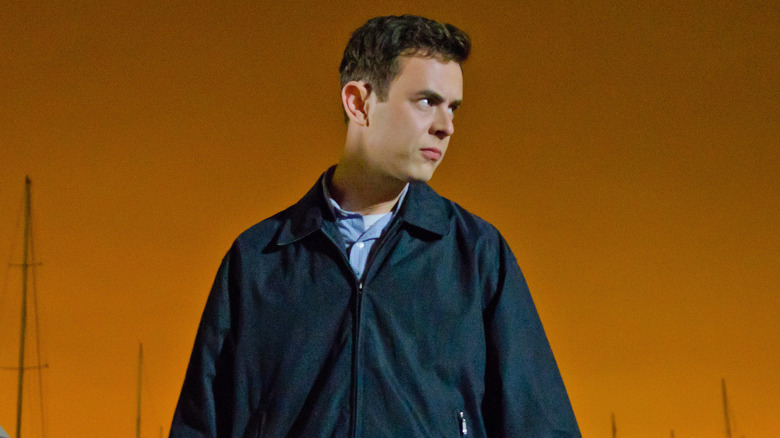
Of the overarching Big Bads who terrorized Miami for only a season, Travis Marshall is by far the weakest — which is kind of shocking given he was technically played by both Colin Hanks and Edward James Olmos. The two celebrated actors essentially play different aspects of Marshall's fractured psyche, with the character (seemingly a meek, subservient victim embodied by Hanks) using a hallucination of his late college professor James Geller (Olmos) as a vessel for his murderous urges.
Marshall is far from a boring antagonist. The religious motif is memorable and unsettling at several points (even if it's one of the most overused crime thriller tropes on TV), and the "Fight Club" twist is kinda cool the first time you watch (though that too has become a tired trope some new viewers might see coming a mile away). If you strip away the theatrics and the twist, however, Marshall's personal relationship with Dexter is disappointingly shallow compared to those of his peers.
9. Jordan Chase
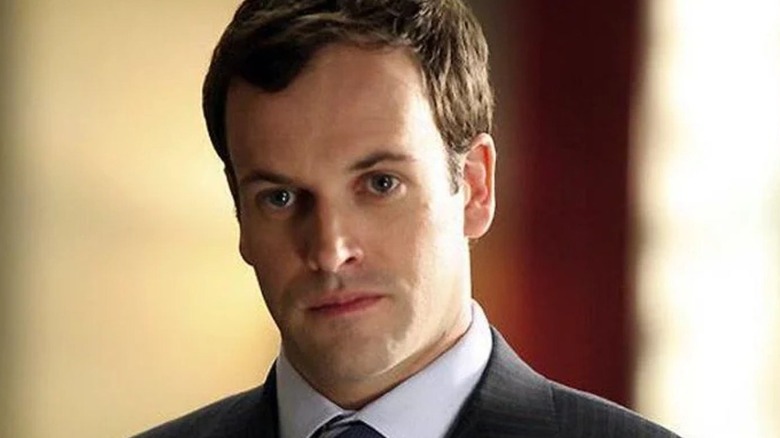
In a show that has aged somewhat poorly with regard to its handling of police misconduct and vigilante justice, "Dexter" tapped into something eerily ahead of its time when it introduced Jordan Chase. Jonny Lee Miller's Season 5 character is one of the most prescient TV villains of the 2010s, with the dynamics, tone, and ideology of his motivational speaking empire resembling the modern-day manosphere.
As was the case with Travis Marshall, Chase loses some points for having a weaker connection to Dexter than his other villains. At the same time, the history between Chase and his true adversary, Lumen Pierce (Julia Stiles), is solid enough on its own. If you can get beyond the season basically using her and the barrel girls at large as a collective surrogate for Rita (their trauma existing to give Dexter the chance to heal from the direct consequences of his actions), Chase's unique brand of narcissistic psychopathy makes for an arrestingly disturbing storyline.
8. Isaak Sirko

Isaak Sirko is a frustratingly difficult character to place on this list, not least of all because he's tangled up in arguably the series' messiest (though not necessarily worst) season. Amidst the unwieldy yet critical subplot spiraling out of Debra's discovery of Dexter's true nature and the introduction of a complicated romantic partner in Hannah McKay, "Dexter" also attempts to get viewers invested in an international organized crime syndicate. It's genuinely impressive that the season works in any capacity.
As drowned out and out of place as he often feels, Sirko's complex background (brought to life through a beautifully tragic yet capably vicious performance from the late Ray Stevenson) made him undeniably entrancing when given the spotlight. His dynamic with Dexter — strangely intimate even as he insists on cold vengeance against his lover's killer — further grounds Sirko, and makes a compelling case that no other villain could help Dexter navigate the problems Season 7 brought.
7. Frank Lundy
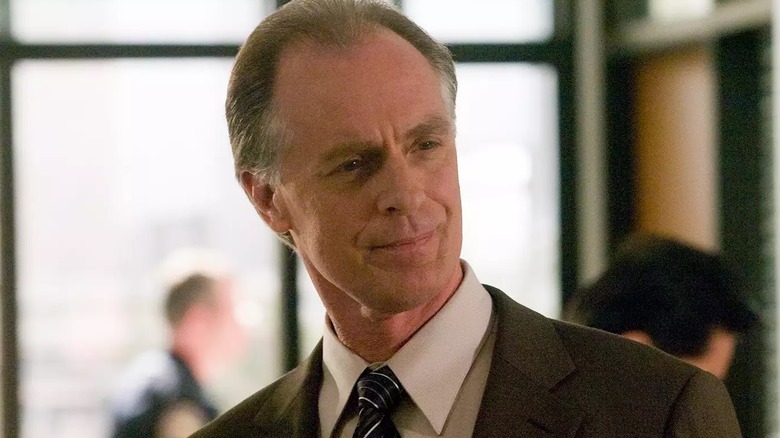
It's been nearly 20 years since "Dexter" fans were introduced to Keith Carradine's FBI Special Agent Frank Lundy — and they still aren't sure they have him all figured out. After Dexter's underwater burial site is brought to the surface, Lundy and the bureau arrive in Miami to take over the police's investigation. He's immediately described to the audience as a legendary serial killer hunter whose sharp deductive skills have made him nearly impossible to evade.
Throughout Season 2, Carradine and the writers keep viewers in the same anxious state as Dexter, the unassuming blood spatter analyst being forced to work on Lundy's Bay Harbor Butcher task force. Even though Lundy says he selected Dexter because he couldn't tolerate the unprofessional conduct of Vince Masuka (C. S. Lee), there are several moments that leave his presumption of Dexter's innocence up for debate.
Whether he is ultimately convinced of Doakes' culpability or harboring lingering suspicions about his ex-lover's brother (we're really trying not to hold that whole storyline against him), Lundy's investigation is arguably the strongest overarching storyline the series ever offered. If he had gotten even a little closer to revealing Dexter's identity to the world, we'd have to bump him significantly higher on this list.
6. Lila West

If you truly can't stand a character you're supposed to despise, the writers, directors, and actors have all done their job. If that's true, "Dexter" deserves an award for Lila West.
Jaime Murray's villain from Season 2 is one of the most reviled characters in the show's history. Lila isn't just a murderer, but a master manipulator so practiced in excusing and masking her own wickedness that she can pretend to be somewhat normal. Certainly, there are valid issues to be raised with regard to how unlikeable she makes Dexter while they're together. But purely considering the level of danger she brings into his life — making a false accusation against Angel Batista (David Zayas), abducting Rita's children, and inviting Santos Jimenez to kill Dexter — she's easily one of the series' most effective villains.
5. Miguel Prado
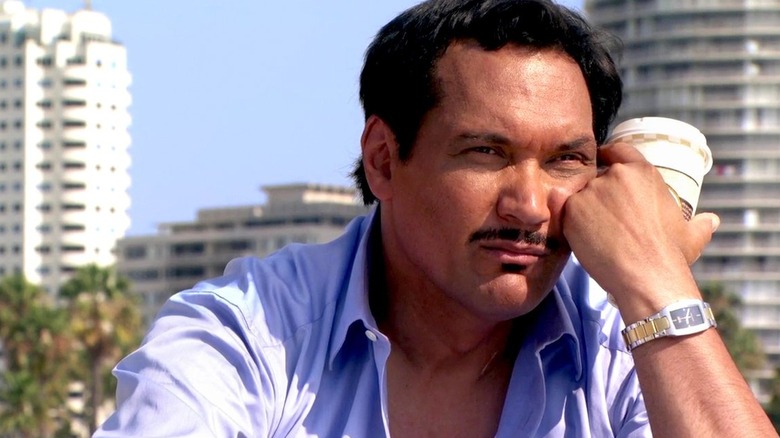
Miguel Prado's storyline in Season 3 shouldn't have worked as well as it does. Coming off of a thrilling, high-stakes season that saw Dexter nearly arrested for his crimes, it's hard to imagine anyone was hoping for the series to explore whether or not Dexter is capable of having friends. But what Jimmy Smits' character accomplishes so successfully is a total moral deconstruction for both Dexter Morgan and the series as a whole. He comes into the killer's life to assert control over the investigation into his brother Oscar's death, a Machiavellian maneuver that, in hindsight, establishes Prado's dark side before he himself knows what he's capable of. Dexter, on the other hand, admires Miguel and treats their friendship as though it confirms some kind of shared, inherent moral superiority. In reality, they are simply two sociopaths who became more intertwined as they validate each other's violence. This dynamic makes Miguel necessary to the show's growth, given that Seasons 1 and 2 mostly allow Dexter to dodge larger questions about why he does what he does.
4. Oliver Saxon
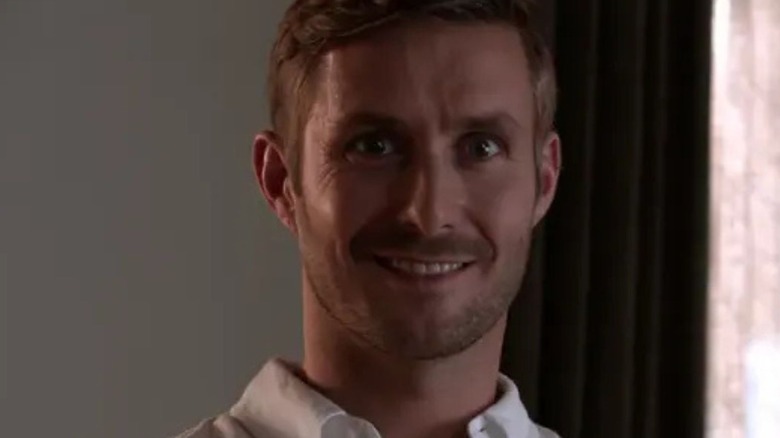
Similar to Isaak Sirko, Darri Ingolfsson's Oliver Saxon bears the unfortunate burden of being an instrument of a poorly executed season of "Dexter." When he isn't being counted among the fundamental flaws of Season 8, those very flaws entirely overshadow what impact he might've had. The beauty of a list like this, however, is that it allows us to ignore other story elements for a moment and consider characters like Saxon in something closer to a vacuum — separated from judgements about the series' end as a whole — the Brain Surgeon is a great villain for Dexter specifically at that moment in the story. He is uniquely horrifying to follow, but he brings more than shock value to the story.
Every seasonal Big Bad up to that point had been written to reveal who Dexter is, but Saxon is the first to show us, crucially, who Dexter isn't at a time when the show wants the audience to wrestle with that. He doesn't absolve Dexter of his crimes by comparison, but forces him (and the audience) to witness a true monster and realize there is a meaningful separation between them that further complicates the show's moral framework.
3. Brian Moser
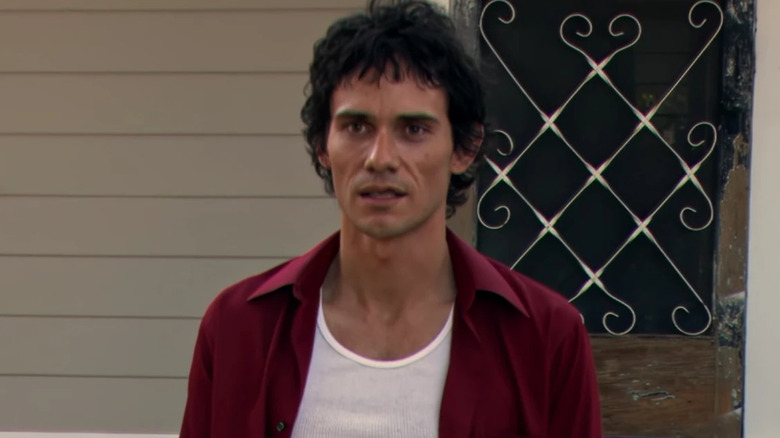
Sadly, villains like Oliver Saxon and even Travis Marshall struggled against the fact that "Dexter" introduced an incomparably strong antagonist in its very first season. Brian Moser was written perfectly. From a story perspective, the identity of the Ice Truck Killer is concealed remarkably well up until the last moment, and his back-and-forth with Dexter from afar masterfully creates suspense around his true motivations while deepening our understanding of Dexter himself.
How is any subsequent killer supposed to compete with Brian Moser, a character who acts as the most direct, revealing, and satisfying foil to who Dexter is at his core? Not to mention Christian Camargo's performance, the versatility of which thrillingly rivals what Michael C. Hall brings to the character of Dexter. Rewatching Season 1, every interaction between them feels like a dangerous social chess match, a tragic competition for connection, shared purpose, and, ultimately, survival.
2. Arthur Mitchell
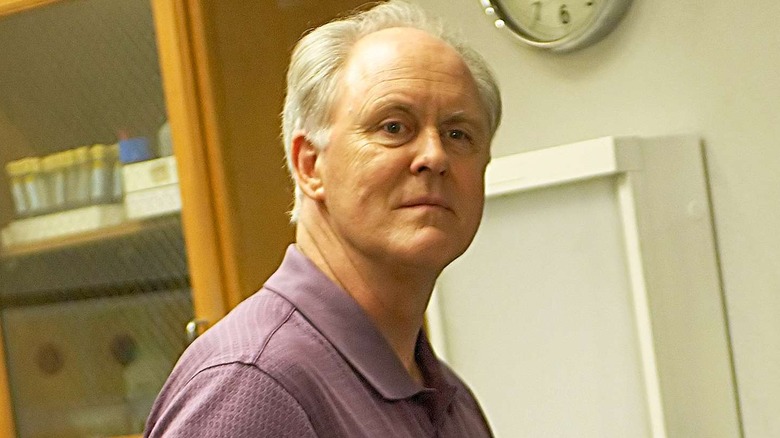
It would be a crime to put any serial killer above John Lithgow's Arthur Mitchell. As revealing as Dexter's dance with Brian Moser was, his pursuit of the Trinity Killer throughout Season 4 raised the bar so high that many fans consider it to be the series' peak.
What makes Mitchell so effective, and undoubtedly one of the greatest TV villains of all time, is the restraint from Lithgow (who won an Emmy for his performance) and the series. He doesn't have a thematic gimmick half as distracting as the Doomsday Killer or even the Ice Truck Killer, nor is his method of murder so singularly grotesque. Instead, they keep the actual killing refreshingly simple to allow viewers to focus on Mitchell's psychology as a man whose desperation to be validated as "good" will never be enough to subdue his evil urges. This is the compelling horror and tragedy at the heart of Season 4, as the hope Mitchell offers Dexter in terms of moral peace is corrupted the more the two reveal themselves to each other. That their conflict ultimately results in the irreparable destruction of Dexter's precarious family life is devastatingly poetic, simultaneously rendering the consequences of Dexter's inexcusable actions in a manner that makes audiences truly heartbroken on his behalf.
1. James Doakes
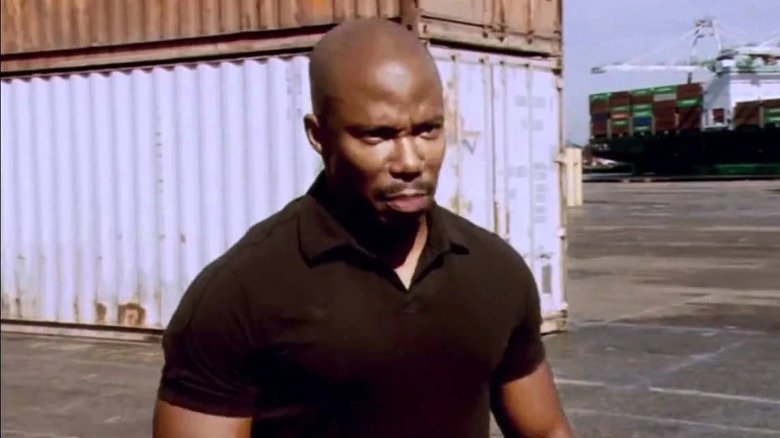
It should be no "surprise" that James Doakes is at the top of this list. All memeing aside, Erik King's relentless homicide detective is the greatest antagonist the series ever had, creating a kind of tension that was never replicated after the character's demise in Season 2.
On a personal level, the relationship between Dexter and Doakes is the perfect mix of mutual, unyielding animosity, professional respect, and an intimate, shared awareness of each other's exploitable flaws. That last aspect not only makes their game of cat-and-mouse exciting and intellectually satisfying, but allows it to take a real, human toll on them both.
Underneath every exchange is the pain that progress means irreversible moral sacrifice — policing is everything to Doakes, and yet his righteous pursuit of Dexter alienates him further and further from his friends in the department and his own professional potential. As he refuses to back down, Dexter is forced to reckon with the increasing likelihood of violating his own code (thereby admitting to himself that he is the monster Doakes believes him to be) in order to survive. They force each other to crack the edges of their once-rigid moral boundaries.
Doakes is the only antagonist in the history of the "Dexter" series that poses a truly existential threat, creating problems that the title character couldn't simply kill his way out of. This, combined with his impact on the series (and taking into account how well his storylines are executed), reveals him as a close but clear victor in our ranking of the show's best villains.