

King Of The Hill's Animation Rules Set It Apart From Every Other Animated Sitcom
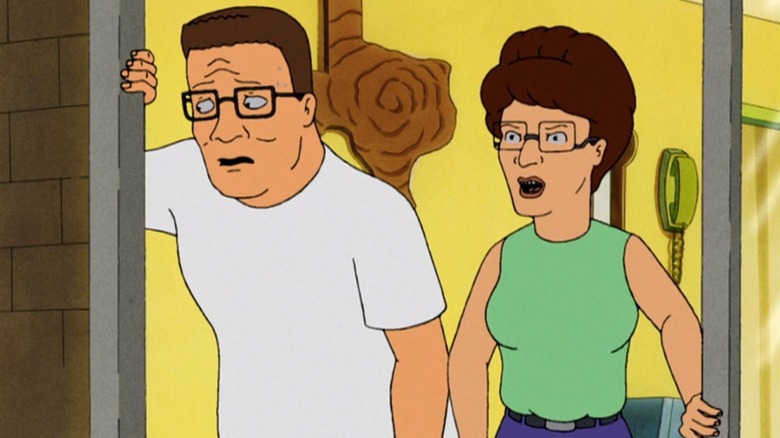
When you watch an episode of an animated sitcom like "The Simpsons" or "Bob's Burgers," you never quite know what you're going to see. Despite following the exploits of an average family, these shows often use animation to go buckwild, allowing characters to perform extraordinary feats or explore worlds far beyond what a live-action sitcom could afford.
But "King of the Hill" is no ordinary cartoon. Rather than indulging that freedom, the team behind the show relied on a rigorous set of internal animation guidelines — referred to as the "Animation Do's and Don'ts" – to help keep Hank Hill's two feet firmly planted on the ground. Animation guides are standard practice across the industry, helping large teams produce consistent work across the entire production process. The animation guide created for "King of the Hill" went beyond simple reminders of how to keep characters like Bobby Hill on model.
Fans of the show, whether from its original run or its well-regarded revival, have long remarked on how realistic "King of the Hill" feels, and this guide offers new insight into just how much work went into making Arlen, Texas, feel grounded.
King of the Hill's animation guide details what makes Arlen special
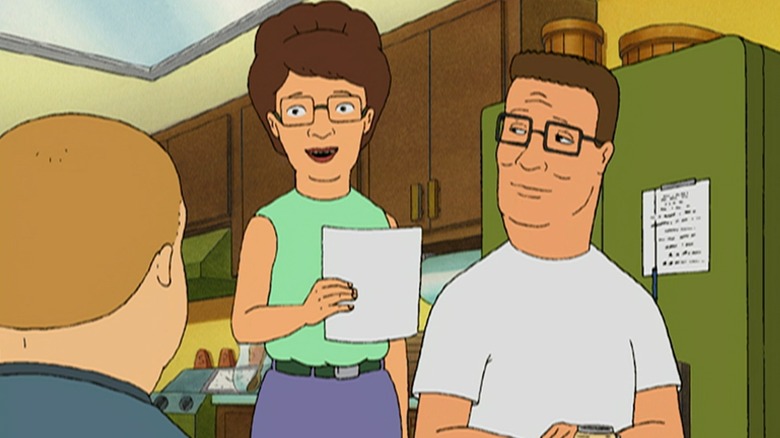
In just one episode, an animated series like "King of the Hill" requires a large team of artists working together to create a cohesive cast of characters and a believable world. That's where animated guidebooks like those used on "King of the Hill" come into play. Created by the show's creative leads, these documents codify how artists should approach everything from drawing Peggy's hair or a character chewing their food to rendering trees so they don't resemble marshmallows.
These guidebooks also outline the show's visual language, from how characters move through a scene to how backgrounds are designed — and this is where "King of the Hill" truly stands apart. Where other animated sitcoms freely bend the rules of physics, "King of the Hill" goes out of its way to remain grounded. The document calls for the camera to be staged as if it's physically in the room with the characters, for TV lighting to be realistically animated, and even for mundane actions – like pouring a glass of beer — to follow real-world physics. It even reminds animators not to exaggerate Peggy's body when depicting her attempts to seduce her husband.
All these rules exist to make Arlen, Texas feel like a place you could actually live, from drawing specific dollar bill denominations to filling backgrounds with cars and pedestrians so the town never feels empty. Most viewers may never consciously notice these details, but together they help make "King of the Hill" stand out in a crowded animated television landscape.