

15 Most Dangerous Reality TV Shows, Ranked
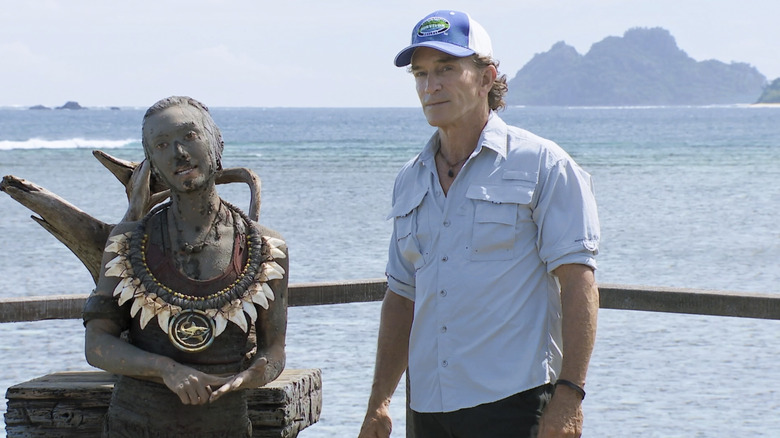
We watch some of the greatest reality television to see people do things most of us would never have the courage to do. Fall in love in front of millions of people on "The Bachelor"? No thanks. Face the judgment of Tom Colicchio on the pressure cooker that is "Top Chef"? We'd rather not. Party with the best, and worst, of the Real Housewives? Well, maybe.
But public humiliation and high-stress situations aren't the only perils to be found on reality television. Some shows put contestants in actual danger, with the threat of bodily harm a very real possibility. While these shows implement safety precautions, injuries still occur. From survival series to celebrities competing in sports for which they are not trained, these shows keep viewers on the edge of their seat.
But which shows are truly the most dangerous of them all? To answer that question, we've ranked them based on two primary factors: the potential for bodily harm inherent in the premise and the documented number of injuries that have occurred on air or behind the scenes. These are the 15 most dangerous reality shows to ever be on television.
15. Fear Factor

Looking back, it's amazing that "Fear Factor" ran for as long as it did. From 2001 to 2006, viewers watched as six unlucky contestants submitted themselves to all kinds of terrifying and gross challenges for a chance to win a cash prize. From being buried alive to drinking liquid from cow intestines, "Fear Factor" relied heavily on shock value. The Johnny Knoxville-hosted revival of "Fear Factor" continued that approach.
But how dangerous is "Fear Factor," really? Contestants placed themselves in potentially perilous situations, and fear and stress alone can pose health risks. But there were likely safety mechanisms in place that prevented any serious injuries from occurring. However, that doesn't account for audience reaction. In 2005, a man sued NBC after vomiting while watching an episode in which contestants ate blended rats. The judge dismissed the case. More tragically, Thai pop star Vaikoon Boonthanom died during a stunt gone wrong at a "Fear Factor"-inspired event in 2005.
14. Kid Nation
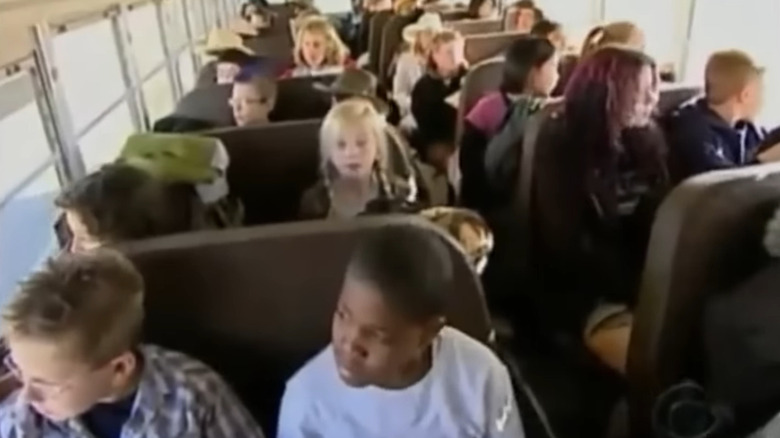
At its best, "Kid Nation" was a fascinating sociological experiment, and at its worst, it was child endangerment and exploitation. The premise of the CBS show was this: forty children, from ages 8 to 15, were selected to live on an abandoned movie ranch in New Mexico. The goal was to create a fully functioning society and government without any assistance from grown-ups. While adults were present on the shoot, their interventions were limited.
Unsurprisingly, this premise led to some problems. Ethical concerns were raised, and compliance with child labor laws became a point of contention. The conditions also presented physical dangers. The children reportedly slept on the floor, and one sandwich per day was described as the only guaranteed meal. Four kids accidentally drank bleach, and one child suffered burns from hot oil while cooking. While none of these incidents were life-threatening and medics were present on set, this is one reality show that doesn't need to be revived.
13. Born in the Wild
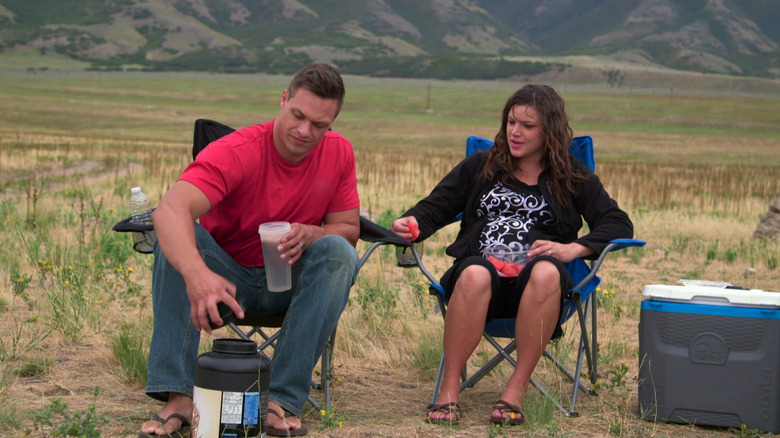
The Lifetime series "Born in the Wild" ruffled feathers before the public had even seen a single episode. The six-episode reality series followed women who planned to give birth in the great outdoors. But it wasn't just families who wanted to witness the miracle of childbirth in their backyards. In the first episode, a couple elects to have their baby in a remote area of Alaska, 150 miles from the nearest hospital.
In all six episodes, the mothers and babies were shown experiencing childbirth without complications. However, childbirth is an inherently risky prospect, particularly depending on the circumstances. The United States has the highest maternal mortality rates among developed countries, and by most estimates, home births exacerbate that risk. Some studies have shown that the neonatal mortality rate for home births was higher than that of hospital births. However, "Born in the Wild" does not rank as the most dangerous reality show because the series did not create the risk; the women were already planning to give birth outdoors.
12. Ice Road Truckers
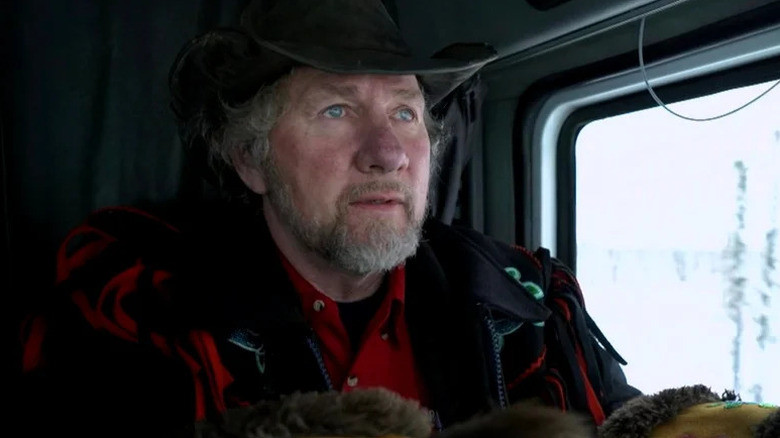
Ice road trucking is a dangerous job, which is part of the appeal of the History Channel series "Ice Road Truckers." Created after the success of "Deadliest Catch," the show gives viewers an inside look at the harrowing job these men and women have signed up for. Ice road truckers drive across frozen lakes and rivers to deliver supplies to remote regions in Alaska and northern Canada. If they stop driving, they could fall through the ice, but going too fast is just as risky.
Though the job is dangerous, the show has not depicted any severe on-air accidents. However, it may have inspired one. Brett Colley, a military veteran, decided to become an ice road trucker after watching the show. Tragically, Colley died in an accident when his truck veered off a frozen road. While accidents are an inherent risk of the profession, "Ice Road Truckers" documents the job rather than creating the danger, which explains its relatively low placement on this list.
11. Deadliest Catch
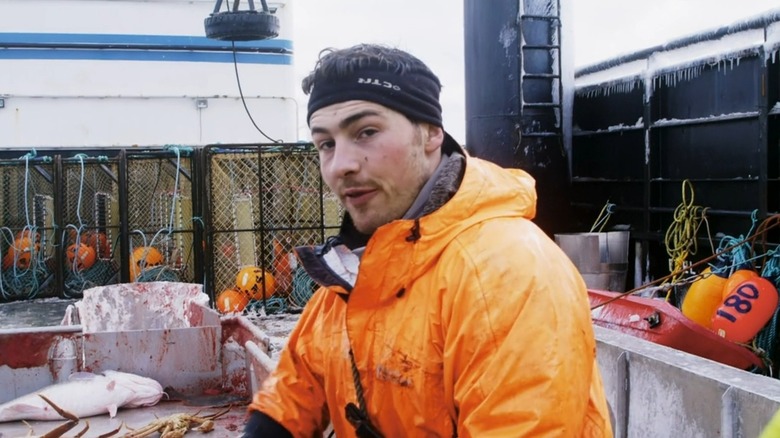
Crab fishing is a dangerous profession, as fans of "Deadliest Catch" are well aware. In 2008, the annual fatality rate for fishermen on Alaskan crab fishing boats was reported at 115 deaths per 100,000 workers, compared with the U.S. average of 4 deaths per 100,000 workers. The History Channel series has made these dangers abundantly clear. Crew members have been smacked in the head by crab pots and hit by rogue hooks. There have been broken legs, fingers sliced off, a life-threatening pelvic injury, and at least one heart attack.
Lives have been lost aboard these boats. Crewmember Todd Kochutin died while working on the F/V Patricia Lee, with footage related to his passing released by the Discovery Channel. Two additional serious injuries were reported on the Patricia Lee in the months following. "Deadliest Catch," a show beloved by director Steven Spielberg, certainly deserves a place on this list. Nonetheless, the danger here stems from the wildness of the Bering Sea, not the producers behind this riveting drama, which keeps it from claiming the top spot.
10. Ax Men
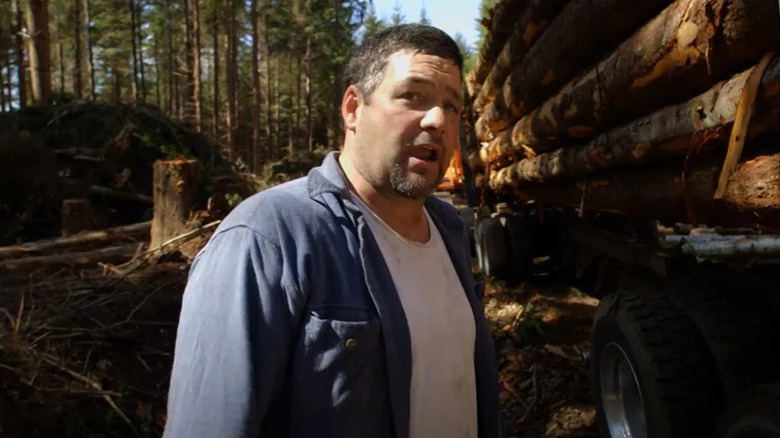
Like the other documentary-style series on this list, "Ax Men" documents a dangerous profession. The show follows different logging crews over the course of ten seasons, primarily based in the Pacific Northwest, with a few companies in Louisiana and Florida. While the job itself is interesting, much of the show's entertainment value lies in the colorful cast of characters it depicts. As we've seen in shows like "Ice Road Truckers" and "Deadliest Catch," perilous jobs like these often appeal to some pretty unconventional folks.
According to the Occupational Safety and Health Administration, logging is one of the most dangerous jobs in America. This danger has made its way to the show. Bart Colantuono, a member of the "Ax Men" cast, died in 2013 when the helicopter he was piloting crashed during a logging operation. While his death was tragic, the accident was not caused by the show's production, which is why several other series rank higher on this list.
9. Circus of the Stars

"Circus of the Stars" was an annual reality TV special that aired from 1977 to 1994. The somewhat bizarre concept saw celebrities take part in circus acts. Unlike more modern celebrity competition shows like "Dancing With the Stars," "Circus of the Stars" featured many high-profile celebrities, including Lauren Bacall, Lucille Ball, Lynda Carter, Betty White, Shannen Doherty, and Brooke Shields.
The injuries on the show were numerous. Charles Nelson Reilly broke his arm and injured his hip after falling from a horse-drawn chariot. In 1987, dancer Juliet Prowse was bitten twice on the neck by a leopard named Sheila. Mark-Paul Gosselaar fractured his sternum while practicing his act on the Russian swing. His series, "Saved by the Bell," had to take a three-week break. In 2008, NBC broadcast a quasi-remake, "Celebrity Circus," which also resulted in injuries. Stacey Dash cracked three ribs, and Christopher Knight from "The Brady Bunch" fractured his forearm.
8. Splash
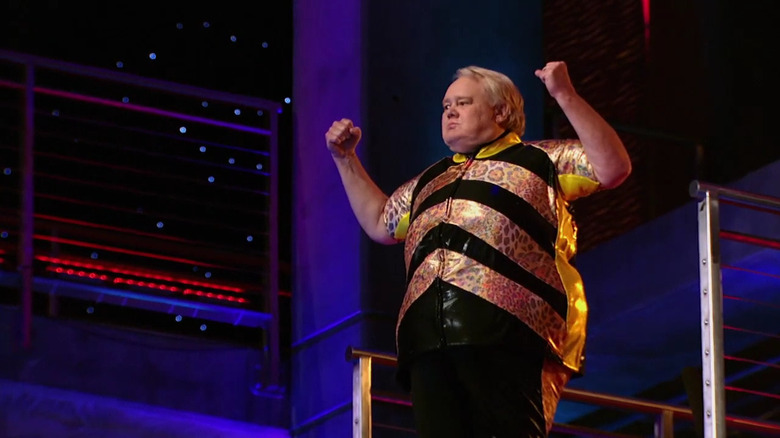
Much like "Circus of the Stars," celebrities competing in difficult sports without prior experience seems to be a recipe for disaster. Case in point: the ABC series "Splash," which follows ten celebrities as they learn how to compete in regulation-height diving. Celebrities for the first and only season included Kareem Abdul-Jabbar, Kendra Wilkinson, and Drake Bell.
Olympic-level diving is a difficult sport, so it's no surprise these celebrities had some trouble. In fact, six out of ten of the contestants on "Splash" walked (or were stretchered away) with injuries. Chelsea Handler's sidekick, Chuy Bravo, exited the competition after suffering a broken heel. Comedian Louie Anderson bruised his ribs, while professional skier Rory Bushfield ruptured his eardrum. Model Katherine Webb sustained a back injury, while "Baywatch" actress Nicole Eggert took a bad fall and was rushed to the hospital. Drake Bell faceplanted into the pool and gave himself a black eye. With a 60% injury rate among contestants, it's no surprise the show did not return for a second season.
7. Jackass

Few shows have embodied the "don't try this at home" warning more than "Jackass." The MTV stunt show, featuring performers Johnny Knoxville and Steve-O, centers on extreme pranks and physical stunts. The injuries featured on the show, and the many "Jackass" movies and specials, are too numerous to count. Steve-O estimates he's broken at least 20 bones, if you include teeth, while filming the franchise. Johnny Knoxville has endured at least 12 concussions over the course of his "Jackass" tenure.
While filming the MTV series, Steve-O fell from a wagon and reportedly lost 30% of the skin on his lower back. He was unable to sit down for two weeks. When he returned to the show, a BB gun tore his nipple off. "Jackass" has faced controversy over the years, as critics have blamed the show for inspiring fans to perform life-threatening stunts of their own. Despite the danger depicted throughout the franchise, the "Jackass" TV series does not rank at the very top of this list. The cast faced stricter broadcast standards on television, while the movies provided them with more freedom to perform even more elaborate and risky stunts.
6. Dancing on Ice

We have a lot of questions about the British reality series "Dancing on Ice." Who thought it was a good idea, and how did it run for an astounding 17 seasons? Similar to ABC's "Dancing With the Stars," "Dancing on Ice" features celebrity contestants learning how to ice dance alongside professional figure skating partners. Ice is hard, and ice skates are sharp, making injuries a real possibility for inexperienced skaters.
"Dancing on Ice" has featured numerous serious injuries over the years. "Hollyoaks" star Chelsee Healey was knocked out after a painful fall. Track and field athlete Greg Rutherford suffered a skating accident in which a blade cut his stomach, later describing the injury as "like giving himself a C-section."
Rutherford wasn't the only skater to experience the danger of the blade. "Hollyoaks" star Jorgie Porter accidentally cut her partner's face, "Brookside" actress Jennifer Ellison injured her scalp during a scorpion kick, and professional skater Yebin Mok suffered a severe leg injury when her blade cut into her leg. While plenty of stars succeeded on "Dancing on Ice," the threat of injury was ever-present.
5. Outlast
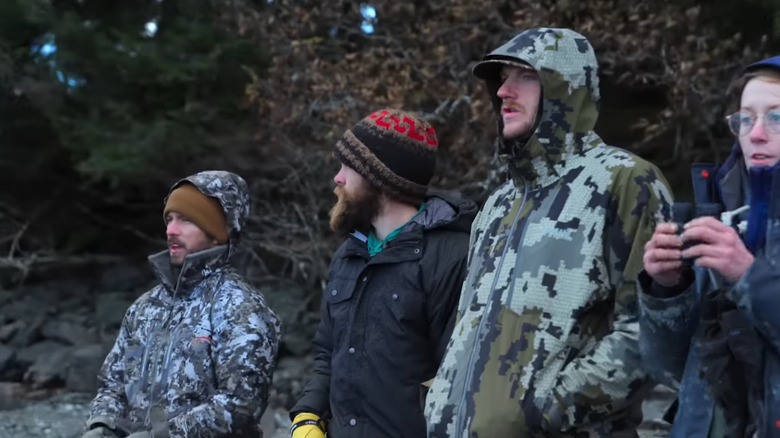
On the Netflix series "Outlast," survivalists are tasked with working together for the chance to win a million dollars. The team-based format has led to intense drama over two seasons. In Season 1, the competition turned cutthroat when one contestant stole sleeping bags, leaving others at risk of hypothermia in the Alaska wilderness. In Season 2, teamwork was the name of the game, with contestants actually working together rather than stabbing each other in the back.
"Outlast" puts its contestants in deliberate peril. Temperatures can drop below freezing, and hypothermia is a real danger. In both seasons, two out of 16 contestants had to be medically evacuated. In Season 2, Tonia was transported by ambulance after blacking out and was treated for hypothermia, hypoglycemia, and dehydration. Lack of food is an issue for all contestants; Paul Preece revealed he lost 42 pounds while on the show. Wildlife, including bears, also poses a threat. While the team element can boost participants' chances of survival, the harsh environment they're left in is no joke.
4. Survivor
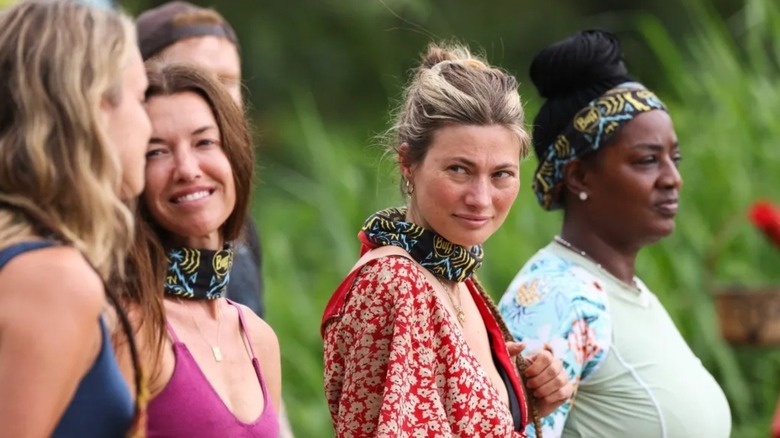
With 26 years and 49 seasons under its belt, "Survivor" has made a massive impact on the reality TV landscape. The series follows a group of people who are dropped in a remote location, usually somewhere warm or tropical. While there, they compete in challenges testing their strength and intelligence. They may win food, comfort items, or immunity. One contestant is voted out each week until a winner is crowned.
While most contestants leave due to a Tribal Council vote, medical emergencies have occurred. As of Season 49, there have been 20 medical evacuations on the show. Medical issues have included infections, heat stroke, and a snake bite. While danger is present on the show, precautions are put into place. Up until Season 41, contestants were given rice they could cook. Certain medications are permitted, depending on the season, and sunscreen and bug spray are provided. While the U.S. version of "Survivor" has never led to any fatalities, a contestant on the French version of "Survivor," called "Koh-Lanta," died of a heart attack, as did a contestant on Bulgaria's version of the show.
3. Naked and Afraid

The title says it all. The Discovery Channel series "Naked and Afraid" follows survivalists as they attempt to survive in remote environments sans clothes. The original series pairs two naked strangers together and instructs them to stay alive for 21 days. "Naked and Afraid XL" follows pairs trying to survive for 40 days, while "Naked and Afraid: Alone" and "Naked and Afraid: Solo" follow contestants on their own.
Unlike "Survivor," the contestants are not given bug spray or sunscreen, and they are only allowed to bring one survival item with them. The fact that contestants are naked and dropped in sunny, remote environments presents obvious risks. At least two contestants, Manu Toigo and Charlie Frattini, contracted Dengue Fever while on the show. One contestant contracted a flesh-eating bacterial infection, and another suffered severe burns after an accident involving a campfire.
According to data compiled by a Reddit user in 2022, the overall success rate across "Naked and Afraid," "Naked and Afraid XL," and "Naked and Afraid: Alone" was estimated at 63%. Of those who tapped out, 56% cited physical reasons and 46% cited mental reasons. The same data indicated that 34% of reported physical injuries led to medical evacuations, totaling 55 cases.
2. Alone
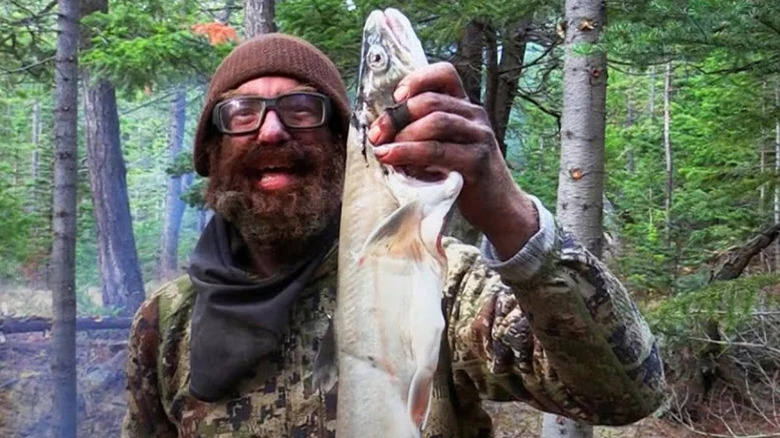
The challenge of "Alone" is both mental and physical. The History Channel series follows 10 contestants (or seven groups of two in Season 4) as they attempt to survive in the wilderness for as many days as they can. Unlike other survival shows, which are shot by a camera crew — and thus contestants aren't really on their own — the contestants on "Alone" film themselves. Their only contact with the outside world consists of scheduled medical check-ins, and they carry satellite phones to use if they choose to tap out.
The show is dangerous for many reasons. Contestants can fall ill from contaminated water, poisonous food, dehydration, starvation, or exposure to the elements. The show typically begins in the fall, meaning temperatures drop as the season progresses. In each season, all but one contestant eventually taps out, with some leaving for medical reasons.
There have been 26 medical evacuations over the course of 12 seasons, the reasons for which include axe cuts, a fishhook accident, losing too much weight, and frostbite. However, even more contestants tapped out for mental or emotional reasons, including homesickness, fear of wildlife, and exhaustion. The unique challenges faced by contestants on "Alone," in addition to the recorded number of injuries, make it one of the most dangerous reality shows ever made.
1. The Jump

You might be surprised to discover that a survival show doesn't top this list. That's because one ill-advised competition series produced a truly astounding number of injuries, and we'd be remiss not to include it. For three less-than-glorious years, Channel 4 aired "The Jump," in which lower-profile celebrities competed in winter sports such as ski jumping, skeleton, and bobsleigh. This resulted in a not very interesting TV show and a surprising number of contestants in the hospital.
When Channel 4 announced plans to cancel the show in 2017, they cited the upcoming onslaught of winter sports due to the Winter Olympics as the reason for its demise. We suspect that the show's critical malignment and potential liability had something to do with it as well. Over the course of only four short seasons, the show resulted in 34 injuries, meaning more than half of its contestants were hurt. Injuries included a dislocated shoulder, a knee injury that required surgery, a broken arm, and a broken leg. Several contestants claimed that their injuries prevented them from working, and gymnast Beth Tweddle, who broke two vertebrae and required spinal surgery, sued the show for damages.
Watching the show, it doesn't appear particularly dangerous. The ski jumps look more like bunny hills, and the contestants' sporting abilities are not particularly impressive. However, these sports carry inherent risks, particularly when performed by inexperienced participants. With all that combined, "The Jump" wins this competition for all the wrong reasons.