

A Different World Sequel Series, Featuring 7 Returning Stars, Sets September Release Date At Netflix
Fall semester at Hillman College begins Thursday, September 24. That's when Netflix will release its highly anticipated sequel to "A Different World" — exactly 39 years after the original NBC comedy premiered.
The announcement was made Friday during Netflix's Celebration of Black Television at the American Black Film Festival (ABFF), where showrunner/executive producer Felicia Pride, executive producer/director Debbie Allen, and series star Maleah Joi Moon unveiled the first teaser trailer. The footage introduces Moon's Deborah Wayne, Whitley and Dwayne's "lovingly sheltered youngest daughter, a free spirit with a flair for the spotlight and a big heart who's still figuring out her own path at Hillman."
"Along the way, she's joined by a new generation that reflects the breadth of Black life on campus," according to the official logline, including "Rashida Duvall (Alijah Kai), a first-generation criminal justice major; Shaquille Johnson (Cornell Young IV), a five-star athlete choosing legacy; Amir Rodale (Jordan Aaron Hall), a sharp psych major better at fixing everyone else's problems than facing his own; Hazel Henry (Kennedi Reece), a church-raised small-town girl defining her own values; and Kojo Achebe (Chibuikem Uche), a Ghanaian-Nigerian fashion entrepreneur finding the courage to follow his vision."
Also co-starring are Vincent Jamal Hooper as Ellington, Elijah J. Roberts as Jalen, Renee Harrison as Candace, Famecia Ward as Nellie Gaines, and Dasan Frazier as Xavier.
Which Familiar Faces Are Returning to A Different World?
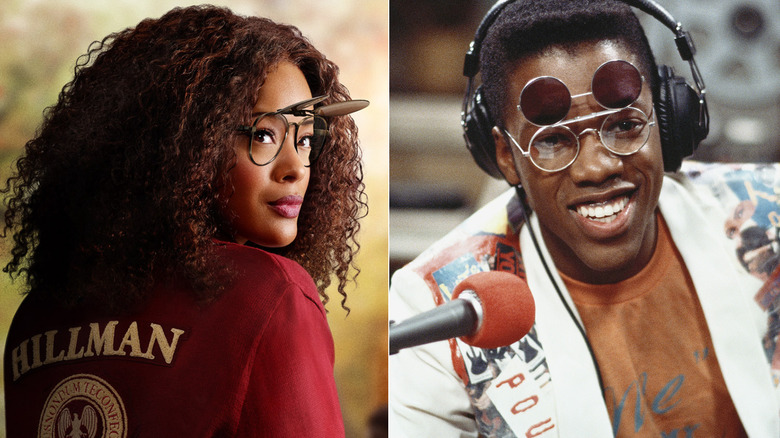
Seven Hillman alumni are set to reprise their roles in the "A Different World" sequel series: Jasmine Guy (as Whitley Gilbert), Kadeem Hardison (as Dwayne Wayne), Cree Summer (as Freddie Brooks), Darryl M. Bell (as Ron Johnson), Charnele Brown (as Kimberly Reese), Jenifer Lewis (as Dorothy Dandridge Davenport), and Jada Pinkett Smith (as Lena James).
While the original series was a multi-camera sitcom, the follow-up is single-camera, shot without a studio audience, and "set against the rituals, humor, and nuances of an HBCU." This version is described as a "hopeful dramedy, full of heart and unapologetically centered on the richness and complexity of the Black experience."