

Why HBO's Deadwood Didn't Get A Fourth Season
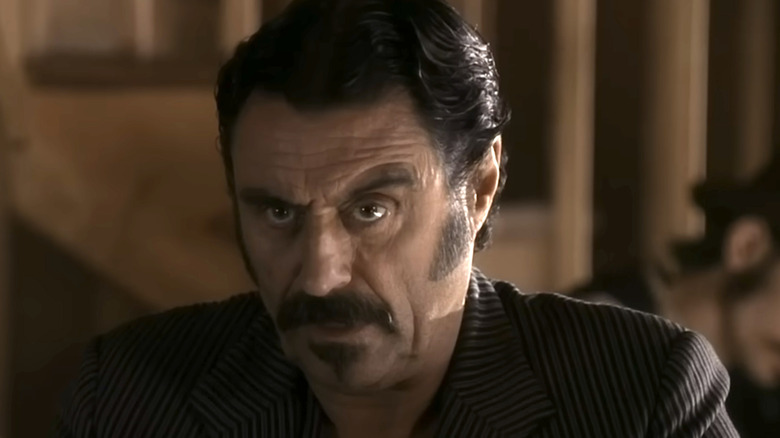
"Deadwood" is arguably one of the best HBO shows of all time, but the series struggled to get back on the horse for Season 4 after negotiations broke down between its creator and the network.
Created by David Milch, "Deadwood" revolved around the residents of a lawless South Dakota town in the aftermath of the Civil War. After three critically acclaimed seasons, it seemed like a fourth was inevitable — until, in May 2006, a phone call between Milch and HBO executive Chris Albrecht brought everything to a halt. "'We would like to get on to the next thing, and you can't really do two [shows] at once,'" Albrecht recalled saying in an excerpt from "The Deadwood Bible" (via Vulture). "'Here's where we are with 'Deadwood:' instead of doing 12 episodes, do you think maybe we could finish up the series in maybe six?'"
This suggestion did not go down well with Milch, who wanted to do 12 episodes, just as he had with the show's previous three seasons. According to Dayton Callie, who played real-life prospector Charlie Utter, the showrunner told Albrecht: "Why don't we do none?"
Negotiations fell apart, and Deadwood didn't return until 2019
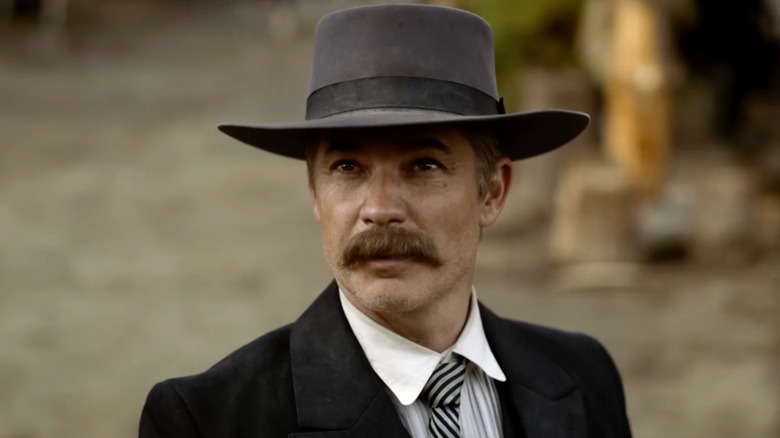
After his conversation with Chris Albrecht, David Milch immediately called Timothy Olyphant, the lead of "Deadwood" — because Olyphant was in the process of buying a property at the time.
"He decided that it was his duty to call Tim Olyphant and tell him that HBO wanted to cancel 'Deadwood' and maybe he shouldn't put the offer in on the house," Albrecht later recalled. "By the time the weekend was over, the trades had it that we were cancelling 'Deadwood,' because I'm sure what happened with Tim is he called his agent and said "Holy f***, they're cancelling 'Deadwood!'"
Olyphant and the rest of the cast eventually returned in 2019 for "Deadwood: The Movie," which sees the town celebrating South Dakota's newfound statehood. The movie was met with widespread praise from critics and finally brought the story of "Deadwood" to a close.
Milch looked back on the messy first ending of "Deadwood" in his 2022 memoir, "Life's Work" (via Goodreads). "To waste time regretting or feeling betrayed as if there was some contract with the audience that was defaulted on," he wrote, "was to deprive oneself, as a member of the audience and participant in the making, of the pleasure of appreciating what did exist."