

5 Classic Sitcoms That Broke The Fourth Wall In Every Episode
There's one rule of acting that even the most casual TV viewer knows — don't acknowledge the camera. Like with any good rule, though, it's made to be broken. "Breaking the fourth wall" means ignoring the imaginary barrier that separates the audience "from the action of a stage play or film, which is said to be broken when an actor talks directly to the audience or starts talking as themselves rather than as their character," per the Cambridge Dictionary.
Breaking the fourth wall is a narrative device that has been used sparingly yet effectively throughout TV history, usually for comedic effect. The unique '80s PI dramedy "Moonlighting" used it to great effect until the Bruce Willis series was canceled in 1989. Since the technique is a bit surreal, it's most frequently used in sitcoms, dating back as early as 1950, well before color broadcasting even became standard. These classic sitcoms broke the fourth wall so effectively, it essentially became part of the show's identity and style — to the point these series were directly acknowledging the audience in every single episode.
The George Burns and Gracie Allen Show (1950)
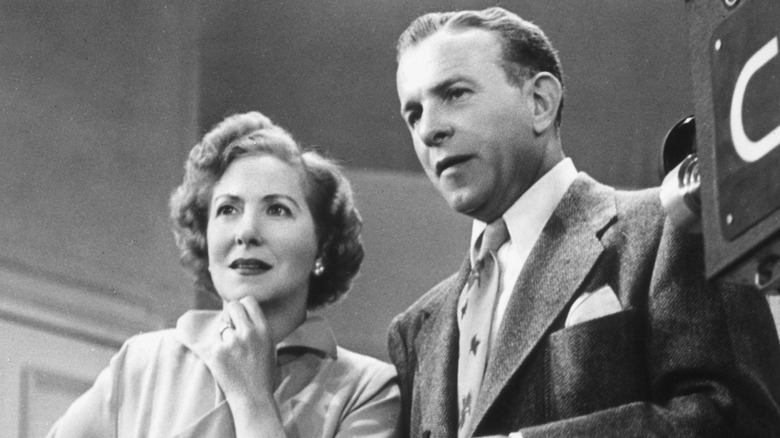
George Burns and Gracie Allen were a real-life married couple and comedy duo credited for an early example of a radio show successfully transitioning to television: "The George Burns and Gracie Allen Show." Burns was the straight man to Allen's comic relief on the show, about a married couple in the entertainment business who often got into funny situations with friends and neighbors. Burns had a monologue speaking to the audience at the start of each episode and stepped out of scenes to comment on Allen's often outrageous predicaments before stepping back into the action. He was letting the audience know he was in on the joke that his flighty wife was often completely unaware of.
According to the Museum of Broadcast Communications Encyclopedia of Television, "Burns was the first television performer to use the theatrical convention of 'breaking the fourth wall' between the audience and the performer," (per the Television Academy). Breaking the fourth wall was an effective technique on "The George Burns and Gracie Allen Show" since Allen's character was just spectacularly dumb. As a viewer, it was nice to have someone breaking the fourth wall to verify that we really were watching a grown woman twist common sense in such a ridiculous knot.
The Many Loves of Dobie Gillis (1959)
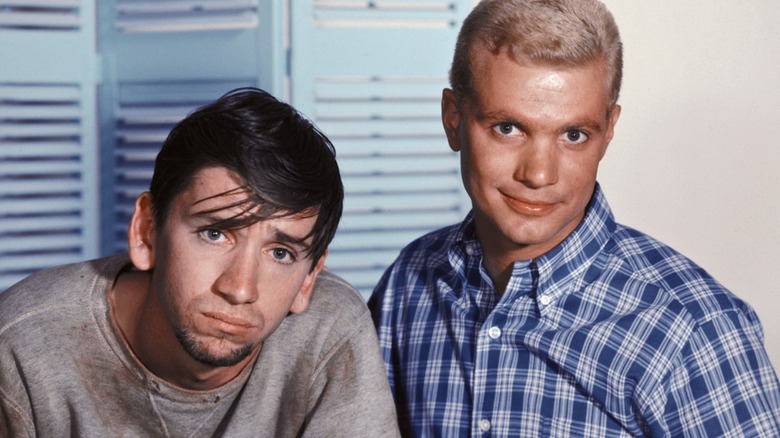
1959's "The Many Loves of Dobie Gillis" was one of the first primetime sitcoms to focus on teenage characters in social settings outside of the home, and an early adopter of breaking the fourth wall as a major part of its storytelling structure. As the title naturally suggests, the series follows none other than Dobie Gillis (Dwayne Hickman) on his quest to date women.
Don't worry, though, he's also in search of other luxuries in life that help teenage boys impress young ladies: Like fancy cars and the money to buy them. Within the first few minutes of every episode, Dobie sat down next to a replica of Auguste Rodin's The Thinker as he considered his dilemma of the week. The proximity of Dobie to The Thinker is obviously meant to be ironic, as Dobie's problems are usually not too serious or thought-provoking (but still funny).
Green Acres (1965)
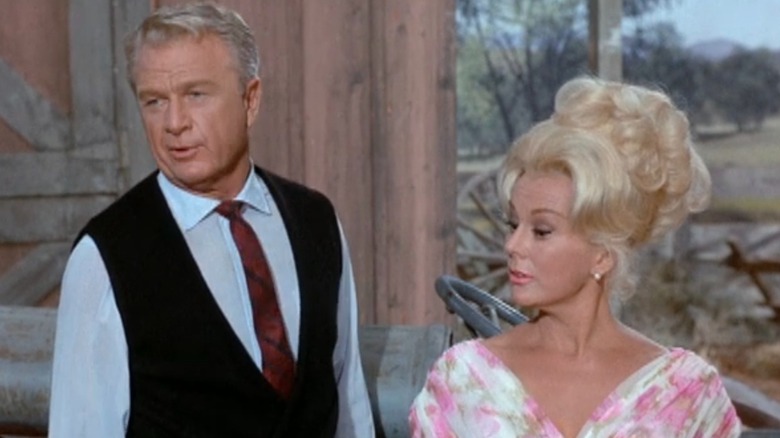
The CBS sitcom "Green Acres" used the concept of breaking the fourth wall in one of the most unique ways in television history. The "fish out of water" sitcom followed Oliver Wendell Douglas (Eddie Albert) and Lisa Douglas (Eva Gabor) after they'd been uprooted from their glamorous city life in Manhattan to a farm Oliver bought in the country, Green Acres. For six seasons and 170 episodes between 1965 and 1971, fans followed the Douglas family's hijinks on the farm as the show never lost its campy, unique vibe. Maintaining that tone included breaking the fourth wall in every episode, but not in the way you'd expect.
Oliver, Lisa, and their friends didn't acknowledge the viewers as previous shows had done. But, every week, they found a funny way to acknowledge the opening credits that would float across the screen or the theme song. Sometimes, Lisa would mention the names floating across her face to Oliver, or the chickens would lay eggs with the credits on them. Other times, names would show up on the breakfast Lisa was cooking, or a friend would whistle the theme song, including some lyrics, on the way to the farm. There were no other moments of breaking the fourth wall in the scripts, but it was a fun way to set the tone each week.
Saved by the Bell (1989)
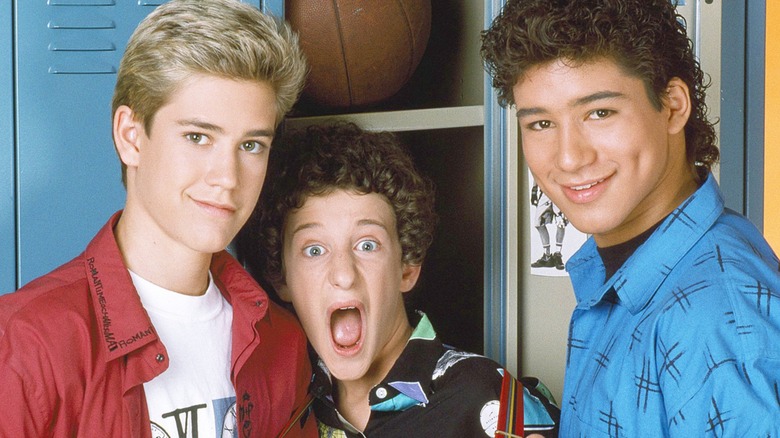
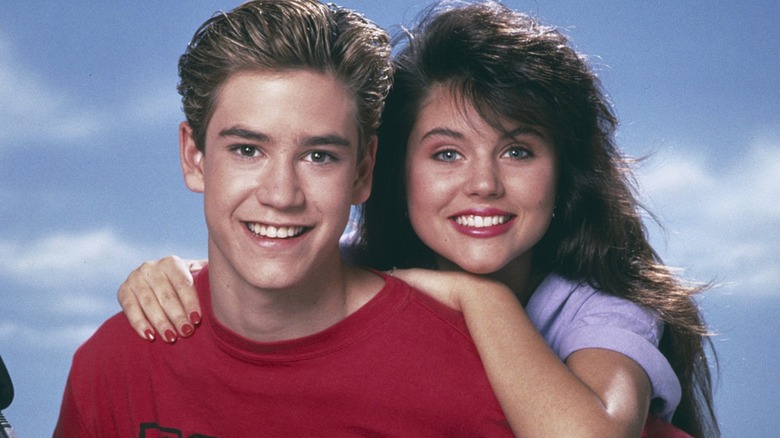
Growing up, many millennials were introduced to the concept of breaking the fourth wall in NBC's high school-focused sitcom "Saved by the Bell," TV's most famous Saturday-morning show. The series follows Zack Morris (Mark-Paul Gosselaar) and his group of friends as they navigate the hallways of Bayside High School in California. They're privileged kids who experience the same drama as typical teens of that time, including, but not limited to: Romantic breakups, makeups, and the occasional fight with a friend.
Zack used the fourth wall in a pretty typical manner to talk to the audience, but there was a significant twist. Any time he wanted to talk a situation through — instead of waiting for his co-stars to leave the scene — Zack could yell "Time out!" and everyone except him would freeze. This would allow him to manipulate the scene so he could narrowly escape a punch from his buddy A.C. Slater (Mario Lopez), or put a barrier between his on-and-off girlfriend Kelly Kapowski (Tiffani Thiessen) and the guy she's making out with in a scene. The device became such a hallmark for the series, it was used in the 2020 Peacock revival by Daisy Jiménez (Haskiri Velázquez).
Clarissa Explains It All (1991)
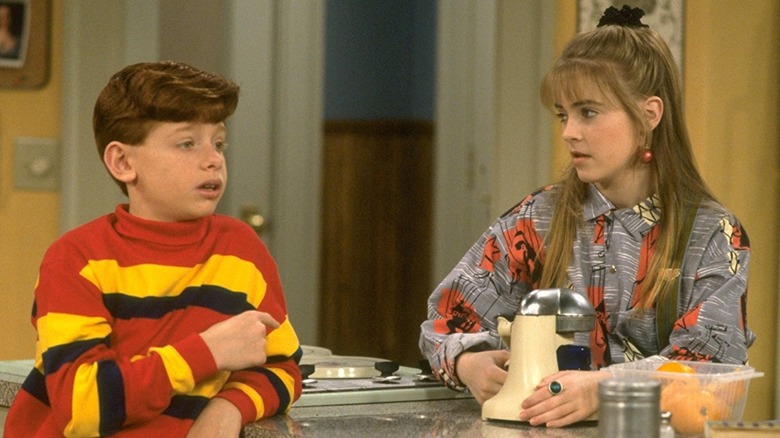
Before Daisy Jiménez took up Zack Morris' torch of breaking the fourth wall in the halls of Bayside High, Clarissa Darling (Melissa Joan Hart) was one of the first young women to break it down with viewers on every episode of "Clarissa Explains It All," which ran for five seasons on Nickelodeon from 1991 to 1994. Clarissa talks through everything from her crushes, to her disdain for her younger brother Ferguson (Jason Zimbler), to her career aspirations with the audience. While most of her breaks are pretty standard, she sometimes co-stars with herself, her monologues are accompanied by special effects and B-roll, and she's always flaunting her eclectic style.
Clarissa wasn't the only sitcom led by a young woman at the time, as Mayim Bialik was leading Blossom on NBC, but breaking the fourth wall on every episode made "Clarissa" a more intimate experience. Clarissa brought viewers in on her thoughts and feelings in a deeper way than many protagonists before her. She wasn't just explaining the plot — she was trying to understand her own feelings and motivations as the feelings and motivations of the people she cared about. A revival was reportedly in the works at Nickelodeon before getting "squashed."