

10 Best TV Shows About The Roman Empire
How often do you think about the Roman Empire? If your answer is more than once a week, your not-so-niche interest may have sent you on the hunt for TV shows depicting this fascinating period of history. Unfortunately for ancient Rome-heads, television that takes place in ancient Rome is hard to come by. Our guess is that the time and money it takes to re-create such an ancient period makes shows like these a difficult sell. Indeed, "Ben-Hur" (both versions) and "Gladiator II" are among the most expensive films ever made.
Still, there's enough interest in ancient Rome that Hollywood — and other international industries — come up with new (and very old) Roman stories to tell every few years. Out of the smattering of Ancient Roman series we have available to us, these are the cream of the archaic crop. Some of these shows prioritize accuracy and realism in telling their stories, while others take a more freewheeling approach to the material. Either way, these series give us a thrilling taste of a society that seems far removed from our own. Ready your chariots — these are the 10 best TV shows about the Roman Empire.
I, Claudius
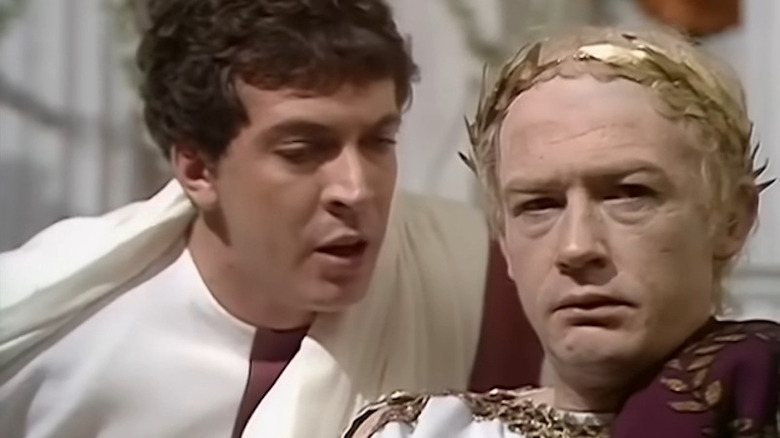
The BBC drama "I, Claudius" marked a turning point in English-language television, proving that the medium could be home to great pieces of art alongside pure entertainment. The miniseries aired in the U.K. in 1976 and came to the U.S. (via PBS) in 1977, the same year "Roots" brought about its own TV revolution. Narrated by an elderly Claudius (Derek Jacobi), the show tells the story of the Romans who ruled during his lifetime: Augustus (Brian Blessed), Tiberius (George Baker), Caligula (John Hurt), and finally, Claudius himself.
For modern viewers, the production values might be jarring at first. Everything was filmed on a soundstage, and rarely do you forget that fact. The costuming lacks the grandeur we've come to expect from period pieces, and dramatic battle scenes are all but nonexistent. Brilliant acting, magnificent writing, and smart direction make up for all of these deficits. In addition to the key players mentioned above, the cast includes Siân Phillips, Sheila White, and Patrick Stewart, delivering Shakespearean performances for the small screen.
The show was hugely influential, a prestige TV show before the concept even existed, ushering in the era of HBO and shows like "Game of Thrones" and "The Sopranos." The creators of "Dynasty" had a modern-day "I, Claudius" in mind when they came up with that era-defining show, and George R. R. Martin found inspiration there as well. With fascinating, well-rounded characters and an overall emphasis on historical accuracy, "I, Claudius" is in a league of its own.
Britannia
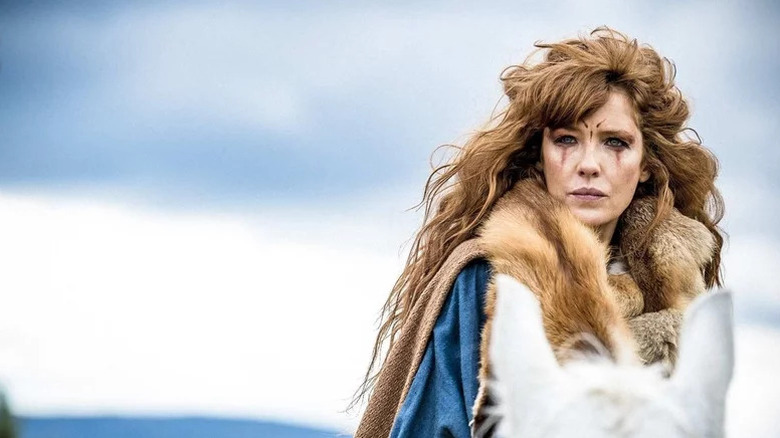
"Britannia" is not a serious show, and its delightfully campy, psychedelic take on ancient Rome is a sight to behold. Set in 43 A.D., "Britannia" follows General Aulus Plautius (David Morrissey) as he attempts to conquer Britain 90 years after Julius Caesar failed. While there, Aulus encounters Celts and druids who couldn't care less about his conquering intentions. They're too busy smoking weed (aka moss), hallucinating, and covering themselves in mud, thank you very much.
Other characters include Kerra (Kelly Reilly of "Yellowstone"), a princess trying to protect her people; Veran (Mackenzie Crook), the scary-looking leader of the druids; and Queen Antedia (Zoë Wanamaker), the elegant, vulgar leader of a powerful tribe. The show uses every historical fantasy trope in the book, featuring sword fights, sorcery, betrayals, beheadings, verbal sparring, and generational feuds.
Though the cast plays it with deadly seriousness, the over-the-top nature of the gore and profanity hints at — or rather broadcasts on a loudspeaker — the show's underlying silliness. Consider the series' squarely on-the-nose theme songs, which include "Hurdy Gurdy Man" and "Season of the Witch" by Donovan. Subtle "Britannia" is not, but with plenty of blood, guts, magic, and F-bombs, it's a heck of a good time.
Spartacus
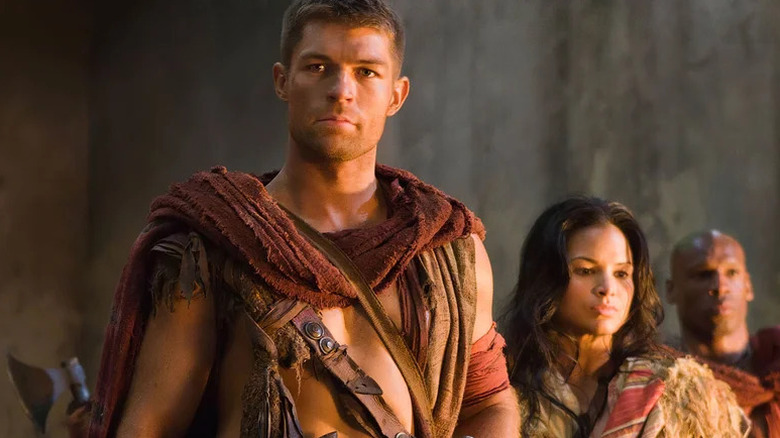
One of the best TV shows ever on Starz, "Spartacus" is a bloody, sexy thrill ride. The series follows an unnamed Thracian man (Andy Whitfield in the first season, Liam McIntyre following Whitfield's illness and death) who is forced to fight as a gladiator for Batiatus (John Hannah) and his wife Lucretia (Lucy Lawless). Christened Spartacus by his new master, he eventually leads a powerful slave uprising, taking revenge against the Roman Republic for his wife's death.
Produced by Sam Raimi, a great comic book director in his own right, "Spartacus" aims for the aesthetic of a comic book or graphic novel, stylizing this dramatic, violent era in history. The show is filled with juicy drama, thrilling fight scenes, and plenty of gore and nudity. It features elements of melodrama, but it's also grounded in the motivations of its characters and their desire for freedom, revenge, or power. Lawless' Lucretia is a fascinating character who's a delight to watch despite (or perhaps because of) her nefarious machinations. Spartacus himself is an easy hero to root for, and the message of resistance he represents is quite moving.
"Spartacus" is a perfect binge, and it doesn't hold anything back. Still, one of the bloodiest shows on TV is also deceptively smart and even funny at times, pulling you in with the gore and beautiful bodies and keeping you hooked with engaging plotlines and fascinating characters.
Rome
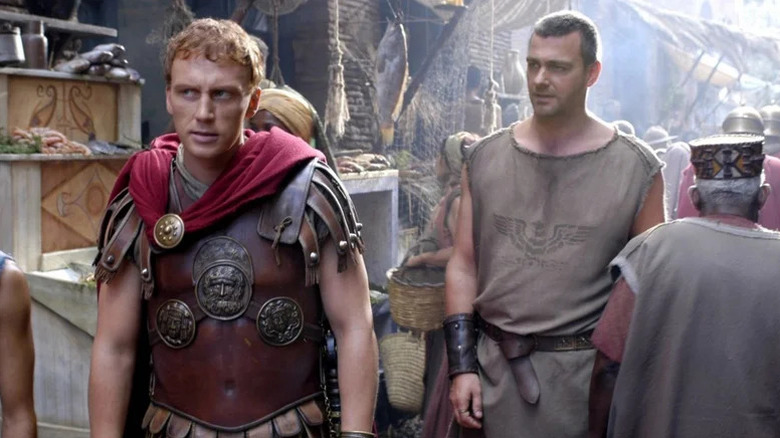
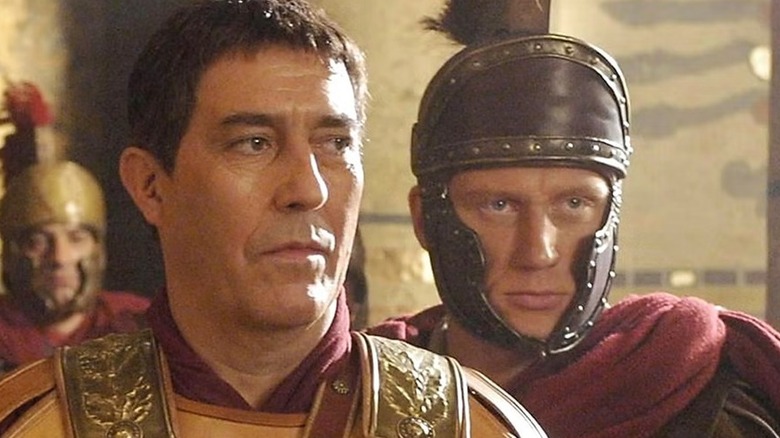
Though it was canceled after two seasons for costing too much, HBO's "Rome" paved the way for the success of "Game of Thrones." "Rome," which aired from 2005 to 2007, takes place during the time of Julius Caesar (Ciarán Hinds) and tracks the violent transition from the Roman Republic to the Roman Empire. Amid the political machinations of leaders like Caesar and the nobles that surrounded him, we watch the drama unfold through the eyes of two commoners. Ray Stevenson and Kevin McKidd play Titus Pullo and Lucius Vorenus, two soldiers at the mercy of their commanders.
While "Rome" tackles significant events of the time (such as Caesar's assassination and the relationship between Cleopatra and Mark Antony), its use of Titus and Lucius as potentially ignorant stand-ins for the audience allows the show to take liberties with the story while still adhering to the historical record. Indeed, "Rome" takes pains (and a whole lot of money) to accurately re-create the era through scenery, clothing, and other ancient customs.
With a reported budget of $100 million per season, HBO decided not to commission a third season of the show. This forced writers to speed up the timeline of the second season to conclude Titus and Lucius' stories, and the pacing of Season 2 suffers because of that. Nonetheless, "Rome" is one of the best historical shows of all time, boasting impressive production design and a whole host of great performances.
Barbarians
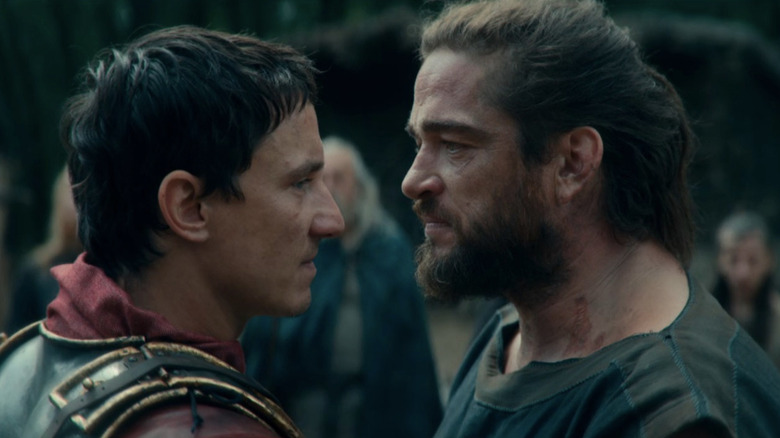
"Barbarians" is a much more straightforward telling of a pushback against Roman invasion than the wonderfully zany "Britannia," but it's a well-constructed show that successfully balances historical accuracy with entertainment value. The show's first season leads up to the Battle of Teutoburg Forest, in which Germanic forces achieved a stunning victory against the Romans. Though the battle has become a symbol of the far right, the show's creators sought to reclaim it as a more complicated piece of history.
The show centers on Arminius (Laurence Rupp), a former member of the Germanic Cherusci tribe who was stolen away by the Romans as a child. Having grown up with the Romans, he returns to his homeland to help unite the tribes against their common enemy. He's aided by Thusnelda (Jeanne Goursaud) and Folkwin Wolfspeer (David Schütter), his childhood best friends.
Though some aspects of the show are paint-by-numbers, Arminius is an interesting protagonist, and his divided loyalties and fractured upbringing make for a compelling narrative. His scenes with Thusnelda and Folkwin are the best in the series and give the story emotional weight. The show's creators strove for historical accuracy, having the Roman characters speak ancient Latin, and the military equipment used in the final battle scene is based on archaeological records.
Attila
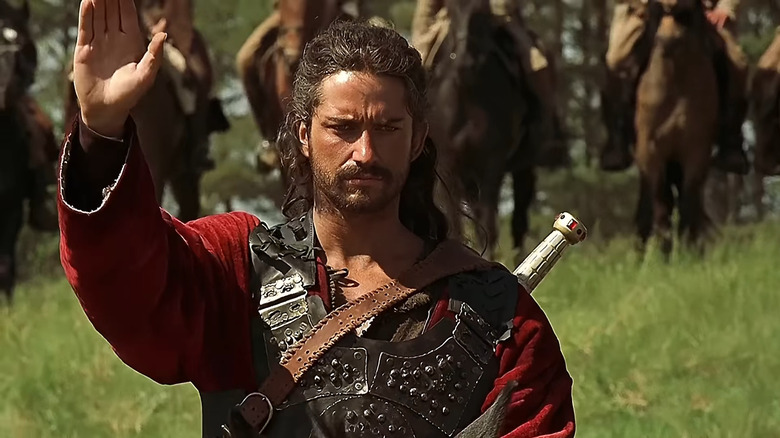
Before he played a Spartan king in "300," Gerard Butler took on the role of Attila the Hun in the 2001 miniseries "Attila." Though an odd casting choice (Attila is often described as short and unattractive, and was probably Eurasian), Butler's presence in the series, which was later repackaged as a TV movie, indicates the priority given to entertainment value over historical accuracy.
The series follows Attila from youth to adulthood, as he becomes the leader of the Huns and works to unite the Hunnic tribes in an effort to thwart Roman control. His storyline is paralleled with that of Flavius Aetius (Powers Boothe), a scheming Roman general released from jail to help stop Attila and his army. Both men are equally power hungry, and the script suggests that though Attila and his Huns are often described as particularly savage, both men led brutal societies.
Though the overarching narrative told in "Attila" is factual, it doesn't care too much about the details, which may bother hardcore history buffs. Indeed, the series features plenty of melodrama and romantic subplots that lessen its "seriousness" somewhat. Still, the production design is worth celebrating, and thoughtful cinematography and thrilling fight scenes give it a dynamic feel. The actors (which include the late, great Tim Curry) all give fittingly thundering performances, and the series' occasionally campy tone doesn't take away from its entertainment value.
Masada
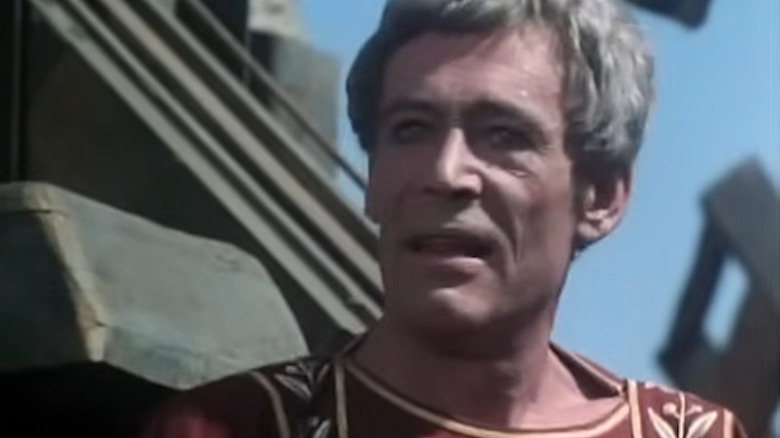
The ABC miniseries "Masada" premiered in 1981, following the wild success of historical miniseries like "Roots" and "Shogun" (back on our screens once again). Based on "The Antagonists" by Ernest Gann, the show is set in 70 A.D. and follows a Jewish rebellion against the Roman occupation of Judea. The great Peter O'Toole plays Roman general Lucius Flavius Silva, working to create a truce with the rebels. Peter Strauss plays Eleazar Ben Yair, the leader of the Jewish rebellion. Also thrown into the mix Sheva (Barbara Carrera), Silva's Jewish slave and lover.
With a budget of $22 million, 105 speaking roles, a crew of 300, and a five-month shoot on location in the desert, the producers of "Masada" spared no expense in creating this historical epic. O'Toole gives a commanding performance, so much so that his Silva emerges as the more sympathetic protagonist (or antagonist) when compared to Strauss' Eleazar. Still, the script works to frame them as comparable leaders, on opposite sides of the issue but equally committed to their people.
Though the modern-day inserts of the Israeli Army border on propaganda, "Masada" nonetheless presents an immersive account of history (or at least, a historical myth) that offers engaging character work alongside epic production design.
Domina
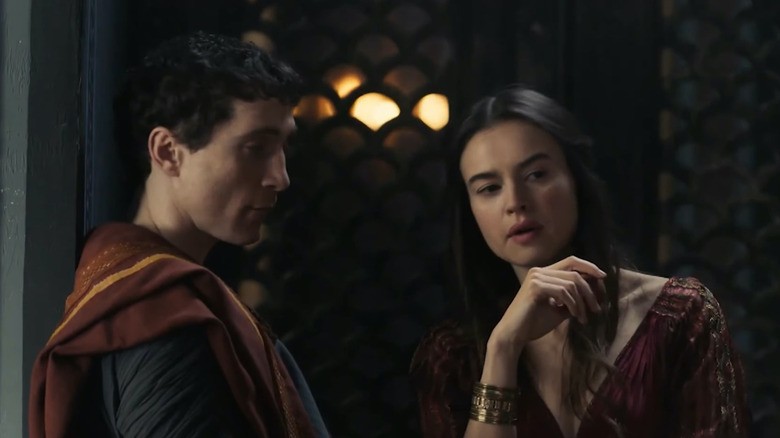
Fans of ancient Rome may know Livia Drusilla best as she appears in "I, Claudius," played by the great Siân Phillips. In "Domina," a historical epic produced by Sky TV, we get a different perspective on the woman. When we first meet her, she is a teenager (played by Nadia Parkes) married to Tiberius Claudius Nero (Enzo Cilenti). She later divorces Nero to marry Augustus (Matthew McNulty), causing a scandal in Roman society. (As an adult, Livia is played by Kasia Smutniak.)
The series tracks Livia's trajectory from naive young woman to cunning wife and political maneuverer, more like the person we saw in "I, Claudius." The first episode gives us a taste of what's to come, as Livia proclaims in its opening moments, "You never forget your first." What she's referring to is, of course, murder. Initially, the show seems to borrow a lot from "Game of Thrones," though it transforms into an engaging political thriller as it goes on. Despite the many recognizable tropes it employs, it is interesting to see this political drama play out through the eyes of a woman, and smart acting gives these familiar characters dimension.
Plebs
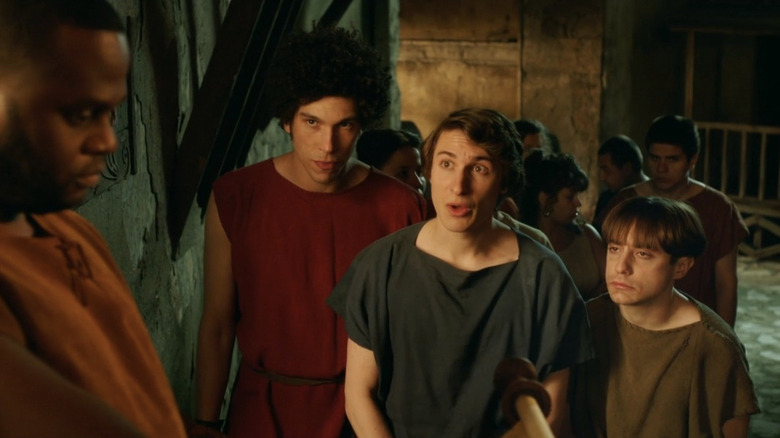
The ITV series "Plebs" follows three young men as they move from the suburbs to the big city, trying to find girlfriends, keep their jobs, and make names for themselves. Though it may sound like the premise of any old modern-day sitcom, "Plebs" actually takes place in ancient Rome. Created by Sam Leifer and Tom Basden, the idea for the show was to take three regular guys with modern-day problems and transport them to ancient times. As Sam Leifer's brother, producer Teddy Leifer, told The Guardian, "Rome allows us to bring in gladiators and beheadings."
Our three ordinary Romans are friends Marcus (Tom Rosenthal) and Stylax (Joel Fry), and their slave Grumio (Ryan Sampson). Marcus and Stylax have boring jobs, a terrible landlord, and a beautiful neighbor, Cynthia (Sophie Colquhoun), who's not the sharpest tool in the shed. The show revels in lowbrow humor, including frequent scatological jokes, and plays with anachronisms via modern-day slang and a jarring ska and reggae soundtrack. And yet, brothers and co-producers Sam and Teddy Leifer both have classics degrees and brought on a historian as an advisor, meaning it's surprisingly historically accurate for a bawdy sitcom. A brilliant (and by that we mean wonderfully stupid) mashup of a situation comedy and a period piece, "Plebs" is the most unique take on ancient Rome we've seen.
The Caesars
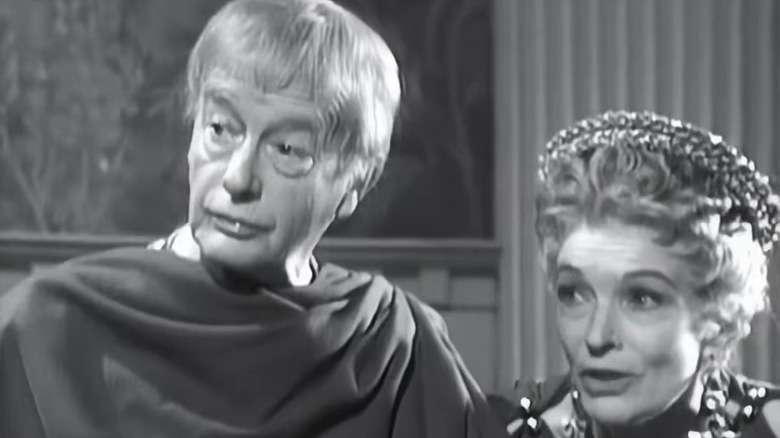
The 1968 ITV series "The Caesars" follows events similar to those of "I, Claudius." It was released eight years after "I, Claudius," though it hasn't maintained the same acclaim. With a script by screenwriter Philip Mackie, "The Caesars" focuses more on fact than fiction, taking a subtle approach to depicting these famous characters from history and their unique approaches to wielding power. The series begins with the rule of Augustus (Roland Culver), whose consolidation of absolute power will have massive consequences for generations to come. Following his death, the series tracks the leadership of his successors, Tiberius (André Morell), Caligula (Ralph Bates), and Claudius (Freddie Jones).
Though less sensationalized in its depiction of these iconic figures, "The Caesars" de-emphasizes the importance of women in the story and lacks memorable performances like that of Siân Phillips as Livia in "I, Claudius." Still, all the actors playing the titular men in "The Caesars" deliver excellent performances, which serve as the emotional anchor of a show without spectacular sets or bloody fight scenes. Indeed, the series has a fairly uncinematic, shot-on-a-soundstage look, placing a lot of weight on the writing and acting, which, thankfully, are both excellent. One of the last black-and-white TV epics before everything switched to color, "The Caesars" is a standout production from a bygone era.