

5 Most Infamous 'Jump The Shark' Moments In Sitcom History
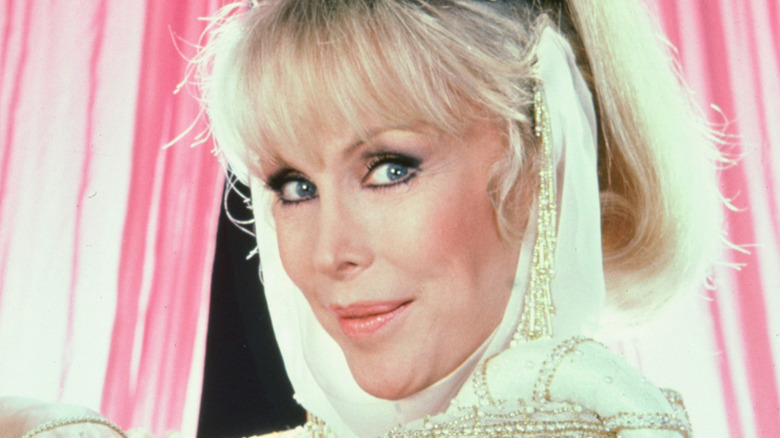
To say a TV show jumped the shark is to say it made a story choice so bad that viewers realized its best days were firmly behind it. Almost every show has its golden age, and the jump-the-shark moment often clearly marks the end of it.
The phrase originated from a 1977 episode of "Happy Days" in which the Fonz (Henry Winkler) literally jumps over a shark on water skis. The absurdity of the moment, combined with the unconvincing editing, served as a clear line in the sand for a lot of viewers. This was when the emotional, grounded tone of the show's early days fully gave way to the cartoonish antics of the later seasons.
The key to a true jump-the-shark moment is that it must tie into a complaint fans already had about the show. For instance, many "Happy Days" fans had already been annoyed that breakout character Fonzie was slowly taking over the series. These complaints would still exist even if the shark-jumping scene never happened, but the scene perfectly encapsulated everything wrong about where the show was going. The five shows included on this list don't involve any literal shark-jumping, of course, but they all have an infamous moment that confirmed their fans' worst fears about where things were headed.
Cousin Oliver joins The Brady Bunch
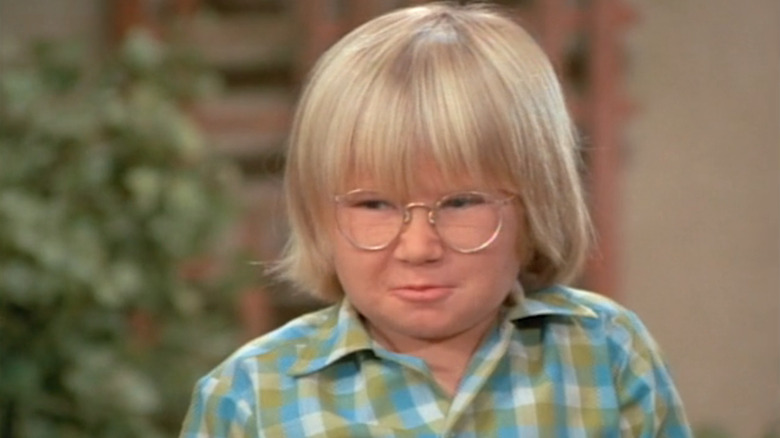
Near the tail end of the fifth and final season of "The Brady Bunch," the show suddenly introduced 8-year-old cousin Oliver (Robbie Rist) to the cast. Not only did fans find Oliver annoying, but the fact that he'd never once been mentioned beforehand made his presence feel extra forced. It was hard not to view Oliver as a desperate Hail Mary from the writers.
Susan Olsen, who played youngest daughter Cindy on the show, told fans at a 2025 panel (via People) that Oliver was the show's "shark jump" moment. She added, "Every time a show is starting to get a little bit lower in the ratings, they start to add in the cute kid." Christopher Knight, who played middle brother Peter Brady, agreed with Olsen. He told fans, "I was looking for the exit when we saw Oliver walking through the front door."
Although the show was already growing a bit stale before Oliver's appearance, the awkwardness of his sudden inclusion tends to put the weight of the show's ending all on him. Maybe that's unfair, but jump-the-shark moments are often fairly symbolic. For his part, Robbie Rist has since acknowledged the backlash, telling Cracked in 2023, "People would come up to me and say, 'You're the guy who killed 'The Brady Bunch.' It cemented itself in the early days of the internet."
Laverne and Shirley move to California
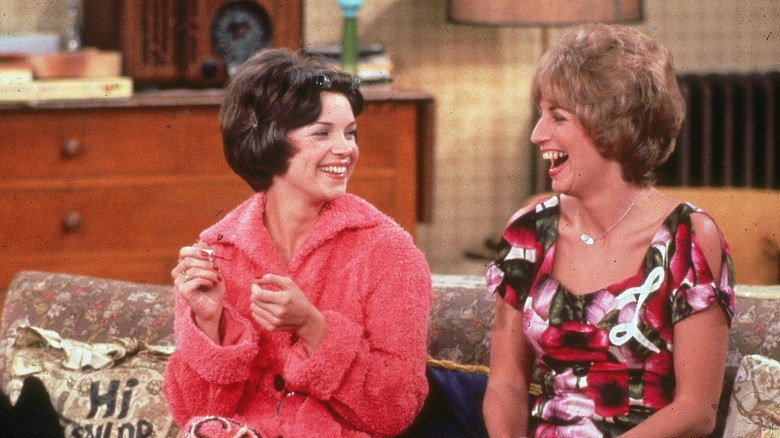
The first five seasons of "Laverne & Shirley" took place in Milwaukee, Wisconsin, and — for a while — the show had a down-to-earth working class charm that fans loved. But, after a series of plot contrivances in the Season 6 premiere, most of the main characters suddenly moved to Burbank, California. Suddenly, the show grew a lot sillier and less relatable to fans.
The move to California was followed by a number of other show-killing problems: Cindy Williams, who played the titular Shirley, left the show after Season 7 on bad terms with the program's producers. Michael McKean (who played Lenny) also had his role reduced in the final season, making the series feel oddly empty.
Some fans point to the major cast departures as the real jump-the-shark moment, but the sudden move west was the true turning point. It came across as a desperate attempt to freshen up the series, but all it did was remind viewers that the show was running on fumes.
Tony and Jeannie get married
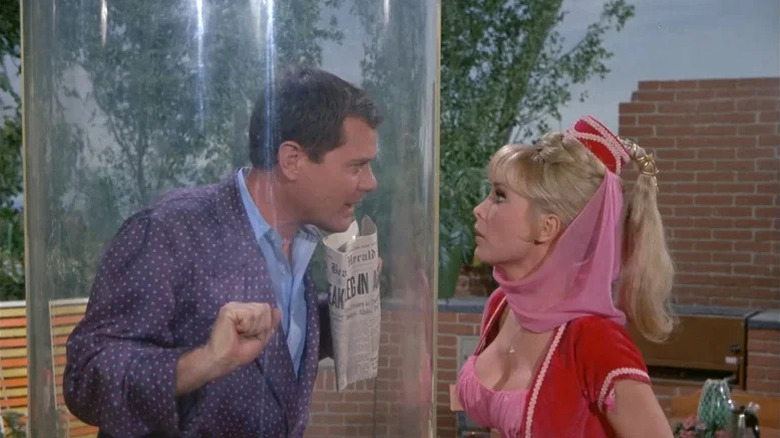
The bizarre fantasy sitcom "I Dream of Jeannie," easily one of the best TV shows of the '60s, centered around a genie named Jeannie (Barbara Eden) and an astronaut named Tony (Larry Hagman) and their will-they, won't-they dynamic. After five seasons of charming romantic tension, however, executives at NBC forced the two characters to get married.
"I was very upset about it — not that anybody would listen to me," Barbara Eden told Forbes in 2025. The show's creator, Sidney Sheldon, also despised this plot point, telling the Television Academy that it was what "finally killed us." He recalled the head of ABC, Mort Werner, giving him an ultimatum at the end of the fourth season: If he wanted the show to be renewed for Season 5, he would have to marry Jeannie and Tony off.
"I tried to make the script as interesting as possible, but with their marriage, the relationship had changed and much of the fun went out of the show," Sheldon wrote in his 2006 memoir. "At the end of the fifth year, 'I Dream of Jeannie' was canceled. Mort Werner had taken a hit show and destroyed it."
Urkel invents a transformation chamber
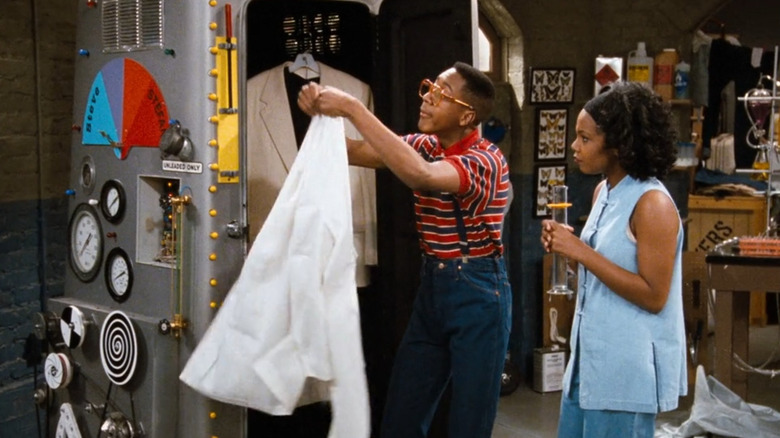
Although "Family Matters" started off as a grounded, blue-collar version of "The Cosby Show," the twelfth episode introduced Steve Urkel (Jaleel White) — and things really escalated from there. By Season 2, Urkel had become a main character, and by Season 3 he'd basically taken over the show. None of this was necessarily a bad thing — America loved Urkel, after all — but in Season 5, Urkel began regularly bringing in sci-fi elements to the series.
In "Dr. Urkel and Mr. Cool," Urkel develops a chemical formula that transforms him into a smooth-talking cool guy named Stefan. This is fine for a one-off episode premise, but in the Season 5 finale, "Stefan Returns," Urkel invents a transformation chamber that allows Stefan to return regularly. The transformation chamber is the point at which the show officially becomes way too wacky for its own good.
The transformation chamber also helped cement "Family Matters" as one of the most notorious examples of a show that shifted shockingly far from its original premise. Famously, it even inspired a "Key & Peele" sketch in which Carl Winslow's actor, Reginald VelJohnson (played by Jordan Peele), vents to the writers about the latest episode's ridiculous premise. "Steve Urkel turns Carl into a giant sandwich and accidentally eats him?" he says incredulously. Compared to some of the actual hijinks later-season Urkel gets up to, this premise isn't even that far-fetched.
The Conners win the lottery
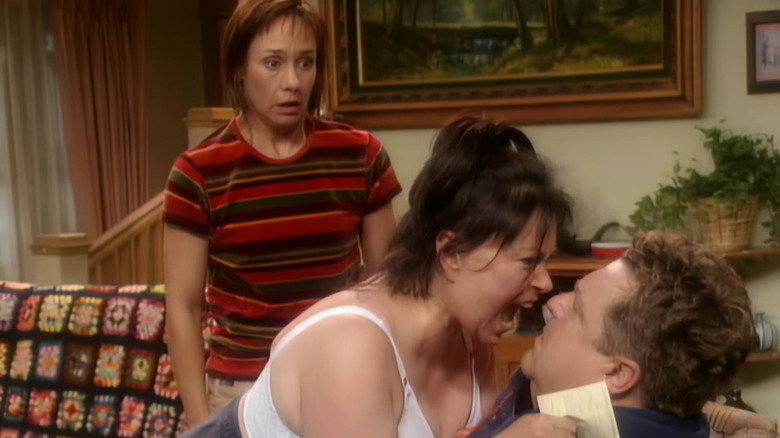
Much of the appeal of "Roseanne" came from how relatable its working-class main characters were, which is why it felt like such a baffling choice for them to win the lottery in the ninth season's second episode. With the characters' sudden influx of $108 million, the show turns into an escapist fantasy sitcom, and much of its charm is instantly lost. The only semi-respectable explanation for this plot swerve is that the writers were out of ideas.
The show's ratings declined soon after, and critics were quick to speculate that the lottery plot point was the big reason why. Roseanne Barr defended the final season as it was running, telling the AP, "My last year is the year I'm going to give everyone's character their dreams come true." This did not turn out to be true, however: The series finale reveals that the lottery win — along with plenty of other major Season 9 plot points — were just part of a book that Roseanne Conner is writing about her life.
Critics found the finale so baffling that they figured the big twist must have been meant as an apology of sorts to fans frustrated by the lottery storyline, but a spokesman for the show's production company told the Philadelphia Daily News that it had been planned ahead of time. While the final episode joined TVLine's list of worst series finales ever, it was the Season 9 premiere that set "Roseanne" hurdling irretrievably towards disaster.