

5 Biggest Changes The Carrie TV Series Makes From Stephen King's Book

We may receive a commission on purchases made from links.
More than 50 years after Brian De Palma's haunting take on "Carrie" premiered, series creator Mike Flanagan is putting his own spin on Stephen King's debut novel. The showrunner and filmmaker has adapted several of King's works, including "Life of Chuck" and "Gerald's Game." Once again with the author's blessing, Flanagan took on the challenge of updating a harrowing classic like "Carrie" by bringing online bullying to the forefront.
The Prime Video series follows Carrie White (Summer H. Howell), a timid and sheltered teen who, in the wake of her father's passing, must let go of homeschooling and attend public school for the first time. Carrie is excited to finally meet other people her age, but her enthusiasm progressively fades when she is mistreated by her peers and mocked online through an anonymously run page titled Carrie Red. Everything culminates in the iconic prom scene, where Carrie uses her telekinetic powers to fight against those who've wronged her.
Although the bulk of the novel is featured in Flanagan's series, the showrunner took creative liberties with the source material on multiple occasions. From transforming the relationship between Carrie and her mother, Margaret White (Samantha Sloyan, who has starred in other Flanagan projects), to introducing a secret organization hunting Carrie down, the Prime Video original made bold choices in its retelling. Here are the major differences from book to screen.
Margaret and Carrie's mother-daughter relationship
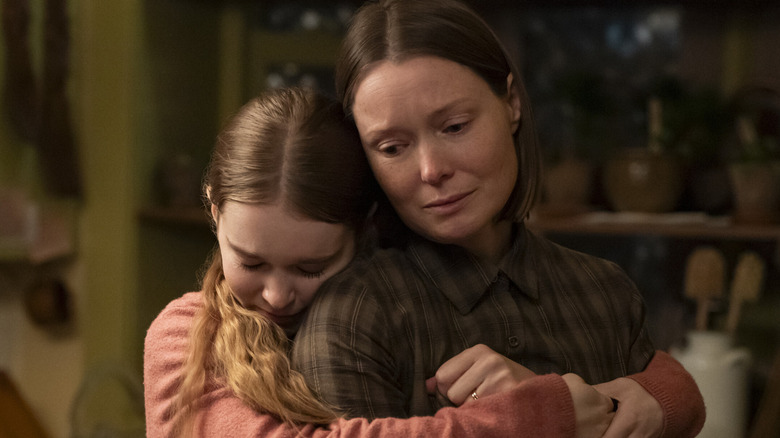
In Stephen King's novel, Margaret White is an evil mother to Carrie, often punishing her and imposing her extremist views on her daughter. The version of Margaret played by Samantha Sloyan in "Carrie" is the complete opposite. She does have the tendency of calling everything outside of her home evil, but she does love Carrie. Instead of perceiving Carrie's first period as sinful, she is distraught that her daughter received guidance from a school teacher instead of her.
When Carrie suffers from online bullying, Margaret is the first to confront Principal Grayle (Matthew Lillard) about the school's unwillingness to hold Chris (Alison Thornton) accountable for her actions. Margaret starts a movement to help both her daughter and other parents protect their children from harassment on social media by starting a page of her own.
Margaret's major flaw is that she is overly protective of Carrie, sheltering her to a fault. When Carrie starts gaining further control of her telekinetic powers, that's when her complicated relationship with her mother reaches its peak. Underneath the anger and resentment, Carrie also cares for her mother to the point of coming home to her after what transpires on prom night. The characters' fates are far more nuanced here than in the source material or other adaptations.
The inclusion of Carrie's friend Emaline
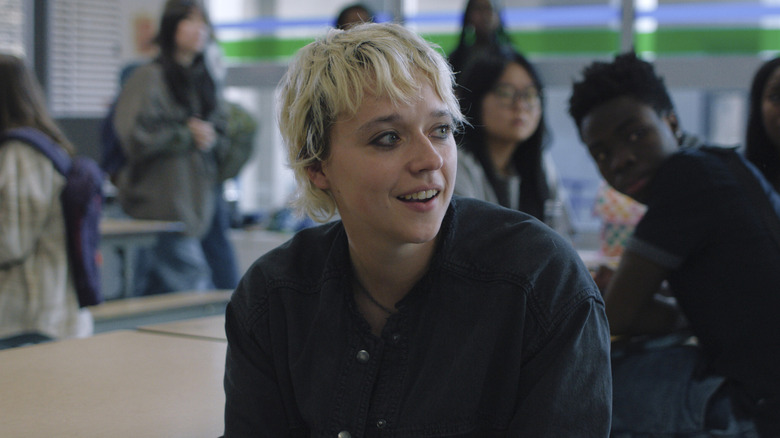
Previous iterations of "Carrie" have followed the book in depicting the protagonist as lonely and mistreated by everyone in her midst. She doesn't have a confidante, and the control she develops over her own powers stems from her inner rage. In Mike Flanagan's series, a character named Emaline (Thalia Dudek) is introduced to stir the plot. Emaline becomes Carrie's ultimate friend in school and is a fundamental figure in helping Carrie hone her telekinetic skills.
In Episode 5, audiences are led to believe that Emaline is a product of Carrie's imagination. A leaked video from Carrie's home security camera showed her talking to herself about breaking Chris' nose, instead of talking with Emaline. Later on, that theory is debunked when the character resurfaces during prom night and helps Carrie enact revenge and escape from their town of Chamberlain after she burns the school down and destroys her own home.
A lot of questions remain unanswered about Emaline's identity in the finale, but what we do know is she was projecting herself from afar in the first few episodes of the series and only appears in the flesh at the end when coming to Carrie's rescue.
Chris' online bullying is motivated by her own personal struggles
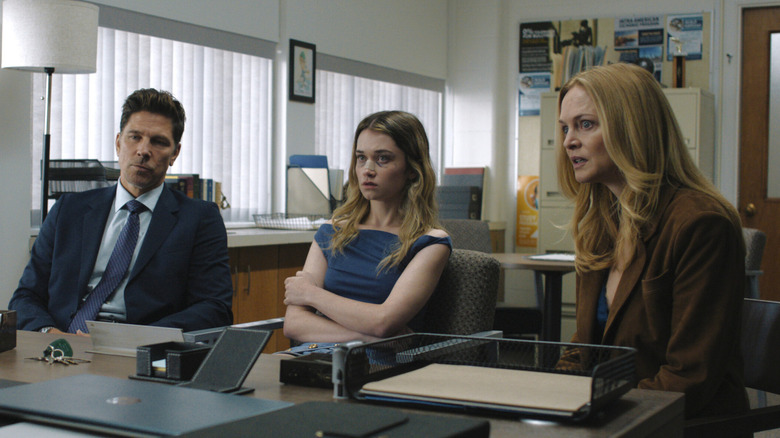
In the "Carrie" series, similarly to the book, Chris is responsible for both perpetrating the bullying at Ewen High School and orchestrating the prank on Carrie during prom night. Yet, Mike Flanagan expands on Chris' character by providing her with a complicated backstory. As her parents' marriage implodes and her father deals with financial insecurity, Chris is distraught that she won't be able to attend her university of choice and that her mother is starting a family of her own. To top things off, her best friend Sue (Siena Agudong, who might look familiar) feels guilty about the way she reacted to Carrie's first period in the locker room and attempts to be Carrie's friend, distancing herself from Chris.
When Chris starts the Carrie Red account on Instagram, she is motivated to ruin Carrie's life because hers is also falling apart. Her actions have consequences, with not only Carrie getting teased in school but several other students and staff becoming targets of online hate. A teacher named Seth Peist (Rahul Kohli) is even outed for having an affair with a student and consequently takes his own life.
In Episode 6, Chris is at risk of expulsion, and her parents organize a meeting with Margaret and Carrie so that she can apologize for her behavior. Yet, Chris doesn't own up to her mistakes. She only apologizes when Carrie is about to kill her after the prom.
If you or someone you know is struggling or in crisis, help is available. Call or text 988 or chat 988lifeline.org.
Carrie doesn't kill her mom
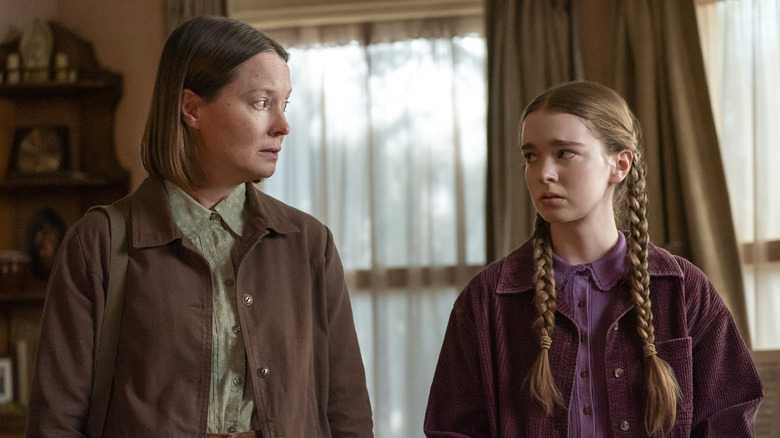
By the series finale, Carrie unlocks her full telekinetic potential when she enacts revenge on everyone who's wronged her at the prom. The destruction even reaches her own home when she almost kills herself and her mother by destroying their family home. Yet, to readers who recall the ending of Stephen King's novel, it was expected for both of them to die by the end. That wasn't the case in the Mike Flanagan series.
Margaret survives the house collapse and is later seen answering a woman's questions about her daughter. The woman's name is Adelaide (Kate Siegel), and she's responsible for narrating several moments in the series that inform viewers about the origins of telekinesis. However, we only uncover her significant role in the series toward the end. Much like Carrie, Adelaide also has telekinetic abilities and is determined to uncover Carrie's whereabouts.
While questioning Margaret, Adelaide discovers that Carrie's mother also had powers of her own. Carrie inherited the TK gene from her mother, even though she was unaware of it. Adelaide kills Margaret similarly to the way Carrie kills her mother in the book, by slowing her heart to a full stop.
Carrie survives at the end of Season 1
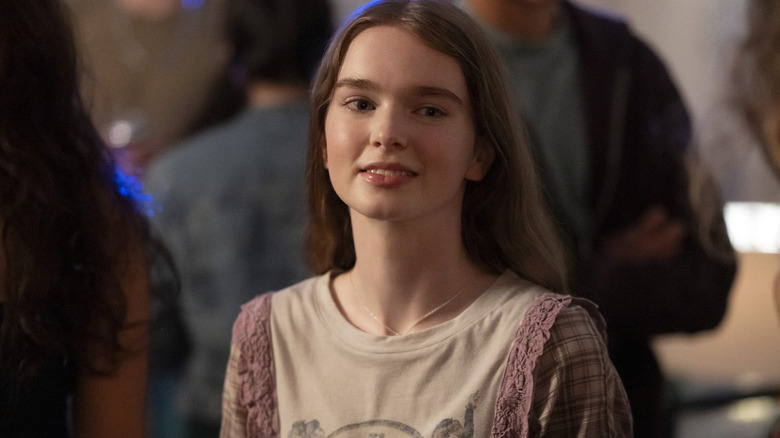
Carrie dies at the end of the book, but her fate is much less dire at the end of the Prime Video series. Season 1 ends with Carrie being rescued by Emaline, and the two of them driving out of Chamberlain. In the finale, it is also revealed that there is a secret organization tracking down people with abilities like Carrie and Emaline.
The open-ended resolution to Season 1 gives enough room for the series to return for Season 2. After all, with Carrie alive and a secret organization hunting her down, there is a lot of room to expand on Stephen King's source material (and potentially crossover with other characters from King's books).
In an interview with Collider, Mike Flanagan shared that his "dream scenario" is for "Carrie" to run for three seasons. This would be a departure from the showrunner's previous work, which tends to be in the limited series format. Only time will tell if Carrie's journey will carry on beyond the finale, but learning that Flanagan has plans to continue her story is an intriguing prospect, given that previous adaptations of the novel haven't done so before.