

Why Star Trek Replaced Jeffrey Hunter With William Shatner, According To Leonard Nimoy
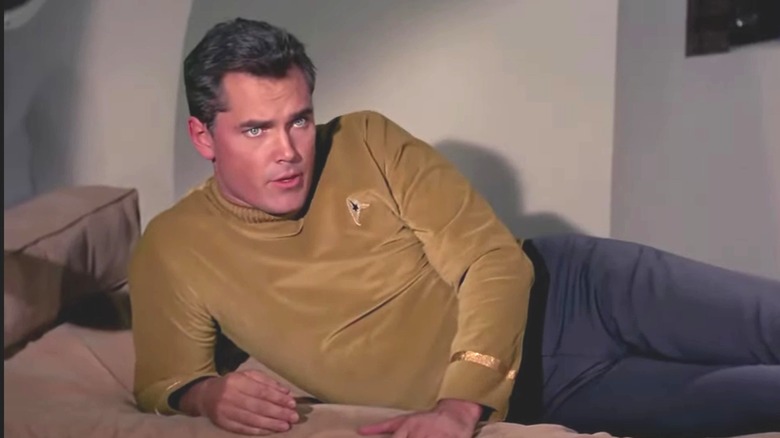
It's hard to imagine now, but back in 1965, TV execs weren't convinced that "Star Trek" would make a marketable series. Fortunately, they gave series creator Gene Roddenberry a second chance. However, when the pilot was completely reshot, the characters and cast were altered, with the exception of Leonard Nimoy as Spock. According to Nimoy, the shift from Jeffrey Hunter (Captain Christopher Pike) to William Shatner (Captain James T. Kirk) was due to contractual differences. "He was concerned about his movie career," Nimoy explained to The Television Academy in 2000. "He asked the studio to guarantee him a feature movie role or roles as part of his deal for acting in this series." Since the studio didn't have any prospective film roles for Hunter, everyone went their separate ways.
Back in 1972, Oscar Katz, executive vice president in charge of production at Desilu Productions, explained that the first pilot's failure created an opening for Hunter to renegotiate his contract. Katz claimed Hunter tried to play hardball to get a better deal. "Word came back that he didn't want to do it because he didn't like the show," Katz recalled (via Fact Trek). "I thought this was a negotiating stance." Regardless of Hunter's actual stance about the project, this bargaining technique failed. According to the 1994 Roddenberry biography "Star Trek Creator," NBC execs weren't jazzed about Hunter from the start, which could have doomed later negotiations.
Hunter's wife may have played a role
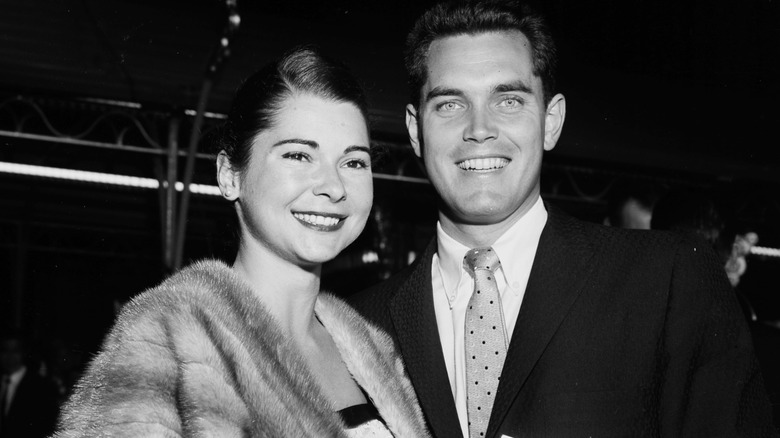
Five years before his interview with The Television Academy, Leonard Nimoy told a slightly different story that implicated Jeffrey Hunter's second wife, Joan "Dusty" Bartlett, in his departure from "Star Trek." "Hunter was let go when his wife began to represent him and made what Gene considered excessive demands," Nimoy explained in "I Am Spock."
William Shatner made a similar claim in "Star Trek Memories," which he co-wrote with Chris Kreski. "Gene later told me that he'd much rather be dealing with Jeff and his agent, or even Jeff and a gorilla, than Jeff and his wife," Shatner declared. "There were so many tantrums, restrictions and ultimatums." However, whatever his personal feelings were, Gene Roddenberry had an important motivation to resist burning bridges. In an April 1965 letter reproduced in "Star Trek Creator," Roddenberry kept his cool about Hunter's departure, and asked him to consider shooting additional footage so the pilot could be repackaged as a film.
Of course, what actually happened was that the footage became a flashback for the two-part episode "The Menagerie," with Sean Kenney as the older version of Captain Pike. Hunter ended up getting an extra $5,000 as part of the deal, which was half his salary for the initial pilot. Sadly, Hunter died in June 1969 following a cerebral hemorrhage, which might have been connected to a recent on-set accident on another project, so we'll never get to hear his version of what happened with "Star Trek."
Shatner was surprisingly the third choice for the captain
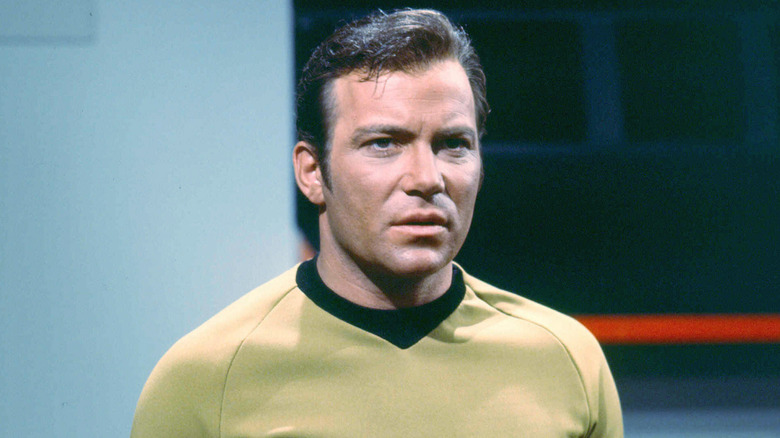
Ironically, Jeffrey Hunter seemed to have had more job security than the other cast members of the first "Star Trek" pilot. As Gene Roddenberry later recalled, NBC had particular beef with the Spock character. However, Roddenberry was adamant about keeping him. "I would not do a second pilot without Spock," he explained in "The Making of Star Trek," adding that the character was necessary to "constantly remind you that you are out in space and in a world of the future."
Although Roddenberry also had a strong attachment to the Number One character, played by his future wife, Majel Barrett, he decided to pick his battles and create another role for her. Besides her work as nurse Christine Chapel and the ship's computer on the original series, Barrett had the distinction of having roles in six Star Trek shows and several movies.
Although William Shatner was long-listed during early casting for the first "Star Trek" pilot, he wasn't the first choice after Hunter left. As Shatner detailed in "Star Trek Memories," Roddenberry asked Jack Lord if he wanted the job, but things fell through when contract disputes occurred. Luckily, things ended happily, and Lord became the star of "Hawaii Five-O" just a couple years later. Once they got around to asking Shatner, contracts were actually working in everyone's favor. His short-lived legal drama "For the People" had just ended, freeing him up to become Captain Kirk.