

5 Character Deaths That Shocked '80s Television Audiences
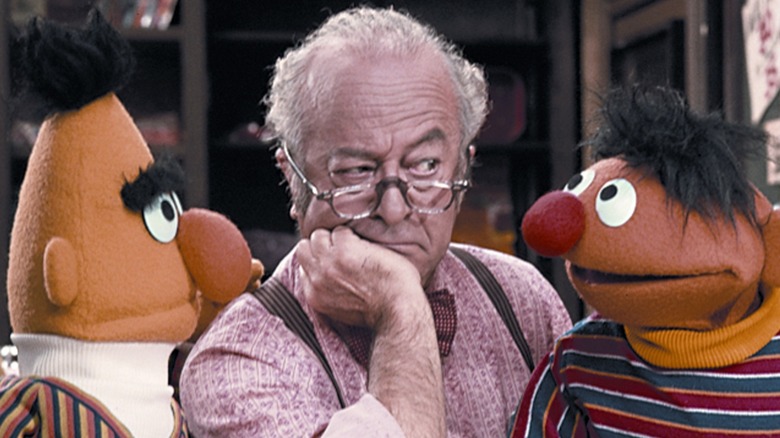
Some of the most shocking moments on 1980s television came when beloved characters died. They're fictional, for heaven's sake! Yet a well-written, well-defined character can get a hold on viewers' hearts just as easily as a real person, making it surprisingly painful when they're written off a show.
Sometimes a character's death is a necessity, as when the actor has died and their presence is so strong that recasting the role seems impossible. On other occasions, the actor may decide that they've done all they can do on the series and depart for greener pastures. Often, however, the decision comes from the writers and producers, whether to move a plotline forward, bring it to a permanent conclusion, or deliver an important message that requires a tremendous amount of emotional heft to hit home.
For these five shocking moments from '80s television, the impact varies with how they're delivered. Whether it's an abrupt emotional gut punch, a growing awareness of the inevitable, or a gradual voyage toward acceptance, each one left its mark on viewers.
Adric, Doctor Who
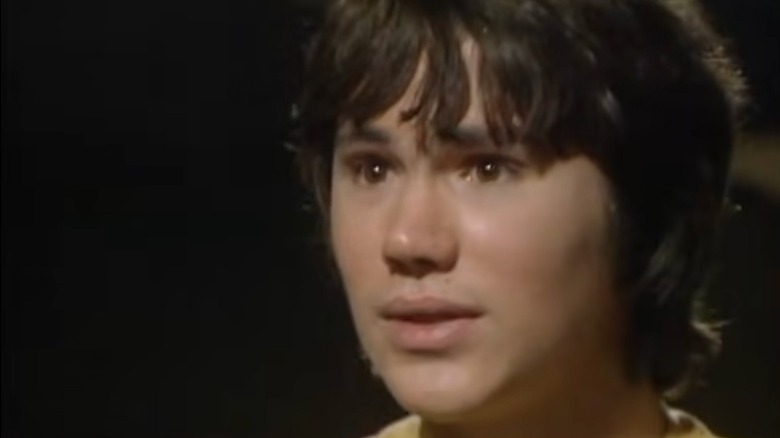
In science fiction, there are a myriad of plot devices that could ostensibly reverse a character's death. But when Adric (Matthew Waterhouse), one of the Doctor's many companions on "Doctor Who," died in 1982, it was the Doctor's refusal to undo his fate that made the loss such a gut punch.
During the "Earthshock" saga, the Doctor (Peter Davison) and his companions battle the Cybermen, who have set a freighter on a collision course with Earth. Although the Doctor escapes with Nyssa (Sarah Sutton) and Tegan (Janet Fielding), the TARDIS is damaged, leaving them unable to save Adric. For his part, Adric manages to send the freighter 65 million years into the past, where its crash causes the extinction of the dinosaurs. In the following adventure, "Time-Flight," Tegan begs the Doctor to travel back in time and save him. Although he clearly wants to, the Doctor refuses, explaining that he must abide by the Laws of Time.
Waterhouse knew that Adric would be written out of "Doctor Who," but didn't realize how soon until he stumbled upon Davison's script in a rehearsal room shortly before filming his final episode. "My first thought was, 'Oh, God, that's very final,'" he told SFX Magazine in 2023 (via Radio Times). "I didn't like it at all. Later, I realized how interesting it was, and how good it was."
Sandy, Growing Pains
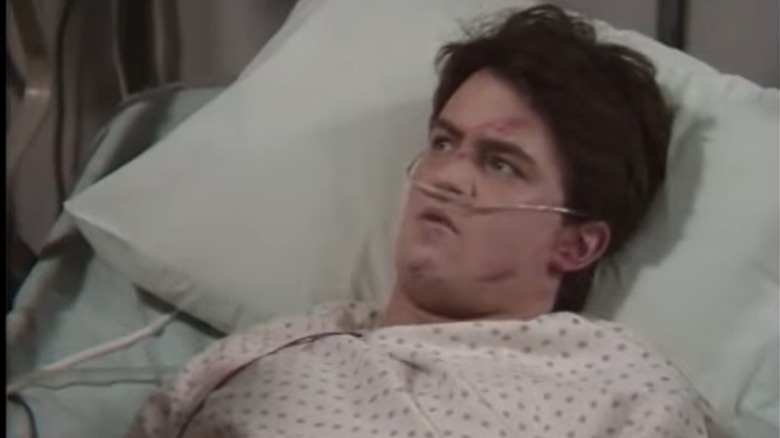
Before Matthew Perry became a household name as Chandler Bing on "Friends," he regularly popped up in guest appearances on sitcoms. But arguably the one that made the greatest impact was his recurring role on "Growing Pains" as Sandy, the love interest of Carol Seaver (Tracey Gold). Sandy's sudden death became the focus of a Season 4 episode.
Sandy was introduced in "In Carol We Trust" and returned in "Anniversary from Hell," establishing his relationship with Carol before the Season 4 episode "Second Chance." After a date with Carol, Sandy is involved in a car accident caused by his drinking and driving. Carol visits him in the hospital, where he seems fine and acknowledges that he's lucky to have gotten a second chance. When she returns home, however, she learns that Sandy has died from internal bleeding. Carol collapses into her mother's arms, sobbing, "This isn't fair! What happened to his second chance?"
The show's executive producers had decided at the beginning of the season that they wanted to do an episode about teens and drinking. EP Steve Marshall told the Los Angeles Times that they didn't want a "sugar-coated ending," so they decided to sacrifice a character for the sake of the story. They developed Sandy across several episodes so his death would have a greater impact. "We didn't want this to be strictly a utilitarian character," Marshall said. "We wanted it to be somebody that the audience knew a little bit, maybe had grown to care about."
If you or anyone you know needs help with addiction issues, help is available. Visit the Substance Abuse and Mental Health Services Administration website or contact SAMHSA's National Helpline at 1-800-662-HELP (4357).
Edith Bunker, Archie Bunker's Place
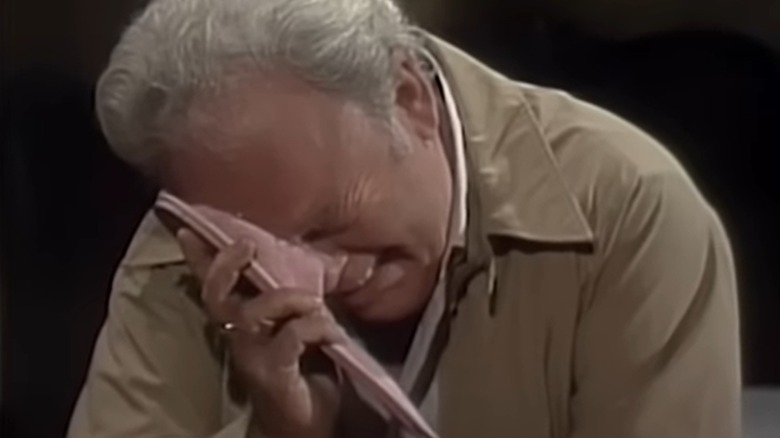
After nine seasons of "All in the Family," actor Carroll O'Connor wasn't yet ready to say goodbye to playing Archie Bunker. As he recalled to the Television Academy, creator Norman Lear "wanted the show to die an honorable death," but O'Connor convinced him to continue the series as "Archie Bunker's Place." Jean Stapleton, meanwhile, was ready to leave her role as Edith. "We'd done everything we could [with Edith], and it was time to go on or be buried ... in this kind of part," she explained in a separate Television Academy interview.
Stapleton appeared in a handful of episodes during the spin-off's first season, but confirmed to "All in the Family" executive producer Bud Yorkin that she wouldn't return. Norman Lear then called to discuss killing off Edith. The two-part Season 2 premiere, "Archie Alone," reveals that she died of a stroke.
In the episode, Archie refuses to allow himself to grieve. But when he returns to the bedroom he shared with Edith for so many years, he stumbles upon one of her old slippers and finds himself overwhelmed. What starts as a poignant, even-keeled monologue grows increasingly emotional, with Archie sobbing, "You had no right to leave me that way, Edith, without giving me just one more chance to say that I loved you."
"Carroll did a great job," said Stapleton, who watched the episode from a hotel room. "It was very moving. He was marvelous."
Mr. Hooper, Sesame Street
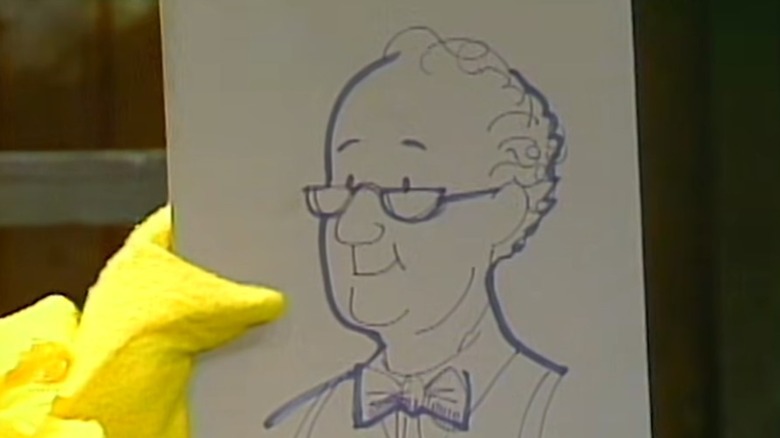
When actor Will Lee died in 1982, "Sesame Street" faced a difficult decision about his character, store owner Mr. Hooper. Rather than recast the role, have Mr. Hooper move away, or simply stop mentioning him, the show chose to address death head-on. "If we left it unsaid, kids would notice," executive producer Dulcy Singer told The New York Times. "Our instincts told us to be honest and straightforward."
The show's research department consulted child psychology experts to understand how children think about death and what worries them, then tasked the writers with developing a script. "We decided to say that while Mr. Hooper was not here anymore, we will always have that part of him that lives within the heart, that we have our love, and that it will always stay," head writer Norman Stiles explained (via PBS Hawai'i).
The resulting episode, "Farewell, Mr. Hooper," was, and remains, a tough watch for kids and adults alike. Unable to comprehend that Mr. Hooper has died, Big Bird asks, "Who's going to take care of the store? And who's going to make my birdseed milkshakes and tell me stories?" Even after he begins to understand that everyone will still have their memories of Mr. Hooper, the crack in Big Bird's voice as he says, "It makes me sad" is enough to break anyone's heart.
Captain Blackadder and his comrades, Blackadder
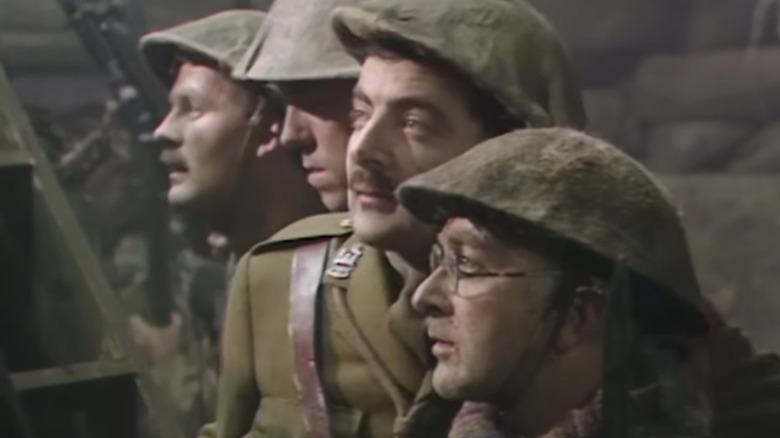
The BBC comedy "Blackadder" stars Rowan Atkinson as the titular character, with each of its four seasons focusing on a different historical incarnation of Blackadder. He's always accompanied by his long-suffering companion, Baldrick (Tony Robinson), and an incompetent upper-class foil, played by Hugh Laurie in the third and fourth seasons.
The fourth and final season, "Blackadder Goes Forth," is set during World War I. "The very first decision we made when we decided to do the sitcom was about the very last moment of the sitcom," said co-writer Richard Curtis in a behind-the-scenes clip. "We said, 'If we do it, we will have to kill everybody at the end. We can't have any lucky escapes' ... And in a way, that set us free to be as disrespectful as we wanted to be in the beginning."
The final episode gradually shifts from comedy to tragedy as Blackadder and his comrades prepare to charge into battle and almost certain death. The original footage of the four men rushing into battle looked somewhat ridiculous without music, but editor Chris Wadsworth slowed it down. "So then the assistant director said, 'Well, what if we slowed down the sound as well?'" director Richard Boden recalled in a making-of feature. "And it starts to get really quite spooky." The smoky battlefield then gives way to a field of poppies as birds begin singing, and...it's all over for "Blackadder."