

10 TV Shows To Watch If You Like Alien: Earth
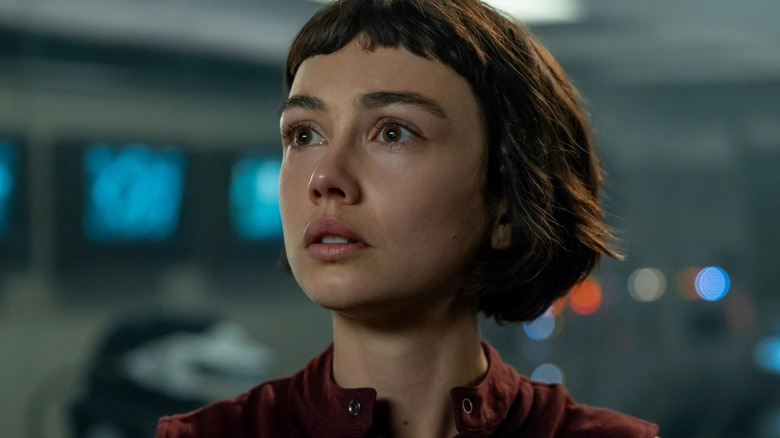
"Alien: Earth" has a tricky needle to thread, because the movie it's based on depended upon the fear of the unknown. "Alien" was a hit in 1979 in part because of its mysterious, H.R. Giger-designed monster with a gall-wasp life cycle; the more we've learned about it, over multiple sequels, prequels, crossover films, and one "interquel," the less terrifying it has become. The xenomorph creature is akin to a large lion at this point — nobody in the story wants to have to face one, but they know exactly what it looks like and what it'll do.
"Alien: Earth," then, depends upon multiple threats. In addition to the familiar xenomorph creature, there are new aliens that all want to kill us, and questions about humanity in the age of AI, as corporate science tries to create immortal bodies for human minds. Everyone has more of an agenda than they'll state out loud, and although the viewer knows this has to end in a massive cover-up so the characters in the prior films never hear of it, we've no idea how this story can get there.
If these, combined with an omnipresent atmosphere of doom, are all ingredients that make for a show to your liking, we have some further recommendations. Read on for 10 other shows to watch if you like "Alien: Earth."
Dune: Prophecy
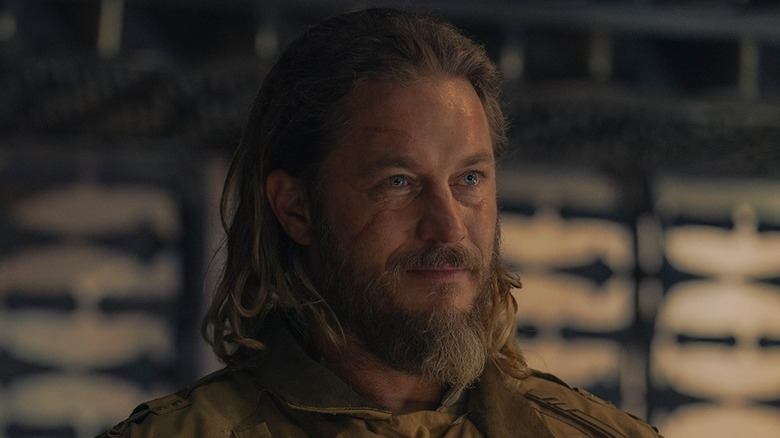
It's a fellow doom-laden, dark sci-fi franchise prequel, but the only aliens are giant worms, and the only robots are supposed to be banned forever. "Dune: Prophecy" also has way more sex and violence than the movies it narratively precedes, which keep things PG-13.
AI is decidedly doomed in this series, but not before causing some trouble, along with a pyrokinetic named Desmond who attempts to sow seeds of discord between the Emperor and the fledgling Sisterhood that will one day become the fundamentalist Bene Gesserit who will breed a Messiah named Paul.
There's no better property, perhaps, to do "Game of Thrones" in space with, and common actors like Mark Addy make such a comparison more explicit. Fortunately, in this case the books are all already finished. "Alien: Earth" likewise has an endpoint prior to what we've seen in movies — the goal with both is to surprise along the way, adding new wrinkles, and wickedly serving up mayhem along its visually and spiritually dark path.
The X-Files

It's impossible to talk about creepy TV shows where the government does experiments on familiar-looking aliens, while other surprise monsters show up, without bringing up "The X-Files." Whether a given episode involved a new cryptid-of-the-week or a deep, complex web of conspiracies involving UFO abductions, black ooze, and aliens, the show's methodical pace was creepy as hell. Low-key, underplayed line deliveries by David Duchovny as Agent Mulder and Gillian Anderson as Agent Scully merely added to the atmosphere — why are these two so unnervingly calm, when one actively believes in outer space invaders and the other thinks he's nuts?
The trouble with a conspiracy plot is that eventually the audience will want everything to be revealed, and "The X-Files" instead tended to just get more complicated. Aliens and other nonhumans are still scary, but a threat stops being threatening if it's too confusing. "Alien: Earth" looks like it won't make that error, but it has at least learned a lot, tone-wise, from the menacing creatures and untrustworthy suits that Mulder and Scully took on back in the day.
Legion
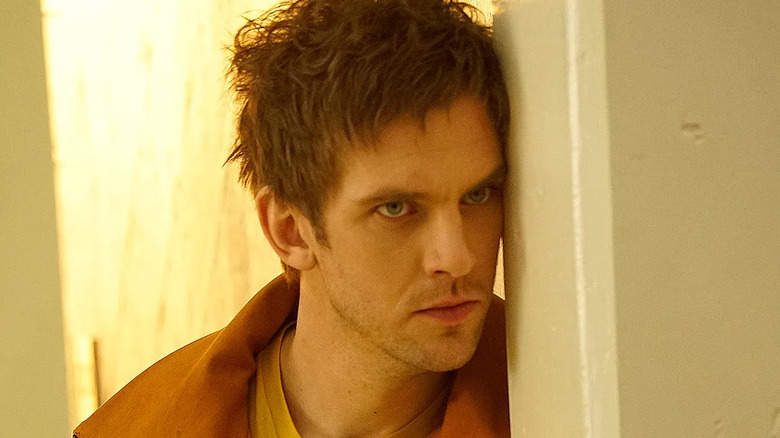
Before playing in the "Alien" sandbox for TV, showrunner Noah Hawley got weird with another major Fox property: X-Men, prior to the Disney merger and consolidation of Marvel properties, in an attempt to compete with Marvel Studios shows like "Agents of S.H.I.E.L.D."
With no Disney influences at that time, "Legion" was free to be strange and surreal, and indulged it, with the story of a young man named David (Dan Stevens) in a psychiatric hospital, having hallucinations that may be more than just mental illness. As it turns out, he's the son of Professor X, being manipulate by a villain named the Shadow King, who initially manifests as his female best friend Lenore (Aubrey Plaza, preceding her thematically similar casting as Death in the MCU).
Aside from the big bad, there are a lot of similarities here, with the scary institution setting, youngsters with unknown powers, and evil/corrupt forces that seek to weaponize them. Unbound by the need for tidy movie arcs, they also allow for more creative storytelling within the confines of what we thought was a familiar universe.
Doctor Who (Classic)
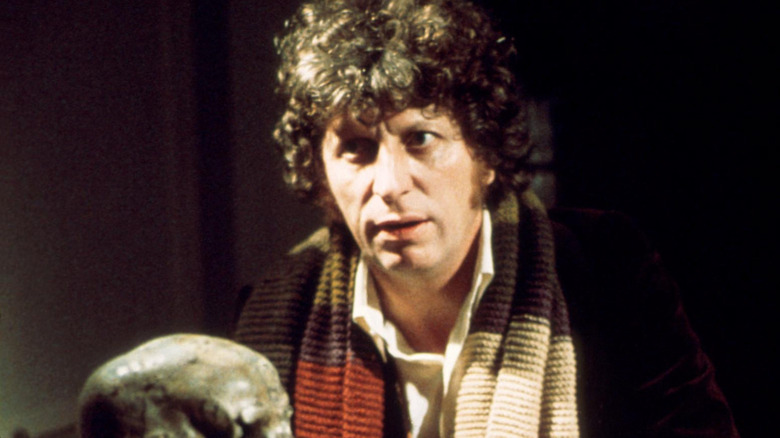
Recent, post-2005 "Doctor Who" has relied more on modern special effects than its earlier phase, from 1963-1989, which had to depend on atmosphere and story. Though it aimed at younger viewers than something like "Alien: Earth," it developed a reputation for being a show kids had to watch from behind the sofa to protect themselves from the outer-space frights a Time Lord might encounter.
Aliens frequently threatened Earth during the run of Third Doctor Jon Pertwee, while his successor Tom Baker often traveled into the galaxy to meet them on strange planets. Either way, with monsters sometimes made of little more than rubber masks and bubble wrap, the series made great use of the dark, and speculation about what might lurk therein. It didn't matter if you couldn't get a great look at the frightening thing — The Doctor effectively served as the threat's hype-man, articulately selling the danger, before inevitably outwitting it in the end, following a cliffhanger or two.
It: Welcome to Derry
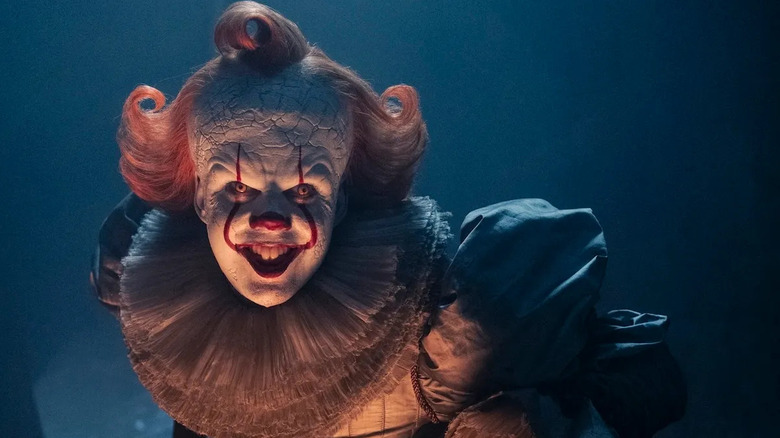
Stephen King fans can argue the specifics of whether or not the entity in the form of Pennywise the clown (an iconic Bill Skarsgard) counts as an alien if it is in fact an extra-dimensional demon or deity. What watchers of "Welcome to Derry" know is that it fell to Earth from the sky, like the Maginot spacecraft and its space monster cargo in "Alien: Earth." From there, it's natural that the military wants to control and weaponize the being that's not from our planet, and because both shows are prequels, we are way ahead of them on just how stupid an idea that is. It's certain to get many, many people killed, but by backfiring rather than playing out as intended by the top brass. Then again, seeing people get killed in gruesome ways is a big reason to watch both shows — you don't utilize an iconic horror movie creation and not let it run rampant.
Fortunately, or not, the children may be our future, seeing the imminent trouble many adults can't. We inherently trust the forerunners of the Loser's Club to do what's right, but the Lost Boys — kid personalities transplanted into older, synthetic bodies, are more morally dubious. Spreading mistrust is the real weapon Pennywise and the xenomorph both have in their sides.
Love, Death & Robots
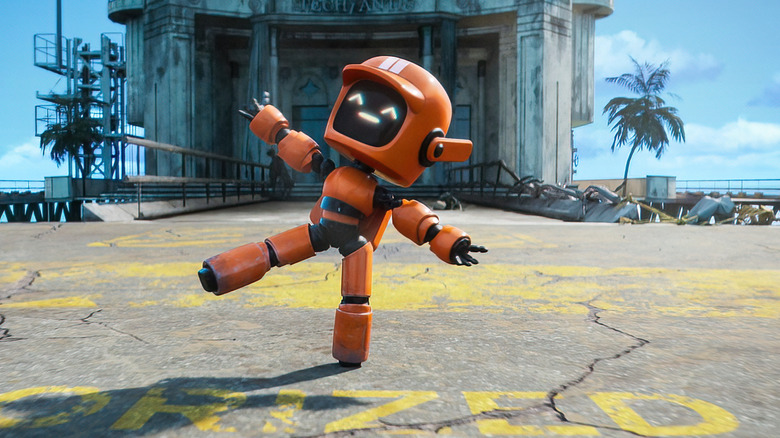
Originally intended to be a new "Heavy Metal" movie, "Love, Death & Robots" found a better home on Netflix, as a recurring anthology series. With animation varying from simple to groundbreaking, and the consistent black comedy of "Deadpool" director Tim Miller and darkness of David Fincher, it's a series of shorts about what the future of robotics and AI might look like.
Whether that involves sentient household appliances, or a post-apocalypse ruled by cats, these atmospheric tales address similar themes to "Alien: Earth," like what it means to be human, where intelligence begins, and the primal forces that no amount of human innovation or technology can control, be it savage bloodlust or the incessant "need" to make more profit.
Being an anthology series, however, and one of the 20 best of all time, "Love, Death & Robots" has a big advantage over many streaming shows, in that while you wait over a year for the next chapter, there's no compelling need to remember any extensive plotlines or mythology.
Fallout
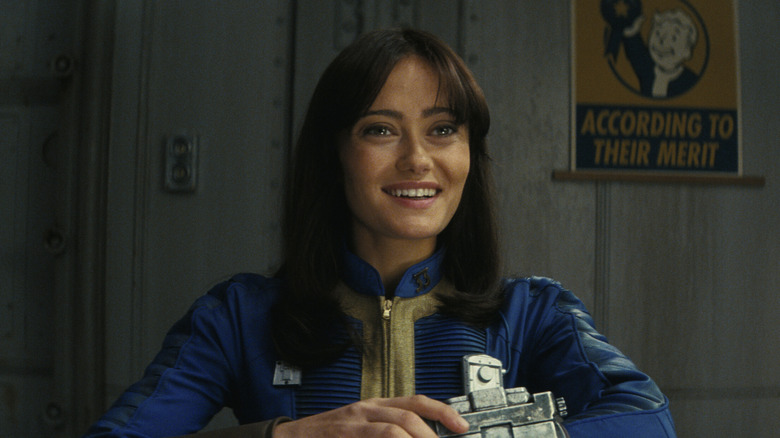
It's hard to beat the Weyland-Yutani company of the "Alien" universe for sheer suicidal stupidity when it comes to their never-ending plans to somehow utilize acid-bleeding xenomorphs for military purposes. Vault-Tec, as seen on "Fallout," however, has them beaten, with the insane plan to start a global nuclear war in order to see how well their underground nuclear-bunker social experiments work. "Alien: Earth" still wants you to be scared of this sort of corporate malfeasance, whereas "Fallout" suggests we're all doomed anyway, so we might as well laugh as we watch the violence and mutations ensue.
Both shows feature childlike female protagonists: Wendy (Sydney Chandler) literally is a kid in a more-grown body who's raised on an isolated island, while Lucy (Ella Purnell) lived a literal sheltered existence underground in a regimented, happy society until a quest to find her father takes her into the crazed wasteland topside. Both heroines make unusual, monstrous allies while navigating what might be called post-end stage capitalism.
Westworld
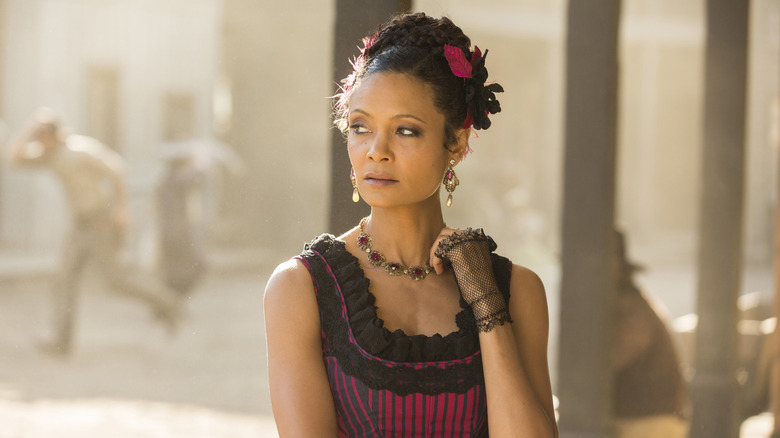
When "Westworld" was originally a movie, it was a basic sci-fi actioner about a robot theme park that can kill guests when the robots become self-aware. In the HBO series, one with some of the best opening credits ever, it's about how the artificial intelligences become self-aware, and resent being enslaved. In some cases, they're replicas of dead people, with their memories. They're certainly spiritual siblings to the hybrids of "Alien: Earth," robots with the consciousnesses of once terminally ill children. Did the souls actually transfer, or is it just mimicry? Both shows do a slow roll-out when it comes to answering that question — and they thoroughly mistrust the big corporations who created them.
Indeed, AI may be a mixed blessing in "Westworld," but the Delos company behind it is unequivocally sinister. The hosts may decide to turn on wealthy guests, but the creators of the hosts have larger-scale plans that don't give a damn about anyone's feelings — human or robot.
Both "Westworld" and "Alien: Earth" offer the scary proposition that big business will always try to capitalize on danger. Yet in the end, the danger always wins, and AI is usually happy to give it an assist in beating humanity.
Raised by Wolves
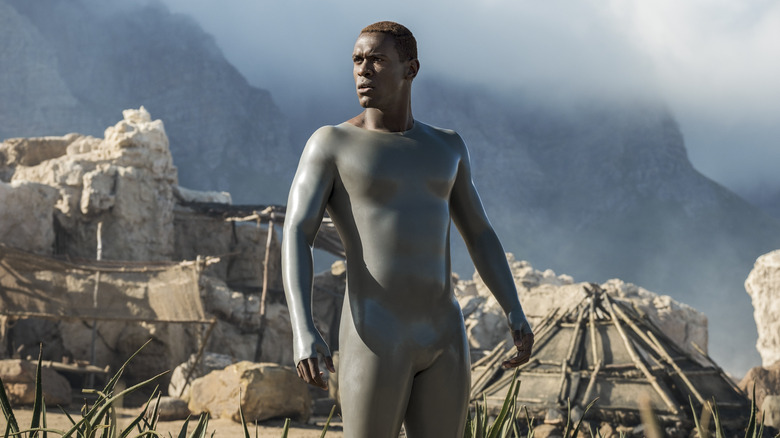
Original "Alien" director Ridley Scott executive produced this series, which feels like a combination of his prequel "Prometheus" and his other iconic sci-fi movie "Blade Runner," which are also evident influences on "Alien: Earth." In a future dominated by a war between atheist and religious factions, two robots attempt to raise human children on an otherwise seemingly uninhabited planet. By default, they raise them without religion, humanistically, while dealing with alien creatures and war refugees.
The story becomes a more obvious Eden metaphor when the mother robot appears to have a virgin birth, but it's a serpent-like parasite; the second season concludes with a crucifixion and possible implied resurrection. It's a common theme throughout many of the shows on this list: science tries to create a perfect community, humans screw it up by being human, science is exposed as a flawed human creation. "Raised by Wolves" implies that you can substitute "religion" in that equation for science and get a similar result.
On the other hand, if the perfect community worked out perfectly, there'd be no story worth watching; it's important to remember that this is science fiction, not science fact.
The Incredible Hulk
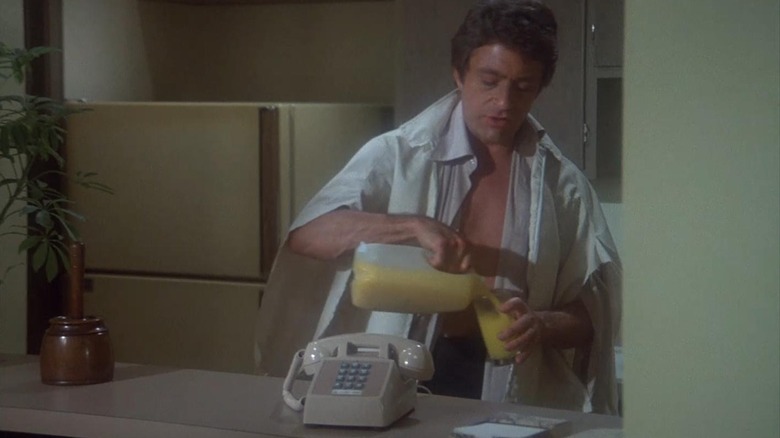
The "Alien" franchise literalizes the notion of a monster inside you. On the original hit Marvel TV show, however, the monster inside was inseparable from the person. Its emergence wouldn't kill the host — but it would kill his chance at any semblance of a normal life.
David Banner (Bill Bixby), his name changed from "Bruce" in the comics, technically put the monster there himself, hoping to unlock the kind of strength that sometime allows mothers to lift prohibitively heavy objects when their babies' lives are on the line. He connects it to Gamma radiation, and horribly inverts the equation. Instead of saving people when he needs the strength, he becomes a muscular, green freak when he gets angry. To make viewers happy, he would always get sufficiently angry at least twice an episode — once to cause trouble and once to thwart it — then have to split town when the Hulk attracted attention.
Like "Alien: Earth" and unlike many of the movies in the related franchise, "The Incredible Hulk" may lure audiences in with promises of a monster, but mostly deals in the real-world consequences to human beings when the inner creatures run amuck. How much responsibility does the creator bear for his creation ... and is the good it might do as a monster hero worth the risk to average bystanders? These are the big questions that keep both shows from being cynical brand extensions.