

Lord Of The Rings: Why The Elves Want The Rings Of Power
Contains spoilers for "The Lord of the Rings: The Rings of Power" Season 3
"The Lord of the Rings: The Rings of Power" has slowly introduced its titular jewelry. Season 2 gave us Seven Rings for the Dwarf-lords and Nine Rings for Mortal Men doomed to die. Expect the One Ring to rule them all to complete the overpowered set at some point in Season 3 as war heats up between the Elves and Sauron in Middle-earth. But what about the Three Rings for the Elven-kings? Why would the Elves want power? After all, they don't need rings to live longer. They're already immortal. The other rings are associated with great wealth or conquest, too. But the Elves don't tend to go in for those kinds of things, either. Rather, the Three Rings are forged for a more nuanced purpose: to preserve, heal, and enlighten.
In the book "The Fellowship of the Ring," at the Council of Elrond, the Elf by the same name summarizes the purpose of the Elven rings. This starts when a Dwarf asks if they could use them to fight Sauron, to which Elrond says, "The Three were not made by Sauron, nor did he ever touch them. ... But they were not made as weapons of war or conquest: that is not their power."
Elrond elaborates, "Those who made them did not desire strength or domination or hoarded wealth, but understanding, making, and healing, to preserve all things unstained." He says the Elves do use their rings to achieve a certain degree of this healing, understanding, and preservation — but it comes at a cost. "These things," he concludes, "the Elves of Middle-earth have in some measure gained, though with sorrow."
What have the Elven rings done in The Rings of Power so far?
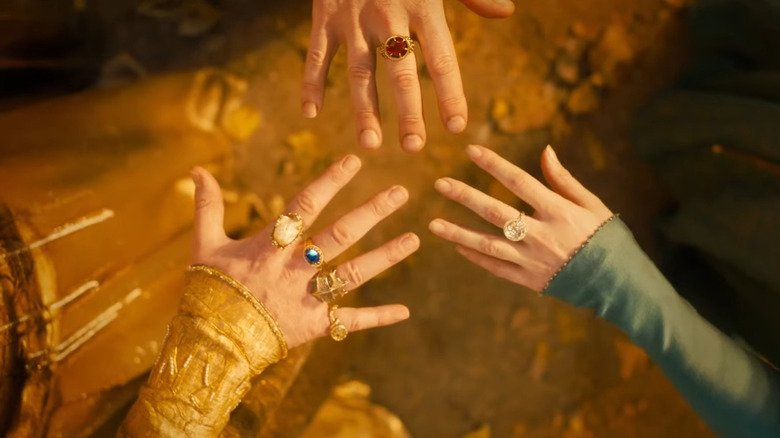
The Three Rings for the Elves arrive at the end of Season 1, and their wearers are busy using them through Season 2 and now into Season 3. In Season 2, we start to see what the Elven Rings of Power can do in this adaptation of Tolkien's story. They are used to reverse the fading of the Elven tree in Lindon, and Galadriel (Morfydd Clark) uses her ring to directly heal a wound on the Elf Camnir (Calam Lynch). The rings also start to give their wearers visions, and when the Orc leader Adar (Sam Hazeldine) comes near Galadriel's ring, his scars are even temporarily reversed.
In the first half of Season 3, these ring-powered phenomena continue. People are healed, and visions abound. While none of this is directly pulled from Tolkien's canon, the inspiration is clear. These are visual manifestations of Elrond's description of rings that heal, preserve, and bring understanding.
This has been a theme of the show since the beginning, too. While we didn't get the Elven rings until the "Rings of Power" Season 1 finale, throughout that first season, the Elves were intensely preoccupied with avoiding fading away into nothingness. Fading is a consistent concept from Tolkien's writings, but this blatant worry about annihilation is never so directly stated in the books. When that happens in the show, it makes sense that we would see the Elven rings more directly used to bring about the healing, understanding, and preservation their wearers are hoping for.
Don't expect to see the Elven rings doing things much longer
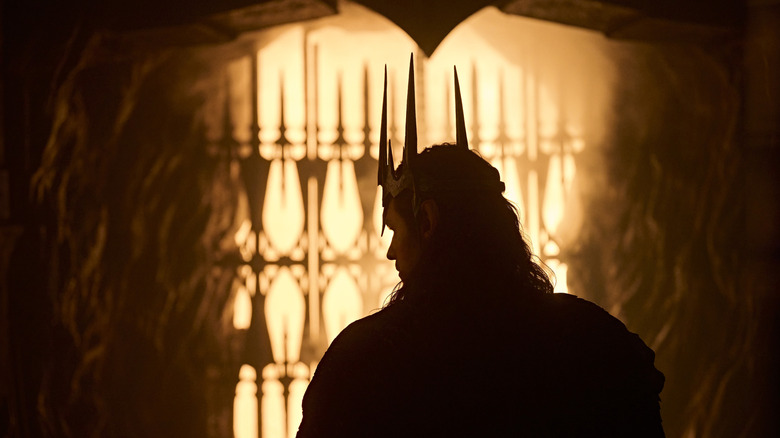
Whether the Elven rings bring healing, preservation, and knowledge subtly (as in the books) or overtly (as with the "Rings of Power" show), there comes a point where they're forced to do less — not because they lose their power but because the Elves can't even wear them. This happens when Sauron completes the One Ring, an event that is confirmed for Season 3 by the showrunners — who have had to change a lot of the timeline (and therefore dealt with plenty of backlash from "Lord of the Rings" fans).
"The Silmarillion" describes what happens when Sauron finally does craft the One Ring. The book says, "As soon as Sauron set the One Ring upon his finger [the Elven ring-bearers] were aware of him; and they knew him, and perceived that he would be master of them, and of all that they wrought." It adds, "Then in anger and fear they took off their rings."
So, unless the showrunners opt for a different order of events, when Sauron does get his ring, there's a good chance the Elven ring-bearers will take theirs off and hide them. At least they won't become enslaved to Sauron's will, as is the case with the Nine Mortal Men who get Rings of Power. But the One Ring will pause their ability to use the Three Rings — at least until someone can be found to cut the One Ring from Sauron's hand. (Isildur? Your time is coming.)
The first four episodes of "The Lord of the Rings: The Rings of Power" are available now on Prime Video.