

The Rings Of Power Season 3 Killed Off A Major Tolkien Character Off-Screen
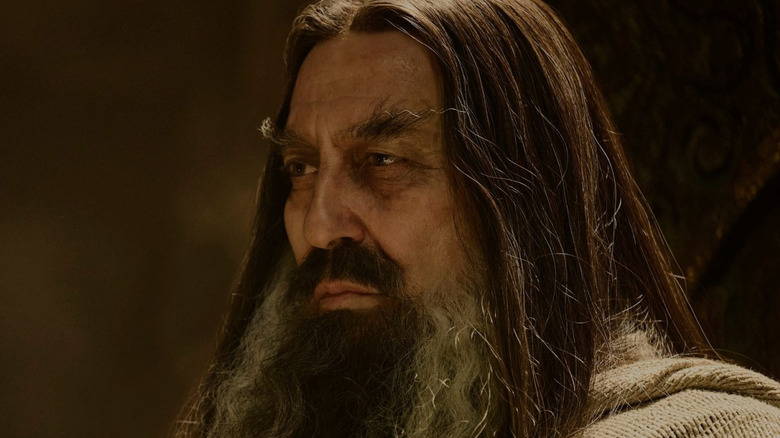
Contains spoilers for "The Lord of the Rings: The Rings of Power" Season 3, Episode 3 – "The Secret Fire"
In "The Rings of Power" Season 3, Episode 3, the Secret Fire reveals to Gandalf (Daniel Weyman) that the long-anticipated second Blue Wizard in Rhûn died before the "Rings of Power" story started — seconds after the character is first revealed in a flashback. Season 3 has delivered some shocking deaths that no one saw coming, and this one was another surprise.
In the rapid-fire scene, we learn that the Dark Wizard (Ciarán Hinds) is Pallando, one of Tolkien's two Blue Wizards. We also find out that Pallando betrayed and murdered his erstwhile companion (presumably Alatar, the other Blue Wizard). The vile event is even credited as the very act that turned Rhûn into a desert.
It's important to remember that this part of Gandalf's story is being invented for the show. Tolkien never wrote about Gandalf being in Middle-earth during the Second Age — or traveling in the eastern regions of Rhûn, for that matter. But the connection between the Wizard and the Secret Fire is vintage Tolkienian lore and goes right back to Gandalf's confrontation with the Balrog in the author's original writings.
In the Amazon show, the hot holy presence first appears to Gandalf out in the deserts of Rhûn. And if you're wondering what this strange burning presence is in the first place, the Secret Fire is a vague term Tolkien uses to represent the creative power of Ilúvatar, the monotheistic, God-like Creator of his world. As the author writes early in "The Silmarillion," "The Secret Fire was sent to burn at the heart of the World; and it was called Eä."
The reveal of the Blue Wizards was a hotly anticipated part of Season 3
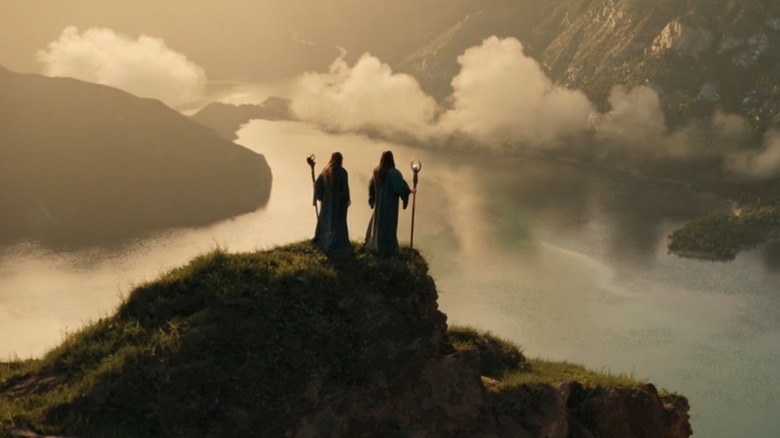
The Dark Wizard entered the "Rings of Power" story in Season 2 and remained an important plot point to remember heading into Season 3. Fans particularly wanted to know if he was one of J.R.R. Tolkien's enigmatic Blue Wizards from Rhûn. Showrunners JD Payne and Patrick McKay all but confirmed this during Season 2. All that was left for Season 3 was to confirm the character and show us where the other Blue Wizard, Alatar, was hiding. The thought that the Dark Wizard's partner was already long gone, killed by his own Wizarding friend, wasn't on most people's bingo cards. That's partly because Tolkien doesn't say anything about one of the Wizards killing the other, nor is there any indication that their specific behavior is the reason Rhûn is a desert wasteland.
What we do get in the source material are hints that Tolkien considered them failures, much like Saruman. In his essay "The Istari," published in "Unfinished Tales of Númenor and Middle-earth," he states that the Blue Wizards "never returned, and whether they remained in the East, pursuing there the purposes for which they were sent; or perished; or as some hold were ensnared by Sauron and became his servants, is not now known." Later, in a letter to a fan written in 1958, Tolkien said that he imagined the Blue Wizards going on to become the "founders or beginners of secret cults and 'magic' traditions that outlasted the fall of Sauron."
Tolkien thought about making the Blue Wizards good guys
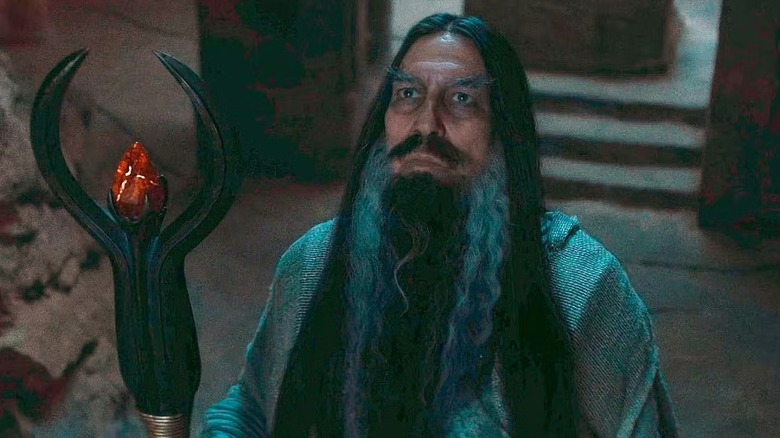
While Tolkien's initial read on his mysterious Blue Wizards was that they were Saruman-level failures, later in life he changed his tune — and the Blue Wizards' names, too. In the posthumously published book "The Peoples of Middle-earth," Tolkien said, "But the other two Istari were sent for a different purpose. Morinehtar and Rómestámo. Darkness-slayer and East-helper." In this version, the Blues are critical in resisting Sauron in the East. He even goes so far as to say, "They must have had very great influence on the history of the Second Age and Third Age in weakening and disarraying the forces of East."
The frustrating part is that Tolkien never decided which version was the official one, which could explain why, in the Prime Video show, we're kind of getting both. As for them breaking bad, Pallando is clearly evil, and he killed his partner. Plus, he has the original Blue Wizard name in the version where they're baddies. On the flip side, the Secret Fire specifically points out that Gandalf's goal isn't to stop the Dark Wizard: He is supposed to save him. A slide from good into evil followed by a redemptive return would play into both halves of the very unfinished ideas Tolkien had for these fascinating, largely underdeveloped characters.