

10 Hit 1970s Shows That No One Remembers Today
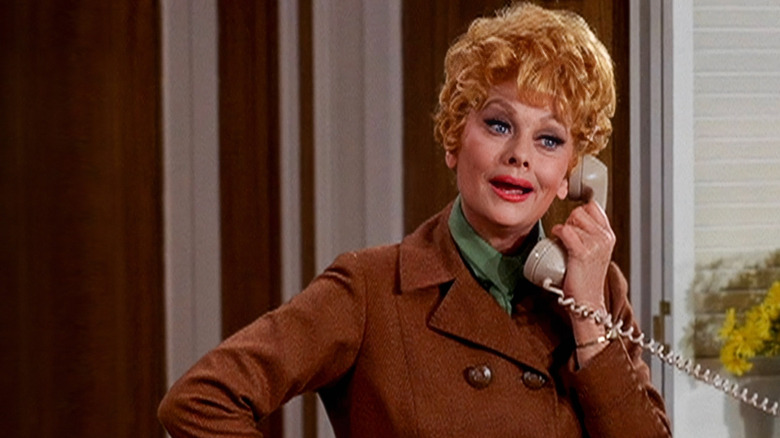
The 1970s saw the television medium in the United States push the boundaries of network content restrictions and other pre-existing storytelling limitations. That meant shows like "Saturday Night Live" and "All in the Family" began incorporating raunchier humor, while dramas also became steadily more mature. The '70s were a pivotal time for television that created plenty of enduring TV classics.
But this time, we're not talking about the greatest '70s shows that have stood the test of time.
For every '70s show that continues to hold cultural relevance all these years later, there are a bunch that have since been forgotten. This includes series that were popular for their time, topping Nielsen ratings and receiving multiple seasons before calling it quits. That, of course, is no knock on these shows' quality but, for whatever reason, they've since fallen into obscurity. With that in mind, here are 10 hit shows from the '70s that aren't much remembered today.
Adam-12
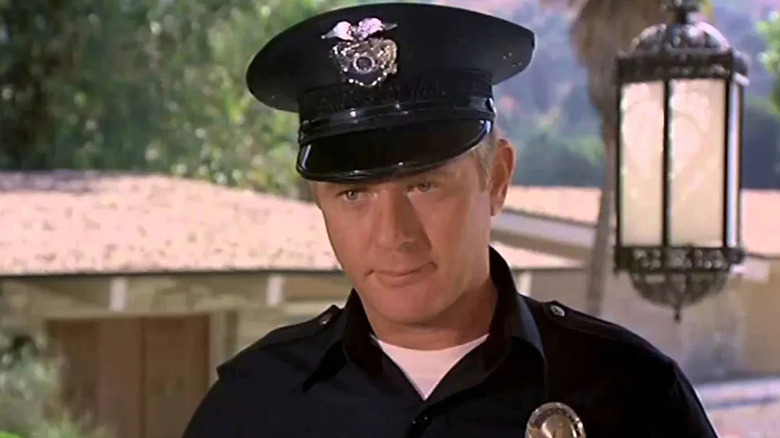
After creating the definitive '60s cop show "Dragnet," Jack Webb co-created another successful LAPD-centric series with "Adam-12." In contrast to "Dragnet" focusing on plain-clothes police detectives, "Adam-12" centered on uniformed police officers at work in the City of Angels. The series revolved around veteran officer Pete Malloy (Martin Milner) showing the ropes to his rookie partner Jim Reed (Kent McCord). Though Malloy initially considered resigning from the force after the loss of his previous partner, he decided to stay on as he built a friendship and productive partnership with Reed.
Premiering in 1968, "Adam-12" ran for seven seasons on NBC and, like Webb's "Dragnet," was produced in cooperation with the LAPD. Though there were certainly references to Malloy and Reed's personal lives, the show was a straight-forward portrayal of LAPD cops at work, with all other elements secondary. This was not a series concerned with the heavy nuance or moral ambiguity of its characters' work, but a showcase for their importance and professionalism. As straight-laced as the genre gets, "Adam-12" didn't have the same enduring relevance and recognition as "Dragnet," despite its own success.
Here's Lucy
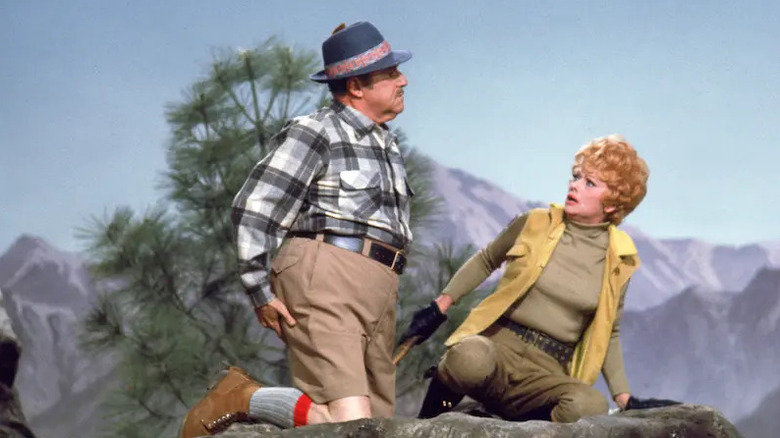
Lucille Ball was an absolute pioneer for the burgeoning television industry, with "I Love Lucy" remaining an iconic sitcom influencing subsequent comedy shows. Her last multi-season hit sitcom was "Here's Lucy," which ran for six seasons from 1968 to 1974 on CBS. Ball starred as Lucy Hinkley Carter, a widow raising two children in Los Angeles, played by Ball's real-life children Lucie Arnaz and Desi Arnaz, Jr. Lucy worked at an employment agency with her brother-in-law Harry Carter (Gale Gordon) as she raised her two teenage kids as a single mom.
Ball was one of those stars who had more than one iconic TV show role, with "I Love Lucy" and "The Lucy Show" cementing her legacy. "Here's Lucy" boasted strong viewership going into the '70s, albeit not as dominantly as Ball's previous sitcoms. After six seasons, Ball chose to end "Here's Lucy" to focus on promoting her planned feature film comeback with the 1974 musical "Mame." Apart from a line of television specials, Ball never was able to recapture her television success, with "Here's Lucy" never quite enduring like her other hit shows.
The Flip Wilson Show
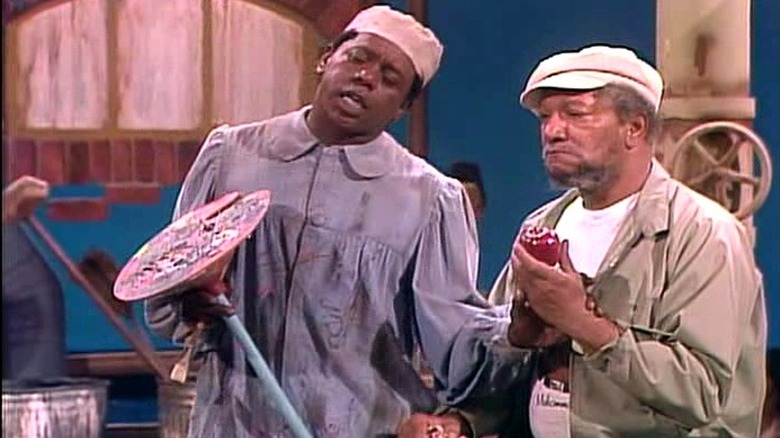
The '70s saw the end of the variety shows that were a staple for the American television industry in its early days. One of the last successful variety shows introduced in the '70s was "The Flip Wilson Show," which ran for four seasons from 1970 to 1974 on NBC. Hosted by comedian Flip Wilson, each episode featured Wilson starring in a set of comedy skits with celebrity guests. Starting out strong, ratings for "The Flip Wilson Show" began to steadily slip as the variety show format lost relevance, resulting in its cancellation after its fourth season.
Wilson was one of TV comedy's trailblazers, opening the doors for Black comics on television. The show had a wide range of guests — not just other comedians, but actors like Leonard Nimoy and athletes like Joe Namath. The show also featured some of the biggest musical guests of the era, including The Jackson 5, Bobby Darin, and Ella Fitzgerald. The show earned numerous Emmy Award nominations, with Wilson himself winning two Emmys for his work, but the show's groundbreaking importance has largely gone under-appreciated with time.
Cannon
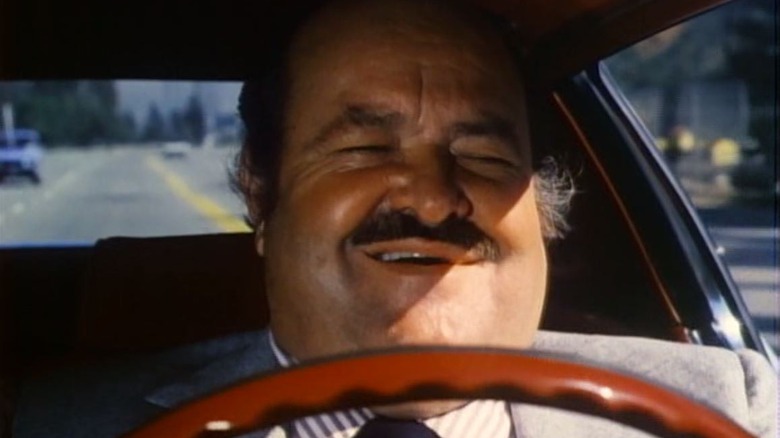
William Conrad was a prolific character actor whose career got its start in radio before he transitioned to film and television. Conrad's biggest on-screen role was private investigator Frank Cannon, the titular protagonist of the '70s CBS crime series "Cannon." A former Los Angeles police detective, Cannon took on a variety of cases, demonstrating that he was surprisingly well-read and formidable in physical altercations. The show was later revealed to be set in the same universe as "Barnaby Jones," leading to a crossover between the two crime series.
"Cannon" would make great use of Conrad's talents, though it did have an uncomfortable tendency to poke fun at his weight. But Conrad gave a real sense of intelligence to his detective character beyond the recurring gags about his body, imbuing a cultured personality to the protagonist. "Cannon" might not make the list of the best detective TV shows ever made, but it was a successful staple of early '70s television. Years later, Conrad would play a similar character in the '80s series "Jake and the Fatman," though both shows have largely gone forgotten.
The Streets of San Francisco
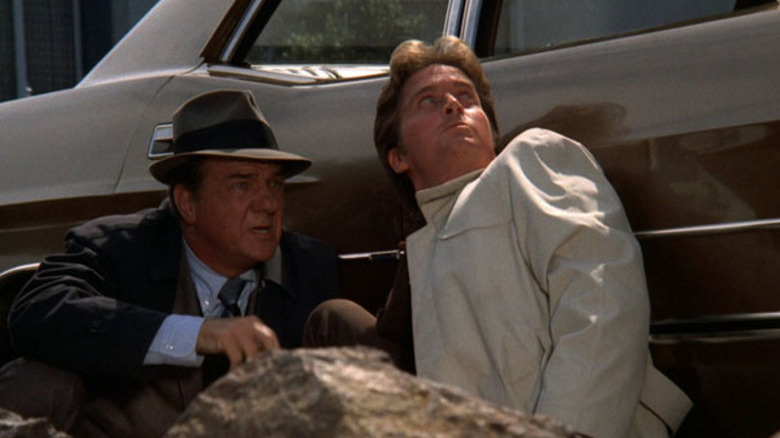
Before he was an Academy Award-winning film producer and bona fide movie star, Michael Douglas got his start on the ABC crime show "The Streets of San Francisco." Douglas played rookie police detective Steve Keller, paired with veteran cop Mike Stone (Karl Malden), who took Keller under his wing. Together, the two detectives worked in the homicide detail in San Francisco, forming a surrogate father-son bond through their close work. The show's final season had Keller leave the force for a university teaching job, with Stone paired with new partner Dan Robbins (Richard Hatch).
Airing for five seasons from 1972 to 1977, "The Streets of San Francisco" noticeably increased its viewership by switching to Thursday nights for its second season. But so much of the show's appeal was the rapport between Malden and Douglas; following the latter's departure, the show never quite recovered. Even with this early role, Douglas energetically commanded every scene he appeared in, paving the way for greater things for his acting career.
Barnaby Jones
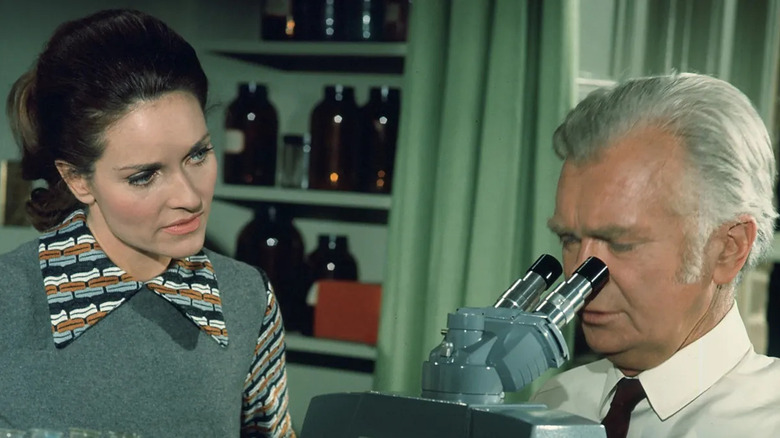
After starring in "The Beverly Hillbillies," actor Buddy Ebsen starred as the titular detective in the CBS crime series "Barnaby Jones." Years after retiring from being a private investigator, Jones returned to work after his son was murdered while investigating a case. Jones reopened his detective agency with his late son's wife Betty Jones (Lee Meriwether), solving mysteries around Los Angeles. As Jones' advancing age started to catch up with him, he turned more of the detective work to Betty and his cousin J.R. Jones (Mark Shera).
"Barnaby Jones" ran for eight seasons from 1973 to 1980, remaining a staple on CBS for much of its run. Of the popular detective shows in the '70s, "Barnaby Jones" was known as the old detective for the character's noticeable age. The show leaned into this distinction, revolving around his fatherly dynamic with his daughter-in-law, united with her through a shared grief. Despite its long run, though, "Barnaby Jones" has become something of an obscure crime show, especially compared to contemporaries like "Columbo" and "The Rockford Files."
Chico and the Man
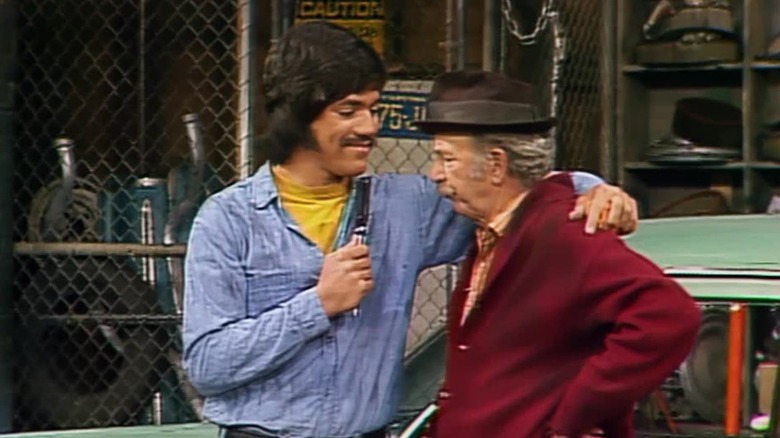
Freddie Prinze, father of Freddie Prinze Jr., was a talented stand-up comedian whose career exploded with a starring role in the '70s series "Chico and the Man." Prinze was joined by Jack Albertson, who starred as cantankerous East Los Angeles resident Ed Brown, who gradually warmed up to Mexican American Chico Rodriguez (Prinze). The duo worked together at Ed's garage, forming a surrogate father-son dynamic, though Ed would vehemently deny this comparison. After Prinze's death in 1977, the final season brought in precocious adolescent orphan Raul (Gabriel Melgar) to offer a more youthful counterpart for Ed.
The tragic loss of Prinze during the third season was one the series never recovered from, even as the show tried to handle the death of a cast member. The show ran for four seasons, from 1974 to 1978, really capturing so much of the charm that Prinze brought on stage during those first three seasons. A successful sitcom that was abruptly and heartbreakingly cut short, "Chico and the Man" never could escape the shadow of its unexpected tragedy.
If you or someone you know is struggling or in crisis, help is available. Call or text 988 or chat 988lifeline.org. Text MHA to 741741 to connect with a trained Crisis Counselor from Crisis Text Line.
Police Woman
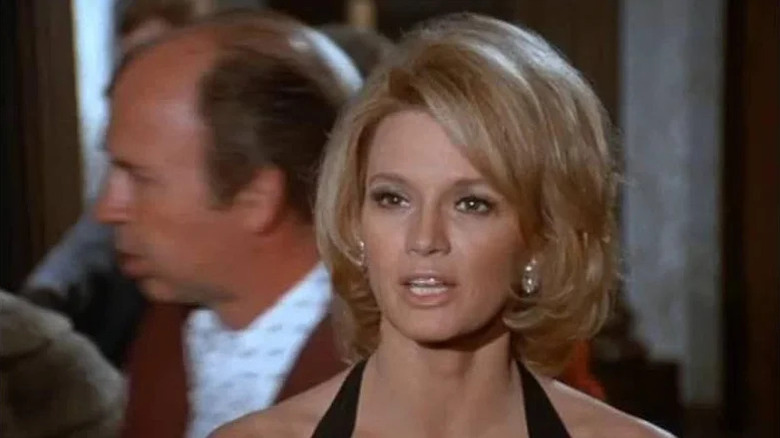
Angie Dickinson had been appearing in movies since the '50s, including a number of projects starring the Rat Pack. She took her career to television in the '70s, starring in the NBC police procedural "Police Woman" as protagonist Pepper Anderson. Working as an undercover police detective in Los Angeles, Anderson took on different personas to get close to criminals around the city. This often involved Anderson posing as everything from prison inmates to flight attendants to gather enough evidence on a suspected crook in order to make an arrest.
Premiering in 1974, "Police Woman" ran for four seasons, coming to a close in March 1978. Dickinson was joined by a parade of guest stars throughout the series' run, including Sam Elliott, Mark Harmon, and William Shatner. The show's formula of showcasing Dickinson in different personas each episode eventually wore thin, however, leading to its eventual cancellation. "Police Woman" reportedly had a fan in then-President Gerald Ford, giving it an amusing footnote in the annals of American history.
Eight Is Enough
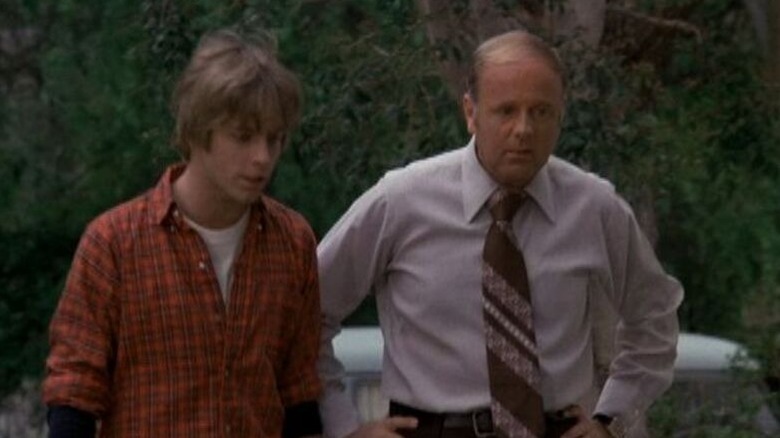
Newspaper columnist Tom Brady's autobiographical book detailing his experiences raising eight children was adapted into the 1977 ABC dramedy "Eight Is Enough." The late Dick Van Patten starred as patriarch Tom Bradford, who had eight kids with his wife Joan (Diana Hyland). Working as a newspaper columnist in Sacramento, Tom became a widower after the first season and remarried Abby Abbott (Betty Buckley), one of his kids' tutors, in the second season. As the series progressed, the kids grew up, got married, and started families of their own, changing dynamics around Tom and Abby's household.
Alongside shows like "Maude" and "M*A*S*H," "Eight Is Enough" was another sitcom that was unafraid to bring in major dramatic elements. The show also featured early performances from Mark Hamill (who played David Bradford in the pilot before being recast) and Ralph Macchio, who would each find big-screen success shortly thereafter. An effective five-season dramedy, "Eight Is Enough" doesn't get enough credit for its seamless blend of narrative tones.
Trapper John, M.D.
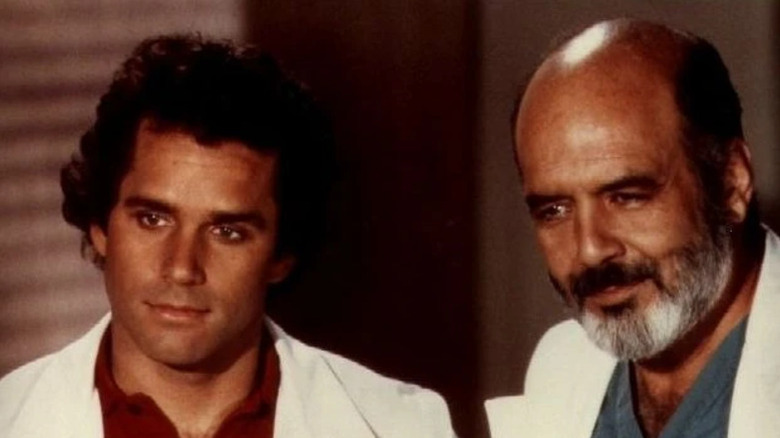
For much of the '70s, "M*A*S*H" was one of the biggest sitcoms on the air and a show that we're still celebrating more than 50 years later. Between the third and fourth seasons, the character of Trapper John McIntyre (Wayne Rogers) left the series, with the character receiving a spin-off in the form of 1979's "Trapper John, M.D."
Now played by Pernell Roberts, the older McIntyre was no longer the hotshot surgeon, but a more measured physician in San Francisco. McIntyre mentored George Alonzo Gates (Gregory Harrison), a younger and wilder surgeon who reminded McIntyre of his former self.
Funnily enough, "M*A*S*H" spawned several spin-offs, but none were as well-received as the original series (including "AfterMASH," one of the worst TV spin-offs of all time). "Trapper John, M.D." was the most successful of these offshoots, despite being much more serious than "M*A*S*H" and its other continuations. But after its seven-season run (which, granted, released mainly during the '80s), nobody talks much about the first "M*A*S*H" spin-off and its franchise shift from a sitcom to a full-on medical drama. Interestingly, Roberts played Trapper John for more than twice as many seasons as Wayne Rogers did on "M*A*S*H," though his contributions to the character aren't as widely recognized.