

15 Best Shows Like It's Always Sunny In Philadelphia
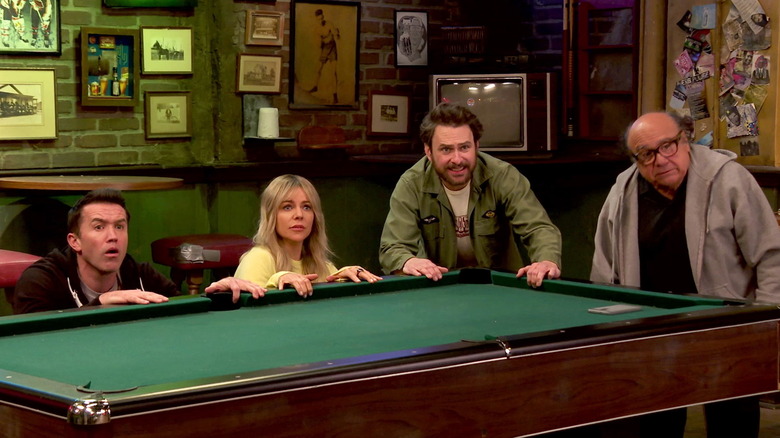
"It's Always Sunny in Philadelphia" originally began airing on FX in 2005, and since then, it's become a ginormous, influential hit — and the longest-running live-action American sitcom of all time, to boot.
Originally germinating from some low-rent shorts made by friends and collaborators Charlie Day, Glenn Howerton, and Rob Mac, the comedy made waves for its frankness in subject matter, its bleakness in tone, its uncompromising willingness to depict the worst decisions possible, and its appealingly raw aesthetics. It's since expanded to an impressive world of ensemble cast members, absurd discursions, and even some sneaky lil' character depth.
If you're a regular at Paddy's Pub and consider yourself a member of The Gang, pull up a bar stool, avoid the Day Man (fighter of the Night Man), and get ready to do some anti-Charlie work (which is to say, "reading," something we know Charlie can't really do). We've got a list of the 15 best shows like "It's Always Sunny in Philadelphia" to keep your buzz going with similarly dark and hilarious TV comedies.
1. A.P. Bio
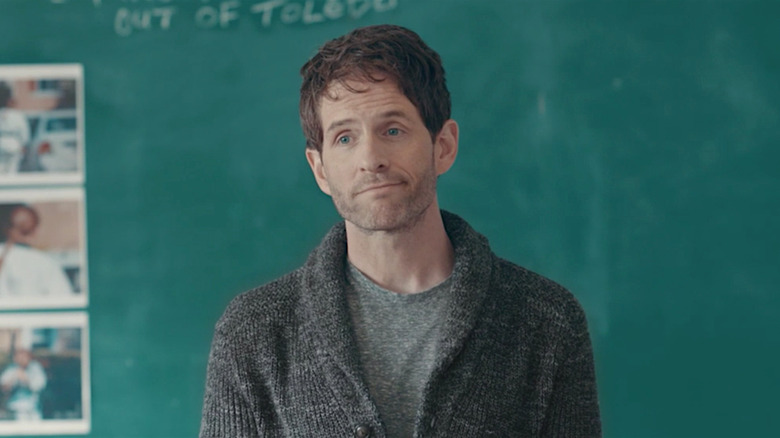
At the end of Season 12 of "It's Always Sunny in Philadelphia," originally airing in 2017, it sure seems like Dennis Reynolds leaves the show, a shocking decision in a show known for a lack of change. Sure enough, Season 13, beginning in 2018, opened with a lack of Dennis (though the creators insisted Glenn Howerton would be back soon). So what gives?
Well, Howerton, who plays Dennis, had taken a leading role in the NBC (and later Peacock) sitcom "A.P. Bio," created by the always unique Mike O'Brien ("Saturday Night Live"). Howerton's Jack Griffin is a former Harvard professor whose professional nemesis (Tom Bennett) gets a dream job over him. So he moves back to his hometown of Toledo, Ohio and takes a job teaching high school biology. There, he uses his classroom of eccentric students for his own personal gain while the principal (Patton Oswalt) tries, somewhat impotently, to keep his newest employee in check.
The show plays a little like "Community" with a darker core, and it's more than worth watching to see Howerton flex his incredible acting range.
2. Archer

A workplace sitcom with toxic idiots who have regressive politics, make terrible decisions, and just barely have a heart at the center? "Always Sunny" fans, please meet your new favorite FX comedy: "Archer."
There are a couple of big differences between the two shows. For one, "Archer" is animated, coming from Adult Swim veteran Adam Reed ("Sealab 2021"). And for another, whereas "It's Always Sunny" follows the exploits of everyday, working-class stiffs, "Archer" follows an ostensibly higher-status crew of espionage agents as they undergo all kinds of high-stakes spy missions. So if your favorite "Always Sunny" episodes are the "Lethal Weapon" spoofs, "Archer" might be custom-made for you.
Like "It's Always Sunny," "Archer" also has a phenomenal ensemble cast that plays richer and deeper as the show goes on, with voice actor supreme H. Jon Benjamin leading the brigade as Sterling Archer. His genius costars include Aisha Tyler, the late, great Jessica Walter, Chris Parnell, Judy Greer, and Reed himself as Ray, a snarky voice of reason to the chaos around him.
3. Cheers

In the Mount Rushmore of "bar TV shows," there's "Cheers," there's "It's Always Sunny in Philadelphia," and there might not be much else.
"Cheers" is a lot kinder of a show than "Always Sunny." Debuting on NBC in 1982 from co-creators Glen Charles, Les Charles, and James Burrows, "Cheers" gathers a rich, lived-in ensemble of found family members, all centered around the owner and head bartender Sam Malone (Ted Danson), a gently misanthropic Lothario (though nowhere near, like, Dennis Reynolds' levels).
There is a subtle darkness at the undercurrent of "Cheers," whether in the deepening fissures of the central will-they-won't-they relationship between Sam and Diane Chambers (Shelley Long) or in the aching loneliness of characters like Cliff Clavin (John Ratzenberger) and Norm Peterson (George Wendt). But these melancholies are observed by the show's creative team with empathy and love, and the ultimate conclusion that people who need people are the happiest people. Think of it like the welcome chaser after the shot of hard liquor that is "It's Always Sunny in Philadelphia."
4. Curb Your Enthusiasm
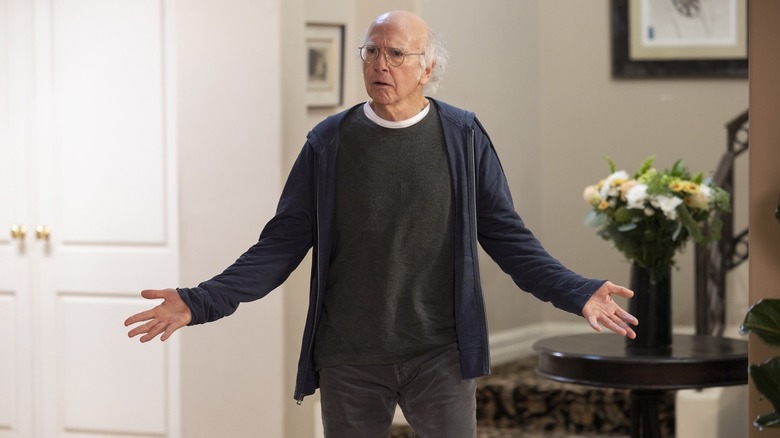
After co-creating "Seinfeld," a show examining our most selfish and prickly neuroses at their most unfiltered, Larry David doubled down.
"Curb Your Enthusiasm," created by and starring David as a fictionalized version of himself, began airing on HBO in 2000, and helped guide the course of contemporary comedy on and off until its final season in 2024. In the show, "Larry David" is regularly driven to madness by the universe's continued destruction of social mores and unspoken rules — unspoken, that is, until Larry snipes and prods and yells about them.
Whether he's playing a voice of reason to someone else's shenanigans (often, hilariously, JB Smoove) or inciting the comedic incident itself, one thing is consistently true about Larry throughout the show's run, whether he'd ever admit it or not: He's a monster. But at the same time, the show argues pretty successfully, we're all monsters. Larry's just willing to say it out loud.
As such, his "Curb Your Enthusiasm" makes wonderful, monstrous bedfellows with the gang of "It's Always Sunny in Philadelphia."
5. Difficult People
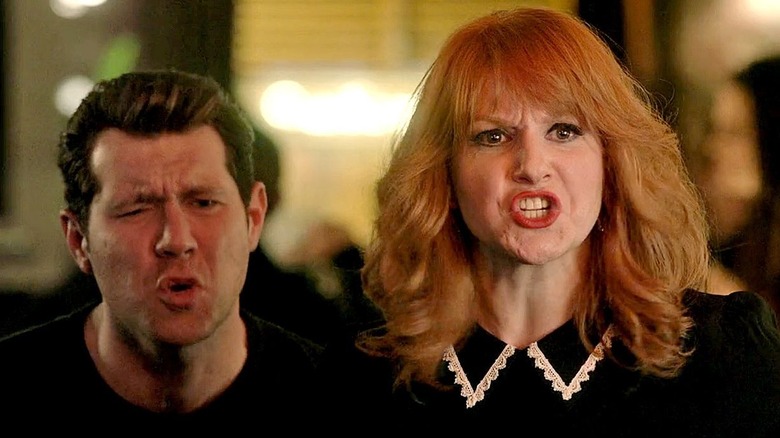
"Difficult People" could very well be an alternate title for "It's Always Sunny in Philadelphia."
The Hulu show stars creator Julie Klausner and legendary shouter Billy Eichner as fictionalized versions of themselves, aspiring comedians in New York City named "Julie Kessler" and "Billy Epstein." As many aspiring comedians do, they work survival jobs, hustle and claw their way into any opportunity possible, and bitterly grouse with each other about the mundane pains of being alive.
What separates "Difficult People" from other comedies about comedians is its ferocity and fearlessness. Every episode, written by Klausner and sometimes co-writer Scott King ("Mad TV"), features sharp and precise jokes more than willing to touch live wires and burn bridges. The Julie and Billy characters stumble their way through surprisingly authentic-feeling pop culture moments that make the series an inadvertent time capsule of the 2010s.
And with that particular time capsule comes its relationship to the #MeToo movement (something it has in common with instant "Sunny" classic episode "Time's Up for the Gang"). From jabbing at R. Kelly in its pilot episode, Woody Allen's then-contemporary Amazon deal, and a constant litany of Kevin Spacey jokes before his allegations came to light, "Difficult People" proves that being difficult means speaking about what scares others.
6. The League

How about another FX hangout show that follows a group of friends who chill at a bar and torment one another?
Created by husband-and-wife team Jeff and Jackie Schaffer (they also directed every single episode), sports TV show "The League" originally ran over seven seasons from 2009-2015. It's about a group of Chicago friends who have a long-running fantasy football league with all manner of inside jokes, crude rewards for winning (like the Shiva Bowl trophy, named after a woman one of the members lost their virginity to), and devastating consequences for losing. Nothing is off-limits for negotiating, not even the naming rights of a character's baby (no spoilers, but the resulting name is LOL-worthy every time).
The cast is a murderer's row of alt-comedy titans, including Mark Duplass as a smooth slacker, Nick Kroll as a fussbudget, Paul Scheer as a rich idiot, Katie Aselton as a tough-talker, Stephen Rannazzisi as a fearful ding-dong, and MVP Jon Lajoie as a perpetual stoner and surprising musical talent. It also gave Jason Mantzoukas ample room to spread his particular brand of chaos, which is never a bad thing.
7. The Mick
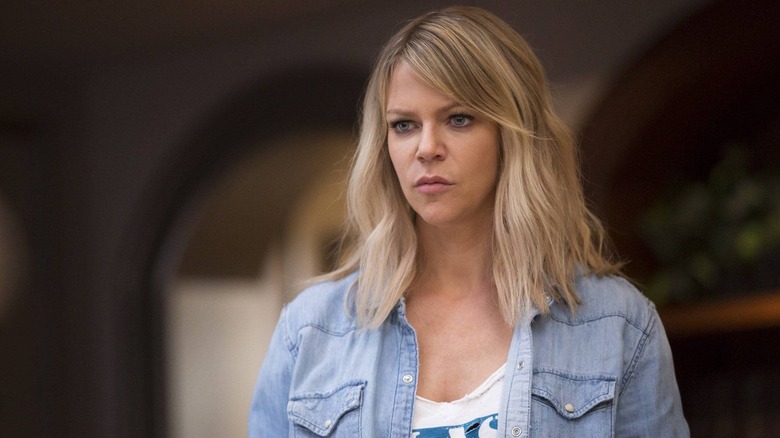
Around the same time Howerton took a stab at leading his own network sitcom, Kaitlin Olson (aka Sweet Dee) toplined the Fox series "The Mick," which only ran for two seasons but works incredibly well as a more mainstream introduction to Olson's ample charms and talents. (Her current ABC crime procedural, "High Potential," is entertaining enough but doesn't quite feel tailor-made to Olson enough.)
Created by brothers and "Always Sunny" writers Dave and John Chernin, "The Mick" stars Olson as Mickey Molng, a tough-talking small-time crook in Rhode Island who has to buck up and take care of her niece and nephews (Sofia Black-D'Elia, Thomas Barbusca, and Jack Stanton) when her sister (Tricia O'Kelley) goes on the run for fraud and racketeering.
Nothing about the resulting show reinvents the wheel — Mickey does her best to soften her edges for the children, who are dealing with their own issues, and everyone learns some lessons — but that's not necessarily a bad thing when it comes to network sitcoms. Olson grounds the proceedings with ample professionalism and spark, proving just how engaging a performer she is in any context.
8. Mythic Quest
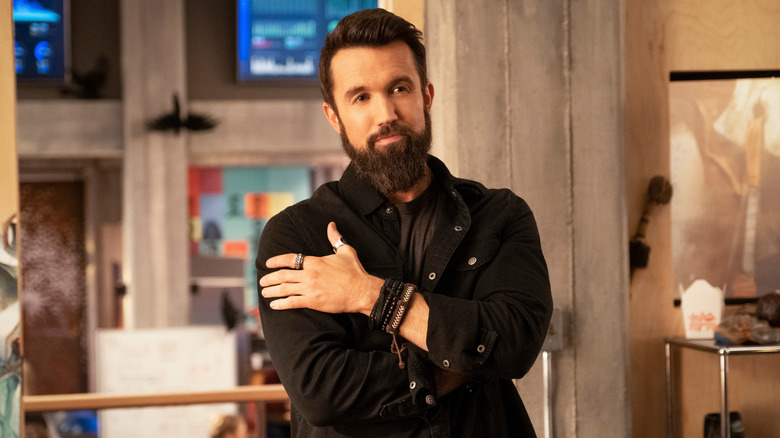
Another show from two "Always Sunny" gang members, "Mythic Quest" might feel the least in conversation with the FX show's gritty tone, showing viewers that Rob Mac and Charlie Day (Charlie) might be the softies of the gang.
They co-created the Apple TV series alongside Megan Ganz (also a "Sunny" writer), giving viewers a decent amount of dysfunctional, even slimy characters they might be used to (especially a hilarious Danny Pudi, reuniting with Ganz after they worked together on "Community"). But the series, following a video game studio chasing the massive success of their massively multiplayer online role-playing game (MMORPG for the real nerds), starts to sing when it chases after empathy. It treats the video game industry and the people who make the games with curiosity and patience.
Case in point: The first season's self-contained episode "A Dark Quiet Death" features none of the regular cast members in its main storyline, instead garnering laughs and tears by its understanding of the universally human emotions at the center of creation, collaboration, and conflict.
9. Party Down
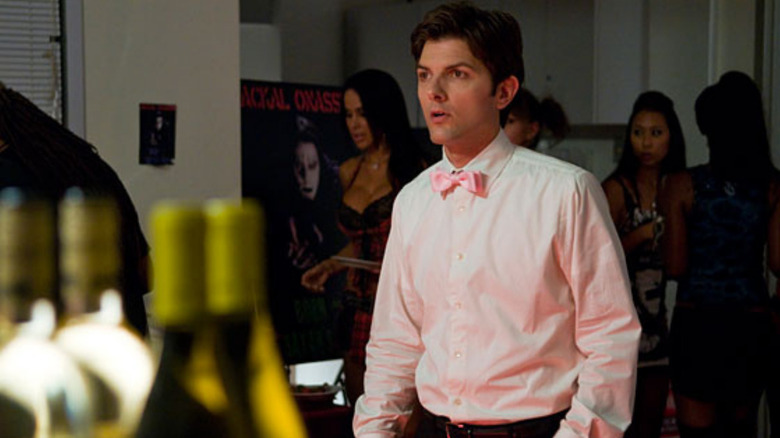
Alright, enough gushy stuff. Here's another comedy that cuts to the bone with its misbehaving characters and ruthless, even mean-spirited psychological examinations of the modern workplace.
Created by a quartet of eclectic writers, including Rob Thomas ("Veronica Mars") and the eternally ageless Paul Rudd, "Party Down" follows the hapless workers of a Los Angeles-based catering firm. Adam Scott leads the crew as Henry Pollard, a struggling actor who had a big break and watched it slip away, even as he's asked to recite his catchphrase ("Are we having fun yet?"). Other struggling caterers include Lizzy Caplan, Ryan Hansen, Martin Starr, Jane Lynch, Megan Mullally, and in the recently revived third season, an always underrated Jennifer Garner letting loose.
The caterers are led by a never-better Ken Marino as Ron Donald, one of the great and most excruciating comedy characters of the 21st century. He makes "The Office" bosses Michael Scott and David Brent look like self-possessed heroes of restraint. He is an utter buffoon, a desperate creature, a man who clings to any semblance of authority to hide his broken insides. He is deeply, deeply funny.
10. Peep Show
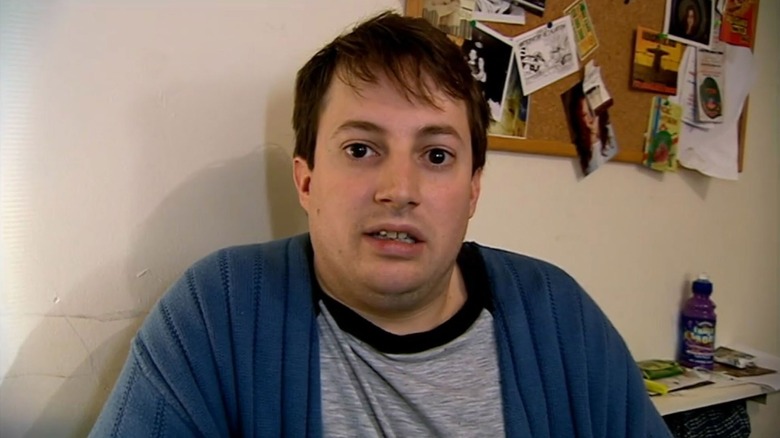
"It's Always Sunny in Philadelphia" represents a particular kind of American, working-class sociopathy. Now, let's head across the pond for an English, slightly more buttoned-up look at the same kind of merciless tendencies.
"Peep Show" is one of the great objects of "cringe comedy," a particularly modern subgenre of humor. It's created by a trio of English comedy masterminds: Andrew O'Connor, Sam Bain, and Jesse Armstrong (whose name Americans might recognize as the force behind "Succession," itself a bit of a cringe comedy). It stars David Mitchell and Robert Webb, two English comedy masterminds themselves (check out their sketch series, "That Mitchell and Webb Look").
And its formal style, in which characters are observed by cameras representing the literal points of view of other characters, giving the viewer access to an unprecedented level of intimacy (including their unfiltered voice-overs), is just about revelatory. It gives the show a deranged surgeon's level of access as its characters quarrel with, disrupt, and out-and-out hurt each other. Good luck!
11. Seinfeld
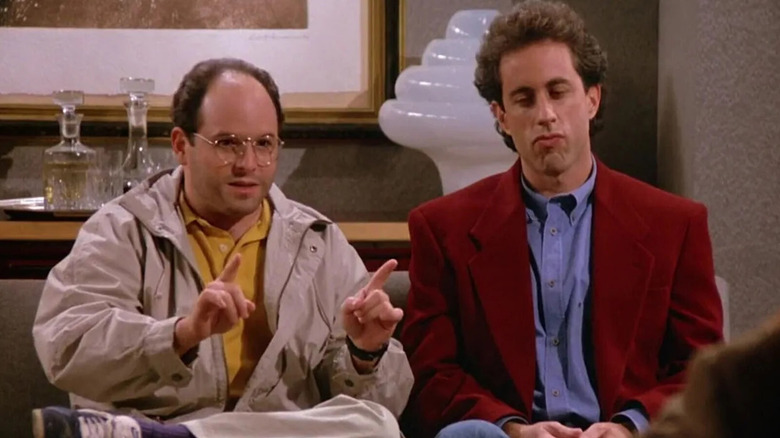
The grandaddy of all "mean characters who argue with each other and learn nothing" shows. A show so directly influential on "It's Always Sunny in Philadelphia," they filmed a dream sequence where the "Sunny" lead characters play its lead characters (in "The Gang Does a Clip Show"). It is, of course, "Seinfeld," the so-called show about "nothing" that manages to talk about everything.
The NBC series, co-created by star Jerry Seinfeld and the aforementioned Larry David, dominated the cultural conversation of the '90s and influenced a generation of TV comedies more than willing to poke and prod. Seinfeld stars as a version of himself, Jason Alexander portrays a version of David called George Costanza, Michael Richards steps into the role of everyone's favorite bumbling schemer Cosmo Kramer, and Julia Louis-Dreyfus plays the seething Elaine Benes.
The quartet reckons with all kinds of maladjusted social situations, usually trying to selfishly navigate their way to victory. Festivus, the taboo-breaking "contest," the still-controversial series finale — if you haven't made your way through "Seinfeld's" best episodes, it's time to see what the fuss is about.
12. South Side
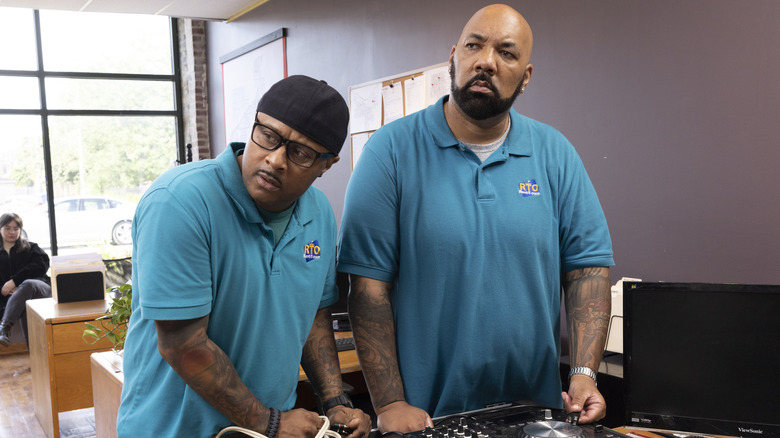
The Peak TV treasure "South Side," which originally aired on Comedy Central and HBO Max over three seasons, stars Sultan Salahuddin and Kareme Young as a pair of knuckleheads in the South Side of Chicago. They just graduated from community college, work at a low-stakes job, and have all kinds of get-rich-quick schemes to try.
Some of the best "Always Sunny" episodes have titles like "The Gang Tries X," where 'X' is an inane and stupid idea. "South Side" is a series full of people trying inane and stupid ideas, pretty much always to the main characters' detriment. But its tone is often sillier, more joyful, and more absurd than the hard-hitting "Sunny," playing something like the combination of "Sunny" with another underrated Midwestern Comedy Central series, "Detroiters."
There's also an appealing metatextual element in common with both "South Side" and "It's Always Sunny." Both shows come from a group of friends who wanted to deliver something new to television and hired their friends (often writing and performing semi-fictionalized versions of themselves) to do it. "It's Always Sunny" is a rebellious, self-made show; "South Side" takes that spitball and runs with it.
13. Taxi
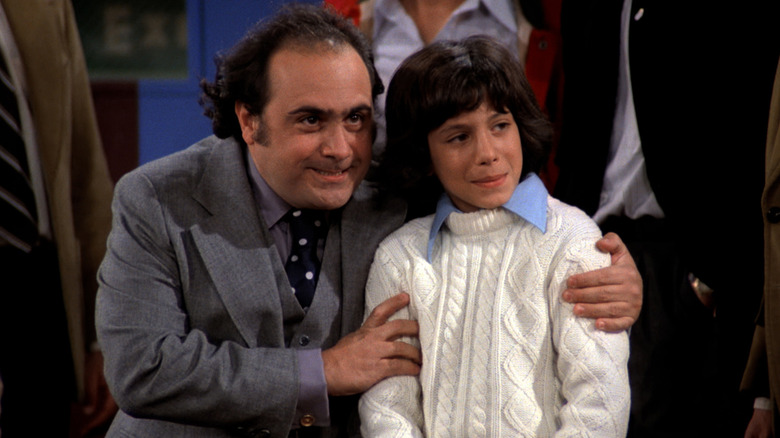
A classic show that originally aired on ABC from 1978 to 1982 over five seasons, "Taxi" has many similarly "Sunny" pleasures to recommend, especially in its willingness to document the working-class urban plight with disarming tension. But more directly, it features a breakout role of one Danny DeVito, who joined "It's Always Sunny" in Season 2 as the unhinged Frank Reynolds.
It's great fun to watch DeVito learn how to strut his stuff in the television space, especially on such a well-written and performed show as "Taxi," created by folks responsible for and involved in some of the best TV shows ever made: James L. Brooks ("The Simpsons"), Stan Daniels ("The Mary Tyler Moore Show"), David Davis ("The Bob Newhart Show"), and Ed. Weinberger ("The Cosby Show").
DeVito plays Louie De Palma, the head dispatcher of the show's cab company, an irritable thorn in everyone's side who complains and berates and makes all kinds of stinks. He's surrounded by a cast of other incredible performers, including Judd Hirsch, Andy Kaufman, Christopher Lloyd, and Carol Kane.
14. Trailer Park Boys
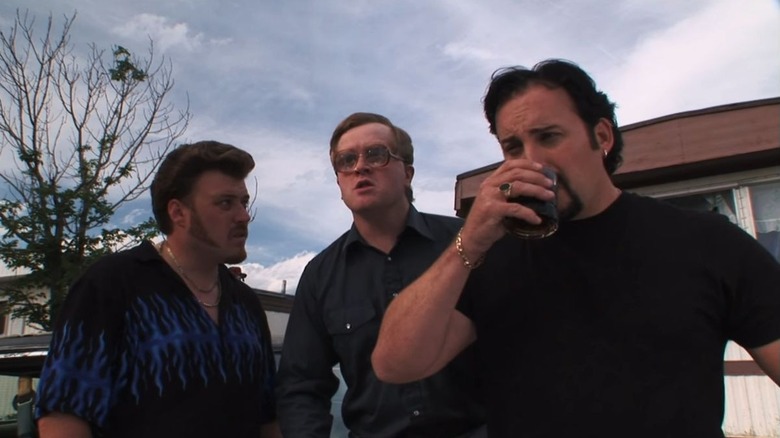
A Canadian cousin to "It's Always Sunny in Philadelphia," the long-running "Trailer Park Boys" series comes from creator Mike Clattenburg, adapting some short films he made with his friends into a beloved cult object of vulgar mythology. Sound familiar, "Sunny" fans?
The show, which began airing on Canadian network Showcase before the producers decided to make their own network and collaborate on distribution with Netflix (not unlike the revival of "Mystery Science Theater 3000"), centers on a trio of absolute idiot ne'er-do-well crooks: the simple Ricky (Robb Wells), the soulful Julian (John Paul Tremblay), and the eccentric Bubbles (Mike Smith, in a pair of iconic glasses). The three bumble their way through the rough-and-tumble trailer park of working-class Nova Scotia, Canada, getting into all kinds of criminal schemes and ideas that blow up in their face.
If you dig the show, there's a litany of other properties in the universe to check out: four feature films (not counting a film made before the TV show, confusingly), two live specials, and a pair of spin-off series, including a cartoon.
15. Workaholics
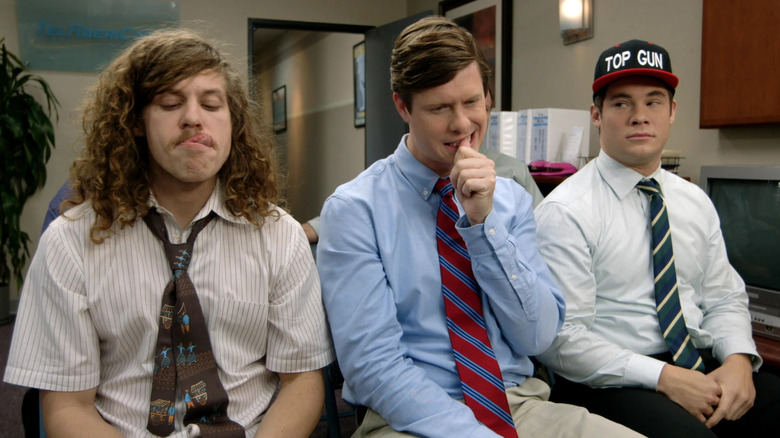
Finally, we examine a Comedy Central hangout/workplace comedy that aired for seven seasons, becoming another snapshot of the 2010s over its run.
Just like "It's Always Sunny," "Workaholics" comes from a group of real-life collaborators and friends: Blake Anderson (who plays Blake), Adam DeVine (who plays Adam), Anders Holm (who plays Anders), and Kyle Newacheck (who directs many of the episodes and sometimes plays Karl; way to break the pattern, Kyle). Blake, Adam, and Anders have dropped out of college and work at a low-level telemarketing company, causing all kinds of mischief and mayhem as their party-loving, slacker tendencies come into collision with the demands of the white-collar workplace.
"Workaholics" is a lot gentler and sillier than "It's Always Sunny," playing in some ways like a prequel series: a drugs-and-alcohol-soaked show about being young and carefree that could curdle, if they're not careful, into the old, bitter, and cynical milieu of "Sunny." Thus, they make for an intriguing pair of contemporary TV comedies.