

10 Things Every Star Trek Fan Needs To Know Before Watching Starfleet Academy

Talk of a live-action "Starfleet Academy" TV show or movie has been going on since almost the beginning of "Star Trek." In 1968, series creator Gene Roddenberry reportedly suggested that a hypothetical first "Star Trek" movie could show Kirk, Spock, and McCoy meeting during their Academy days. Years later, the concept was pitched for the sixth "Trek" movie, but Paramount ended up going in another direction.
Starfleet Academy finally shows up in "The Next Generation" episode "The First Duty," broadcast in 1992. Later, audiences saw some of the original crew's Academy days, albeit in the alternate timeline of J.J. Abrams' "Star Trek" (2009).
Now we finally have a "Starfleet Academy" series on Paramount+, and it's neither the proposed original nor the "Next Generation" version. Instead, it's set in the 32nd century, following the events of "Star Trek: Discovery" at a point where the Federation is a galactic underdog rather than the major governing body of known space.
What do you need to know before you jump into the new series? Here are 10 things for fans who lack photographic memory of "Trek" lore.
An Era Defined by The Burn
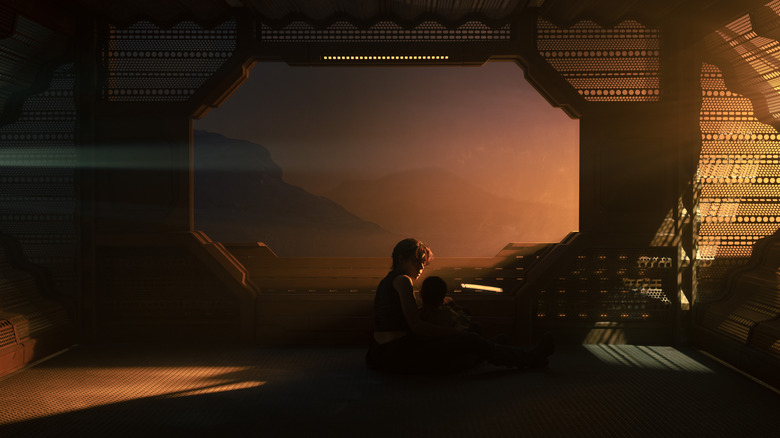
When Michael Burnham (Sonequa Martin-Green) of "Discovery" jumps from the 23rd century to the 32nd, she learns that a catastrophic event in 3069 called the "Burn" causes all the dilithium in known space to become inert, exploding every active warp core. The Discovery crew find and resolve the cause of the Burn, but they can't fix everything that's gone wrong in 900 years. Without warp technology, Starfleet massively downsizes, with travel between many of its worlds rendered impossible. Sans intergalactic peacekeepers, the universe becomes a rougher place, and the Federation is in tatters trying to re-form.
For human teens and their alien age-equivalents attending a college for peaceful exploration, it's a generational shift. Their great-grandparents are traumatized by a mass-casualty event and grow up in a more prejudiced, crime-infested time. The younger class may have open minds, but for children of parents used to galactic anarchy, progress might require breaking harsh traditions designed to keep them safe.
Don't Count on the Same Allies
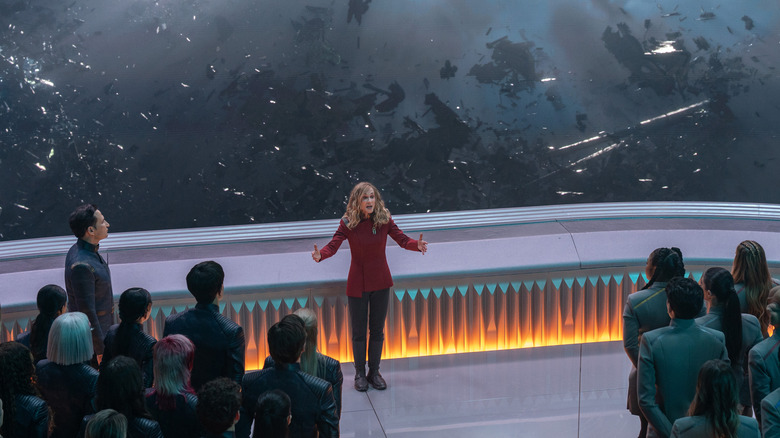
Forget what you think you know about which planets are in the Federation. Vulcan is still in, but it's now called Ni'Var and home to Romulans as well as Vulcans, since the Romulan planet is canonically destroyed in the 24th century. The predictably volatile Klingons are doing their own thing. Betazed, however, erects a psychic barrier after the Burn, and its inhabitants generally don't want anything to do with outsiders. It's not entirely clear what became of the Cardassians, but as is in the case in "Discovery," we see some humanoids who clearly show the familiar reptilian DNA in their facial features. Fans of Rok-Tahk from "Prodigy" will be glad to note that there's a Brikar in Starfleet.
Klingons Are Back to Normal
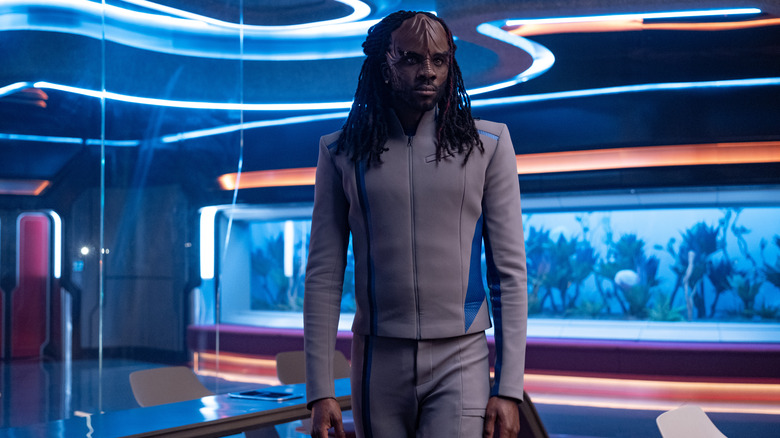
Arguably the most controversial aspect of "Star Trek: Discovery" is the redesigned Klingons. In Season 1, the quintessential cosmic hardcases look more like hairless crab people than their traditional selves, and fan reactions were mixed. In Season 2, the Klingons get their hair and beards back, while still looking a little bit crablike. When the crew jumps to the 32nd century in Season 3, however, the Klingons are noticeably absent. It took Worf (Michael Dorn) returning in "Picard" Season 3 to reassure us that in the modern era, some Klingons still look like Klingons.
Thanks to the presence of new cadet Jay-Den Kraag (Karim Diane), we now know for sure that the classic-style Klingons are back. They're not the power in the galaxy that they used to be, but they still love honor, wine, and eating worms, and they look like space Vikings with ridged foreheads and long hair.
Jay-Den is an anomaly, though — he's the first Klingon we've ever encountered who would rather learn medical science than fight.
Doctor Who?
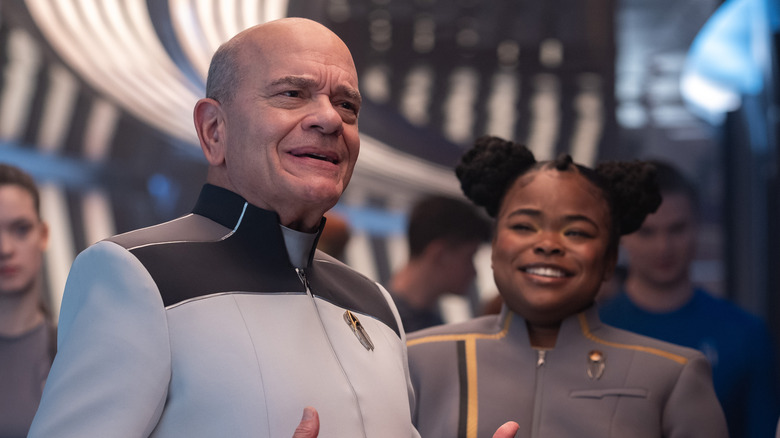
Any science fiction franchise naming a character "The Doctor" is asking for trouble — not only does "Doctor Who" exist, but it's been around even longer than "Star Trek." Yet "Star Trek: Voyager" got away with it, because Robert Picardo played the Emergency Medical Hologram, aka the Doctor, with endearing fussiness and vulnerability. Picardo also played alternate versions of the hologram, as well as its creator and template, Dr. Lewis Zimmerman.
At Starfleet Academy, the Doctor is back, and it's definitely the original Doctor from "Voyager." He's added an aging algorithm to explain Picardo's real-life aging. In canon, it's meant to put humans more at ease, but let's get real: If The Doctor looks like he's aged 24 years — the gap between the end of "Voyager" and now, for Picardo — over the course of nearly a millennium, the aging algorithm would not make a difference to any human with a normal lifespan.
Know Your DS9

If you've never watched "Deep Space Nine" — and if that's the case, you are missing out — it might help to know a little something before getting to Episode 5 of "Starfleet Academy." Living hologram SAM (Kerrice Brooks) tries to enroll in a particular class mid-semester and must prove her worth with a research project that sends her down a historical rabbit hole to learn more about Captain Benjamin Sisko. It's an episode with as many "Deep Space Nine" Easter eggs as a typical "Lower Decks" episode — as well as some "Lower Decks" Easter eggs.
No, Avery Brooks hasn't returned to acting to play Sisko again. However, it will vastly improve your enjoyment of this episode if you know something about Sisko. If you think you have time to binge all seven seasons of "DS9," go for it. If not, you might want to know that Sisko eventually learns that he's part-alien and connected to a group of immortal beings called Prophets who are worshipped as gods by the people of planet Bajor. He ultimately disappears to rejoin the Prophets outside of time.
The Jem'Hadar Follow a Franchise Tradition
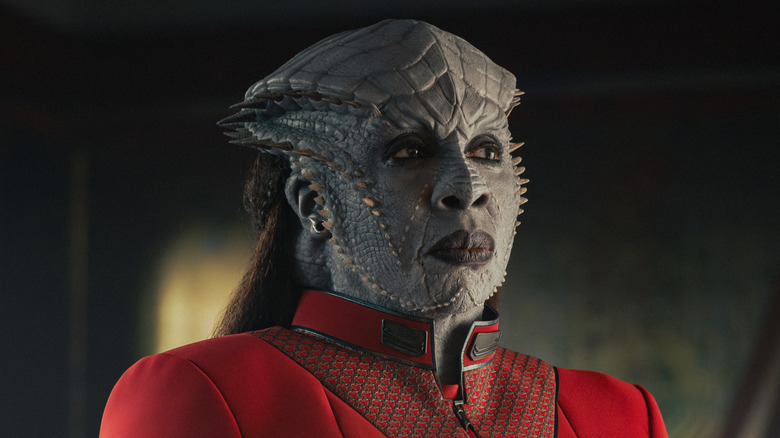
It's something of a "Trek" trope that a new series — at least one that moves the continuity forward and isn't a prequel — will feature a member of a former enemy alien race as an ally. It begins with Worf the Klingon in "The Next Generation," which introduces the Ferengi and the Borg as enemies. Then "Deep Space Nine" brings in Quark the Ferengi (Armin Shimerman) as a nominal ally, and "Voyager" gives us a former Borg named Seven of Nine (Jeri Ryan). "Deep Space Nine" introduces a new enemy race called the Jem'Hadar, and we haven't seen them in live action since ... until now.
Originally, this race bred purely to be savage foot soldiers don't eat, sleep, or reproduce, and they are all male. All that, however, has apparently changed. "Starfleet Academy" gives us our first female Jem'Hadar in Lura Thok (Gina Yashere), the cadet master at the Academy. It turns out that while she outwardly appears purely Jem'Hadar, she's also half-Klingon, indicating that her species evolved significantly since the Dominion War.
Long-Lived Lanthanites
The first Lanthanite to appear in "Star Trek" is Carol Kane's Pelia in "Strange New Worlds." Like Whoopi Goldberg's El-Aurian character Guinan on "The Next Generation," the long-lived humanoid seems like an in-canon excuse to have a character who remembers our time. It's a device that connects the unfamiliar to the familiar and allows at least one character to make references we recognize. Pelia has been alive for the entirety of human history, but specifically loves telephones, record players, and other artifacts of 20th century tech.
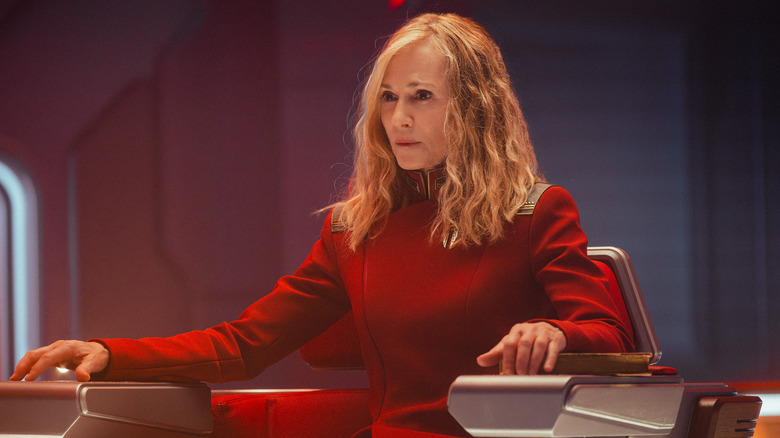
In "Starfleet Academy," Holly Hunter's Captain Nahla Ake is half-Lanthanite. She's been around for "only" 400 years, or thereabouts, which isn't enough to tie her back to our time or even previously shown "Trek" eras. However, it's plenty of time for her to remember 32nd century backstory and fill other characters in as needed.
Remember the Tellarites
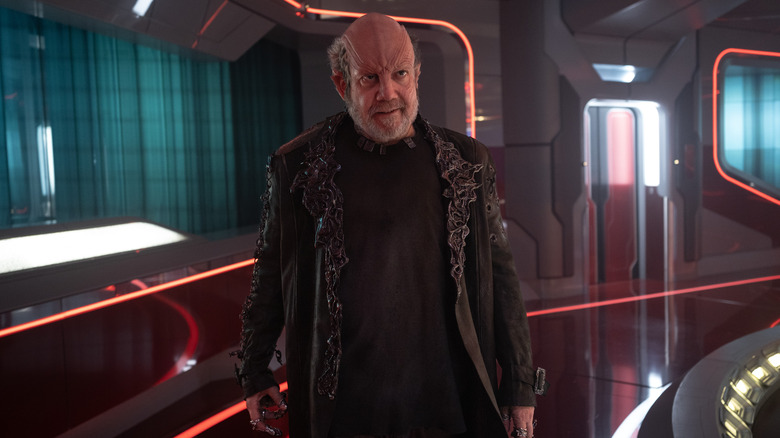
The Tellarites might not be the first "Star Trek" aliens a viewer thinks of, but they've been there since the original series episode "Journey to Babel" and have appeared on nearly every "Trek" series since. In the post-Burn era of "Discovery," they're still around, but many have been stranded outside of Federation space.
Typically argumentative and rude, Tellarite personalities often match their porcine appearance. The primary villain of "Starfleet Academy," Paul Giamatti's Nus Braka, is half-Tellarite and half-Klingon. He's also exceedingly criminal and hateful. Beneath his aggression and lawlessness lies no hidden honor — just contempt and self-preservation. He's great at delivering long-winded villainous monologues, though.
Mascots as Tribute
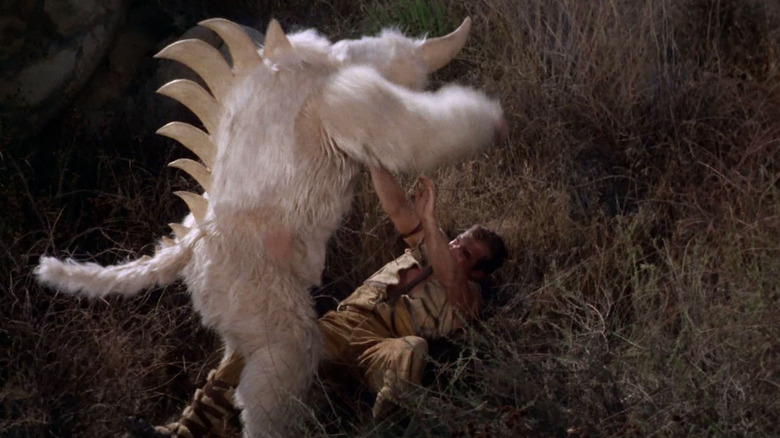
Mugatos are a classic man-in-suit alien species — white gorilla-like creatures with back spines, horns, and a venomous bite — from the original series. They haven't appeared in live action since, though they show up in several episodes of "Lower Decks."
Rather than turn them into CG creations, "Starfleet Academy" pays tribute to mugatos by making them the official mascot animals of the Academy's rival War College — a holdover from the more militaristic, immediate post-Burn universe. Since the mugato we see in "Starfleet Academy" is a mascot, he's literally a man in a suit.
Starfleet Academy's mascot animals — the laplings — are a bit more obscure. They are a type of practical puppet creature seen in "The Next Generation" episode "The Most Toys." The species is believed extinct or endangered, as is the case for the peaceful iteration of Starfleet during the immediate post-Burn years, which makes laplings a very on-the-nose choice for official Academy mascots.
Three Returnees From Discovery
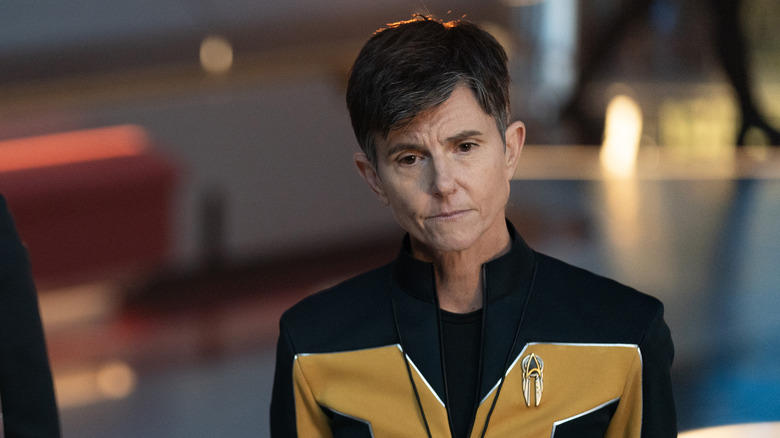
The Doctor isn't the only returning cast member from a previous series. Also coming to "Starfleet Academy" are Mary Wiseman as Sylvia Tilly, who leaves the crew of the Discovery in order to teach; Tig Notaro's Jett Reno, the former Discovery engineer; and Oded Fehr's Admiral Charles Vance, the head of Starfleet in the 32nd century.
If you're tuning in because of them, though, be advised that they don't get a whole lot of screen time — at least, not in the six episodes made available for advance review. Vance gets the most, seeing as how he's the top boss. Jett is in this even less than she's in "Discovery" — she usually just drops a wry one-liner and peaces out.
"Starfleet Academy" has already been renewed for Season 2, so maybe we 'll see more of these characters down the line.