

10 TV Shows From The '70s That Defined The Decade
Since the first televised broadcast in the first half of the 20th century, TV has helped describe, drive, and ultimately define our popular culture, and the culture at large. Go decade by decade, and you'll see series that shaped the nation, and the world. "I Love Lucy" and other sitcoms launched the comedy craze in the 1950s. Sci-fi went mainstream with "Star Trek" and "The Twilight Zone" (which started Oct. 2, 1959) in the 1960s. The 1980s saw a return to wholesome series like "Full House" and "The Cosby Show," while the 1990s were defined by such distinct genre-pushing and boundary-breaking shows as "NYPD Blue" and "The X-Files." Since the 2000s, "The Sopranos" on HBO and other prestige shows brought us into the "Peak TV" era we are still in today.
"What about the 1970s?" you're probably wondering. The decade was distinct, a blend of the wholesomeness of the TV eras that came before, and a precursor to the more controversial series that would come after. You can't say that any one or two shows defined the decade — heck, we had trouble narrowing it down to 10. We didn't include mini-series or TV movies (so no undisputed masterpieces like "Roots"), but only scripted shows with seasons. Even so, making this list was a challenge, with so many seminal series to choose from. There are comedies, dramas, and a bit of both. While they're all different, each of these 10 TV shows from the '70s helped define the decade.
All In The Family
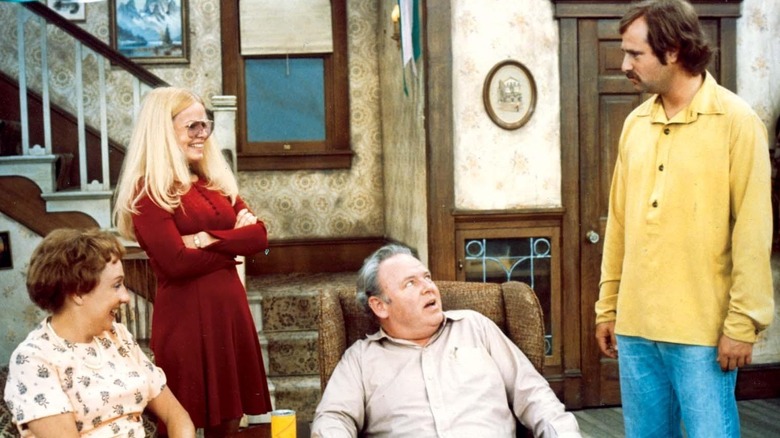
"All In The Family" ran for nine seasons and 205 episodes on CBS. It covered the entire expanse of the 1970s, premiering on January 12, 1971 and finishing its historic run on April 8,1979. While it ran for a long time, its contributions to television, and pop culture period, were far larger. For starters, it had several spin-offs, including "Maude," the "Maude" spin-off "Good Times," "The Jeffersons," "Gloria," and "704 Hauser," as well as pseudo-sequel "Archie Bunker's Place." So you could say there was an "All In The Family" extended universe before Marvel or DC ever went mainstream.
That alone would warrant the show's inclusion, but "All In The Family" helped define the decade because it brought real-world drama into the sitcom like never before. Most of the time, this was played for laughs, such as arch-conservative Archie Bunker's (Carroll O'Connor) cringe-inducing politically incorrect comments; or his weekly arguments with his liberal, live-in son-in-law Michael "Meathead" Stivic (Rob Reiner). No topic was seemingly taboo for "All In The Family," and not all of it was meant to be a punchline — such as the ditzy but delightful Edith Bunker's (Jean Stapleton) breast cancer scare.
Primetime TV simply didn't tackle topics like this before "All In The Family," which reflected American's lives back to them in ways they had never experienced. After "All In The Family," anything was on the kitchen table. Those were the days, indeed.
The Mary Tyler Moore Show
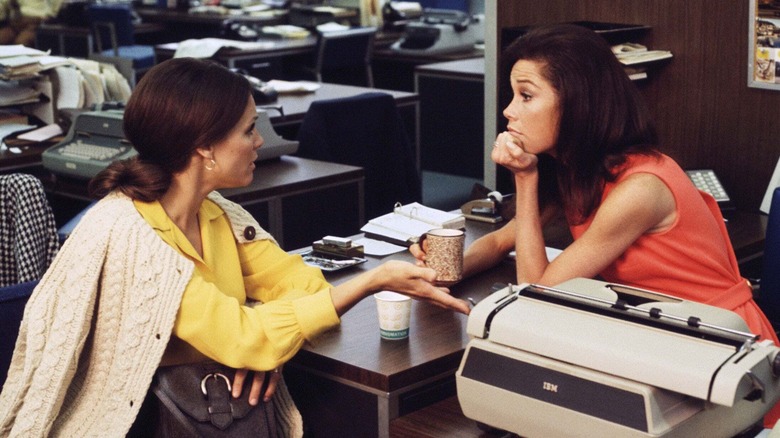
Mary Tyler Moore earned her permanent place in TV history as Laurie Petrie in "The Dick Van Dyke Show," which ran for five seasons and 158 episodes on CBS from 1961 to 1966. Moore cemented her status as a television legend just four years later with a self-titled show of her own. "The Mary Tyler Moore Show" ran for 168 episodes from 1970 to 1977, again on CBS. Much like her former show showcased the changing face of the early-to-mid 1960s domestic life, her self-titled show helped define the 1970s, specifically as it tackled one of the most transformative topics in the culture: women in the workforce.
What we take for granted today was still novel at the time; the idea of a single woman in her 30s taking care of herself without the help of a man footing the bill. Only a TV star with Moore's credibility and connection with viewers could pull off such a feat, and she certainly did, making Mary Richards a modern heroine for the age.
But Moore didn't do it alone, and was backed up by a stellar cast that included TV luminaries like Betty White and Ed Asner. Proof of the show's popularity came from its three spin-offs: "Rhoda," "Phyllis," and "Lou Grant." American women saw themselves in Mary Richards, and knew they were going to make it after all.
Charlie's Angels
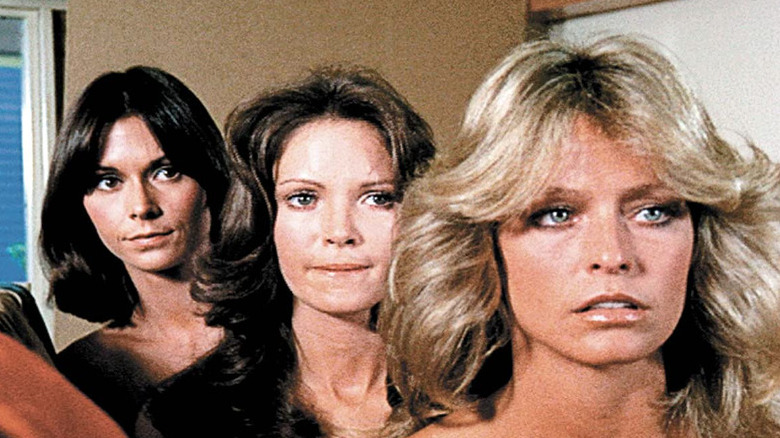
During the Cold War, spy adventures were one of the most bankable genres across movies, TV, books, you name it. These spy adventures followed a reliable, if predictable, formula: dashing super-spy defeats the bad guys and gets the beautiful women. Basically, every James Bond movie ever. In the mid-1970s, there was a TV show that updated this tried-and-true formula by making the beautiful women into the super spies. Thus, "Charlie's Angels" was born.
The series ran on ABC for five seasons and 115 episodes from 1976 to 1981. It was a shorter run than many of the other shows on this list, but par for the course for an hour-long drama at the time, and doesn't convey just how big a deal "Charlie's Angels" was, as it's one of only two entries on this list to spawn a separate movie franchise.
Blonde bombshell Farrah Fawcett was undeniably the culture's collective crush during the 1970s, despite leaving "Charlie's Angels" after only one season (though she returned for guest spots). A string of other angels came and went, including Kate Jackson, Cheryl Ladd, Shelley Hack, and Tanya Roberts, with only Jaclyn Smith as Kelly Garrett there throughout the run of the show. While we never saw the titular Charlie Townsend, his presence was felt through the voice of John Forsythe, whose tongue-in-cheek delivery nailed the show's cheeky charm. As good as he and David Doyle as Bosley were, "Charlie's Angels" belonged to the angels.
The Brady Bunch
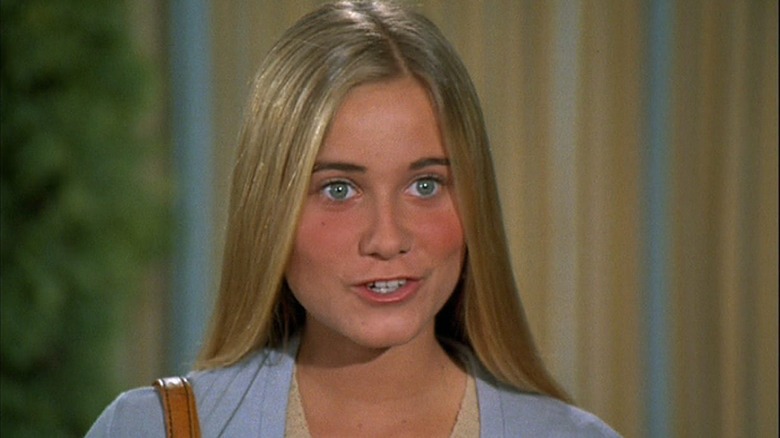
"Here's the story ... of a lovely lady ..." We bet you know the rest, and 100% guarantee you can at least remember the tune. Unless you have been living under a rock (no judgment here, you do you), there's no way you haven't heard of "The Brady Bunch," the peppy, poppy, playful sitcom about a blended family. Even if you haven't watched a single episode, the premise should sound familiar (after all, it's spelled out in the title song): a single dad with three sons marries a single mom with three daughters. Hilarity ensues.
While "The Brady Bunch" debuted on September 26, 1969, this is a 1970s show through and through. The hair, colors, costumes, and the vibes are evident of the time, an era thats culture was transitioning from the psychedelia and mod of the 1960s into the disco-infused largesse of the '70s.
Though nobody would argue that "The Brady Bunch" was high art or a sophisticated sitcom, there's no denying that it accomplished its most important mission: it was carefree fun that this country no doubt needed given the tumult of the era. "The Brady Bunch" only ran for five seasons and 115 episodes, ending its legendary run in 1974, barely halfway into the decade. But its influence is felt not only in its cartoon ("The Brady Kids") and ensemble ("The Brady Bunch Hour") spinoffs, or the two '90s films it inspired, but in the stream of similar silly sitcoms that followed.
Taxi
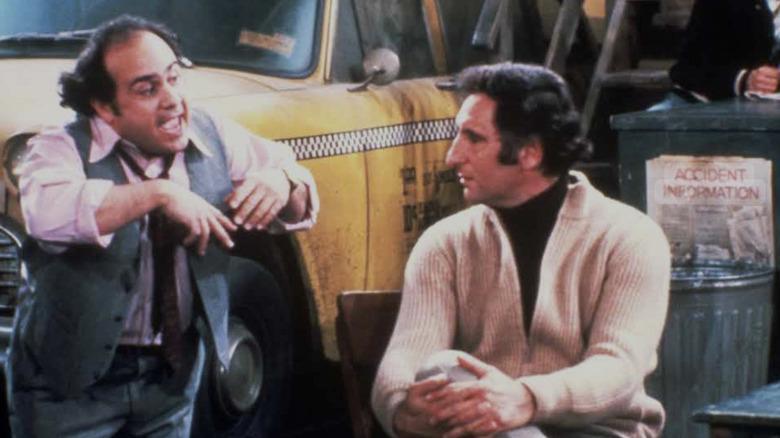
Work is funny. Or at least, the workplace is a funny setting for TV sitcoms, which is why so many of our favorite shows have taken place there. Most of us know what it's like to work for a living, so can relate to, and laugh with, the comedic plight of the other poor schlubs on TV.
Rarely have we related more, or laughed harder, than we did with the employees who worked the night shift at the fictional Sunshine Cab Company in New York City in "Taxi." Running from 1978–1982 on ABC, then on NBC until 1983, "Taxi" was a show about broken dreams and missed opportunities. Its iconic cast of characters had different aspirations, but shared the conviction that taxi driving wasn't their real profession, just a stop on the road of life. Well, except for the series lead, Alex Reiger (Judd Hirsch). Throw in a cruel, mendacious, and mercurial manager in one Louie De Palma (Danny DeVito), and you have the makings of what sounds like a bleak FX or HBO drama series, not a beloved sitcom.
What made "Taxi" so special? It pulled no punches. This wasn't a bubbly escapist fantasy like "The Brady Bunch," nor was it tackling tales ripped from the headlines like "All In The Family" or any of its spin-offs. No, "Taxi" was a show that was both timeless and timely, mining comedy gold in its tale of working stiffs.
Saturday Night Live
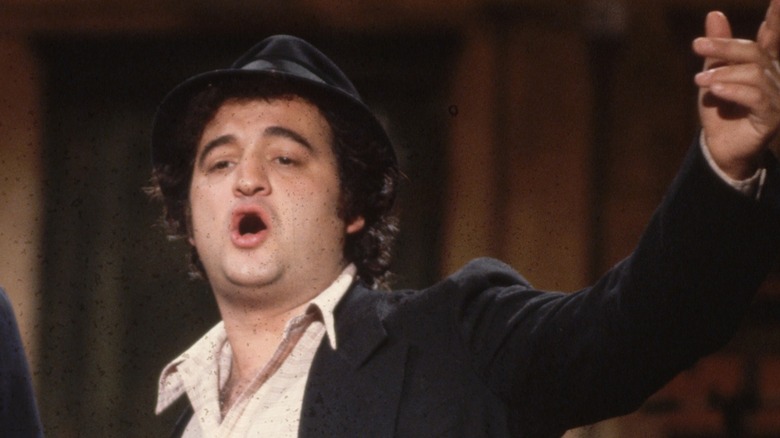
"Saturday Night Live" is more than a TV show — it's a cultural institution. Unlike any other show on this list, "SNL" is still going strong, and it all started with its debut on October 11, 1975. By running late on Saturday nights, "SNL" was able to do more mature material that wouldn't fly before nine, and that perfectly embodied the comedic spirit of the '70s. In fact, the sketch comedy show even lampooned the fact by calling its cast "The Not Ready For Primetime Players."
The OG cast may not have been ready for primetime, but it was comprised of soon-to-be comedy legends, including Gilda Radner, John Belushi, Dan Aykroyd, and Chevy Chase, among others. Plus, "SNL" featured some of the most famous standup comedians of the '70s as hosts, such as George Carlin (the shows' very first host), Richard Pryor, and Steve Martin.
But it wasn't just the cast that made "SNL" essential viewing for comedy lovers in the 1970s. It was the fact that it aired live. This gave the show an "anything goes" energy that was unlike anything viewers were seeing at the time. "SNL" presented the raw and edgy comedy that defined the decade, and created a passionate fanbase out of younger viewers looking for something different.
M*A*S*H
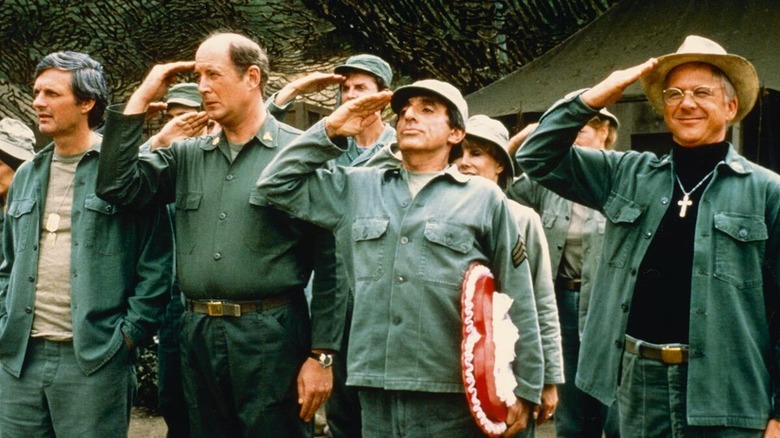
"War is hell" declared Civil War general William Tecumseh Sherman. Turns out, it can also be the source of comedy. Such was the case with "M*A*S*H," which ran for an astounding 11 seasons and 256 episodes from 1972 to 1983 (nearly four times as long as the Korean War), the longest-running sitcom on this list. "M*A*S*H" is also the only show here that was based on a movie, Robert Altman's 1970 classic war comedy of the same name starring Donald Sutherland and Elliott Gould. As era-defining as that film was, its continued cultural impact pales in comparison to the TV show that followed in its footsteps.
"M*A*S*H" was so popular its series finale, "Goodbye, Farewell and Amen" on February 28, 1983, became the most-watched single episode of any TV series in history — a record it holds to this day. With 105 million viewers, it still holds the record for the most-watched scripted television broadcast in U.S. history.
While set during the Korean War, "M*A*S*H" spoke to a nation still reeling from the horrors of the Vietnam War, the first American conflict that was broadcast daily on American TV screens. "M*A*S*H" managed the impossible, honoring the sacrifice and service of American soldiers, while still finding humor in the absurdities of war. Clearly it struck a nerve, and still does today, given its lasting cultural impact.
Happy Days
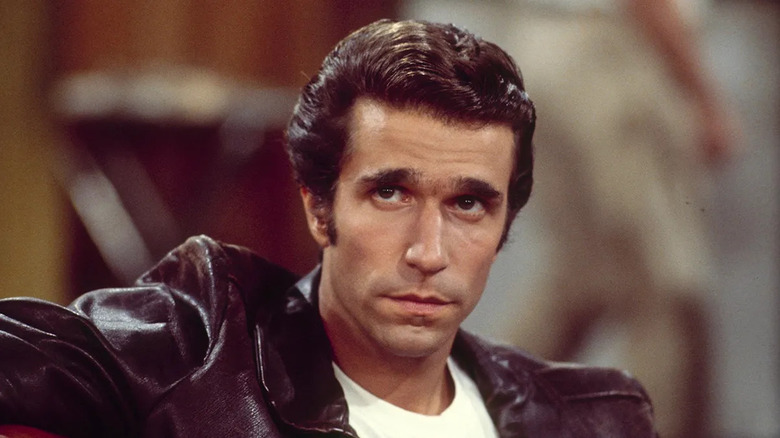
Nostalgia is one of the most potent forces in the popular culture landscape, proven by the fact that pretty much everything today is based on something from back in the day. This isn't a new phenomenon, based on the popularity of "Happy Days." However, "Happy Days" wasn't based on any specific book, movie, or TV show that came before (though it's fair to say it was probably inspired by the success of George Lucas' "American Graffiti"), but rather an entire decade — the 1950s.
It turned out 1970s TV goers were pining for the "good old days" of less than two decades before. But a lot happened in the 1960s, making the '50s almost feel further away. It wasn't just nostalgia that powered "Happy Days" for 11 seasons and 255 episodes; it was abiding affection for the characters, especially Richie Cunningham (Ron Howard) and Henry "The Fonz" Fonzarelli (Henry Winkler), the epitome of cool.
"Happy Days" launched several other shows, most notably spinoffs "Laverne and Shirley" and "Mork & Mindy" (which itself launched Robin Williams' career), while also giving rise to the term "Jump The Shark" (a moment so silly and far fetched that it destroys a shows' credibility). Other notable nostalgic shows have come since ("The Wonder Years," "That '70s Show"), but arguably none have had the same impact as "Happy Days."
Good Times
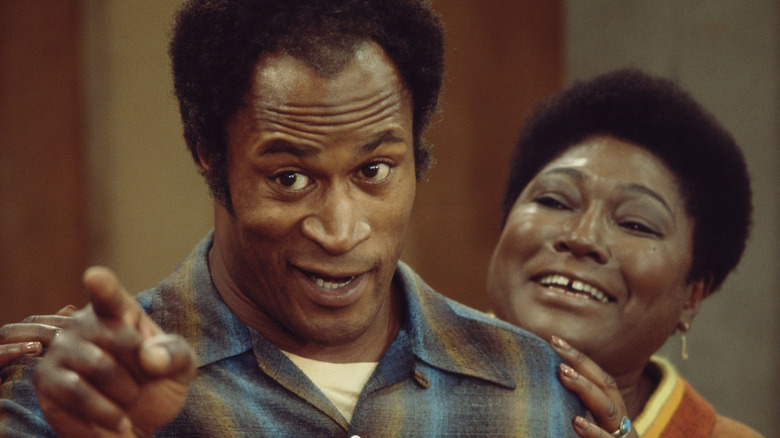
"Good Times" was a spin-off of the "All In The Family" spin-off "Maude," so you could say it was the "grand-spinoff" of the seminal 1970s sitcom. While "The Jeffersons" had greater cultural impact than "Good Times," the latter came first, and was a better representation of the lived Black experience at the time. And where "The Jeffersons" was an aspirational story of a couple "movin' on up" to a nice apartment in Manhattan, "Good Times" took place in a Chicago public housing project, and focused on a blue collar working family struggling to make ends meet.
Florida Evan (Esther Rolle) started as Maude Findlay's (Bea Arthur) maid in "Maude," but got her own series that focused on her family life with her husband James (John Amos) and three children. "Good Times" was the first two-parent family sitcom focused on a Black family, so it was a precursor not only to "The Jeffersons," but such seminal hits to come as "The Cosby Show" and "Family Matters."
Like "All In The Family," "Good Times" didn't shy away from the realities of the real world, and tackled complex social issues like poverty, abuse, drug addiction, racism, and even gang warfare. Yet it never lost its ability to make audiences of all backgrounds laugh. "Good Times" lasted for six seasons and 133 episodes, running from 1974 to 1979, but its impact on representation on television continues to this day.
Little House On The Prairie
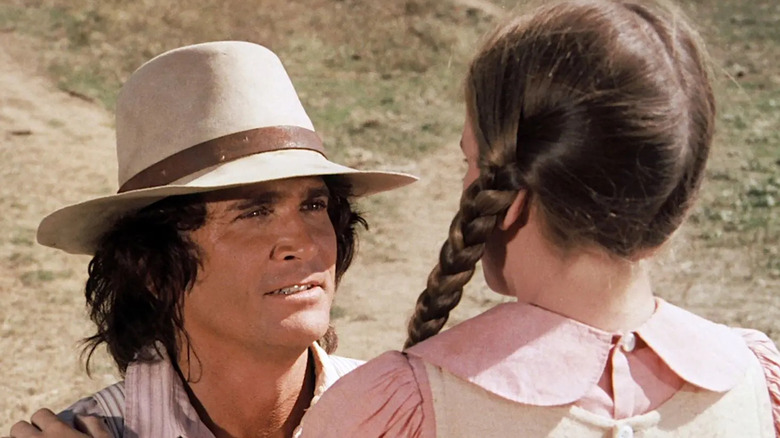
In the 1970s, the social change and upheavals of the 1960s finally arrived on American's television screens. Yet one of the era's most popular shows wasn't set in the urban projects, a working-class neighborhood, a workplace, or a war zone, but on ... well ... a little house on the prairie. Based on the semi-autobiographical children's book series of the same name by Laura Ingalls Wilder, "Little House On The Prairie" told the story of the Ingalls family and their adventures on a farm in rural Walnut Grove, Minnesota in the 1870s–1890s.
Running for nine seasons and 200 episodes (plus five specials) from 1974 to 1983 on NBC, "Little House on the Prairie" was wholesome, bordering on saccharine. Still, it wasn't afraid to tackle certain harsh realities of prairie life, such as eldest daughter Mary (Melissa Sue Anderson) going blind. Told from the perspective of middle daughter Laura (Melissa Gilbert), "Little House on the Prairie" probably could have found success during any TV era. But while it would have come off as cliche during the '50s and '60s, it felt fresh and unique in the cynical '70s.
As much as TV viewers wanted to see their real lives reflected back at them, many also wanted to go back to a simpler time. "Little House On The Prairie" may have faded into obscurity had it aired during any other era. Instead, it was one of the shows from the '70s that defined the decade.