

10 Critically Panned TV Shows That Are Actually Worth Your Time
Critical acclaim — or the lack thereof — isn't the only arbiter of a show's worthiness. Opinions on pop culture are subjective, and sometimes, critics are looking for different things than the average viewer. Overall quality might be paramount to some, while others seek pure entertainment value. This can result in a major gap between critical consensus and audience opinion.
In many instances, the following shows exemplify this discrepancy. These series have Metacritic scores of 50 or below, but plenty of viewers still found them enjoyable. In some cases, what critics dislike about these shows are the same characteristics that the audiences love. For example, a cheesy affect or formulaic plotlines might rub critics the wrong way, but fans find these qualities charming or comforting. Moreover, we don't really have control over the things we love (or hate). Often, we're drawn to a television series or film not because of any objective quality but because it moves us in some way.
We're not here to judge you — or ourselves — for liking something with a bad reputation. In fact, we're here to give a few of these shows the credit they deserve. Here are 10 critically panned shows that are actually worth your time.
Ghost Whisperer
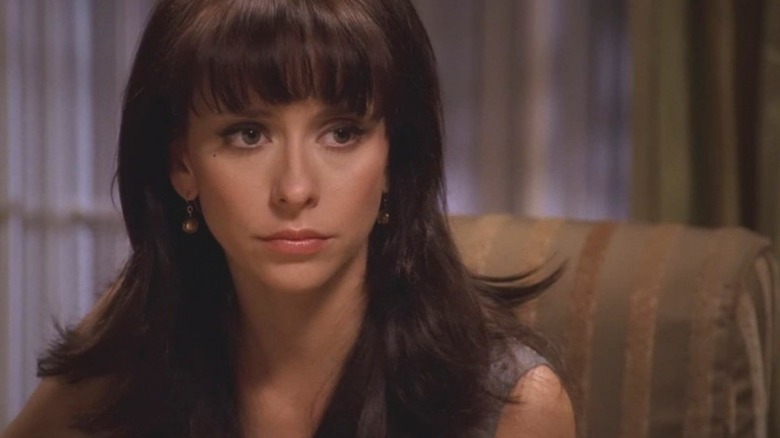
"Ghost Whisperer" was never destined to be a critical darling. The CBS series, which began in 2005, follows Melinda Gordon (Jennifer Love Hewitt), who runs an antique store in the quaint town of Grandview, New York. She lives with her firefighter husband, Jim (David Conrad) and works alongside her best friend, Andrea (Aisha Tyler). Melinda can see and talk to ghosts, and in every episode, she meets wandering spirits and helps them cross over into "the light." The majority of critics disliked "Ghost Whisperer," and it holds a paltry 29 on Metacritic. The most prominent criticism of the show concerned its shmaltzy tone. Almost every negative review features a synonym of the word "cheesy," and several note that, much like the show's spectral characters, it lacks substance.
These criticisms aren't off the mark, exactly, but "Ghost Whisperer" can be a delight to watch. The show is absolutely hokey, but it's so much fun to watch Hewitt ratchet the sentiment up to 11, crying big, fat tears at the end of almost every episode. The series also features some hilariously far-fetched plotlines, like when her husband gets reincarnated into the body of another man, and the same actor keeps playing him. Like any good procedural, the show's trope-laden formula is a large part of its appeal. You know what to expect from every episode, and there's a lot of comfort in that.
One Tree Hill
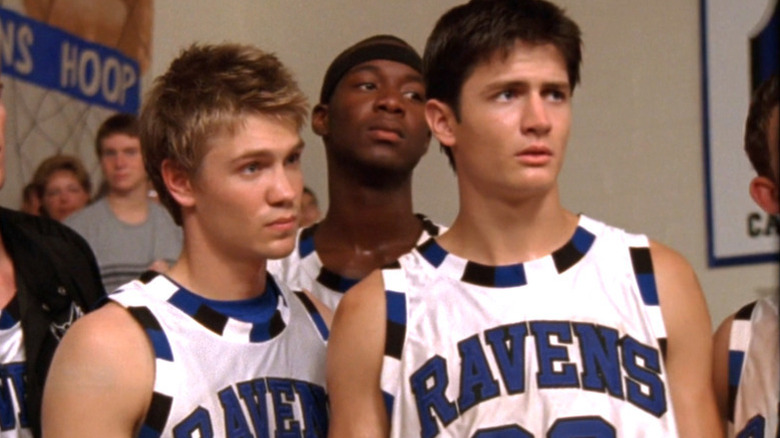
Though the series was filmed in Wilmington, North Carolina, the same location as "Dawson's Creek," "One Tree Hill" strived to stake out its own identity in the teen TV landscape. Downright Shakespearean in its approach, the show follows half-brothers Lucas (Chad Michael Murray) and Nathan Scott (James Lafferty). Lucas is a loner raised by his struggling single mom. Nathan is the wealthy and popular star of the basketball team. When Lucas joins the basketball team, they must learn to work together while navigating the perils of teen romance.
Critics weren't sold on "One Tree Hill," and its Metascore is 46. A number of reviewers found it derivative, noting that it seems to follow the formula of the teen drama without any real passion or interest. Others lamented its lack of charismatic actors and star power. "It just sits there, like desperate mush, a recipe for success that is bland and unsatisfying," wrote Tim Goodman of the San Francisco Chronicle.
For fans, these reviews certainly don't describe their feelings about the show. The protagonists are all lovable if you give them a chance, and there's plenty of good acting to go around. (Though the girls tend to out-act the boys, James Lafferty gives an underrated, surprisingly tender performance.) As in contemporary teen shows like "The O.C.," the series features an incredible soundtrack and some wonderful musical moments. With a "One Tree Hill" sequel in the works, now's the time to revisit this 2000s classic.
Hart of Dixie
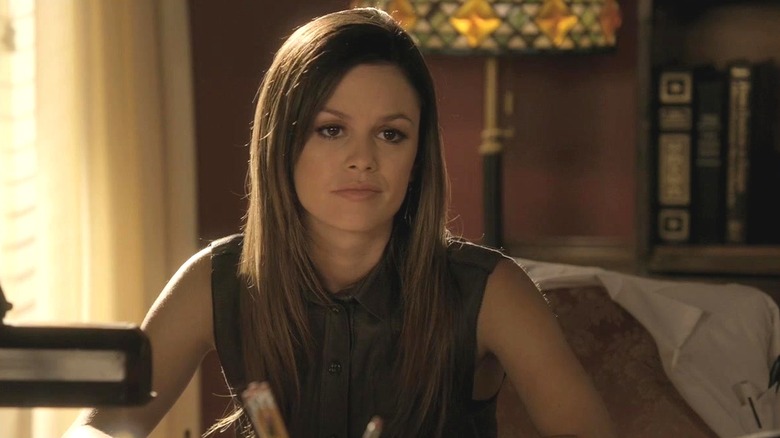
One of many underseen adult shows on The CW, "Hart of Dixie" features former teen star Rachel Bilson in the lead role. Bilson plays Dr Zoe Hart, an aspiring heart surgeon living in New York City. When her career implodes, she accepts a job offer in the small town of Bluebell, Alabama, after learning the father, whom she never knew, left half his practice to her. Zoe struggles to adjust to her new surroundings, and the locals aren't sure about having a city girl around.
With a Metacritic score of 43, critics were far from bowled over by "Hart of Dixie," and those who disliked it, REALLY disliked it. "Watching 'Hart of Dixie' is like mainlining praline. Your mind will rot before your teeth do," reads a review in TV Guide. This sentiment, cutting as it is, exemplifies many of the negative reviews of the show, which tend to emphasize its lazy writing and simplistic characters.
For fans of the show, it works because of how well it caters to our desire for escapism and the sheer force of Rachel Bilson's effervescent charisma. Though critics derided the show's romance novelesque qualities, this is only a negative if you can't stand romance novels. "Hart of Dixie" is the definition of a comfort show, and as romance novelist Bolu Babalola writes, "It is sweet and warm and just what you need for a brain massage."
Criminal Minds
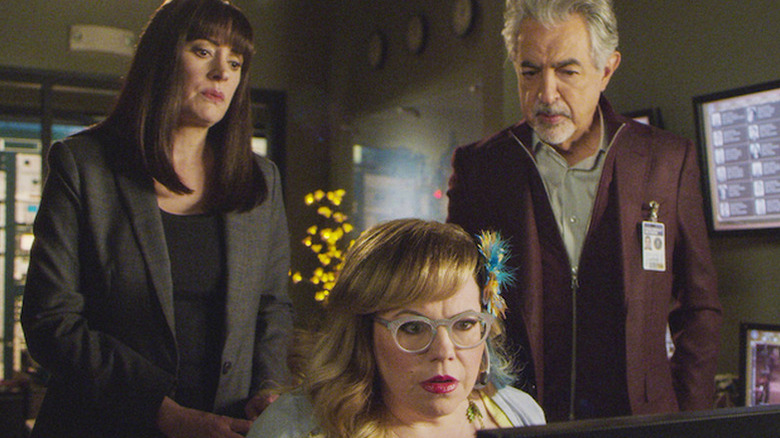
Love it or hate it, "Criminal Minds," with its 19th season on the way, is an iconic police procedural that stands the test of time. The show follows a group of FBI agents who work for the Behavioral Analysis Unit (BAU), a real-life department in which agents use criminal profiling techniques to catch perpetrators. Though the members of the unit have changed over its two decades on air, this fictional BAU is defined by its close-knit team and the speed and accuracy with which they deliver their profiles.
"Criminal Minds" has an average critic score of 46 on Metacritic, and many reviewers find the show tiresome. Those who dislike the show describe it as clichéd, lacking defining qualities to distinguish it from other crime procedurals. For these critics, it has no identity of its own and is simply an amalgamation of various "CSI"-type shows.
That "Criminal Minds" has no unique identity isn't entirely fair. Its single-minded focus on behavioral analysis rather than forensics (apart from digital forensics) gives the show a cerebral bent, even if the analysis in question is somewhat basic. For fans of the show, its appeal is two-part: the BAU team, which comprises a chummy group of likeable, quirky characters played by charming actors, and the easily digestible (if you can stomach serial killer content) formula. Despite its dark subject matter, it's comforting to know you can flip on just about any episode and know what to expect.
Shadowhunters
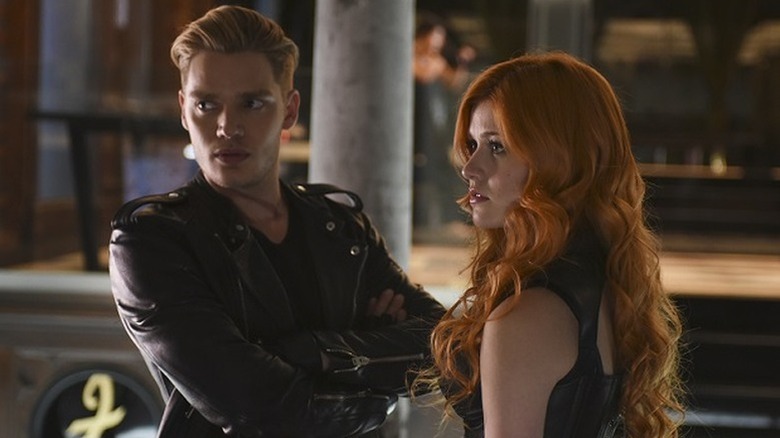
As far as fantasy fare goes, "Shadowhunters" tells a familiar coming-of-age story. Katherine McNamara plays Clary Fay, an 18-year-old girl who discovers she belongs to a group of human-angel hybrids tasked with fighting demons and other supernatural forces. Clary joins other Shadowhunters who teach her about this strange new world.
Author Cassandra Clare hasn't had the best track record in Hollywood. Her "Mortal Instruments" series was adapted for film in 2013, but it was a box office bomb, and the planned franchise came to an end. "Shadowhunters," which premiered in 2016 on Freeform, serves as a reboot of that film, though it wasn't a rousing success either. The show boasts a Metascore of 45, and many critics suggested that it takes itself too seriously. Tim Grierson at The Wrap declared that it's "Not fun enough to be trashy and not resonant enough to make you care."
We won't argue with the critics who found the show silly... because it is. For diehard fans of the books, it can be frustrating to witness all the changes they made. But if you're in the mood for a light-hearted, fluffy fantasy show with several shippable characters and can forgive sometimes cringe-worthy (but often hilarious) dialogue, it's an entertaining ride. It also improves significantly in the second season, with better CGI, better acting, and more fleshed-out characters.
Midnight, Texas
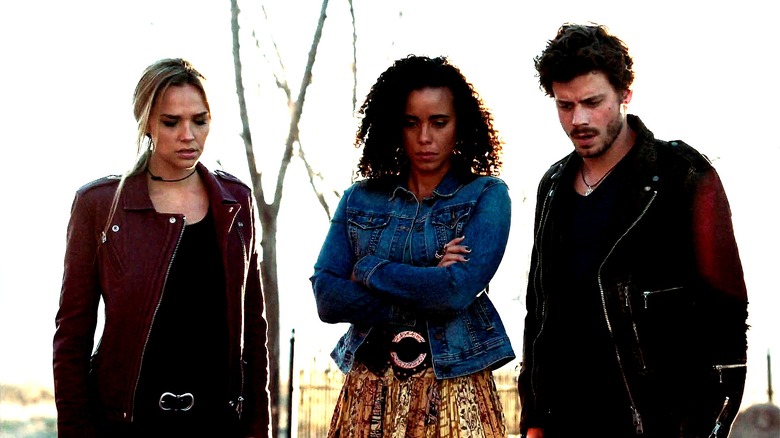
Charlaine Harris is best known as the author of "The Southern Vampire Mysteries," the novel series that was adapted into HBO's hit show "True Blood." Harris also authored the "Midnight, Texas" series, which NBC turned into a television show in 2017. The show takes place in the Texas town of Midnight, a ragtag community of outcasts, brimming with supernatural energy. Our protagonist is Manfred Bernardo (François Arnaud from "Heated Rivalry"), a psychic in need of a safe haven.
The show was not well-loved by critics and holds a Metascore of 50. Our own Dave Nemetz hated the "Midnight, Texas" pilot, calling it "an overstuffed, often ridiculous supernatural drama that somehow manages to make a town filled with magical creatures seem crushingly dull." His sentiments were echoed by several other reviewers, who found it too tame and lacking energy, and many have criticized the show's poor special effects.
While it's true that it is somewhat absurd, that's also why it's worth watching. TVLine's editor-in-chief, Kimberly Roots, counts herself as a devoted fan of "Midnight, Texas." "The series built a world quickly, and well, and it's a world I like being in," she wrote after its cancellation. The plotlines don't always adhere to logic, but it features fun monster-of-the-week action, a quirky cast of characters played by a charming ensemble, witty dialogue, and fast-paced action. The special effects, thankfully, improved in the second season, and it's a shame it didn't get the chance to further spread its wings.
Motherland: Fort Salem
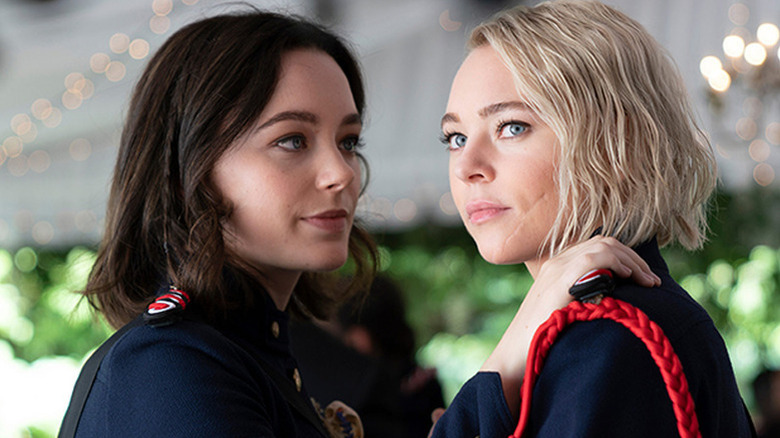
The Freeform series "Motherland: Fort Salem" takes place in an alternate universe in which American witches put an end to the Salem witch trials by agreeing to serve in the military. The country is now matriarchal, and modern-day witches are drafted to serve in the U.S. Army. The show follows three cadets at Fort Salem as they begin their training and learn that not everything is as it seems. Though most critics expressed an appreciation for the show's compelling premise, it was far from a critical hit, and received a Metascore of 49. Several reviewers note how confusing the show's first season is, with several plotlines that seem underdeveloped and tacked on. Some found it uneven and half-baked, with the show's most interesting concepts left unexplored.
Despite these negative reviews, the show garnered a passionate fan base. Viewers came to love the characters, who grow and develop as the series wears on, and found the worldbuilding engaging. Many have lauded the show for its diversity, and the show's primary romance is a queer couple beloved by audiences. When it was cancelled after its third season, devastated fans created a campaign to save it. Though it's not without flaws, it's one of the most original shows we've seen in recent years, and the narrative diverges from expectations enough to keep you tuned in.
Full House
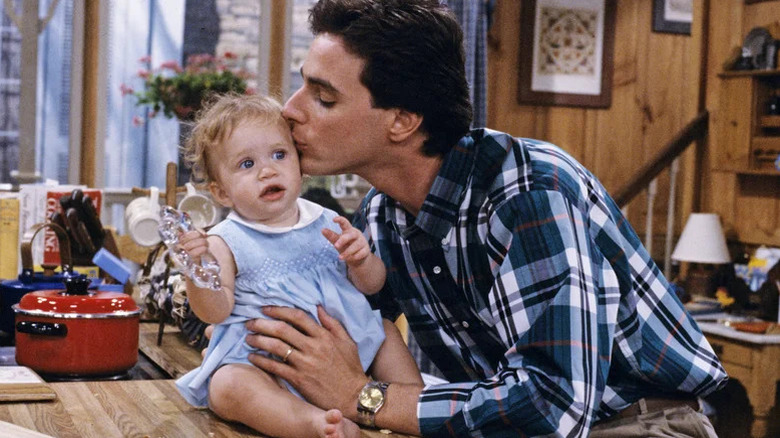
Just because something is a classic doesn't mean it lacks haters. In particular, sitcoms, some of the most popular shows on television, tend to have a hard time winning over the critics. Take, for example, ABC's "Full House," which follows the newly widowed Danny Tanner (Bob Saget) as he calls on his brother-in-law, Jesse (John Stamos), and best friend, Joey (Dave Coulier), to help raise his three daughters. As the title suggests, the house fills up quickly, and this unique living situation is the heart of the show.
Though it was watched by millions of people when it aired, and millions more during reruns, critics didn't buy into "Full House," and the compiled reviews translate into a score of 31 on Metacritic. Reviewers found it dull, unfunny, and entirely too milquetoast to be worth watching. When the Netflix revival "Fuller House" came out, retrospective reviews were just as bad. Slate described the original as a "hackneyed and saccharine family sitcom."
Though the term "saccharine" is usually deployed as a negative descriptor, "Full House" is an extra-sweet show, and that's one of its most endearing qualities. Paste's, Josh Jackson described it as "the television equivalent of cotton candy," which isn't necessarily a bad thing. If you love the characters, and find comfort in their archetypal roles and the life lessons they offer, watching "Full House" is a pleasant experience. It may be semi-mindless entertainment, but it succeeds because of the inherent chemistry of its charming cast.
ALF
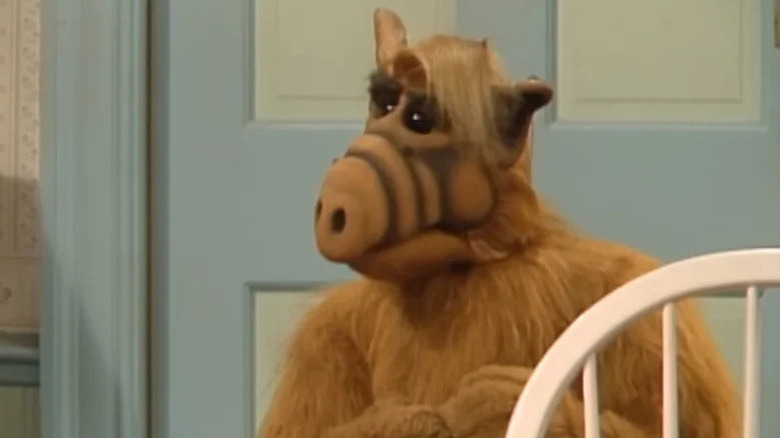
It's not all that surprising that the '80s sitcom "ALF" wasn't a hit with critics. Consider the premise: A furry alien crashes his spaceship in a sunny California suburb. When the Tanner family discovers him in their garage, they decide to give the creature (nicknamed ALF, as in "Alien Life Form," though his given name is Gordon Shumway) shelter in their home. The military is after ALF, and the Tanner's neighbors are suspicious, but the family grows to love their furry friend.
Critics were not charmed by this puppet alien, and "ALF" holds a Metascore of 44. Several reviewers noted that the series — and its characters — lack any sort of charisma that could make the silly show a hit. Despite its goofy premise, detractors encountered a dearth of good humor. While these critics found "ALF" to be an unbelievably dull protagonist, viewers came to care for the little guy. Family comedies dominated the airwaves in the 1980s, but few were this quirky. ALF's fish out of water situation provides for many humorous extraterrestrial hijinks à la "E.T.," and the evil government agency bit is oddly sinister.
There has never been another show quite like "ALF," and whether it's good or bad is sort of a moot point. It captured viewers' attention, generating two animated spin-offs, an unlikely 2004 talk show, and a TV movie, though recent plans for a reboot fell apart.
Private Practice
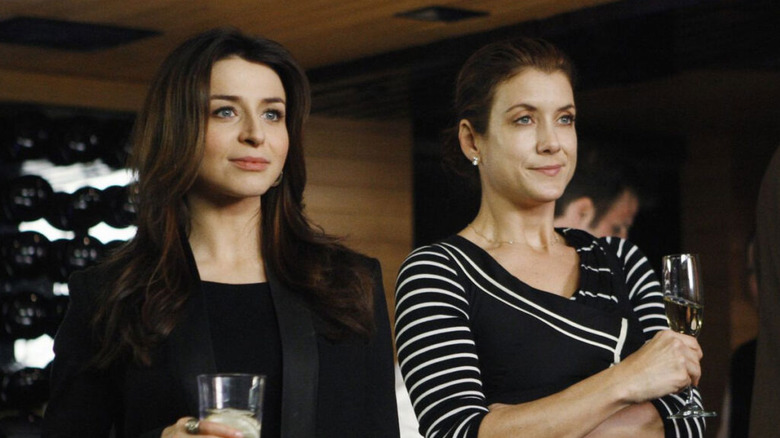
One of the longest-running shows on American television, "Grey's Anatomy" was the smash hit that made Shonda Rhimes a TV powerhouse. Considering that show's massive success, expanding the universe was a logical next step. "Private Practice" follows the exploits of Addison Montgomery (Kate Walsh), an OBGYN viewers were first introduced to as a ballsy protagonist in "Grey's Anatomy." Addison decides to leave Seattle for Los Angeles, joining a private practice alongside her friend Naomi (Audra McDonald).
Though many fans were happy to follow Addison to her new job, "Private Practice" wasn't a hit with critics. It holds a Metascore of 44, compared to "Grey's Anatomy," which scored a respectable (though not outstanding) 64. Critics lamented the show's clumsy scripts and flimsy subplots, suggesting that a formidable character like Addison and her talented co-stars should be given something meatier to work with.
"Private Practice" improves as it goes on, especially with the addition of Amelia Shepherd (Caterina Scorsone) in Season 3. The smaller cast and slower pace give "Private Practice" a more grounded feel (despite a few bonkers plotlines), and that means situations are not quite as life-or-death as in "Grey's." Walsh and her costars are extremely charming, and the show's breezy quality intermingles with melodrama for some juicy storylines.