

10 Hit Shows From The '80s That Nobody Talks About Today
Nostalgia for '80s TV never seems to go away. "Knight Rider" is always being rebooted, He-Man is getting a movie later this year, and "Star Trek: The Next Generation" spawned characters who still keep showing up in new shows and movies. Those are just the tip of the iceberg, too.
Yet not everything from the '80s remains in the conversation. Some shows just don't see any real demand for rebooting, revisiting, or even still being worth talking about. That even applies to many that were quite popular in their day. Perhaps part of the problem is that '80s TV never met a formula it didn't like to milk to death. Whether it was prime-time soaps about rich jerks, mismatched partner action comedies, family sitcoms, or the maximum amount of sci-fi possible on a TV budget, many of the shows that did well in their day were but one of many in their lane, and don't hold up to the scrutiny of reruns. Others arguably deserve to be remembered better, but were too big a downer to revisit as light entertainment.
Here are '80s shows people just don't seem to talk about any more, for good or ill. In some cases, they have even had reboot attempts that failed to get any significant attention. As you'll see, it's entirely possible viewers just burned out on the notion of two slightly different characters in partnership...
Hardcastle and McCormick
If a showrunner wanted to pitch an action series in the '80s, there was a pretty simple formula that worked, many times over: two mismatched leads fight crime. One would usually be a fairly traditional leading-man type, and the other a character actor. If no cool name for the show comes to mind, just put an ampersand between the two character names and call it a day. If you can throw in a distinctive vehicle — all the better for merchandise rights — so much the better.
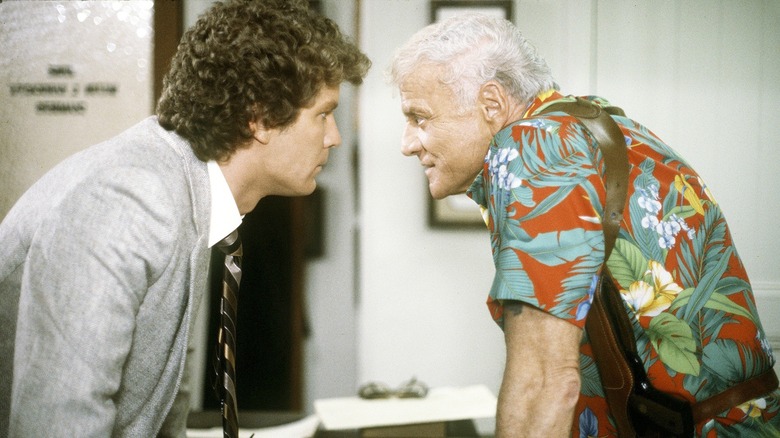
Exhibit A, in a lengthy alphabet of exhibits, is "Hardcastle and McCormick." The leading-man type here was Daniel Hugh Kelly's "streetwise" car thief Mark McCormick, boasting the sort of '80s perm that screams anything but "street." Attempting to steal a prototype sports car designed by his late best friend, he's busted and strikes a deal with Judge Milton Hardcastle (Brian Keith).
McCormick can avoid jail if he works with the judge, using the fancy car to bust all the criminals who escaped the court's justice using legal technicalities. Like many shows during the era, there was a strong undercurrent of old-fashioned tough guys showing the kids what "real justice" was all about. Real heroes, on an '80s TV set, circumvented the law when it was a question of good vs. evil. Compared to the likes of "The A-Team," though, this show was low-key.
Simon & Simon
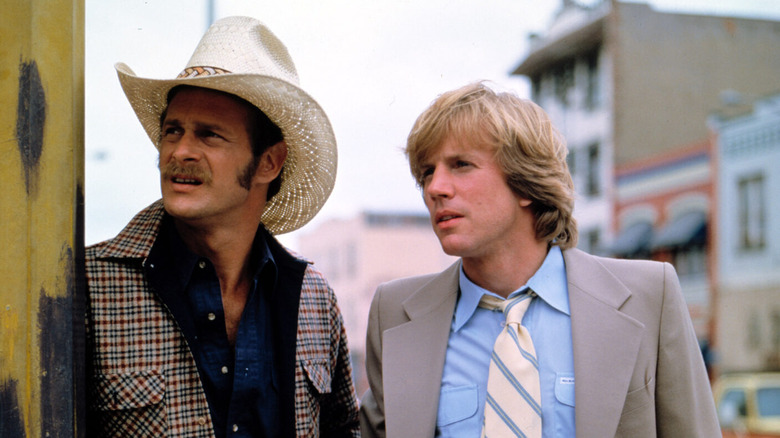
It's the action partner formula again, this time asking the big question: What if bickering private detectives were brothers? Jameson Parker's A.J. Simon, the conventional hunk in this duo, was uptight and Catholic; Rick Simon, played by Gerald McRaney, was a former Marine who acted more laid-back and lived on a boat. McRaney, who is not a veteran, would go on to make a career of playing military types, most notably the far more conservative and memorable Marine character "Major Dad."
Again, there were signature cars: Rick drove a Dodge Power Wagon, and A.J. a Camaro. Parker didn't maintain the same level of success as McRaney, though they did reunite for both a "Simon & Simon" TV movie and an episode of "Major Dad."
Though popular in its time, "Simon & Simon" feels downright restrained next to a flashier partner show like "Miami Vice." With the partners being brothers who choose to work as a team, there also wasn't the same level of tension as in similar shows where characters are forced to work together, like "Hardcastle and McCormick." As we'll soon see, it was a formula that proved pretty easy to one-up.
Riptide
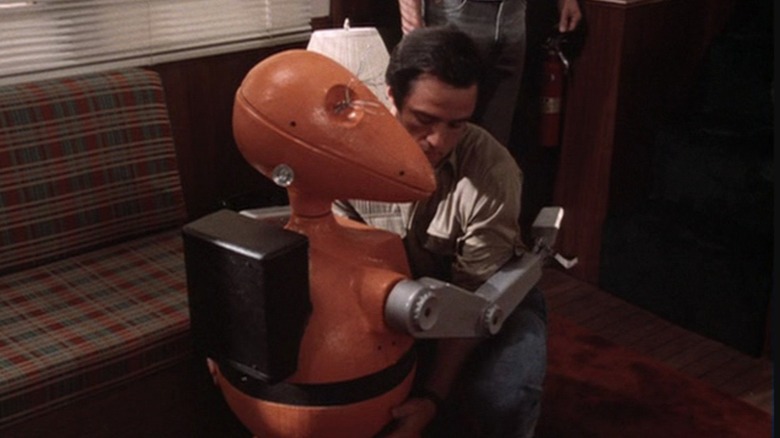
Like "Simon & Simon," "Riptide" also featured two brothers — albeit Vietnam veteran "brothers in arms," rather than actual siblings — operating a detective agency out of a boat. The twist was they added a third partner, a computer hacker with a robot buddy he built himself.
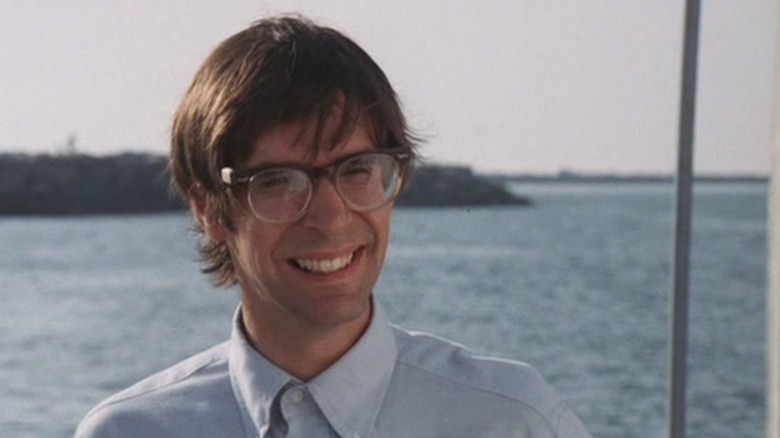
Perry King and Joe Penny, as lead characters Cody and Nick, both fulfilled the traditional leading-man role, with Thom Bray's Murray a broadly stereotypical nerd who liked to say "Neat!" a lot. This being the '80s, very few screenwriters actually understood what computers and robotics could or could not do, so the portrayal of the Snoopy-looking "Roboz" served the plot more than it did plausibility. As for signature vehicles, the trio also owned a speedboat, helicopter, and station wagon.
"Riptide" may have tried to be too many things to too many different people, with the traditional detective show and tech-nerd elements contrasting more than they meshed, along with plots that tried to tackle serious issues like corruption in the U.S. military. Mad Magazine's parody called the show "Rip-Off Tide," since it played like a pastiche of elements stolen from more popular shows. Penny would go on to be the conventionally handsome part of yet another popular mismatched-partner series of the '80s, "Jake and the Fatman." Bray became a writer-producer on shows like "Nash Bridges." King remained a stalwart of TV movies.
The combination of Vietnam vets and '80s-style nerd caricature has dated over the years, and doesn't scream revival.
Cagney & Lacey
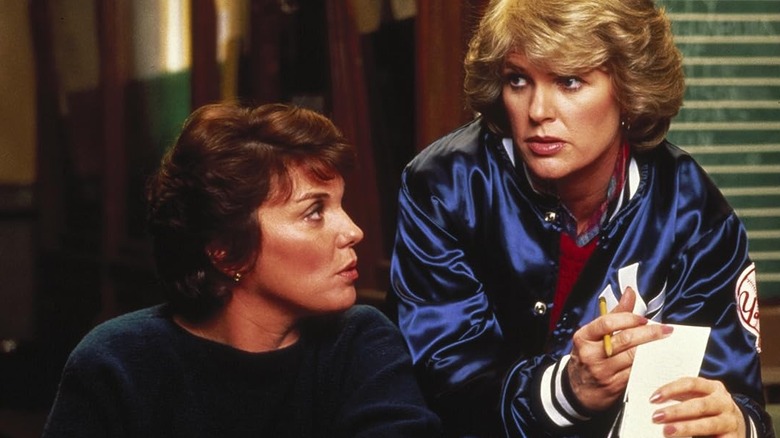
Despite the familiar title formula, "Cagney & Lacey" was anything but the typical action formula show. It was originally planned as a female buddy cop movie, answering feminist critiques that none had yet been made. Producer Barney Rosenzweig soon found out why: no movie studio wanted one, so he retooled it as a TV show instead. It took a while to find a groove: Loretta Swit played Detective Christine Cagney in the pilot, but wasn't allowed out of her "M*A*S*H*" contract. Meg Foster replaced her, but was herself replaced by Sharon Gless after CBS found her too aggressive, and nearly canceled the show (a fan campaign helped save it). Tyne Daly, who had acted opposite Clint Eastwood's Dirty Harry in "The Enforcer," was Detective Mary Beth Lacey from the get-go.
It's wild that we don't talk about this show more today — it's one of the greatest procedural shows ever — though probably for the same predictable reasons that it didn't become a movie. The show won 14 Emmys, and made its leads into feminist touchstones. It's possible the novelty of female buddy cops as a mere concept has worn off; it's also possible that the show isn't watched more often today because it was frequently a bummer, with the duo often losing their cases. In attempting to portray female detectives in an authentic, non-exploitative way, a level of realism felt necessary, albeit (appropriately) depressing at times. CBS attempted a reboot in 2018, but passed on the pilot.
Kate & Allie
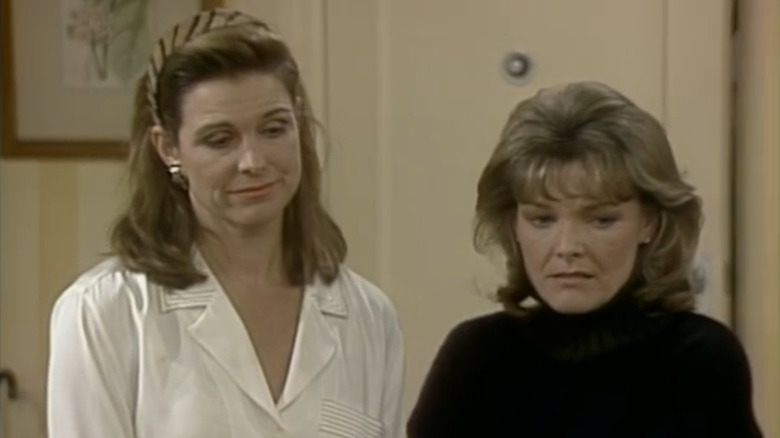
For '80s kids too young to have seen "Saturday Night Live" in its first years, "Kate & Allie" was what Jane Curtin was known for. She was paired with Susan Saint James, who previously starred in the mismatched detective series (yes, another one) "McMillan & Wife," starring Rock Hudson as McMillan. Saint James played the more liberal Kate opposite Curtin's Allie, in a sitcom about two divorced single moms who become Greenwich Village housemates. U.S. divorce rates peaked in the early '80s; as a result, "divorced people can be normal and funny too" sitcoms were quite popular (keep reading this list!), in stark contrast to previous decades that forbade mention of it.
Initially, much humor derived from Allie taking on the homemaker role with Kate as the breadwinner. As the story evolved, they opened up a business together; as their kids grew, teen issues came to the fore. Unlike so many sitcoms, life didn't simply reset at the end of each episode. This only proved a problem when Allie got married, which essentially destroyed the premise of the show, and it never recovered. Six seasons and two Emmys for Curtin isn't bad, though.
"Kate & Allie" likely doesn't enter the conversation much any more for the same reason our next two entries don't: divorce and single-parent families aren't novelties on TV any more. A proposed 2021 reboot never ended up happening.
Dear John
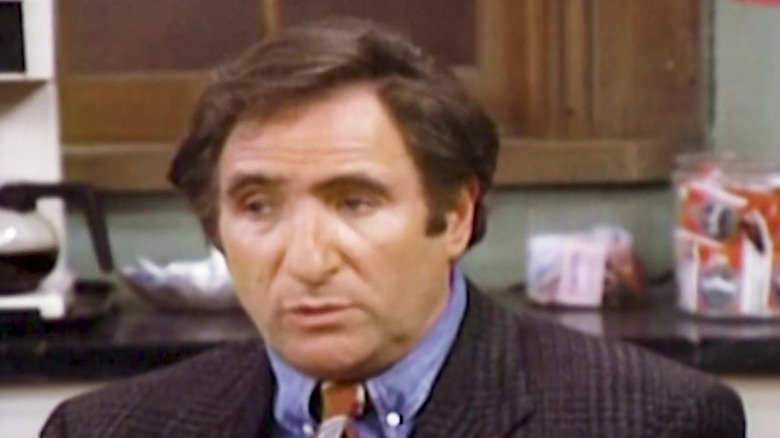
In "Dear John," John (Judd Hirsch) comes home one day to find that his wife of ten years has left him for his best friend, leaving only a note. He promptly loses custody of their son and possession of the house, moves into an apartment, and joins a support group for the newly divorced. The degree to which this group resembles rehab is fodder for a lot of the sitcom's humor. As with a lot of gender-based humor on TV in the '80s, the idea that a former man of the house has trouble functioning by himself is treated as inherently amusing.
"Dear John" was loosely based on a British series of the same name; the original lasted two seasons of seven episodes apiece, while the U.S. remake lasted four seasons with 90 episodes total. For Hirsch, it was his steadiest TV gig since "Taxi," and would remain so until "Numb3rs" in 2005. Since the '80s, Hirsch has had a successful run of playing fathers of main characters: Rob Morrow and David Krumholtz's in "Numb3rs," Marc Maron's in "Maron," Johnny Galecki's in "The Big Bang Theory," Jeff Garlin's in "The Goldbergs," and of course Jeff Goldblum's in the "Independence Day" movies.
Maybe that's why we don't talk about "Dear John" any more — it's like thinking about your dad's dating life.
Empty Nest
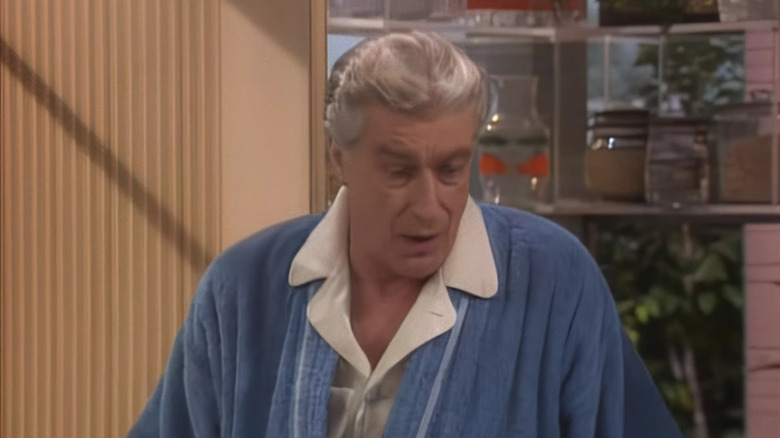
Imagine if "The Golden Girls" did a spinoff show, and it was about a man who's kind of a downer. No need to imagine; it existed, and was called "Empty Nest." Originally it was going to be a bout a married couple played by Rita Moreno and Paul Dooley, who played the Girls' neighbors in a backdoor pilot episode; Moreno and others hated the script, so the premise was retooled for another secondary character, widower Dr. Harry Weston (Richard Mulligan). The new version of "Empty Nest," which retained David Leisure as a wacky, deliberately annoying neighbor, proved to be a hit and lasted seven seasons.
The premise — widowed Weston has both adult daughters move back in with him — mashed up several premises that had already been hits. Daughter Carol (Dinah Manoff) was a divorcee forced to move back in with family, while her sister Barbara (Kristy McNichol) was a female cop, still something of a novelty for a TV character. When not dealing with their problems, Harry had his own workplace issues at the hospital, which later got its own spinoff show, "Nurses," that lasted three seasons.
Though "The Golden Girls" cast members frequently appeared on "Empty Nest," nostalgia for the former has not led to much renewed interest in the latter. The marked tonal difference might be responsible: Dorothy, Blanche, Rose, and Sophia love life and make the most of it, while Harry mainly survives it.
Head of the Class
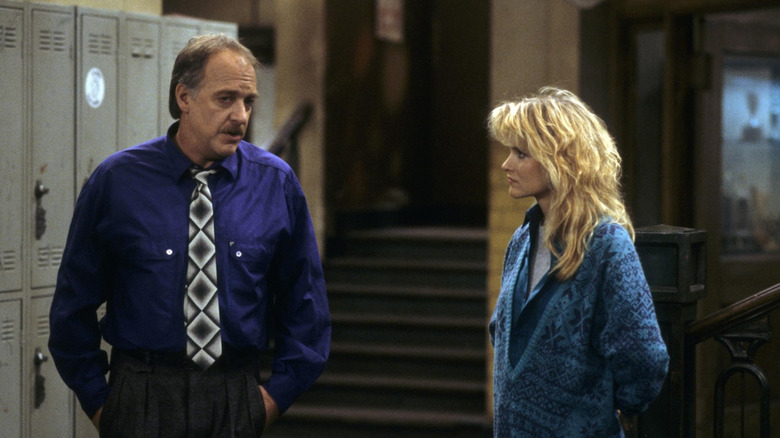
Howard Hesseman and Billy Connolly aren't exactly two actors who would ever be confused for one another. Connolly, however, was Hesseman's replacement as the lead in the fifth and final season of "Head of the Class," a sitcom about an unorthodox teacher inspiring his honor students.
Best known as the trouble-making Dr. Johnny Fever on "WKRP in Cincinnati," Hesseman maintained a familiar rebellious streak as Charlie Moore, an out-of-work actor who becomes an honors teacher, and helps students deal with their personal problems as well as their homework. In return, they help him learn more modern skills like how to use a PC. Notable actors playing the students included Robin Givens and Ke Huy Quan.
When Hesseman left the show, ABC somehow settled on lovably vulgar Scottish comedian Billy Connolly to replace him. As the imaginatively named "Billy MacGregor," Connolly managed to clean up his act enough for network TV, but the wild swing didn't save the show, which was canceled soon thereafter. A sequel reboot was attempted on HBO in 2020, featuring a special appearance by Robin Givens, but it was discontinued immediately, and removed from the streamer completely. In a post-"Dangerous Minds" world — not to mention the subsequent spoof film "High School High" — "Head of the Class" just didn't have much gas any more.
Charles in Charge
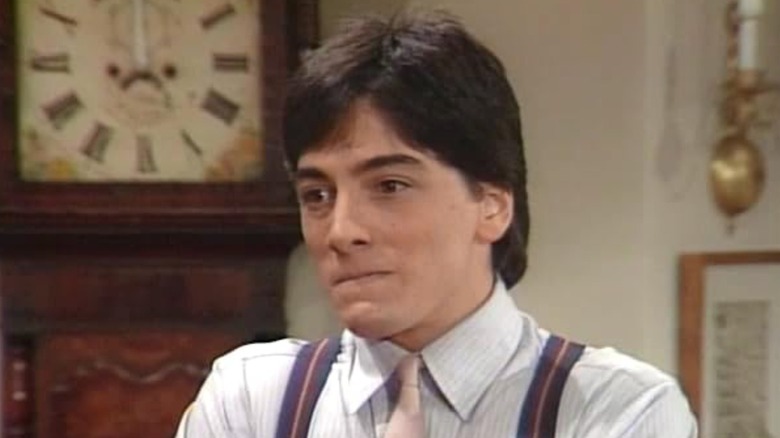
Another popular trope of '80s sitcoms was the unlikely babysitter/housekeeper. When it caught on, it really caught on for the likes of "Who's the Boss?" and "Mr. Belvedere." "Charles in Charge" can't be blamed for trying, but there may be more than one reason we don't talk about it today. First, the hokey premise: College student Charles (Scott Baio) agrees to work for an affluent family in exchange for room and board. He must balance his new responsibilities with both his studies and the standard college partying and girl-chasing hijinks with best pal Buddy (Willie Aames). The show switched out the host family cast after the first season, but it lasted four more.
Baio has stayed in the public eye most recently as a conservative political spokesperson; Aames went on to play the direct-to-video Christian superhero Bibleman. When Baio's acting career comes up, he tends to be identified primarily with his more famous sitcom character, Chachi, from "Happy Days" and "Joanie Loves Chachi."
Another possible reason fans don't talk about "Charles in Charge" is darker, though. Nicole Eggert, who played Jamie, one of Charles' charges, accused Baio of molestation and statutory assault in 2018. Charges were not filed in Los Angeles due to statute of limitations. Alexander Polinsky, who played Eggert's brother on the show, then backed the allegations up and made some of his own, including physical violence. Baio has denied all the accusations.
Highway to Heaven
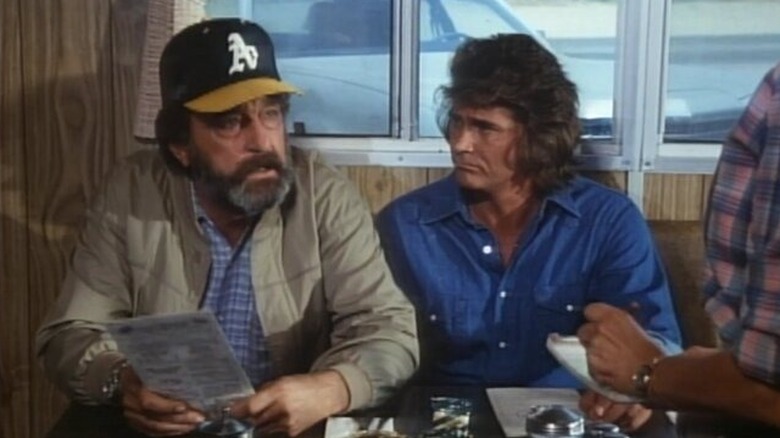
Michael Landon will forever be known in the annals of TV history for two very popular shows: "Bonanza" and "Little House on the Prairie." Though it lasted five seasons, "Highway to Heaven" is not generally mentioned in the same breath. Yet another mismatched partners show, it was a bit gentler than the crime-fighting dramas that typically used the same premise. Landon's Jonathan was an angel on Heavenly probation, who teamed up with an ex-cop named Mark, played by Landon's friend and regular costar Victor French. Together, they travel from town to town helping souls in need with the use of divine magic and sentimental sermonizing.
Though it was more softhearted than a typical action show, "Highway to Heaven" essentially treated Jonathan as a God-powered superhero, able to create secret identities and manipulate objects with a little help from "the boss." The 1988 Writers Guild of America strike, along with failing ratings, meant "Highway to Heaven" never went beyond five seasons. The show's overall popularity seems to have remained in the '80s. Though, in 2021, Lifetime did try to reboot the series with a movie.