

Why The Super Bowl Uses Roman Numerals
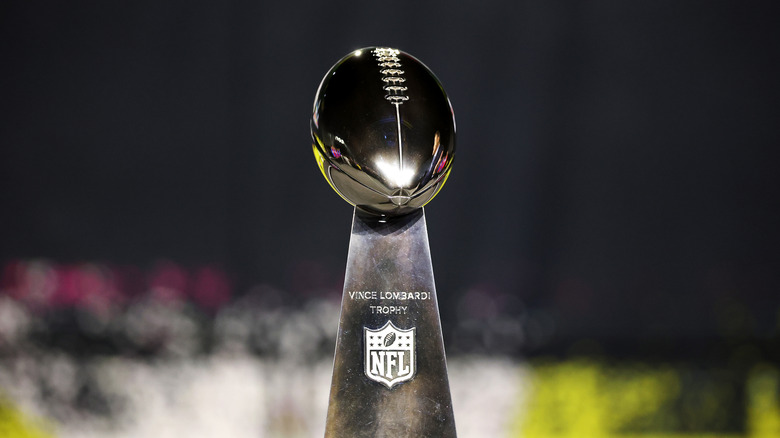
Super Bowl LX is mere days away. For the Arabic-numeral-minded among the NFL fandom, which should be all but a handful of double-fisting Latin football superfans, that's Super Bowl 60. The use of Roman numerals goes back to near the start of the Super Bowl, but not quite to the beginning. Rather, it was a change instituted for Super Bowl V in 1971, following the AFL-NFL merger. Roman numerals were then retroactively attached to the four previous Super Bowls, the first two of which were originally known as the AFL-NFL World Championship Game.
So why the change from our newfangled Arabic numerals to Roman numerals? As the story goes, there are two main reasons. First and most importantly, the goal was clarity. NFL seasons take place almost entirely in the calendar year preceding their respective Super Bowl; for example, the 2025 season concludes with a Super Bowl played in 2026. This imbalance was even more extreme when the Super Bowl was played in January instead of February. The idea was that numbering the games with Roman numerals would reduce confusion about which Super Bowl corresponded to which season.
The second reason was more about marketing than clarity — giving the Big Game a distinctive title structure to set it apart as a big event.
The Super Bowl's Roman numerals were meant to add glitz

The late Lamar Hunt, former owner of the Kansas City Chiefs, is generally credited with an outsized influence on the way we name the Super Bowl, including the push for Roman numerals as a way to spice things up. While it might sound silly, and some fans complain every year trying to do the math of what number we're actually on, there's no question that the convention sets the game apart from other professional sports championships that simply use the relevant years — the 1979 World Series, 2024 WNBA Finals, etc.
Hunt also helped spearhead the AFL in 1959, creating a direct competitor to the NFL. The first Super Bowl — again, not called that at the time — was the result of early merger efforts between the two leagues, which were finalized by the early 1970s.
Ever since Super Bowl V, the numbering convention has largely stuck, with one notable exception. Super Bowl 50, played in 2016, used Arabic numerals because the Roman equivalent, Super Bowl L, was deemed inadequate. Should the NFL live to see 40 more Big Games, we'll likely get a similar exception for Super Bowl 100, rather than Super Bowl C.
While many still find the tradition annoying, it's not so hard once you get a handle on it. "I" is 1, "V" is 5, "X" is 10, "L" is 50, and "C" is 100, with any numerals listed before the largest being subtracted from it, and any listed after the largest being added to it. In this year's case, Super Bowl LX essentially means "Super Bowl 50 plus 10." It's just one of those traditions, like questionable Super Bowl halftime shows, that make the big game such an inimitable event in American sports.