

Why Midnight Mass Couldn't Be Made Today, According To Creator Mike Flanagan
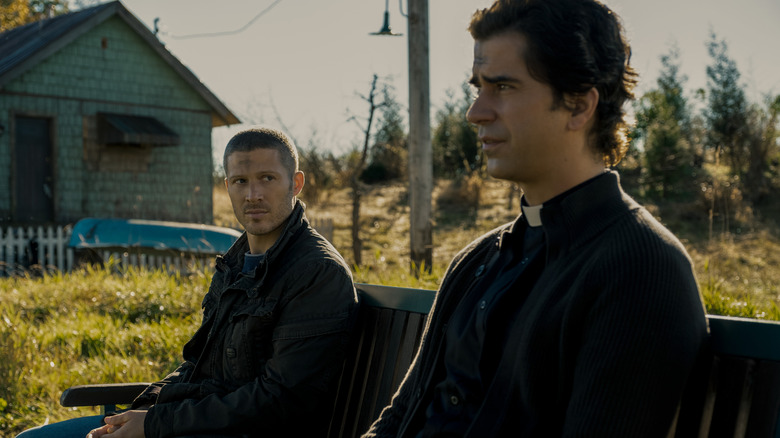
Of all the horror series Mike Flanagan created at Netflix, "Midnight Mass" is the clear odd one out. It's the only series of the five based on original material, rather than adapting a prior text, as is the case with "The Haunting of Hill House," "The Haunting of Bly Manor," "The Midnight Club," and "The Fall of the House of Usher." It's also decidedly the slowest in pace and the most literary in nature, with the meat of the series far more interested in larger themes of faith and fanaticism than in the horror itself.
Perhaps it's no surprise, then, that Flanagan himself sees the show as an oddity — a rare one-off that slipped through a narrow window of viability. On a recent episode of Flanagan's Wake, a podcast dedicated to the writer/director's work, Flanagan made a guest appearance, sharing all sorts of stories and insights into his past and upcoming work. That included a deep-dive into the production of "Midnight Mass," which Flanagan said would likely never get made now, just a few years later.
"It still amazes me that Netflix made Midnight Mass, frankly," Flanagan explained. "There's nothing about it on paper that makes sense to make. It's just not a show you make. And I think it got made because 'Bly Manor' did so well, and, well, because 'Hill House' did so well, really." Where those shows had clear hooks in the horror genre, "Midnight Mass" wasn't really the vampire show many anticipated, with a structure more befitting a stage play, filled with monologues and pontifications.
"It happened at the perfect time when Netflix was saying yes to so many things," Flanagan said. "The industry's just not like that anymore."
Midnight Mass snuck through a 'regime change' at Netflix
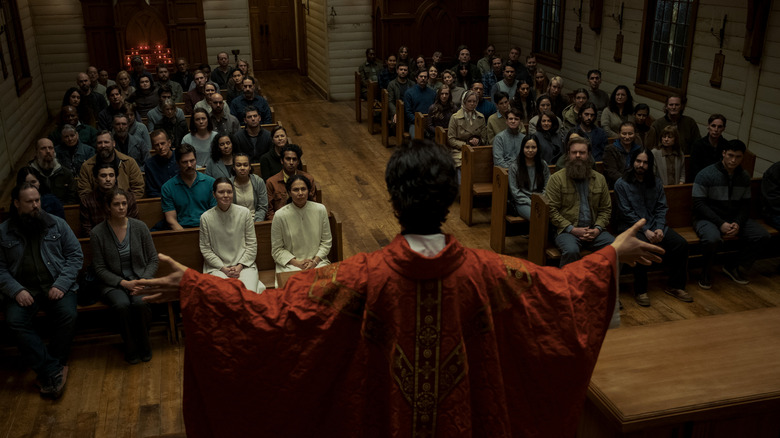
When Netflix first gave the series order for "Midnight Mass," Flanagan was one of the streamer's hottest creators. That gave him a level of leeway to push for his true passion project. "'Hill House' did so well that they wanted 'Bly Manor,' and I said I would do it if they did 'Midnight Mass,'" Flanagan explained. "So there's a little bit of hostage-taking involved."
"The Haunting of Hill House" was a massive hit, so it makes sense that the then-execs at Netflix would grant the wish. After all, it meant more material from an auteur whose star was rapidly rising. But in the time it took to actually make the show, major shake-ups had hit Netflix, putting the already unique show on less certain ground.
"They didn't initially know what to do with the show when we were done," Flanagan explained. "There'd been a huge executive regime change at Netflix that occurred during production on 'Midnight Mass.'" Production changes as a result of the COVID-19 pandemic gave an extra level of autonomy to the project, with less on-set scrutiny than normal.
"We were just off in our own little bubble, and all the people who had given us permission to make the show were gone by the time we were done," Flanagan said. "There was a whole new team who had just gotten acclimated and said, 'Okay, let's see this show.' And I was like, 'Here is the show!' And they said, 'Where are the vampires?' And I said, 'They'll get there eventually, but the real vampire is fanaticism!' They didn't think that was terribly funny."
There may never be another Midnight Mass
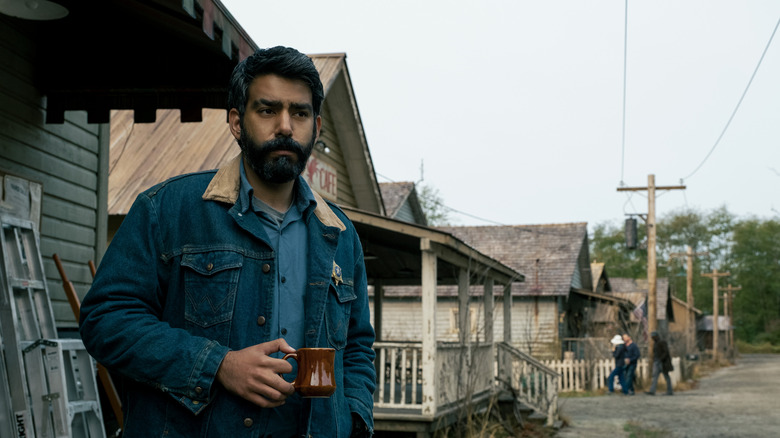
Unsure what to do with "Midnight Mass," the new leadership pushed for major reshoots to turn it into a proper vampire series that could be marketed in a more straightforward way, like other Netflix horror miniseries. But according to Flanagan, the sets had already been destroyed, making changes too costly to actually follow through on. With no other option, the streamer ultimately released the show as it was, and while it may not have been the typical genre hit the folks in charge were looking for, the finished package spoke for itself, earning strong reviews and a lot of viewer attention based on Flanagan's past successes. The series ranked second across all major streaming platforms in minutes watched for its first full week back in 2021, trailing only the global phenomenon that was "Squid Game" season 1.
Even with those clear metrics of success, though, Flanagan doubts that the series would ever get greenlit now. "I don't think the show would be made today, anywhere," he said frankly on Flanagan's Wake. "It had struck me that it was a show about internal dialogue and homilies, and ultimately a show that didn't have the answers to the questions it asked, because we don't. And that was kind of baked into its identity, and it was really just a song at the end of the day, about faith, and life, and how we treat each other, and it's hard to sell that."
Since moving to Amazon from Netflix, Flanagan has been primarily focused on making more of the Stephen King adaptations that made him famous — perhaps a sign of the kinds of things that are easier to pitch in this day and age.
For Flanagan, though, all of that difficulty — the unpitchable, irreplicable structure of "Midnight Mass" — only made it more special. As he said on Flanagan's Wake, "It's my favorite of the series that I've gotten to do."