

15 Best Post-Apocalyptic TV Shows Of All Time, Ranked
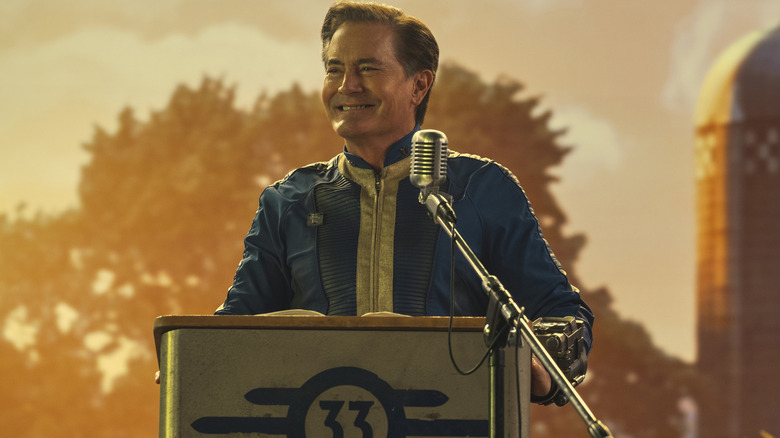
Fiction about the aftermath of the "end of the world" has been a staple of science fiction and fantasy for centuries, and, on television, its most notorious iterations date back at least as far as the multiple "The Twilight Zone" installments grappling with nuclear anxiety. Since the '70s, we've seen more and more full-fledged TV shows set entirely in post-apocalyptic realities — and, for one reason or another, their ubiquity has ramped up significantly in the 21st century.
For this ranking of all-time highlights in the genre, we've included everything centered on the continuation of society in the wake of Earth-shattering calamity — including entries in the oft-overlapping dystopian bracket, so long as their sociopolitical nightmares are contextualized by global wreckage. Here are the 15 best post-apocalyptic TV shows of all time.
15. Silo
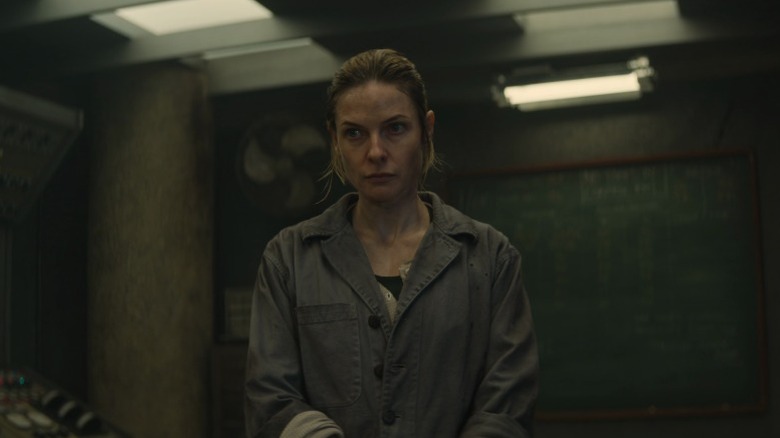
The world of "Silo" is an enthralling labyrinth of shadows and secrets, and its exploration is marvelously incorporated into the very fabric of the narrative intrigue. Drawing upon the eponymous novel series by Hugh Howey, the show does so much with the massive underground bunker in which it takes place that it would be an all-timer achievement in post-apocalyptic television for the lore-building and production design alone. Watching the up-and-down movement of Juliette Nichols (one-time TVLine Performer of the Week Rebecca Ferguson) through the Silo's 144 floors populated by 10,000 residents is plenty captivating even before the secrets of this dystopian society begin to unravel.
Once it does, though, "Silo" morphs into something even better: A highly political and philosophical sci-fi thriller with a sense of place and purpose. Following a host of three-dimensional, excellently-acted characters as they contend with the true nature of their centuries-old survivalist enclave and rebel against its suffocating, military-like organization, this underrated Apple TV original does just about everything of dramatic interest that can be done with a post-doom story, and lays out a clearly distinct, richly-imagined world that nonetheless holds up a scary mirror to our own.
14. The Last Man on Earth
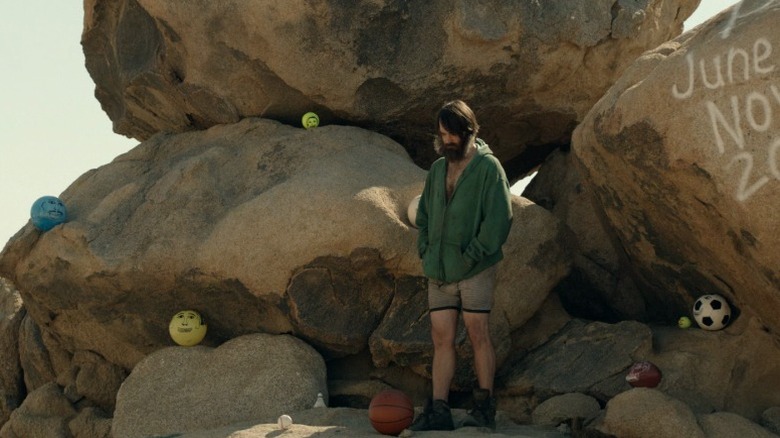
"The Last Man on Earth" is a show that begins as far away from traditional sitcom structure as possible, and then makes its own inching towards (and away from) that structure into the butt of the joke. We open on Phil Miller (Will Forte), a pretty unremarkable guy from Tucson, Arizona, as he goes about his dreary everyday routine after years of isolation, believing himself to be the last human alive on planet Earth in the wake of an apocalyptic pandemic. Just before committing suicide, Phil comes across Carol Pilbasian (Kristen Schaal), and then meets a bunch of other scattered survivors — but with community comes conflict.
How do the pressures of the literal end of the world impact the dynamic of a bickering ensemble comedy? Such is the question that "The Last Man on Earth" poses across four seasons, consistently coming up with hilariously daffy answers. As cartoon-esque as it is existentially and emotionally heady, the show feels like nothing else in the history of network TV comedy, and the creativity with which it explores its own anything-can-happen premise is seemingly boundless.
13. Kipo and the Age of Wonderbeasts
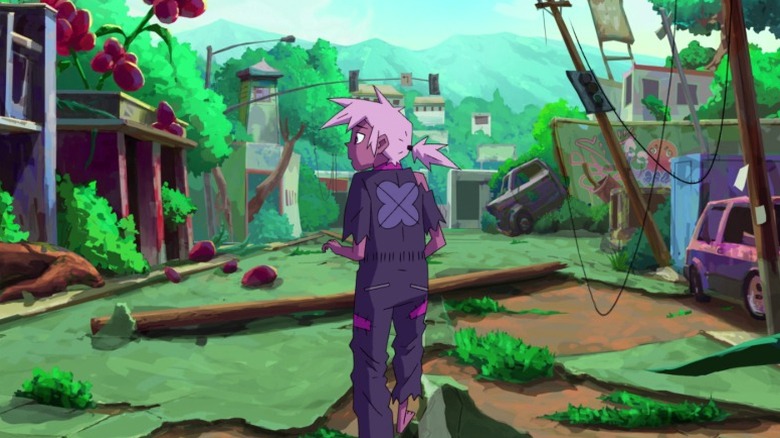
Another post-apocalyptic show in which the world-building is a spectacle all its own is DreamWorks Animation's "Kipo and the Age of Wonderbeasts." Karen Fukuhara, who rarely gets to use her voice as Kimiko on "The Boys," here gets a sterling vocal showcase in the role of protagonist Kipo Oak. Raised within one of the underground "burrows" to which most humans have been confined for two centuries after anthropomorphic mutant animals took over the Earth's surface in the early 21st century, the 12-year-old Kipo sees her burrow attacked by a giant monkey, and gets thrown into the hostile ruins of what used to be Los Angeles.
Despite the hardships that have befallen her and the world, Kipo is a cheerful idealist who believes that humans and "mutes" (as the mutant animals are called) may one day learn to live in harmony. This belief guides her tentative exploration of the world above ground alongside a ragtag crew of mutes and fellow humans; as Kipo comes of age in a world where nobody but her seems to harbor any more hope, "Kipo and the Age of Wonderbeasts" takes flight as an impeccable, moving, wondrous fantasy adventure saga for all ages.
12. Fallout
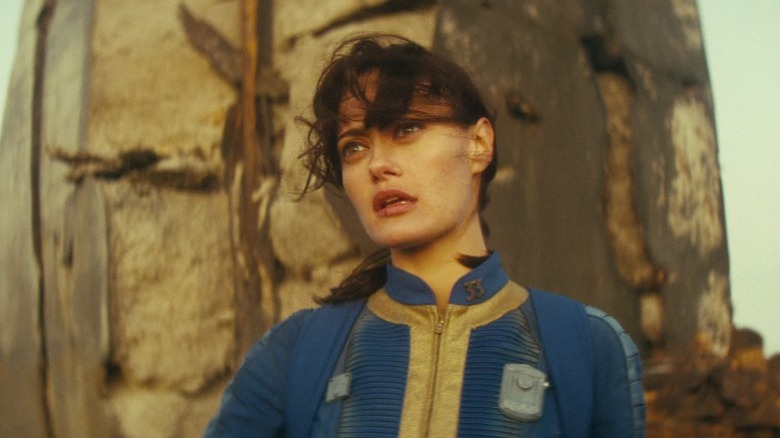
The concept of a film or TV adaptation of Bethesda's hugely popular "Fallout" video game franchise had been floating around since the late '90s, but it wasn't until 2024 that "Fallout" the TV show finally hit Prime Video. Created by Graham Wagner and Geneva Robertson-Dworet with executive production from "Westworld" masterminds Lisa Joy and Jonathan Nolan, "Fallout" proved worth the wait and then some; not only was it a faithful and reverent adaptation that honors the "Fallout" ethos and lore, but it also lived up to the potential for cinematic lushness that fans had long seen in the games.
More to the point, "Fallout" has turned out to be a fantastic post-apocalyptic drama, which beautifully renders the games' legendary retrofuturist stylings (a result of alternate history colliding with post-nuclear chaos) while making the most of the emotional potential offered by TV's closed-circuit storytelling. Ella Purnell and Walton Goggins are both perfectly cast as once-plucky heroine Lucy MacLean and the mutant disfigured bounty hunter known as the Ghoul, and there's very little more compelling on TV right now than their dovetailing journeys through a wrecked Earth.
11. Wayward Pines
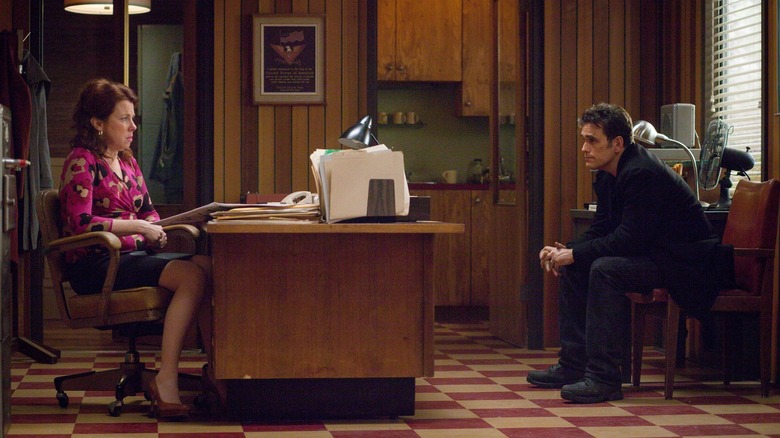
Developed by Chad Hodge from the eponymous novels by Blake Crouch, the underrated Fox sci-fi series "Wayward Pines" opened in May 2015 with an M. Night Shyamalan-directed pilot that expertly wove a web of uncanniness and claustrophobia around both U.S. Secret Service agent Ethan Burke (Matt Dillon) and the audience. Stumbling into the titular mountain town in a fog of confusion after a car accident, Ethan suddenly finds himself surrounded by strange, aggravating behavior from the townsfolk, and then learns that the community's rules prohibit him from leaving.
To wade into how Ethan's predicament eventually morphs into a post-apocalyptic narrative through a series of gobsmacking reveals would take away half the fun of "Wayward Pines," which, in its first season, could well be called the single wilder, most gripping, most effective helping of supernatural TV intrigue of the 2010s. Originally intended as a miniseries, the show could be even higher on this ranking had it ended where it was supposed to; even if the vastly inferior (and largely disconnected) second season makes it impossible to rank it any higher, it's still a series that deserves much more prestige and recognition than it has received over the past decade.
10. The Walking Dead
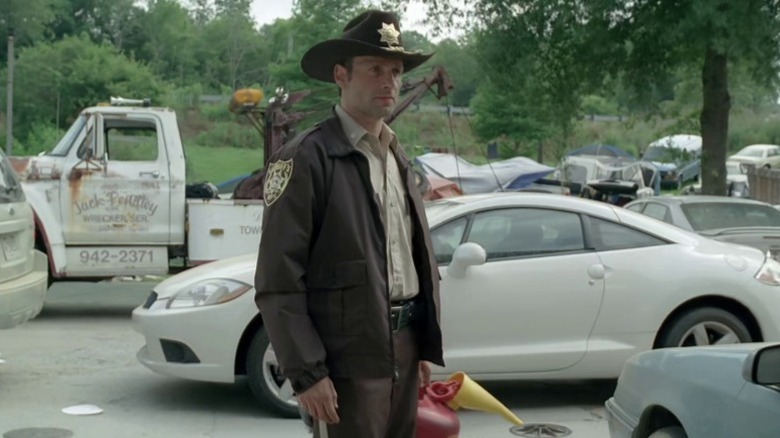
There's an argument to be made that the entire modern history of post-apocalyptic television began with Rick Grimes (Andrew Lincoln) walking into the convenience store in the first scene of "The Walking Dead." The AMC adaptation of the eponymous zombie apocalypse-themed comics by Robert Kirkman, Tony Moore, and Charlie Adlard was such a gigantic, industry-reshaping success that it's easy to overlook what a risky bet it was 16 years ago.
Given what an aimless shell of its former self it eventually became, as "The Walking Dead's" worst episodes piled up along more and more redundant seasons, it's also easy to overlook that the show only became a phenomenon because, in the early going, it was an unqualified artistic triumph. The directors and writers (led by none other than Frank Darabont in Season 1) didn't just get audiences to accept long stretches of slow, meditative storytelling in the middle of their ostensible action-adventure show. They effectively brought a whole world into being, persuasively establishing the agonizing tactility and nightmarish moral logic of an Earth swarming with "walkers," such that the show's sprawling cast came to feel like real people before they were anchors for any sort of plot or gory set piece. No wonder it spawned so many spin-offs.
9. The Last of Us
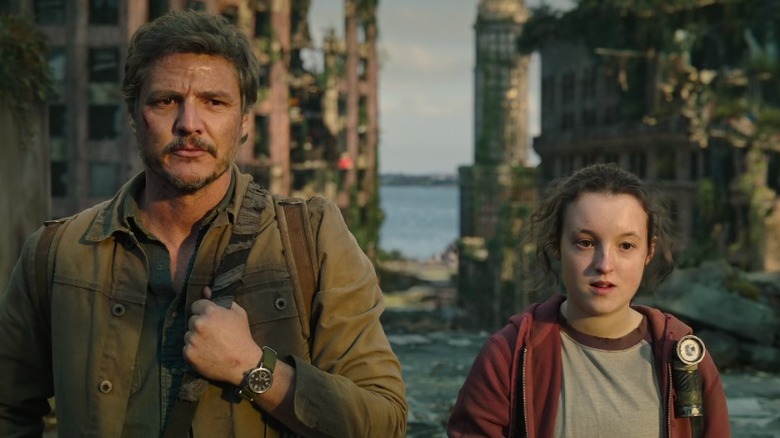
There are myriad ways in which an HBO-produced, more self-consciously "arty" take on the zombie survival drama genre could have gone rather wrong. Thankfully, "The Last of Us" knew to strike gold by sticking to its guns — namely, the rich dramaturgy of the eponymous Naughty Dog video game series.
Developed by "Chernobyl" author Craig Mazin alongside the game's co-creator Neil Druckmann (who is set to depart ahead of Season 3), "The Last of Us" delivered on its promise of serious, conceptually ambitious post-apocalyptic fiction by faithfully — but not grovelingly — transposing the wealth of emotion already present in the game's relationship between Joel Miller and Ellie, here played to counterintuitive perfection by Pedro Pascal and Bella Ramsey.
With incisive writing and attentive direction offering opportunities for the entire cast to shine in multidimensional, painfully human roles, the show draws a searing portrait of the search for meaning in a world overrun by desolation and grief. Even the frequent segues into action-blockbuster mode are carefully steeped in character.
8. Samurai Jack
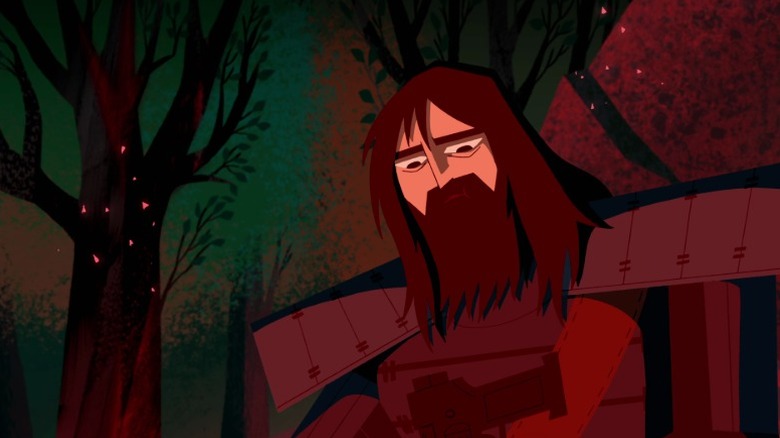
A lot of Cartoon Network series of the '90s and 2000s galvanized the medium in one form or another, but "Samurai Jack" might be the only American kids' animated series of its era that could genuinely be called avant-garde. From its swanky opening theme song on, it's a feat of indomitable coolness: No extensive lore infodumps, no official name for its wandering protagonist (who adopts "Jack" because a bunch of aliens called him that), no dialogue for long stretches, no outlines on most of the art.
Stark shapes, colors, and visually intelligible conflict take precedence, immediately setting apart the show's story of a samurai (Phil LaMarr) who gets sent into the distant, post-apocalyptic future by the shapeshifting demon (Mako and later Greg Baldwin) he was trying to stop from taking over the Earth. Every corner of this densely weird new world is made fascinating by the series' dazzling aesthetic experimentation, and Jack's quest to return to his time and defeat Aku masterfully balances delicate cartoon humor with deep, disarming pathos. The darker Adult Swim-exclusive 2017 revival season, in particular, is just TV perfection through and through.
7. Survivors (1975)
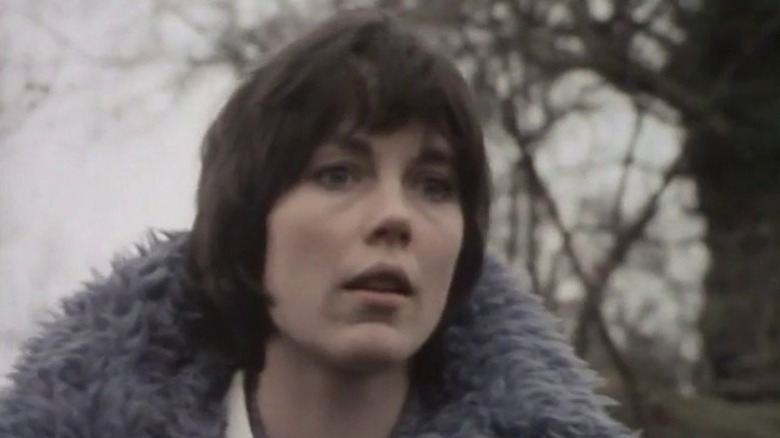
Not to be confused with the quasi-eponymous American reality series, BBC's "Survivors" is the common ancestor of pretty much every show on this list. Its 1975-1977 run essentially introduced the concept of a multi-episode post-apocalyptic drama into mainstream television; what's even more impressive, though, is that the series still holds up exceptionally well even next to its countless genre descendants.
Created by frequent '60s and '70s "Doctor Who" writer Terry Nation, "Survivors" begins by depicting, with stomach-churning intimacy, the onslaught of a global pandemic that wipes out over 99.9% of the world's population. From there on out, the show follows the efforts of a handful of survivors to swallow their planet-sized trauma, adapt to the circumstances, and stay alive.
Although the setup may now scan as familiar, the execution is anything but: "Survivors" is stunningly committed to the serious intellectual consideration of such a scenario, beginning with the understanding that no sensationalism is necessary to muster up drama when the conditions of post-apocalyptic life are truly grappled with. Watching the show feels like gaining access to a platonically smart and emotionally honest version of all the stock post-apoc conflicts, from resource wars to moral dilemmas to abiding philosophical anxieties.
6. Future Boy Conan
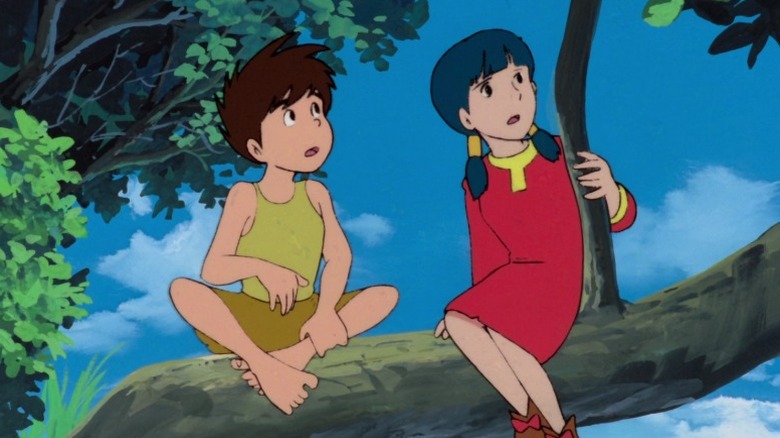
A year before he began his legendary filmmaking career with "The Castle of Cagliostro," Hayao Miyazaki was already putting his directorial chops on full display with the landmark 1978 anime "Future Boy Conan." Adapted by Akira Nakano, Satoshi Kurumi, and Sōji Yoshikawa from the 1970 American sci-fi novel "The Incredible Tide" by Alexander Key, the 26-episode series features direction by Miyazaki on all installments (accompanied on some by Keiji Hayakawa and future Studio Ghibli co-founder Isao Takahata), and anticipates several of the pet themes he'd develop further in his film work.
Chief among those themes is a child's eye view of war, oppression, and resistance — here manifested in Conan (Noriko Ohara), an 11-year-old boy raised by a community of survivors in the wake of a magnetic arms race that reduced most of the Earth to a giant ocean. Accustomed to isolated life on Remnant Island and largely unaware of the ongoing post-apocalyptic horrors, Conan is prompted to explore the world beyond the sea upon meeting Lana (Mieko Nobusawa), a troubled girl from a neighboring island. What ensues is a thrilling, gorgeous, perfectly-paced feat of adventure storytelling, brimming with Miyazaki's signature blend of casual wonder and hard-hitting emotional maturity.
5. Adventure Time
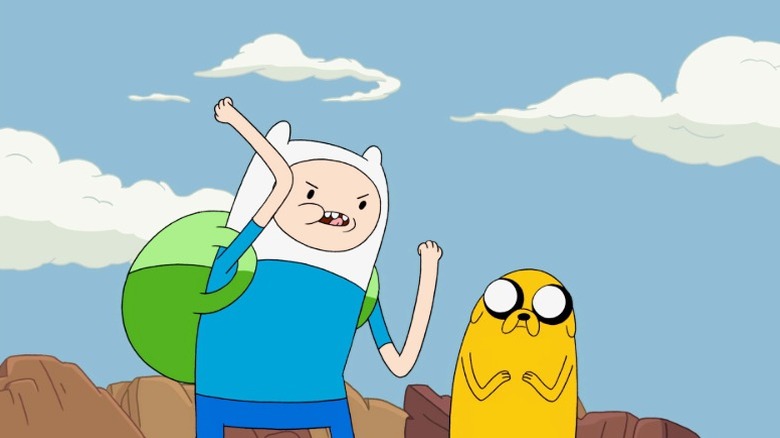
It may well be the case that no 21st-century TV series has had a bigger impact on its respective medium and genre than "Adventure Time." The before-and-after effect of this Pendleton Ward-created Cartoon Network phenomenon is astounding: American TV animation was all but lost to exhausted directionlessness by the late 2000s, and the adventures of Finn the Human (Jeremy Shada) and Jake the Dog (John DiMaggio) essentially brought it roaring back to life, creating a new blueprint for loopy, endearing, emotionally hefty cel-animated fantasy that could captivate kids and adults alike.
Set 1000 years after a nuclear apocalypse in a land that has taken on the properties of an open-world medieval RPG map, the show features some of the most thorough, relentlessly imaginative world-building that TV has ever seen, with a logic entirely its own extending from the scenery to the cartoon physics to the character designs. And the aesthetic vision is met every step of the way by the phenomenal writing, which slowly develops every character and piece of lore in the Land of Ooo until an overpowering tragicomic vision snaps into focus.
4. Girls' Last Tour
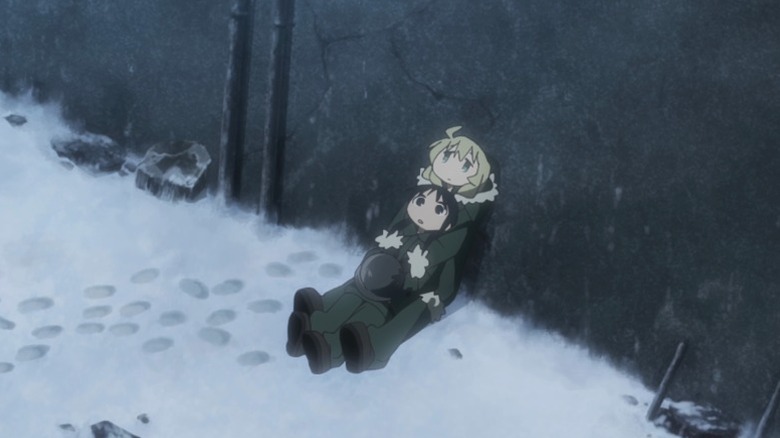
Based on the eponymous manga by Tsukumizu, "Girls' Last Tour" is post-apocalyptic fiction pared down to essentials: Two girls, a seemingly endless landscape of wintry desolation, and the shapeshifting substance of a life lived quietly from moment to moment.
With 12 episodes divided into three mini-stories each, the show primarily follows the levelheaded Chito and the venturesome Yuuri as they make their way through the barren industrial ruins of a world with almost no other surviving inhabitants. There's nothing to hope for, nothing to run from except hunger and the cold, and no real possibility of rebuilding civilization — and yet, Chito and Yuuri have each other, and so they are alive to the world.
"Girls' Last Tour" is made up almost entirely of poetic interludes, as the protagonists take comfort in small joys, talk extensively about their existential circumstances, and explore the world with attentive eyes and no expectation of finding anything in particular. It's an extraordinarily warm and soothing series to the same degree as it's unbearably devastating.
3. Battlestar Galactica
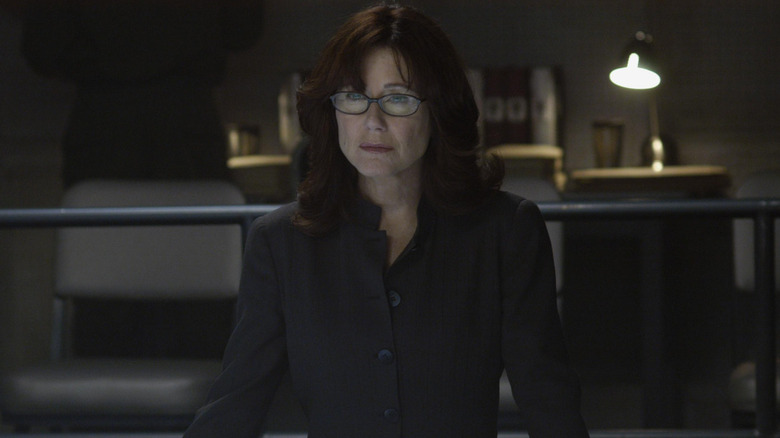
No other space sci-fi show in the 21st century has been such a hardline proponent of dense, stirring, emotionally and epistemologically complex drama as the 2004 remake of "Battlestar Galactica." And a lot of that rare dramaturgical achievement is down to the series' deeply-considered take on post-apocalyptic fiction.
Set in a universe where humankind has colonized twelve planets around the galaxy, only for a civilization of sentient robots known as the Cylons to decimate the vast majority of those colonies' populations, "Battlestar Galactica" follows the vanishingly few humans who have survived the Cylons' attacks and now roam the cosmos aboard a small fleet of starships.
Every character on the series is a vivid creation, and the interlocking conflicts, political tensions, moral and religious dilemmas, and psychologically fraught scenarios that arise as they trudge on in the war against the Cylons make up one of TV's great examples of epic ensemble storytelling. It's a legendary show for very good reason.
2. Station Eleven
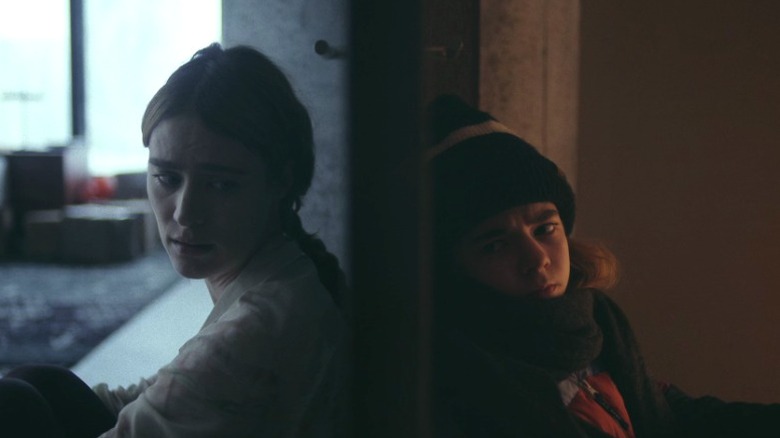
Created by Patrick Somerville and adapted from the eponymous novel by Emily St. John Mandel, the HBO Max miniseries "Station Eleven" left an outsized dent in the history of post-apocalyptic television. With just 10 episodes released between December 2021 and January 2022, the show epitomized pretty much everything interesting that could be done with the genre in a contemplative dramatic context.
Focusing on the members of a traveling musical theater troupe twenty years after humanity was nearly wiped out by a flu pandemic, the series flits back and forth in time to track the oft-overlooked nuances of how people might respond to an all-consuming cataclysm. There's little in the way of action and violence; instead, the show derives all of its intensity from grappling, bluntly and sans-euphemism, with the harrowing emotional reality of its characters' unimaginable circumstances. Life and society go on in some form; art emerges as a spiritual lifeboat; human connection becomes more precious and more important than ever. Few shows in history have dared to look this directly at what human existence is made of at the most fundamental level.
1. The Leftovers
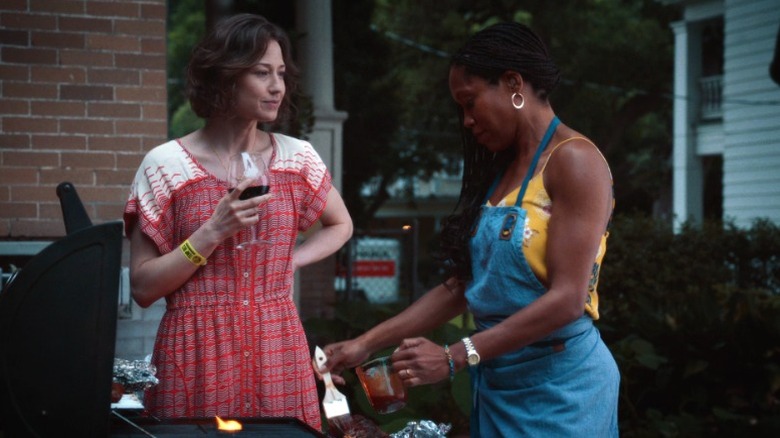
Technically, only 2% of the human population was claimed by the inexplicable supernatural event at the top of HBO's "The Leftovers." Indeed, one of the show's ironies is that its characters struggle adamantly to move on and bring the world back to a sense of normalcy, refusing to entertain the idea that they may be living in any sort of "post-apocalyptic" reality. But even so, no show in history has done so very much, so brilliantly and unforgettably, with the idea of ambling existence in an irrevocably ravaged world.
Although the series, adapted from the eponymous Tom Perrotta novel, was Damon Lindelof's follow-up to "Lost," "The Leftovers" is not at all concerned with providing answers or solutions to its central "mystery." It's just something that has happened: One October day in 2011, 140 million people around the globe vanished into thin air, never to be found again, and that was that. Set a few years after the Sudden Departure, the show uses a freewheeling multi-perspective structure to examine, in overwhelming detail, how various broken people are coping — or failing to cope — with this horribly ambiguous and inconclusive tragedy. Cue some of the most bizarre, exuberant, profound, cathartic, and gut-wrenching moments in television history, all adding up to one of the best HBO original series of all time.