

10 Sitcoms Without A Single Bad Season
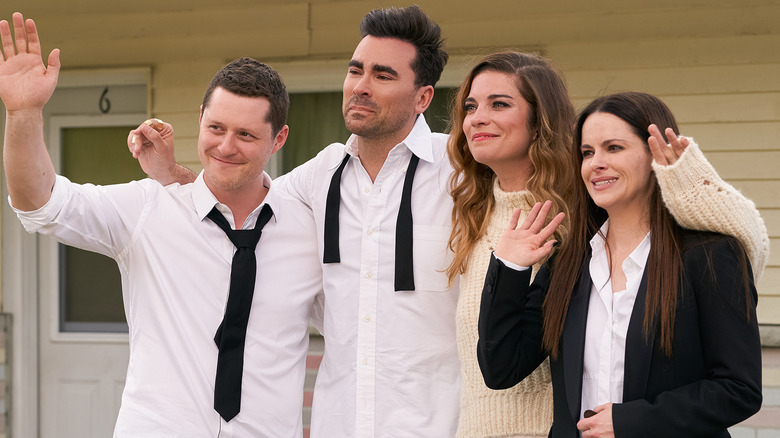
Sitcoms have been around for nearly the entirety of television's lifespan, from the early days of "I Love Lucy," all the way to modern-day hits like "Abbott Elementary." Compared to most other shows, sitcoms can vary quite a lot in quality; oftentimes, even the most popular shows deal with behind-the-scenes turmoil that will result in cast members coming and going, storylines that seem like desperate ploys from writers to recapture the early seasons' magic, and, in the case of "Happy Days," literally jumping the shark.
However, it takes a rare kind of show to maintain quality throughout its entire run, whether it's throughout decades of production or in shows that are only a few seasons long. While some of the best sitcom episodes of all time come from shows like "The Office," "Arrested Development," and "It's Always Sunny in Philadelphia," even diehard fans know some seasons are better forgotten than rewatched.
These ten shows cross the entire spectrum of shows that captured the zeitgeist and series that maybe flew under the radar but deserve far more love. In an age where sitcoms like "Scrubs" and "Malcolm in the Middle" are receiving reboots assembling original casts, we hope these shows don't get their perfect reputations ruined — though we'd definitely welcome a guaranteed-good new season if the creators had it in them.
Taxi
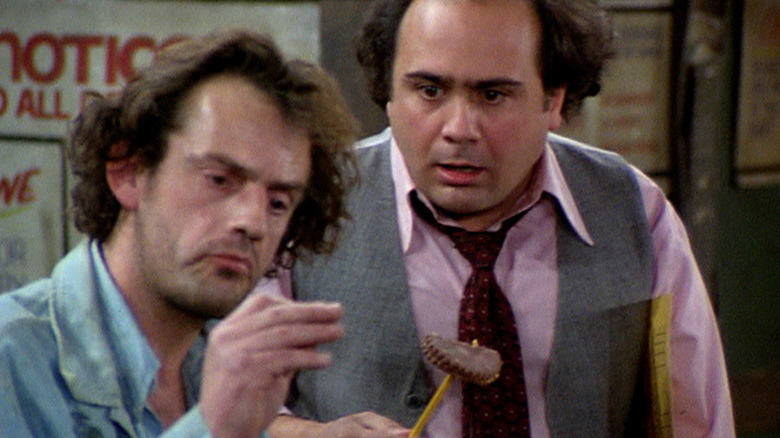
"Taxi" is the type of sitcom from a bygone era, and not just because it's the only show on this list that's a multicam sitcom. In the late '70s and early '80s, sitcoms had more in common with stage plays, rarely (if ever) featuring movie stars and often running for more than 100 episodes. It wasn't until the '90s that the more modern sitcom, with canned laugh tracks and single-camera formats, began to take over the medium.
Nevertheless, "Taxi" is proof that sometimes, the old ways are better. Part of that is due to the cast of "Taxi," which comprises the dysfunctional but close-knit workers of a New York City cab company. The drivers include Judd Hirsch's Alex, Marilu Henner's Elaine, and Tony Danza's Tony, with Danny DeVito playing their abusive dispatcher, Louie, and Andy Kaufman as eccentric mechanic Latka. Christopher Lloyd later joins as dim-witted Jim Ignatowski, and Carol Kane joins as Latka's wife Simka.
Notably, "Taxi" was one of the biggest TV hits of its era, winning 18 Emmys throughout its run on both ABC and NBC. It was cancelled after its fourth season by the former and revived by the latter. However, it wasn't taken off the air due to a lack of audience support, but rather a dip in ratings due to rescheduling and network interference, as evidenced by the cast's reception during a "Saturday Night Live" episode hosted by DeVito immediately following the cancellation.
Curb Your Enthusiasm
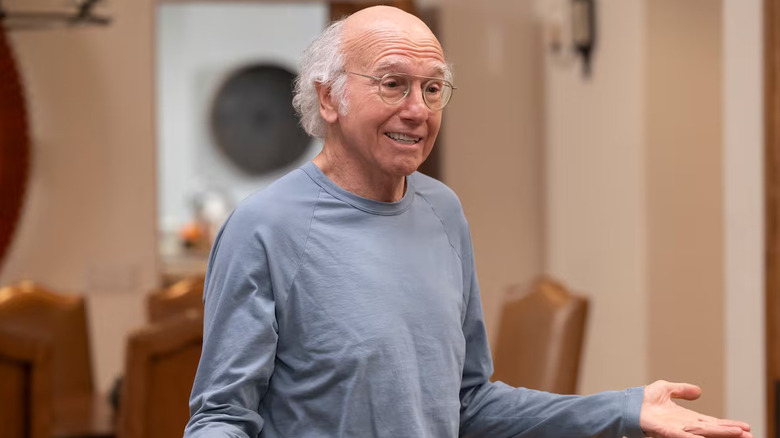
"Curb Your Enthusiasm" is, debatably, a better version of "Seinfeld" than "Seinfeld" itself. Following the iconic '90s sitcom ending, co-creator and off-camera presence Larry David took his unique voice to HBO in 1999 with a one-hour mockumentary special. The special was a meta look at David's life as a comedian post-"Seinfeld," and the series was picked up a year later, producing 12 seasons over the next 25 years before ending in 2024.
Oftentimes, sitcoms get bogged down by many different factors, whether it's a revolving door of cast members or behind-the-scenes turmoil. However, "Curb" is one of the few sitcoms that has remained consistent in tone and presentation throughout all 12 seasons. There are, of course, standout seasons, such as one in which David's selfish attempt to get back with his ex-wife results in a forced "Seinfeld" reunion that may be more entertaining than an actual one.
Even the series finale of "Curb" takes a page from "Seinfeld," but ultimately corrects its predecessor's ending in ways that left a bad taste in viewers' mouths. In terms of shows that are endlessly rewatchable, no matter which season you're in, "Curb Your Enthusiasm" somehow keeps finding new avenues to explore in David's cynicism toward the world and less-than-appropriate way of handling personal conflict.
30 Rock
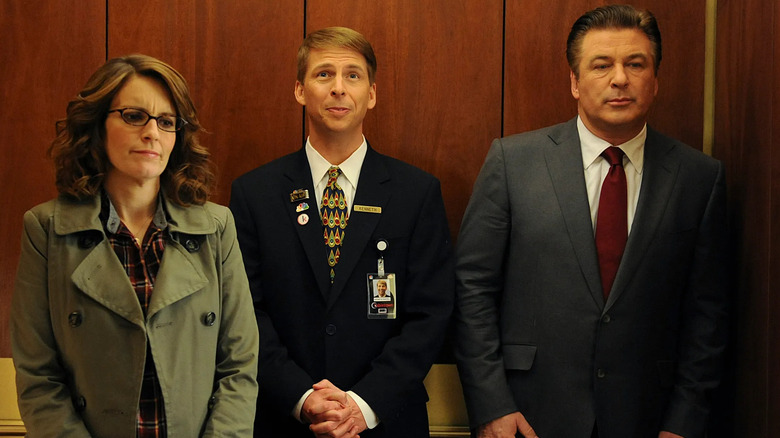
There's a good reason why so much modern TV is compared to the fake TV shows and movies "30 Rock" often satirized. The NBC comedy series was groundbreaking, taking a meta look at the behind-the-scenes of NBC itself, with co-creator and writer Tina Fey starring as Liz Lemon, the head writer of a progressive sketch comedy series not dissimilar to "Saturday Night Live," where Fey was formerly head writer.
From the very first episode, Lemon has a lot on her plate at the titular TV studio. There's the new head of NBC's programming, Jack Donaghy (Alec Baldwin), whose conservative tastes and business mindset threaten the show's creativity, as well as self-obsessed and eccentric actors Tracy Jordan (Tracy Morgan) and Jenna Maroney (Jane Krakowski), and even a very involved and enthusiastic NBC page named Kenneth (Jack McBrayer). The character dynamics in the show are among its greatest attributes, keeping it consistently wacky throughout all 7 seasons with nonstop jokes and memorable one-liners.
Despite having aired its final episode over 13 years ago, "30 Rock" remains so relevant to a lot of audiences' complaints about the entertainment industry, often prioritizing commercial sales rather than creativity. Then again, the fact that NBC let a show like "30 Rock," which spent its entire run satirizing its parent company and featuring guest stars like Oprah and Buzz Aldrin, air for over 100 episodes is proof that maybe there's still some good in the world.
Veep
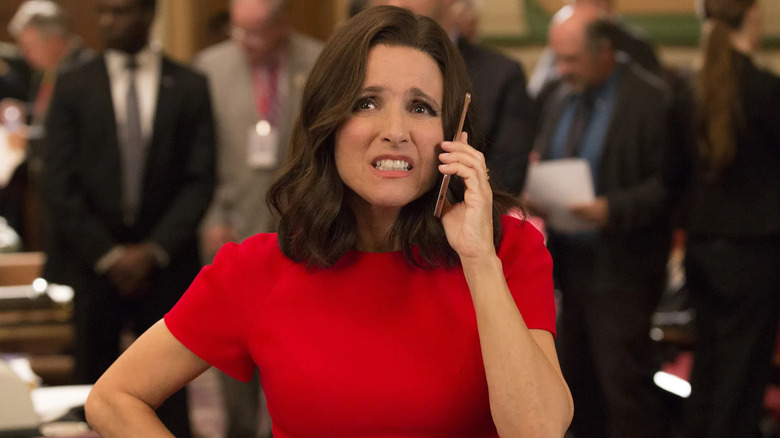
By the time "Veep" started, Julia Louis-Dreyfus was already television royalty, with two Emmys under her belt for both "Seinfeld" and "The New Adventures of Old Christine." However, "Veep" was something of a victory lap for the comedian, winning her six consecutive Emmys throughout the show's run for her performance as Selina Meyer, the incompetent and foul-mouthed vice president of the United States.
Though it may seem like a premise that doesn't have much legs, creator Armando Iannucci gets a lot of mileage out of exploring Meyer's political career both in and out of office. She not only rises to the office of president in the third season but later runs for re-election and is subsequently ousted, forcing her to adjust to post-presidency life before deciding to give it another shot in the show's final season. At no point in this seven-season run does watching Meyer flail in pursuit of power ever get boring; if anything, it actually somehow gets better as it goes on.
When "Veep" was on the air between 2012 and 2019, the idea that politics could be this vulgar was enough of a fantasy to inspire plenty of comedy. Nowadays, it feels lighter in tone than actual politics, meaning it doesn't feel wholly depressing to rewatch on HBO. If anything, the show has its lead performer, Louis-Dreyfus, to thank for its consistency, as she equally grounds the show in reality while also giving TV some of its funniest moments ever.
Girls
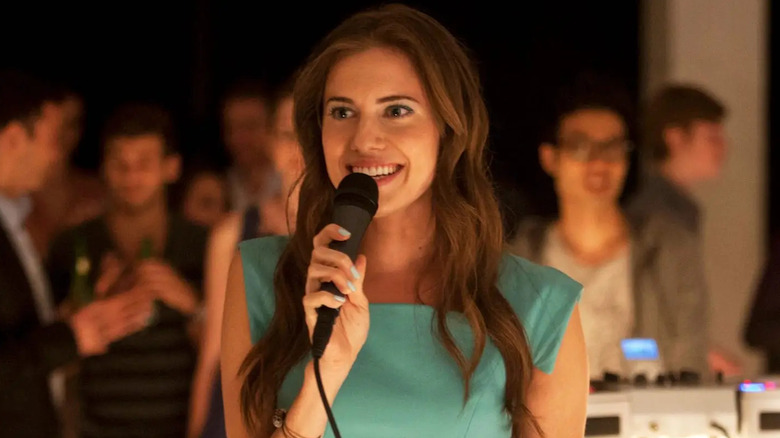
The HBO series "Girls" was like "Sex and the City" for a millennial generation, though episode to episode, it felt a lot more like a sitcom than the earlier HBO series. The show centers on a group of four female friends living in New York City, played by Lena Dunham (also the show's creator, writer, and frequent director), Allison Williams, Jemima Kirke, and Zosia Mamet. Throughout the series, the four face ups and downs in their careers, love lives, health, and family dynamics, but never does it get boring or stale.
Compared to other shows on this list, "Girls" saw its fair share of changes throughout its six seasons, such as main cast member Christopher Abbott leaving after two seasons. However, the show never wavers in quality despite these changes, with later-season episodes rarely featuring the four leads together after a particularly dramatic Season 3 episode centered on a Long Island vacation.
Part of the widespread appeal of "Girls" throughout all six seasons lies in Dunham's creative direction, which keeps the characters always somehow indulging in their worst impulses and cringiest choices. Whether it's Marnie's (Williams) ill-advised romance with the unstable Desi (Ebon Moss-Bachrach), Shoshanna's (Mamet) awkward run-ins with her ex Ray (Alex Karpovsky), or Hannah (Dunham) watching her ex Adam (Adam Driver) spark a romance with her best friend Jessa (Kirke), most episodes of "Girls" play out like a car accident in slow motion that you can't look away from.
Schitt's Creek
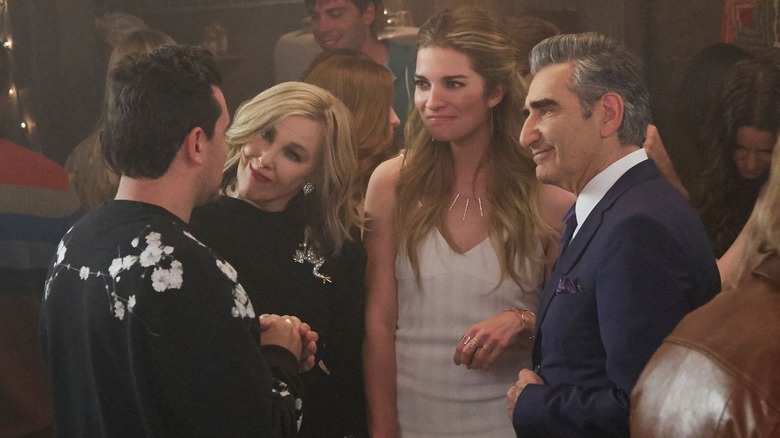
The recent passing of the brilliant Catherine O'Hara has rightfully gotten a lot of television fans returning to "Schitt's Creek," the CBC sitcom that she repeatedly stole scenes in for six seasons. The series stars O'Hara's longtime friend and collaborator Eugene Levy as Johnny Rose, the well-meaning patriarch of the wealthy Rose family, whose lives are upended when their fortune is embezzled by a corrupt business manager, forcing Johnny, his bourgeois wife Moira (O'Hara), and his children Alexis (Annie Murphy) and David (Daniel Levy) to relocate to a motel in the titular one-stoplight town.
Though it's a simple enough fish-out-of-water premise, placing a privileged family in a rural new setting, "Schitt's Creek" remains so high quality throughout its run by really challenging its main characters. The typically thoughtless Alexis finds herself in a healthy relationship with the local veterinarian, Ted (Dustin Milligan), while David eschews his obsession with fashion to open an apothecary with Patrick (Noah Reid), whom he later falls for and marries in the series finale. Meanwhile, Johnny begins managing and franchising the motel they call home, and Moira finds joy in joining the town council.
It's a little bittersweet to rewatch "Schitt's Creek" now that the great O'Hara has passed, but thankfully, there are six straight seasons of great television to offset this feeling. It's consistently charming, sweet, and laugh-out-loud hilarious, and was more than deserving to sweep the Emmy Awards with its record-breaking wins in 2020.
Unbreakable Kimmy Schmidt
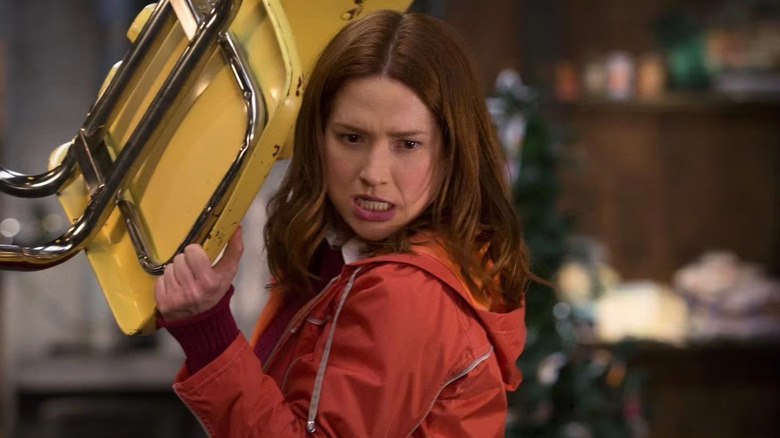
After Tina Fey and Robert Carlock wrapped up "30 Rock," they quickly proved their sitcom skills weren't a fluke with a series for Netflix, "Unbreakable Kimmy Schmidt." It was a well-deserved starring role for "The Office" and "Bridesmaids" veteran Ellie Kemper, who plays the titular Kimmy Schmidt, a chipper young woman who moves to New York City after being freed from a doomsday cult in which she was held captive. Just you wait, it only gets more absurd from there.
Not only does Kimmy find a companion in roommate Titus Andromedon (played by the one-of-a-kind Tituss Burgess), but the series also finds great use for Fey's former "30 Rock" co-star Jane Krakowski, who plays an out-of-touch socialite who hires Kimmy as her nanny. Across its four seasons, Kimmy experiences love, writes a children's book, prevents more women from being kidnapped by a cult, and by the very end, even opens an amusement park.
After ending in 2019, "Unbreakable Kimmy Schmidt" returned to Netflix with an interactive special in 2020, which was also acclaimed despite being removed from the streaming service in 2025. Overall, if you liked the absurdity and jokes-per-minute pace of shows like "30 Rock," "Unbreakable Kimmy Schmidt" is similar in all the right ways and different enough to keep it fresh even six years after its final episode aired.
Fleabag
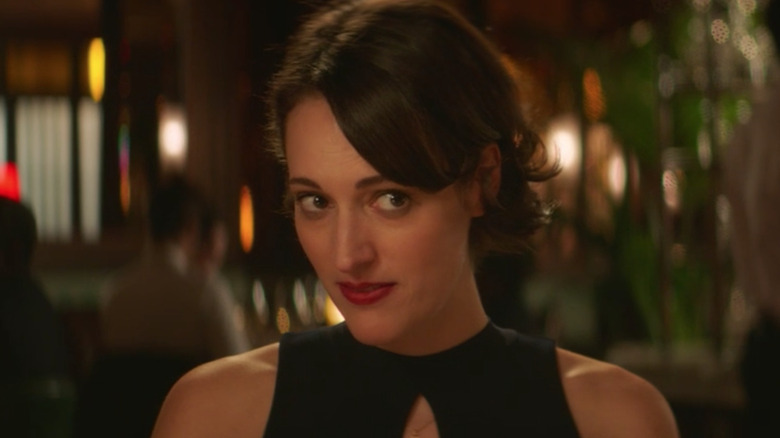
Although it's only two seasons and a total of twelve episodes, it simply wouldn't be a proper list of the best comedy series without mentioning the peak TV treasure that is "Fleabag." Originating as a one-woman play, Phoebe Waller-Bridge wrote and starred in a BBC series adaptation of "Fleabag" in 2016, following the life of a young woman grieving the sudden death of her best friend, trying to keep afloat a cafe they started together, and navigating difficult dynamics with her father (Bill Paterson), evil stepmother (Olivia Colman), and sister Claire (Sian Clifford).
While Season 1 of "Fleabag" is perfect from start to finish, Season 2 is where it exploded into a mainstream phenomenon. The second season mainly follows Fleabag's flirtation with a priest (Andrew Scott) hired to officiate her father and stepmother's wedding, which not only challenges her worldview but also her tendency to speak to the audience in fourth-wall breaks, which only the priest notices.
It also may be debatable whether or not "Fleabag" is a proper sitcom, though several episodes feel like self-contained stories, like when Fleabag and Claire attend a silent retreat for women in the first season, or when Fleabag reunites with her family after a year for an awkward family dinner in the second. We could simply watch a hundred more seasons of Waller-Bridge's brilliance, but maybe the show is best left to rest on its laurels.
The Good Place
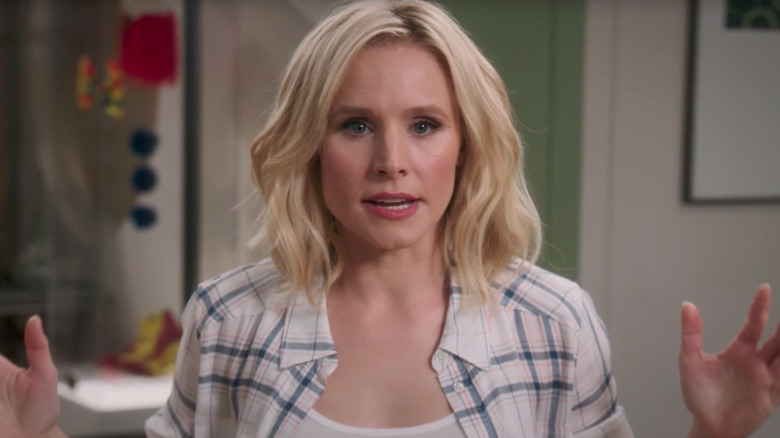
"The Good Place" was created by Mike Schur, whose previous credits on NBC included "The Office," "Parks & Recreation," and "Brooklyn Nine-Nine." However, "The Good Place" is as far from a workplace sitcom as you can get, following Eleanor (Kristen Bell), a woman in the afterlife known as the "good place," who realizes she's there by accident and was meant to be sent to "the bad place." While attempting to keep up the ruse, she finds allies in the indecisive ethics professor Chidi (William Jackson Harper), condescending philanthropist Tahani (Jameela Jamil), and dim-witted DJ Jason (Manny Jacinto).
However, "The Good Place" does something most other sitcoms don't, which is to completely switch up the entire premise of the series with its season 1 finale twist. If you haven't watched the show, keep scrolling and don't read this spoiler alert... as it turns out, Eleanor, Chidi, Tahani, and Jason are in the bad place, and this ruse was designed by the architect Michael (Ted Danson) as an advanced form of torture.
As the series continues, it strays from its original premise in several ways, as Michael slowly realizes that his design created a foolproof way to encourage humans to change for the better before moving on to the real good place. By the series finale of "The Good Place," it had become a brilliant exploration of ethical philosophy, whether human beings are intrinsically good, and whether life has a purpose. And all from Mose Schrute, nonetheless.
Detroiters
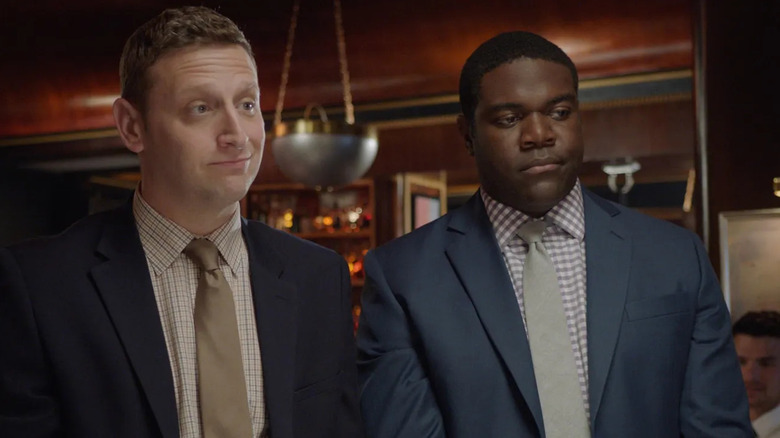
If you're a fan of comedy, chances are you have a couple sketches from "I Think You Should Leave with Tim Robinson" memorized word for word. However, before the sketch comedy series premiered on Netflix in 2019, Robinson and writing partner Zach Kanin were co-creators of the Comedy Central sitcom "Detroiters," along with Sam Richardson and Joe Kelly. In the series, Robinson and Richardson star as best friends who run an advertising agency together, collaborating on commercials for local Detroit businesses.
Though it was unfortunately canceled after two seasons, "Detroiters" feels like a predecessor to the unique style of comedy Robinson and Kanin continued in "I Think You Should Leave," with characters often acting absurdly in what should be normal social situations. Along the way, there are some familiar guest stars for fans of Robinson's work, including Tim Meadows, Cecily Strong, and Connor O'Malley.
Thankfully, fans of Robinson's recent work, including his latest HBO series "The Chair Company," can watch both seasons of "Detroiters" on Netflix. Maybe there will someday be a future for the show, but for now, TV audiences will sadly only have the what-ifs to wonder about if this nonstop laugh riot of a show gets to keep going for much, much longer.